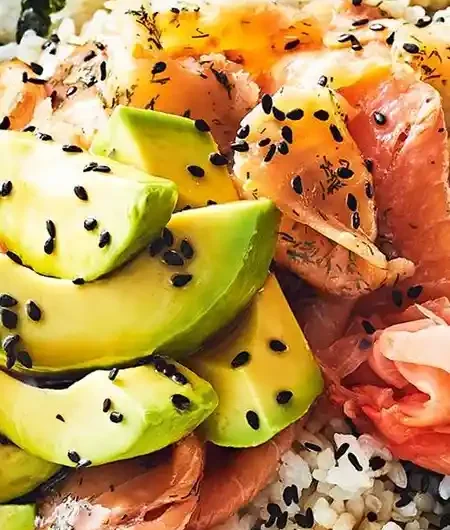
This refreshing sushi-style bowl combines the creaminess of ripe avocado with the savory depth of smoked salmon. It is a nutrient-dense meal perfect for a light dinner or a healthy office lunch.
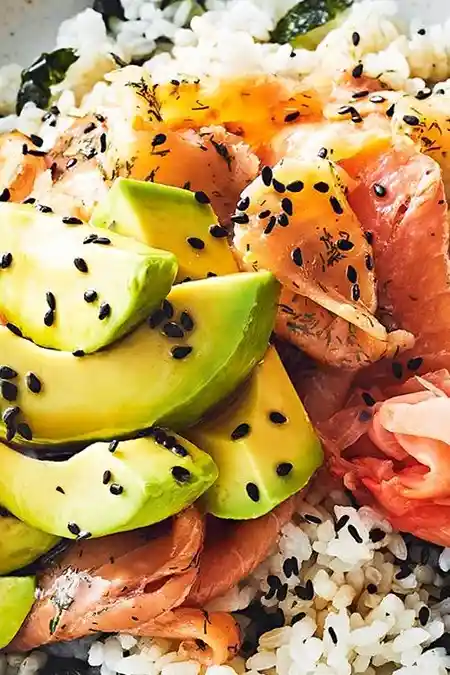
List of ingredients
- 290g (1 1/3 cups) sushi rice – short grain for necessary stickiness
- 500ml (2 cups) water – for cooking the rice
- 60ml (1/4 cup) rice vinegar – provides a tangy base
- 15g caster sugar – balances the vinegar acidity
- 1.2g salt – enhances all flavors
- 4.5g roasted seaweed snack, torn – adds umami and a salty crunch
- 30ml tamari – gluten-free soy alternative for the dressing
- 1 tsp sesame oil – adds a toasted nutty aroma
- 2 avocados, sliced – provides a rich, creamy texture
- 225g smoked salmon or gravlax – the primary protein source
- 6g black sesame seeds – used for garnish and texture
- Pickled ginger – optional side for palate cleansing
- Wasabi – optional for a spicy kick
step-by-step instructions
- Prepare the rice: Place the sushi rice in a sieve and rinse it thoroughly under cold water until the water runs clear. Set the rice aside for 1 hour to drain completely.
- Cook the rice: Combine the drained rice and water in a saucepan over high heat. Bring the mixture to a boil, stirring occasionally to prevent sticking. Cover with a tight-fitting lid, reduce heat to low, and simmer for 15 minutes. Remove from heat and let it steam undisturbed for another 15 minutes.
- Prepare the seasoning: While the rice is steaming, mix the rice vinegar, caster sugar, and salt in a small jug. Stir continuously until the sugar and salt are fully dissolved.
- Season the rice: Spread the cooked rice across a large tray. Sprinkle half of the vinegar mixture over the rice and use a flat-edged spoon to fold it in gently. Allow the rice to cool slightly, then fold in the torn roasted seaweed.
- Assemble the bowl: Mix the tamari and sesame oil into the remaining vinegar mixture. Divide the seasoned rice among four bowls. Top with sliced avocado and smoked salmon, then drizzle with the tamari dressing. Garnish with black sesame seeds, pickled ginger, and wasabi if desired.
Perfecting Your Sushi Rice
Choosing the Right Rice Grain
Always use short-grain Japanese rice specifically labeled as sushi rice. This variety has a higher starch content, which allows the grains to cling together while remaining distinct and fluffy.
The Importance of Proper Rinsing
Rinsing the rice removes excess surface starch that otherwise makes the final product gummy. Draining the rice for a full hour ensures the grains are not overly saturated before cooking, leading to a better texture.
Achieving the Correct Texture
The 15-minute resting period after simmering is essential for moisture redistribution. Skipping this step can result in rice that is unevenly cooked or too wet on the surface.
Ingredient Substitutions
Tamari vs Soy Sauce
Tamari is a richer, gluten-free alternative to soy sauce that adds a deeper umami flavor. If you prefer a saltier, lighter taste, you can substitute tamari with standard soy sauce in a 1:1 ratio.
Alternative Salmon Options
Fresh seared salmon fillets or marinated tofu can replace smoked salmon for a different flavor profile. If using tofu, press it firmly to remove excess water before slicing to ensure it holds the dressing.
Vinegar Alternatives
If rice vinegar is unavailable, apple cider vinegar can be used as a substitute. Add a small pinch of extra sugar to compensate for the different acidity levels of the apple cider vinegar.
Customizing Your Bowl
Adding Fresh Vegetables
Shredded carrots, thinly sliced cucumbers, or steamed edamame beans add vibrant color and extra nutrients. These additions provide a crisp, fresh contrast to the soft rice and creamy avocado.
Incorporating Extra Protein
A soft-boiled egg or chilled steamed shrimp can increase the protein content and satiety of the meal. These proteins pair naturally with the tamari dressing and roasted seaweed.
Enhancing the Texture
Toasted white sesame seeds or crispy fried shallots provide an extra layer of crunch. These small additions make the overall mouthfeel of the bowl more interesting and satisfying.
Assembly and Presentation
Slicing Avocado for Aesthetics
Slice the avocado into thin, even wedges and fan them out across the top of the rice. This ensures every single bite contains a balanced portion of the fruit.
Balancing Flavors in the Bowl
Distribute the smoked salmon and avocado evenly to maintain a consistent mix of salty and creamy notes. Keep the pickled ginger on the side to cleanse your palate between different flavors.
Garnishing for Visual Appeal
Sprinkle the black sesame seeds specifically over the green avocado for a high-contrast look. Adding a small, neat dollop of wasabi on the edge gives the dish a professional, restaurant-style appearance.
Storage and Reheating
Storing the Seasoned Rice
Keep the seasoned rice in an airtight container in the refrigerator for up to three days. It is best to store the rice separately from the fresh toppings to maintain quality.
Keeping Avocado Fresh
To prevent browning, squeeze a small amount of lemon or lime juice over the sliced avocado. Store the avocado in its own sealed container until the moment of assembly.
Reheating Guidelines
If you prefer warm rice, steam it briefly in the microwave with a damp paper towel covering the bowl. Always add the cold smoked salmon and avocado only after the rice has been heated.
Make-Ahead Strategy
Preparing the Vinegar Mixture
The mixture of rice vinegar, sugar, and salt can be prepared several days in advance. Store it in a glass jar in the refrigerator and give it a quick stir before using.
Pre-cooking the Rice
You can cook the rice a day early, but avoid adding the vinegar mixture until you are ready to serve. This prevents the rice from becoming too soft or overly acidic.
Assembling the Toppings
Slice the smoked salmon and prepare your ginger and wasabi portions in advance. Keep these ingredients chilled and assemble the bowls immediately before eating for the freshest taste.
Nutritional Balance
Healthy Fats from Avocado
Avocado provides monounsaturated fats which are essential for heart health and satiety. These fats also help the body absorb fat-soluble vitamins from the other vegetable additions.
Omega-3s in Salmon
Smoked salmon is naturally rich in omega-3 fatty acids that support brain function and reduce inflammation. This makes the bowl an excellent choice for a high-energy, cognitive-boosting meal.
Managing Sodium Levels
Using a low-sodium tamari can significantly reduce the overall salt intake of the dish. This allows you to enjoy the bold Japanese flavors while adhering to dietary sodium restrictions.
Troubleshooting Common Issues
Rice is Too Mushy
Mushy rice usually occurs if too much water was used or if the rice was not rinsed properly. To fix this, reduce the water by one tablespoon in your next batch or increase the draining time.
Rice is Too Hard
If the grains remain firm after cooking, add a small splash of water and simmer for an additional few minutes. Ensure the lid remains tightly sealed to trap the necessary steam.
Avocado Browning Quickly
Browning is caused by oxidation when the fruit is exposed to the air. Use a ripe but firm avocado and apply a citrus-based acid immediately after slicing to slow the process.
Frequently Asked Questions
Can I use brown rice?
Brown rice can be used, but it requires more water and a significantly longer cooking time. Note that it lacks the sticky consistency of sushi rice, which will change the structure of the bowl.
Is this recipe freezer-friendly?
The assembled bowl is not suitable for freezing because the avocado and fresh salmon lose their texture. However, you can freeze plain cooked rice in portions for later use.
How long does smoked salmon last?
Once the packaging is opened, smoked salmon generally stays fresh in the refrigerator for three to five days. Keep it tightly wrapped or in an airtight container to prevent drying out.
Print
Avocado and Smoked Salmon Sushi Bowl
- Total Time: 95 minutes
- Yield: 4 servings 1x
- Diet: General
Description
This simple sushi salad bowl is perfect for a healthy lunch or light dinner.
Ingredients
- 290g (1 1/3 cups) sushi rice
- 500ml (2 cups) water
- 60ml (1/4 cup) rice vinegar
- 15.00 gm caster sugar
- 1.20 gm salt
- 4.5g pkt roasted seaweed snack, torn
- 30.00 ml tamari
- 1 tsp sesame oil
- 2 avocados, sliced
- 225g smoked salmon or gravlax
- 6.00 gm black sesame seeds
- Pickled ginger, to serve (optional)
- Wasabi, to serve (optional)
Instructions
- Step 1: Place the rice in a sieve and rinse well. Set aside for 1 hour to drain.
- Step 2: Place the rice and water in a saucepan over high heat. Bring to the boil, stirring occasionally. Cover with a tight-fitting lid. Reduce the heat to low and simmer for 15 minutes. Remove from heat. Set aside for 15 minutes to steam.
- Step 3: Meanwhile, combine vinegar, sugar and salt in a small jug. Stir until sugar dissolves.
- Step 4: Spread rice over a tray. Sprinkle with half the vinegar mixture. Use a flat-edged spoon to fold the vinegar mixture into rice. Set aside to cool slightly. Fold in seaweed.
- Step 5: Add tamari and sesame oil to remaining vinegar mixture. Divide rice mixture among bowls. Top with the avocado and salmon. Drizzle with the tamari dressing. Top with sesame seeds, ginger and wasabi, if using.
Notes
For the best rice texture, ensure it drains completely for the full hour before cooking.
- Prep Time: 80 minutes
- Cook Time: 15 minutes
- Category: lunch
- Method: Stovetop
- Cuisine: Japanese-inspired
Nutrition
- Serving Size: 1 bowl
- Calories: 570 kcal
- Sugar: 6 g
- Sodium: 840 mg
- Fat: 21 g
- Saturated Fat: 4 g
- Unsaturated Fat: 17 g
- Trans Fat: 0 g
- Carbohydrates: 62 g
- Fiber: 8 g
- Protein: 18 g
- Cholesterol: 45 mg
Keywords: sushi bowl, avocado salmon rice bowl, healthy lunch, sushi salad