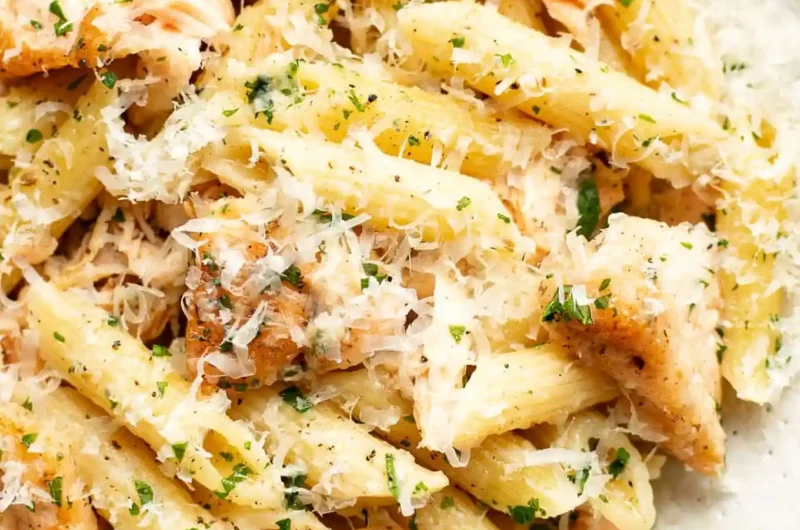
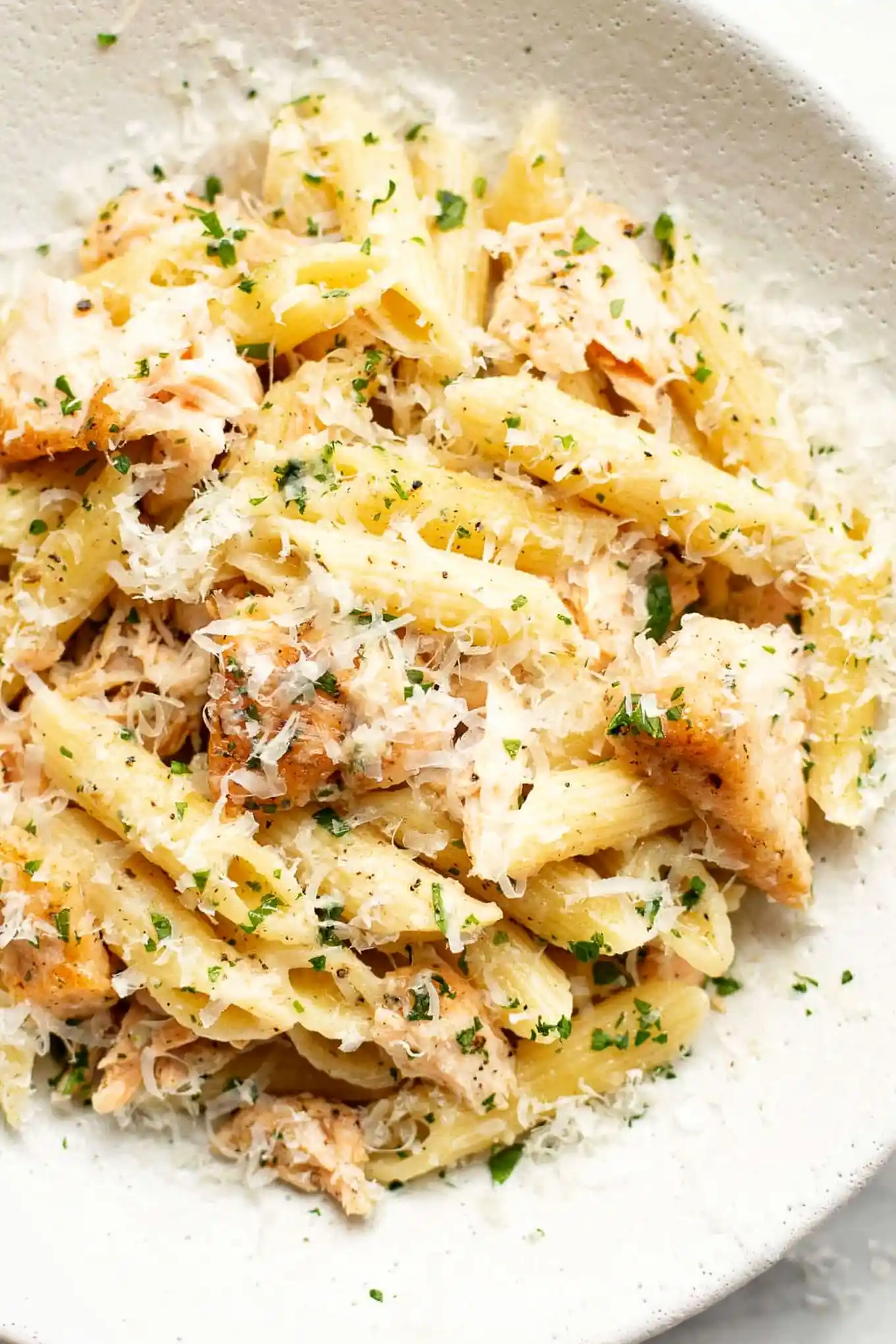
This efficient recipe delivers a rich, buttery salmon pasta in just 20 minutes. It is an ideal solution for busy weeknights when you need a high-protein meal with minimal cleanup.
List of ingredients
- 4 ounces uncooked pasta – use a shape like penne or spaghetti for best results.
- 1/2 pound fresh salmon – skin-on or skin-off, cut into a manageable fillet.
- Salt & pepper – to taste for seasoning the fish.
- Flour – used for dredging the salmon to create a golden crust.
- 1 tablespoon olive oil – for initial searing.
- 2 tablespoons butter – adds richness and forms the sauce base.
- 1/2 cup chicken broth or vegetable broth – provides the savory liquid for the sauce.
- 1 tablespoon lemon juice – adds acidity to balance the butter.
- 3-4 cloves garlic – minced finely.
- Optional garnish – fresh parsley, red pepper flakes, and parmesan cheese.
step-by-step instructions
- Boil the Pasta: Bring a pot of salted water to a boil. Cook the pasta until al dente according to the package directions. It is most efficient to start the sauce preparation once the water has reached a boil.
- Prepare the Salmon: Sprinkle the salmon fillet with salt and pepper. Lightly coat the fish in flour, shaking off any excess.
- Sear the Fish: Heat the olive oil and butter in a skillet over medium-high heat. Once hot, add the salmon and cook for 2 minutes per side. Remove the salmon from the pan and set it aside on a plate. If you prefer not to eat the skin, peel it off now while the fish is warm.
- Simmer the Sauce: Pour the chicken or vegetable broth into the same skillet, then stir in the minced garlic and lemon juice. Reduce the heat to medium and let the mixture simmer for about one minute.
- Finish the Salmon: Return the seared salmon to the pan. Use a spoon to break the fish into bite-sized pieces. Continue cooking for a few more minutes until the salmon is cooked through and the sauce has reduced in volume.
- Combine and Serve: Drain the cooked pasta and add it directly to the skillet. If the sauce seems too thick, stir in a small amount of reserved pasta water. Toss everything together and serve immediately with parsley, red pepper flakes, and parmesan cheese.
Cooking Techniques for Optimal Results
Searing Salmon for a Golden Crust
Dredging the salmon in flour before searing creates a thin barrier that helps the fish develop a golden-brown exterior. Ensure the oil and butter are shimmering hot before adding the fish to prevent sticking. Avoid moving the fillet too often, allowing it to sear undisturbed for the full two minutes per side.
Achieving the Perfect Al Dente Texture
Cooking pasta al dente means leaving it slightly firm to the bite. This is crucial because the pasta continues to cook for a minute or two once it is tossed in the hot sauce. If the pasta is overcooked in the water, it will become mushy when combined with the salmon and butter.
Emulsifying the Garlic Butter Sauce
The combination of butter, broth, and lemon juice creates a simple emulsion. Simmering the liquid allows it to reduce, which concentrates the flavor and thickens the consistency. Adding the pasta and a splash of starchy pasta water helps the sauce cling to the noodles rather than pooling at the bottom of the plate.
Ingredient Substitutions and Alternatives
Alternative Pasta Shapes
While penne and spaghetti are recommended, other shapes work well depending on your preference. Fusilli or rotini are excellent for trapping small bits of garlic and parmesan in their spirals. Farfalle, or bow-tie pasta, provides a sturdy texture that holds up well against chunks of salmon.
Replacing Chicken Broth with Vegetable Broth
Vegetable broth is a direct substitute for chicken broth and maintains the savory profile of the dish. Ensure the vegetable broth is low-sodium to maintain control over the overall salt levels. If you lack broth, you can use water with a pinch of salt and a dash of soy sauce for umami.
Using Frozen Salmon Fillets
You can use frozen salmon, but it must be completely thawed before cooking. Thaw the fish in the refrigerator overnight or use a cold-water bath. Pat the salmon very dry with paper towels before seasoning to ensure it sears rather than steams in the pan.
Substitutes for Fresh Garlic
If fresh garlic is unavailable, you can use garlic powder, though the flavor is less pungent. Use approximately 1/4 teaspoon of garlic powder for every clove required. Avoid using pre-minced jarred garlic if possible, as it often contains preservatives that alter the taste.
Flavor Variations to Try
Incorporating Fresh Spinach
Adding two cups of fresh baby spinach to the pan just before adding the pasta adds color and nutrients. Stir the spinach into the simmering sauce for 30-60 seconds until it just begins to wilt. This provides a fresh, earthy contrast to the rich butter sauce.
Adding Sun-Dried Tomatoes
Chopped sun-dried tomatoes add a concentrated sweetness and tang to the dish. Add them to the pan at the same time as the garlic. The oil from the sun-dried tomatoes can also be used in place of olive oil for an extra layer of depth.
Creating a Creamier Sauce
For a richer texture, stir in two tablespoons of heavy cream or a dollop of cream cheese after the broth has reduced. This transforms the sauce into a velvety cream sauce. Balance the added richness with an extra squeeze of fresh lemon juice.
Increasing the Heat Level
While red pepper flakes are listed as a garnish, stirring them into the butter during the searing process infuses the entire dish with heat. For a more intense flavor, add a finely diced fresh serrano or jalapeño pepper along with the garlic.
Serving and Pairing Ideas
Pairing with Steamed Vegetables
This pasta is rich, so pairing it with light, steamed vegetables balances the meal. Steamed asparagus, snap peas, or broccoli florets work well. Toss the vegetables in a small amount of lemon juice and salt to complement the flavors of the salmon.
Selecting a Side Salad
A crisp green salad with a vinaigrette dressing provides a necessary acidic contrast. Arugula with a simple lemon-olive oil dressing is a professional pairing. The bitterness of the arugula cuts through the butter sauce, refreshing the palate between bites.
Adding Extra Cheese Varieties
While parmesan is the classic choice, other hard cheeses can be used. Pecorino Romano provides a saltier, sharper punch. Grana Padano offers a milder, nuttier flavor that doesn’t overpower the taste of the salmon.
Storage and Reheating Advice
Refrigeration Guidelines
Store leftover pasta in an airtight container in the refrigerator for up to two days. Seafood degrades faster than other proteins, so avoid keeping the dish longer than 48 hours. Ensure the pasta is cooled slightly before sealing the container to prevent excess moisture buildup.
Best Reheating Methods
The best way to reheat this dish is on the stove over low heat. Add a tablespoon of water, broth, or lemon juice to the pan to loosen the sauce and restore moisture. Avoid high heat, as this will cause the salmon to become tough and dry.
Why Freezing is Not Recommended
Freezing salmon pasta is not advised because the texture of the fish changes significantly. Upon thawing and reheating, the salmon often becomes rubbery or mushy. Additionally, the butter-based sauce may separate, leading to a greasy consistency.
Make-Ahead Preparation Tips
Pre-cutting Salmon Pieces
To save time during the cooking process, you can cut the salmon into bite-sized cubes before searing. This eliminates the need to break the fillet apart with a spoon later. Sear the cubes for about 1-2 minutes per side until just opaque.
Preparing the Garlic and Lemon
Mince the garlic and measure the lemon juice and broth in advance. Having these ingredients ready in small bowls (mise en place) prevents the garlic from burning while you are searching for other items. This ensures the sauce is built smoothly and quickly.
Pre-boiling the Pasta
You can boil the pasta ahead of time, drain it, and toss it with a teaspoon of olive oil to prevent sticking. Store it in the fridge and add it to the skillet during the final step. Be sure to undercook it slightly more than usual since it will be reheated in the sauce.
Troubleshooting Common Issues
Fixing a Sauce That is Too Thin
If the sauce has not reduced enough and seems watery, simmer it for an additional two minutes before adding the pasta. Alternatively, stir in a small amount of grated parmesan cheese, which acts as a natural thickener. A tablespoon of pasta water can also help emulsify the fats and liquids.
Preventing Overcooked Salmon
Salmon can overcook quickly, becoming dry and chalky. To prevent this, remove the fish from the pan as soon as the sides are seared, even if the center is still raw. The fish will finish cooking during the final step when it is simmered in the sauce and tossed with the hot pasta.
Avoiding Burnt Garlic
Garlic burns quickly over medium-high heat, which creates a bitter taste. To avoid this, reduce the heat to medium before adding the garlic, or add the broth immediately after the garlic hits the pan. The liquid lowers the temperature of the skillet and protects the garlic.
Frequently Asked Questions
Can I use skin-on salmon?
Yes, skin-on salmon is perfectly fine to use. You can either leave the skin on for added nutrients or peel it off easily after the initial sear. The skin helps protect the fish from direct heat during the first stage of cooking.
Which pasta shape works best?
Penne, fusilli, and spaghetti are the most effective shapes. Penne and fusilli are better for capturing the sauce and small pieces of garlic, while spaghetti offers a more traditional presentation.
Can I make this dairy-free?
You can replace the butter with a plant-based butter alternative or additional olive oil. For the garnish, use nutritional yeast or a dairy-free parmesan substitute to maintain a salty, cheesy flavor profile.
Print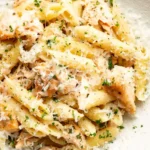
Quick Garlic Butter Salmon Pasta
- Total Time: 20 minutes
- Yield: 2 servings 1x
- Diet: General
Description
This 20-minute garlic butter salmon pasta recipe is super easy to make and uses only a handful of ingredients. It’s perfect for dinner on a busy weeknight!
Ingredients
- 4 ounces uncooked pasta
- 1/2 pound fresh salmon
- Salt & pepper to taste
- Flour for dredging
- 1 tablespoon olive oil
- 2 tablespoons butter
- 1/2 cup chicken broth (or veg broth)
- 1 tablespoon lemon juice
- 3–4 cloves garlic (minced)
- fresh parsley (optional garnish)
- red pepper flakes (optional garnish)
- parmesan cheese (optional garnish)
Instructions
- Step 1: Boil a salted pot of water for your pasta. Cook it al dente according to package directions. I suggest starting the sauce once the water’s boiling.
- Step 2: Sprinkle the salmon with salt & pepper and coat it in the flour.
- Step 3: Add the oil and butter to a skillet over medium-high heat. Once the pan is hot, add the salmon and cook it for 2 minutes/side, then take the fish out of the pan and set it aside (if you bought salmon with skin and don’t want to eat it, you can easily peel the skin off at this point if you wish).
- Step 4: Add the chicken broth, garlic, and lemon juice to the pan. Reduce the heat to medium and let it simmer for about a minute.
- Step 5: Add the salmon back into the pan and break it up with your spoon into bite-size pieces. Cook it for a few more minutes until it’s cooked through and the sauce has reduced a fair bit.
- Step 6: Drain the pasta and add it to the skillet (you can add a little pasta water if you wish). Toss it & serve immediately with parsley, red pepper flakes, and parmesan cheese if desired.
Notes
Salmon skin is fine to eat, but can be peeled off easily after searing. If using leftover cooked salmon, simply add it to the pan at the end to warm through.
- Prep Time: 5 minutes
- Cook Time: 15 minutes
- Category: Main Course
- Method: Pan-searing
- Cuisine: American
Nutrition
- Serving Size: 1 serving
- Calories: 559 kcal
- Sugar: 2 g
- Sodium: 369 mg
- Fat: 27 g
- Saturated Fat: 9 g
- Unsaturated Fat: 18 g
- Trans Fat: 0 g
- Carbohydrates: 47 g
- Fiber: 2 g
- Protein: 31 g
- Cholesterol: 92 mg
Keywords: garlic butter salmon pasta, quick dinner, easy seafood pasta, 20-minute meal