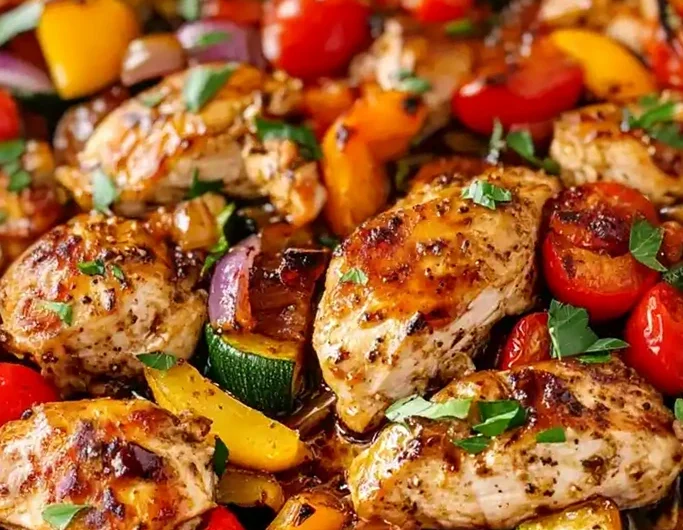
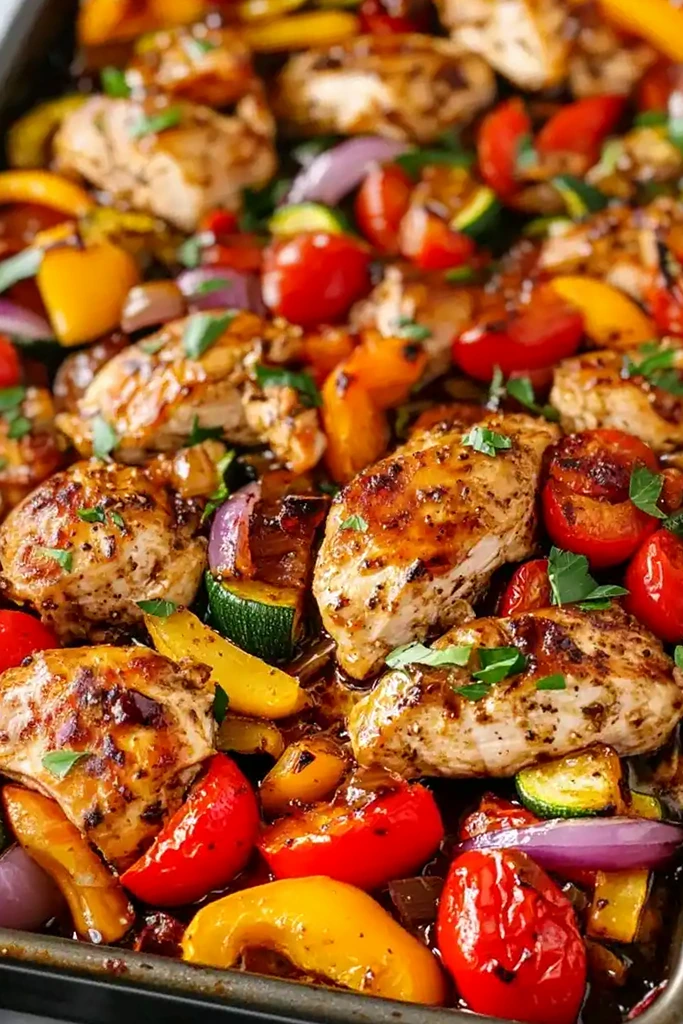
This one-pan meal combines tender chicken and roasted vegetables with a tangy balsamic glaze. It is a fast, nutritious dinner option that minimizes cleanup and preparation time.
List of ingredients
- 2 boneless skinless chicken breasts or thighs – use thighs for extra juiciness.
- 2 cups assorted vegetables (bell peppers, zucchini, cherry tomatoes, red onion) – chop into uniform sizes.
- 1 tablespoon olive oil – ensures even roasting and prevents sticking.
- ½ teaspoon salt – enhances all natural flavors.
- ½ teaspoon black pepper – adds a subtle spicy kick.
- ½ teaspoon garlic powder – provides a base layer of savory taste.
- ¼ cup balsamic vinegar – creates the tangy base for the glaze.
- 1 tablespoon honey or maple syrup – adds sweetness and helps caramelization.
- 1 teaspoon Dijon mustard – emulsifies the glaze and adds tang.
- 2 cloves garlic, minced – adds aromatic punch to the sauce.
- ½ teaspoon Italian seasoning – brings classic herb flavors to the dish.
step-by-step instructions
- Preheat and Prepare: Heat the oven to 400°F (200°C). Line your baking sheet with foil or parchment paper to make cleanup easier.
- Create the Glaze: In a small mixing bowl, whisk together the balsamic vinegar, honey, Dijon mustard, garlic, and Italian seasoning until smooth.
- Season the Ingredients: Place chicken on one side of the pan and surround it with vegetables. Drizzle with olive oil, then sprinkle with salt, pepper, and garlic powder, tossing the vegetables to coat.
- Apply Initial Glaze: Brush half of the prepared balsamic mixture over the chicken and drizzle the rest over the vegetables. Save the remaining half for the final step.
- Roast in Oven: Bake for 20 to 25 minutes. Ensure the chicken reaches an internal temperature of 165°F (75°C) and vegetables are tender.
- Caramelize with Broiler: Brush the remaining glaze over the chicken. Switch the oven to broil and cook for 2 to 3 minutes until the glaze is bubbly and brown.
- Rest and Serve: Let the chicken rest for a few minutes before slicing. Garnish with fresh parsley or basil before serving warm.
Professional Roasting Tips
Cut Vegetables to Uniform Sizes
Consistency in the size of your vegetable pieces ensures that everything cooks at the same rate. If carrots are too thick and zucchini is too thin, the zucchini will turn mushy before the carrots are tender. Aim for bite-sized chunks of roughly equal dimensions.
Avoid Overcrowding the Pan
Leave enough space between the chicken and vegetables so that air can circulate freely. If the pan is too crowded, the ingredients will steam instead of roast, preventing that desired caramelization. Use two pans if necessary to keep items separated.
Use a Meat Thermometer
The only way to ensure chicken is safe and juicy is by checking the internal temperature. Remove the meat from the oven as soon as it reaches 165°F (75°C). Overcooking by even a few degrees can lead to dry breast meat.
Select High-Quality Balsamic Vinegar
A high-quality, aged balsamic vinegar provides a thicker consistency and a deeper, sweeter flavor. This reduces the need for extra sweeteners and improves the overall richness of the glaze. Look for vinegar with a rich, dark color.
Ingredient Substitutions
Replacing Honey for Different Sweeteners
If you do not have honey, maple syrup is an excellent alternative that adds a woody sweetness. Brown sugar can also be used for a more molasses-like flavor profile. Agave nectar is a good option for those seeking a liquid alternative.
Alternative Vegetable Combinations
While the original mix is great, you can use broccoli, cauliflower, or Brussels sprouts for more earthy flavors. Carrots and parsnips also roast beautifully but may require a few extra minutes in the oven. Always adjust the cook time based on the density of the vegetables.
Using Chicken Thighs Instead of Breasts
Boneless, skinless chicken thighs are more forgiving than breasts and stay juicy even if slightly overcooked. They have a higher fat content, which pairs well with the acidic balsamic glaze. Just ensure they are trimmed of excess fat.
Swapping Dijon Mustard
Whole grain mustard provides a similar tang but adds a nice textural element to the glaze. Yellow mustard is a simpler alternative, though it is slightly less complex in flavor. Honey mustard can work if you reduce the amount of honey in the recipe.
Flavor Variations
Adding a Spicy Twist
To introduce heat, stir a pinch of crushed red pepper flakes into the glaze. A small amount of Sriracha or chipotle powder also adds a smoky depth to the dish. Balance the heat by adding an extra teaspoon of honey.
Incorporating Fresh Herbs
Fresh rosemary or thyme can be added to the vegetables before roasting for a more aromatic profile. Sliced basil or parsley added at the end provides a fresh, bright contrast to the rich glaze. Avoid adding delicate herbs too early as they may burn.
Adding Citrus Notes
A squeeze of fresh lemon juice or a teaspoon of lemon zest added to the glaze brightens the flavor. For a sweeter, fruitier version, replace a portion of the vinegar with orange juice. This works particularly well with chicken thighs.
Creating a Creamier Finish
For a richer experience, serve the roasted chicken and veggies with a dollop of Greek yogurt or sour cream. The coolness of the dairy balances the acidity of the balsamic vinegar. Drizzle the remaining pan juices over the cream for extra flavor.
Best Ways to Serve
Pairing with Whole Grains
Serving this dish over quinoa or brown rice adds fiber and makes the meal more filling. The grains soak up the extra balsamic glaze, preventing waste. Cook the grains separately and scoop the chicken and veggies on top.
Serving with Starchy Sides
Creamy mashed potatoes or roasted gold potatoes are excellent companions for this recipe. The starch helps balance the tanginess of the balsamic reduction. Consider roasting baby potatoes on the same sheet pan if you start them 10 minutes earlier.
Low-Carb Serving Options
For those avoiding carbs, replace grains with cauliflower rice or a bed of sautéed spinach. Increasing the portion of zucchini and bell peppers also keeps the meal satisfying. This ensures the dish remains healthy and light.
Complementary Side Salads
A fresh arugula salad with a simple lemon and olive oil dressing pairs perfectly with these flavors. The peppery notes of the arugula contrast the sweetness of the glaze. Add some shaved parmesan for extra depth.
Storage and Preservation
Refrigeration Guidelines
Store any leftover chicken and vegetables in an airtight glass container in the refrigerator. The meal will stay fresh and flavorful for up to four days. Ensure the food has cooled slightly before sealing the lid.
Freezing the Roasted Chicken
You can freeze the cooked chicken, though the vegetables may lose their texture upon thawing. Store the meat in a freezer-safe bag for up to three months. Thaw overnight in the fridge before reheating.
Proper Container Choice
Use glass containers when storing foods with balsamic vinegar to avoid staining. Acidic sauces can sometimes react with certain plastics or leave a permanent smell. Glass also helps maintain the freshness of the glaze.
Reheating Methods
Using an Oven for Best Texture
Reheat leftovers at 350°F (175°C) in a covered dish to keep the moisture in. This method preserves the roasted texture better than a microwave. Heat until the center is warmed through.
Quick Microwave Reheating
Place leftovers in a microwave-safe dish and cover with a damp paper towel. Heat in 30-second intervals, stirring gently in between. This prevents the chicken from becoming rubbery.
Stovetop Sautéing
Heat a skillet over medium heat with a teaspoon of olive oil or a splash of vegetable broth. Add the chicken and vegetables, tossing them until heated through. This allows you to refresh the glaze by adding a tiny bit of extra balsamic vinegar.
Meal Prep Strategy
Pre-cutting Vegetables
Chop your bell peppers, zucchini, and onions a day in advance and store them in a sealed bag. This reduces the active prep time to just a few minutes on the night of cooking. Keep the tomatoes separate to prevent them from getting too soft.
Marinating Chicken Overnight
Place the chicken in a bag with half of the glaze and refrigerate for up to 24 hours. This allows the balsamic vinegar to tenderize the meat and deepen the flavor. Simply remove the chicken and place it on the pan when ready to bake.
Preparing Glaze in Batches
Make a double or triple batch of the balsamic glaze and store it in a jar. Use the extra glaze as a marinade for steak, tofu, or roasted salmon. It keeps well in the fridge for about two weeks.
Troubleshooting Common Issues
Fixing a Glaze That is Too Sour
If the balsamic vinegar is too sharp, whisk in an extra teaspoon of honey or maple syrup. A pinch of salt can also help balance the acidity. Taste the sauce before brushing it on the chicken.
Preventing Burnt Vegetables
If your vegetables are browning too quickly, move the baking sheet to a lower rack in the oven. You can also cover the pan loosely with foil for the first 10 minutes. Check the pan every few minutes during the broiling phase.
Dealing with Dry Chicken
To prevent dryness, avoid overcooking the breasts and always let the meat rest before slicing. Using a meat thermometer is the most reliable way to stop cooking at the perfect moment. Using thighs instead of breasts is a great safety net.
Frequently Asked Questions
Which vegetables work best for this dish?
Bell peppers, zucchini, cherry tomatoes, and red onions are ideal because they roast quickly. You can also use carrots, broccoli, or Brussels sprouts, but cut them smaller to ensure they cook through. Root vegetables may need a head start in the oven.
Can I make this recipe ahead of time?
Yes, you can prep all the ingredients and marinate the chicken in the glaze for up to 24 hours. This actually improves the flavor profile of the meat. Just keep everything refrigerated until you are ready to roast.
How do I make this dish low-carb?
Replace the honey or maple syrup with a sugar-free syrup or a small amount of stevia. Focus on non-starchy vegetables like zucchini, bell peppers, and asparagus. This keeps the calorie count low and the nutrients high.
Can I use a different oil?
Avocado oil is a great alternative to olive oil because it has a higher smoke point. Coconut oil can be used for a slight sweetness, though it changes the flavor profile. Grapeseed oil is another neutral option that works well.
Print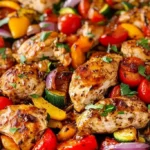
Easy Sheet Pan Balsamic Chicken and Vegetables
- Total Time: 35 minutes
- Yield: 4 servings 1x
- Diet: Gluten-free, Dairy-free
Description
This Sheet Pan Balsamic Glazed Chicken and Veggies is a quick and flavorful meal that’s perfect for busy weeknights. Juicy chicken is roasted alongside tender vegetables, all coated in a tangy-sweet balsamic glaze. With minimal prep and only one pan, cleanup is a breeze. Serve this healthy Mediterranean-inspired dish as is or pair it with quinoa or rice for a more filling meal.
Ingredients
- 2 boneless skinless chicken breasts (or thighs)
- 2 cups assorted vegetables (bell peppers, zucchini, cherry tomatoes, red onion)
- 1 tablespoon olive oil
- ½ teaspoon salt
- ½ teaspoon black pepper
- ½ teaspoon garlic powder
- ¼ cup balsamic vinegar
- 1 tablespoon honey or maple syrup
- 1 teaspoon Dijon mustard
- 2 cloves garlic (minced)
- ½ teaspoon Italian seasoning
Instructions
- Preheat & Prep: Preheat your oven to 400°F (200°C). Line a large baking sheet with parchment paper or foil for easy cleanup.
- Prepare the Glaze: In a small bowl, whisk together balsamic vinegar, honey, Dijon mustard, garlic, and Italian seasoning. Set aside.
- Season the Chicken & Veggies: Place the chicken breasts on one side of the baking sheet. Arrange the chopped vegetables around the chicken. Drizzle olive oil over everything and season with salt, pepper, and garlic powder. Toss the veggies to coat them evenly.
- Add the Balsamic Glaze: Brush half of the balsamic glaze over the chicken and drizzle a little over the vegetables. Reserve the remaining glaze for later.
- Roast the Chicken & Veggies: Bake in the preheated oven for 20-25 minutes, or until the chicken reaches an internal temperature of 165°F (75°C) and the vegetables are tender.
- Broil for a Finishing Touch: Remove the sheet pan from the oven and brush the remaining balsamic glaze over the chicken. Switch the oven to broil and cook for 2-3 more minutes to caramelize the glaze.
- Serve & Enjoy: Remove from the oven and let the chicken rest for a few minutes before slicing. Garnish with fresh parsley or basil and serve warm.
Notes
Cut vegetables evenly so they cook at the same rate. Use chicken thighs for juicier meat. For extra crispiness, broil the veggies for the last 2-3 minutes.
- Prep Time: 10 minutes
- Cook Time: 25 minutes
- Category: Main Course
- Method: Roasting
- Cuisine: Mediterranean
Nutrition
- Serving Size: 1 serving
- Calories: 320 kcal
- Sugar: 10 g
- Sodium: 720 mg
- Fat: 12 g
- Saturated Fat: 3 g
- Unsaturated Fat: 9 g
- Trans Fat: 0 g
- Carbohydrates: 18 g
- Fiber: 4 g
- Protein: 34 g
- Cholesterol: 95 mg
Keywords: Sheet Pan, Balsamic Glazed Chicken, Mediterranean, Healthy Dinner, One Pan Meal