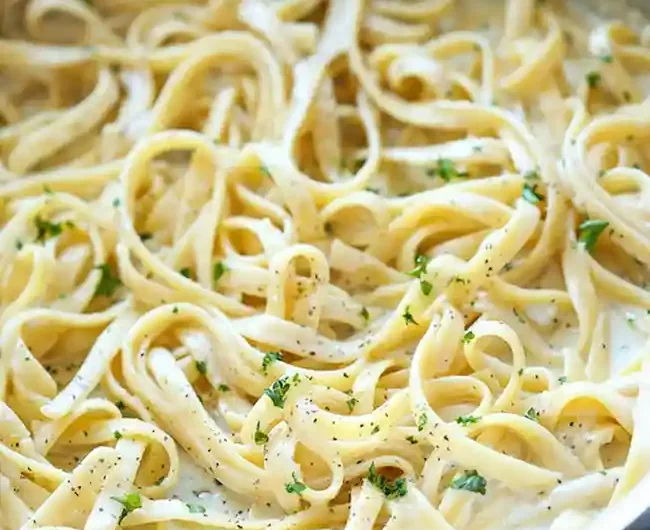
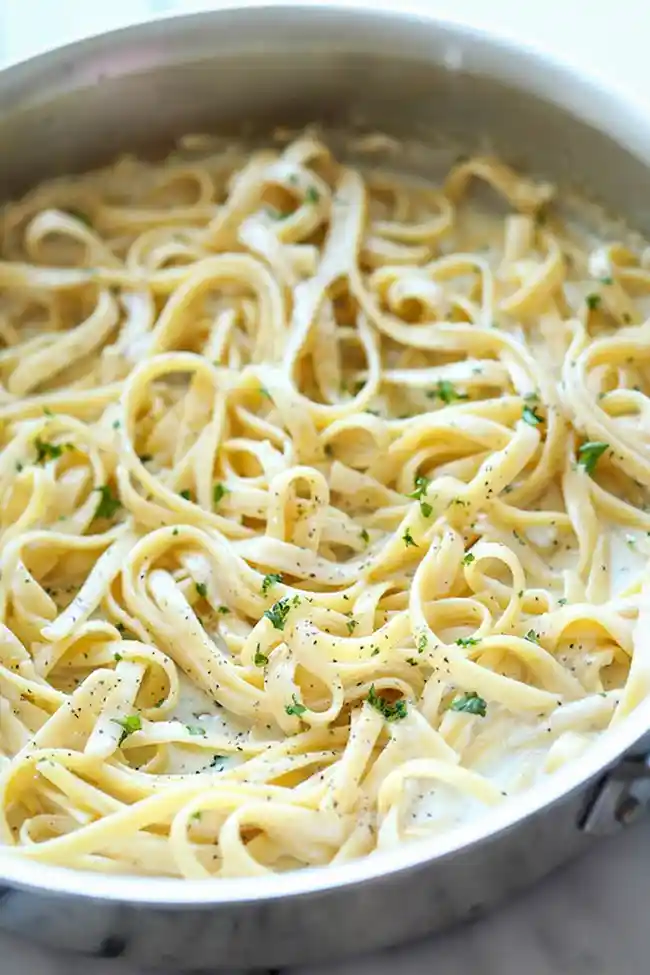
This creamy pasta is prepared entirely in one pan, allowing the noodles to cook directly in the sauce for maximum flavor. It is a fast, efficient meal that minimizes cleanup without sacrificing taste.
List of ingredients
- 2 tablespoons unsalted butter – used for sautéing garlic.
- 4 cloves garlic, minced – provides the primary aromatic base.
- 2 cups chicken broth – the main cooking liquid for the pasta.
- 1 cup milk, or more as needed – creates the creamy consistency.
- 8 ounces uncooked fettuccine – the primary starch.
- Kosher salt and freshly ground black pepper, to taste – for seasoning.
- 1/4 cup freshly grated Parmesan – adds saltiness and thickness.
- 2 tablespoons chopped fresh parsley leaves – for a fresh finish.
step-by-step instructions
- Sauté Garlic: Melt butter in a large skillet over medium high heat. Add garlic and cook, stirring frequently, until fragrant, about 1-2 minutes.
- Combine Liquids and Pasta: Stir in chicken broth, milk, and fettuccine. Season the mixture with salt and pepper to taste.
- Simmer and Cook: Bring the liquid to a boil, then reduce the heat to a simmer. Stir occasionally until the pasta is cooked through, approximately 18-20 minutes.
- Finish the Sauce: Stir in the grated Parmesan cheese. If the sauce is too thick, stir in additional milk until the desired consistency is reached.
- Garnish and Serve: Serve the pasta immediately, garnished with chopped fresh parsley if desired.
Practical Cooking Tips
Use a Wide-Bottomed Skillet
A large, wide skillet ensures that the fettuccine noodles have enough room to lay flat. This prevents the pasta from clumping together in the center of the pan. It also allows for more even evaporation of the liquid.
Control the Simmer Temperature
Once the liquid reaches a boil, immediately lower the heat to a steady simmer. Boiling too vigorously can cause the milk to separate or the bottom of the pan to scorch. A gentle bubble ensures the pasta cooks evenly.
Stir Regularly to Prevent Sticking
Pasta releases starch as it cooks, which can cause noodles to stick to the bottom of the pan. Stirring every few minutes distributes the starch and ensures the sauce remains smooth. This also helps the noodles cook uniformly.
Measure Liquids Accurately
The ratio of broth to milk is critical for the final thickness of the sauce. Use standard measuring cups to ensure the pasta has enough liquid to hydrate. If the liquid evaporates too quickly, the pasta will remain hard.
Ingredient Substitutions
Swap Chicken Broth for Vegetable Broth
Vegetable broth is an excellent alternative for those avoiding meat-based stocks. It provides a similar savory depth and salt content. Ensure the vegetable broth is low-sodium to control the overall saltiness of the dish.
Use Whole Milk for Extra Creaminess
While any milk works, whole milk provides a richer mouthfeel and a creamier sauce. The higher fat content prevents the sauce from breaking during the simmering process. This results in a more velvety coating on the noodles.
Substitute Fettuccine with Linguine
Linguine is a suitable replacement if fettuccine is unavailable. Because linguine is slightly thinner, you may need to reduce the simmering time by one or two minutes. Always test the pasta for doneness before adding the cheese.
Try Pecorino Romano Instead of Parmesan
Pecorino Romano offers a sharper, saltier flavor profile than Parmesan. If using this cheese, reduce the amount of added kosher salt to avoid over-seasoning. It melts well and provides a bold taste.
Use Garlic Powder if Fresh Garlic is Unavailable
In a pinch, you can use 1 teaspoon of garlic powder instead of four fresh cloves. Stir the powder into the melted butter for a few seconds before adding the liquids. Note that the flavor will be less pungent than fresh garlic.
Flavor and Texture Variations
Incorporate Sautéed Mushrooms
Sauté sliced mushrooms in the butter before adding the garlic for an earthy flavor. Mushrooms add a meaty texture that complements the parmesan sauce. Cook them until browned to maximize their flavor.
Add Fresh Baby Spinach
Stir in two cups of fresh baby spinach during the last minute of cooking. The residual heat will wilt the leaves quickly without overcooking them. This adds color and a mild vegetable taste to the meal.
Mix in Frozen Peas
Add half a cup of frozen peas during the final two minutes of simmering. The peas provide a pop of sweetness and bright green color. There is no need to thaw them before adding them to the pot.
Add Red Pepper Flakes for Heat
Stir in a pinch of red pepper flakes along with the minced garlic. This adds a subtle spicy kick that cuts through the richness of the dairy. Adjust the amount based on your heat preference.
Stir in a Pinch of Nutmeg
A tiny pinch of ground nutmeg enhances the creaminess of the milk and cheese. This is a classic addition to white sauces that adds a professional depth of flavor. Use it sparingly so it does not overpower the garlic.
Add Grilled Chicken Breast
Top the finished pasta with sliced grilled chicken breast for a full meal. You can cook the chicken in the same skillet before starting the pasta process. Simply remove the chicken and set it aside until the end.
Mix in Sautéed Shrimp
Shrimp pair exceptionally well with garlic and parmesan. Sauté the shrimp separately and fold them into the pasta just before serving. This prevents the shrimp from becoming rubbery due to overcooking.
Serving and Presentation Ideas
Pair with Garlic Bread
Warm, toasted garlic bread is the perfect accompaniment to this creamy dish. It provides a crunchy contrast to the soft texture of the fettuccine. Serve the bread on the side for dipping into the excess sauce.
Serve with a Crisp Green Salad
A salad with a lemon-based vinaigrette helps balance the richness of the parmesan sauce. The acidity of the dressing cleanses the palate between bites. Use mixed greens, cucumbers, and cherry tomatoes for freshness.
Garnish with Extra Parmesan
Adding a final sprinkle of freshly grated Parmesan on top enhances the visual appeal. It also provides a concentrated burst of salty flavor in every bite. Use a fine grater for a snow-like effect.
Use Freshly Cracked Black Pepper
Finishing the dish with freshly cracked black pepper adds aromatic heat. The coarse texture of fresh pepper is more impactful than pre-ground versions. It highlights the savory notes of the garlic.
Storage and Reheating Guide
Store in Airtight Containers
Place leftover pasta in a sealed airtight container to prevent the noodles from drying out. The sauce will naturally thicken as it cools in the refrigerator. Ensure the container is fully sealed to keep out odors.
Refrigerate Within Two Hours
To maintain food safety, move the pasta to the refrigerator within two hours of cooking. The dairy components can spoil if left at room temperature for too long. Leftovers are typically safe for 3 to 4 days.
Reheat with a Splash of Milk
When reheating, add one to two tablespoons of milk to the pasta. This helps loosen the thickened sauce and restores the original creamy consistency. Without extra liquid, the pasta may become gummy.
Use Low Heat for Reheating
Reheat the pasta on the stovetop over low to medium-low heat. Stir constantly to avoid scorching the bottom of the pan. High heat can cause the cheese to separate from the sauce.
Make-Ahead Preparation
Mince Garlic in Advance
Prepare your minced garlic a few hours before you plan to cook. Store it in a small container with a drizzle of olive oil to keep it fresh. This reduces the active prep time during the cooking process.
Pre-measure Liquid Ingredients
Measure your chicken broth and milk into a single pitcher or bowl before starting. Having the liquids ready allows you to add them quickly once the garlic is fragrant. This prevents the garlic from overcooking while you measure.
Grate Cheese Freshly
Grate your Parmesan cheese immediately before it is needed in the recipe. Pre-shredded cheeses often contain anti-clumping agents that hinder smooth melting. Freshly grated cheese integrates seamlessly into the sauce.
Troubleshooting Common Issues
Fix Sauce That Is Too Thick
If the sauce is too thick after adding the cheese, stir in milk one tablespoon at a time. Continue adding milk until the sauce coats the noodles smoothly. Be careful not to add too much, or the sauce will become watery.
Resolve Sauce That Is Too Thin
If the sauce is too liquidy, simmer the pasta for another two to three minutes. This allows more moisture to evaporate and the starch to thicken the base. Stir frequently to ensure the pasta does not overcook.
Prevent Garlic from Burning
If the garlic begins to brown too quickly, immediately add the broth and milk. Burnt garlic tastes bitter and can ruin the entire dish. Keep the heat at medium-high but stir the garlic constantly.
Avoid Overcooking the Pasta
Start tasting the fettuccine two minutes before the suggested cook time ends. The pasta should be al dente, meaning it has a slight firmness in the center. Overcooked pasta will lose its structure and become mushy.
Frequently Asked Questions
Can I use heavy cream instead of milk?
Yes, you can use heavy cream for a denser and richer sauce. If using cream, you may need to add a splash of broth or water to prevent the sauce from becoming too thick. Reduce the amount of butter if you prefer a less heavy dish.
Do I need to salt the water separately?
No, because the chicken broth and Parmesan cheese already contain a significant amount of salt. Taste the pasta during the simmering process and add kosher salt only if necessary. Over-salting is common in one-pot pasta recipes.
Can I use a different type of pot?
A deep pot or a Dutch oven can be used if you do not have a large skillet. However, you will need to stir more frequently to ensure the noodles do not clump at the bottom. The wider the surface area, the better the evaporation.
Why is the sauce clumping?
Clumping usually happens if the heat is too high when adding the cheese or if the cheese was not finely grated. To fix this, lower the heat and whisk the sauce vigorously. Adding a small amount of warm milk can also help smooth out the texture.
Print
One Pot Garlic Parmesan Pasta
- Total Time: 30 minutes
- Yield: 4 servings 1x
- Diet: General
Description
The easiest and creamiest pasta made in a single pot – even the pasta gets cooked right in the pan!
Ingredients
- 2 tablespoons unsalted butter
- 4 cloves garlic, minced
- 2 cups chicken broth
- 1 cup milk, or more, as needed
- 8 ounces uncooked fettuccine
- Kosher salt and freshly ground black pepper, to taste
- 1/4 cup freshly grated Parmesan
- 2 tablespoons chopped fresh parsley leaves
Instructions
- Sauté: Melt butter in a large skillet over medium high heat. Add garlic and cook, stirring frequently, until fragrant, about 1-2 minutes.
- Combine: Stir in chicken broth, milk and fettuccine; season with salt and pepper, to taste.
- Simmer: Bring to a boil; reduce heat and simmer, stirring occasionally, until pasta is cooked through, about 18-20 minutes. Stir in Parmesan. If the mixture is too thick, add more milk as needed until desired consistency is reached.
- Serve: Serve immediately, garnished with parsley, if desired.
Notes
Cooking the pasta directly in the pan allows the noodles to soak up the sauce flavor, creating a creamier consistency without needing heavy cream.
- Prep Time: 10 minutes
- Cook Time: 20 minutes
- Category: Main Course
- Method: Stovetop
- Cuisine: Italian-American
Nutrition
- Serving Size: 1 serving
- Calories: 450 kcal
- Sugar: 6 g
- Sodium: 820 mg
- Fat: 18 g
- Saturated Fat: 11 g
- Unsaturated Fat: 7 g
- Trans Fat: 0 g
- Carbohydrates: 46 g
- Fiber: 3 g
- Protein: 16 g
- Cholesterol: 65 mg
Keywords: one pot pasta, garlic parmesan pasta, creamy pasta, easy dinner