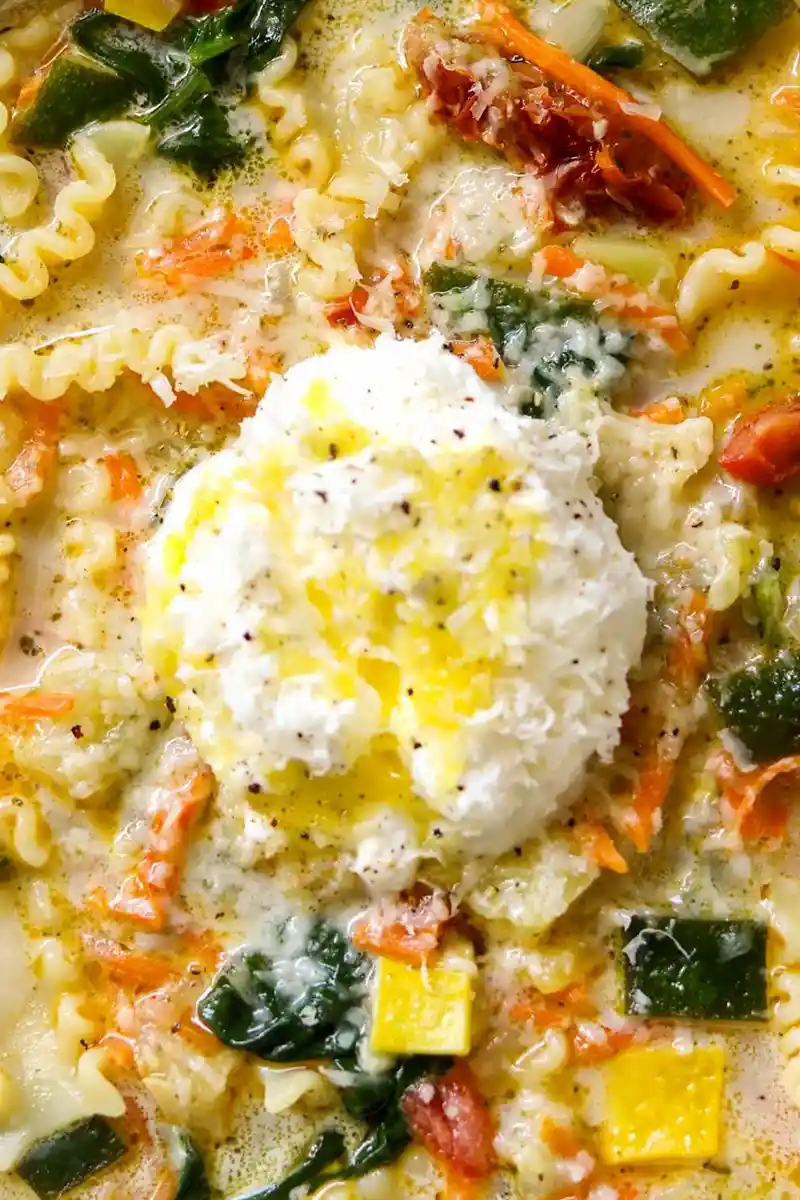
This creamy white lasagna soup is a nutrient-dense meal that blends a rich pesto base with a colorful variety of seasonal vegetables. It provides the comfort of a baked lasagna in a convenient, one-pot soup format.
List of ingredients
- 2 tbsp Olive Oil – used for sautéing the aromatic base.
- 1 Sweet Onion – finely diced for a mild flavor.
- 1/4 tsp Red Pepper Flakes – adds a subtle heat.
- 5 cloves Garlic – roughly chopped for aromatic depth.
- 3 cups Yellow Squash – chopped in 1/4 inch cubes (about 2 squash).
- 2 cups Zucchini – chopped in 1/4 inch cubes (1 medium zucchini).
- 2 cups Carrots – grated for texture and sweetness.
- 1/4 cup Sun Dried Tomatoes – include the oil from the jar for extra flavor.
- 1/4 tsp Italian Seasoning – a blend of classic herbs.
- 2 quarts Chicken or Vegetable Stock – the savory liquid base.
- 1 Parmesan Rind – adds a deep, salty umami flavor.
- 2 cups Mafalda Corta Pasta – or 3 sheets of lasagna noodles, broken into pieces.
- 2 cups Fresh Spinach – stirred in at the end for color and nutrients.
- 1/2 cup Heavy Cream – creates the signature creamy texture.
- 2 tbsp Pesto – adds a burst of basil and garlic flavor.
- Ricotta – used as a creamy topping for serving.
- Parmesan Cheese – for grating over the finished soup.
- Finishing Olive Oil – a final drizzle for richness.
- Fresh Cracked Pepper – for a sharp, spicy finish.
- Flaky Salt – to enhance the overall seasoning.
step-by-step instructions
- Sauté Aromatics: Heat olive oil in a soup pot over medium heat. Add the diced onion, a pinch of salt, and red pepper flakes, cooking for 3 minutes.
- Cook Garlic: Stir in the chopped garlic and continue to cook for another 3 minutes until fragrant.
- Caramelize Vegetables: Add the yellow squash, zucchini, grated carrots, sun dried tomatoes, and Italian seasoning with another pinch of salt. Increase the heat and cook for 3-5 minutes until the vegetables begin to caramelize.
- Simmer Broth: Pour in the chicken or vegetable stock and add the parmesan rind. Bring the liquid back to a boil.
- Cook Pasta: Add the Mafalda Corta or broken lasagna noodles. Simmer for approximately 10 minutes or until the pasta is cooked through.
- Finish Sauce: Turn off the heat. Stir in the fresh spinach, heavy cream, and pesto. Taste the soup and season with additional salt and pepper if needed.
- Plating: Ladle the soup into bowls. Top each serving with a dollop of ricotta, a sprinkle of parmesan cheese, a drizzle of olive oil, flaky salt, and fresh cracked pepper.
Vegetable Substitutions and Additions
Using Baby Kale instead of Spinach
Baby kale is a heartier alternative to spinach that holds its structure better. Add it at the same time as the spinach, though it may require an extra minute of residual heat to soften. This adds a slightly earthier taste to the broth.
Adding Red Bell Peppers
Red bell peppers provide a sweet contrast to the savory pesto. Dice them into small pieces and add them during the caramelization step with the squash and zucchini. They add a vibrant pop of color to the soup.
Incorporating Fresh Asparagus
Asparagus can be added for a spring-inspired twist. Cut the spears into one-inch pieces and add them during the last five minutes of the pasta simmering process. This prevents them from becoming too mushy.
Substituting Parsnips for Carrots
If you prefer a more peppery, nutty flavor, try grated parsnips instead of carrots. They maintain a similar texture and provide a unique sweetness. Use the same quantity as listed for the carrots.
Using Celery for Added Depth
Adding finely diced celery to the onion sauté creates a classic mirepoix base. This adds a subtle saltiness and depth to the overall broth. Sauté the celery for about 3 minutes before adding the garlic.
Pasta Selection and Variations
Benefits of Mafalda Corta Pasta
Mafalda Corta is ideal because its ruffled edges trap the creamy sauce and pesto. This ensures that every bite of pasta is coated in flavor. It mimics the texture of traditional lasagna sheets while being easier to eat with a spoon.
Using Broken Lasagna Sheets
If you cannot find Mafalda Corta, simply break standard lasagna noodles into small, irregular pieces. This creates a rustic feel and provides a variety of textures. Ensure the pieces are small enough to fit comfortably in a soup bowl.
Switching to Rotini or Fusilli
Spiral pastas like rotini or fusilli are excellent alternatives for capturing the thick broth. They are widely available and provide a satisfying chew. Cook them according to the recipe’s timing for best results.
Selecting Gluten-Free Pasta Options
Brown rice or chickpea pasta can be used for a gluten-free version. Be mindful that these pastas often release more starch, which may thicken the soup more than wheat pasta. You may need to add a splash of extra stock to maintain the consistency.
Using Whole Wheat Noodles
Whole wheat pasta adds a nuttier flavor and more fiber to the dish. These noodles often require a slightly longer simmering time than white pasta. Check for doneness a few minutes before the timer goes off.
Modifying the Creamy Base
Using Whole Milk for a Lighter Texture
Whole milk can replace heavy cream if you prefer a less rich consistency. While the soup will be thinner, it will still maintain a creamy appearance. Be careful not to boil the soup once the milk is added to prevent curdling.
Substituting Heavy Cream with Half-and-Half
Half-and-half offers a middle ground between whole milk and heavy cream. It provides a smooth mouthfeel without being overly heavy. Use the same 1/2 cup measurement as the heavy cream.
Cashew Cream for Dairy-Free Needs
To make the soup dairy-free, soak raw cashews in water, then blend them with a bit of fresh water until smooth. Use this cream in place of the heavy cream. Ensure you also use a vegan pesto and vegetable stock.
Coconut Milk for a Tropical Twist
Full-fat coconut milk can be used for a creamy, dairy-free alternative. Note that this will introduce a subtle coconut flavor to the soup. It works surprisingly well with the spinach and sun-dried tomatoes.
Evaporated Milk for Stability
Evaporated milk is a great substitute that is more stable under heat than fresh milk. It provides a concentrated creaminess that blends well with the pesto. Stir it in at the very end of the cooking process.
Enhancing the Flavor Profile
Adding Fresh Basil Leaves
While the pesto contains basil, adding fresh, torn leaves at the end enhances the aroma. This provides a bright, herbal note that cuts through the richness of the cream. Stir them in along with the spinach.
Incorporating Fresh Parsley
Finely chopped parsley adds a clean, peppery finish to the soup. It helps balance the saltiness of the parmesan rind. Sprinkle it over the top of each bowl before serving.
Using Lemon Zest for Brightness
A pinch of fresh lemon zest stirred in at the end adds a citrusy lift. This brightness highlights the flavors of the zucchini and squash. It prevents the cream and cheese from feeling too heavy.
Adding Nutritional Yeast
For an extra boost of savory, cheesy flavor, stir in a tablespoon of nutritional yeast. This is especially useful if you are using a dairy-free cream substitute. It adds a deep, golden hue to the broth.
Using Smoked Paprika for Depth
A small pinch of smoked paprika added during the vegetable sauté provides a subtle smokiness. This complements the caramelized vegetables and sun-dried tomatoes. Use it sparingly to avoid overpowering the pesto.
Understanding the Role of the Parmesan Rind
Extracting Maximum Umami
The parmesan rind is a powerhouse of flavor that releases savory notes as it simmers. It adds a complex saltiness that cannot be achieved with salt alone. This is a traditional Italian technique for enriching broths.
Managing Salt Levels
Because the parmesan rind is naturally salty, be cautious when adding extra salt to the pot. Taste the broth after the rind has simmered for a few minutes before seasoning further. This prevents the soup from becoming over-salted.
Properly Removing the Rind
The rind is meant for flavoring and is generally not eaten. Use a slotted spoon to remove the rind from the pot before serving the soup. This ensures a smooth eating experience for your guests.
Storage and Preservation
Proper Refrigeration Containers
Store the leftover soup in airtight glass or BPA-free plastic containers. Glass is preferred as it does not absorb odors from the garlic and pesto. Leave a small amount of space at the top to allow for expansion.
Cooling the Soup Quickly
Do not place a boiling hot pot directly into the refrigerator. Transfer the soup to shallow containers to help it cool down faster. This prevents the soup from spending too much time in the danger zone for bacteria.
Shelf Life in the Fridge
This soup will stay fresh in the refrigerator for 3 to 4 days. The flavors often meld together and improve by the second day. Keep the container tightly sealed to maintain freshness.
Avoiding Freezing Pasta
It is generally not recommended to freeze this soup with the pasta inside. The noodles will absorb the liquid and become mushy upon thawing. For the best quality, freeze the broth and vegetables separately from the pasta.
Freezing the Base Only
If you wish to freeze the soup, cook it without the pasta and cream. Freeze the vegetable and stock base, then add fresh pasta and cream when reheating. This ensures the texture remains professional and appetizing.
Reheating Techniques
Stovetop Reheating Method
The best way to reheat this soup is in a small pot over medium-low heat. Stir occasionally to ensure the cream doesn’t scorch on the bottom. Heat slowly until it reaches a gentle simmer.
Microwave Precautions
If using a microwave, heat the soup in short 1-minute bursts. Stir well between each interval to distribute the heat evenly. This prevents hot spots and keeps the cheese from separating.
Thinning the Soup with Liquid
Pasta continues to absorb liquid even after the soup has cooled. When reheating, you will likely need to add a splash of vegetable or chicken stock. This restores the original soup consistency.
Refreshing the Spinach
If the spinach has become too dark during storage, stir in a handful of fresh baby spinach during the reheating process. This restores the vibrant green color and adds a fresh texture to the meal.
Serving and Presentation
Perfecting the Ricotta Dollop
Place a generous tablespoon of ricotta right in the center of the bowl. Do not stir it in completely; let it melt slowly into the hot broth. This creates creamy pockets of cheese in every spoonful.
Drizzling Finishing Olive Oil
Use a high-quality extra virgin olive oil for the final drizzle. This adds a fruity, peppery note that complements the pesto. A small swirl on top makes the dish look restaurant-quality.
Applying Flaky Salt and Pepper
Use a pinch of flaky sea salt and freshly cracked black pepper as the final touch. These crystals provide a burst of flavor and a slight crunch. It enhances the individual flavors of the vegetables.
Pairing with Garlic Bread
Toasted garlic bread is the ideal accompaniment to this soup. The crunchiness of the bread contrasts perfectly with the creamy texture of the broth. Use a baguette with melted butter and minced garlic.
Side Salad Pairings
A light arugula salad with a lemon vinaigrette balances the richness of the cream. The bitterness of the arugula cuts through the fat of the ricotta and parmesan. This makes the meal feel complete and balanced.
Cooking Troubleshooting
Preventing Mushy Vegetables
To keep the vegetables from becoming too soft, ensure you sauté them on medium-high heat. The goal is to caramelize the edges quickly. Avoid overcooking them before adding the stock.
Fixing a Broken Sauce
If the cream separates upon reheating, whisk in a teaspoon of cornstarch mixed with water. Gently simmer the soup to emulsify the fats again. This will bring back the smooth, velvety texture.
Correcting Over-Salted Broth
If the parmesan rind made the soup too salty, add a splash of unsalted stock or water. A small squeeze of lemon juice can also help neutralize the perception of excess salt. Always taste before adding more seasoning.
Handling Pasta Absorption
If the soup becomes more like a pasta dish than a soup, it is because the noodles absorbed the liquid. Simply stir in more stock or water until the desired consistency is reached. This is common with Mafalda and lasagna noodles.
Frequently Asked Questions
Can I use frozen vegetables instead of fresh?
Yes, you can use frozen squash, carrots, and zucchini. Add them during the sauté phase and cook until the excess moisture has evaporated. Note that the texture may be slightly softer than fresh vegetables.
Is it possible to make this soup vegan?
Yes, replace the stock with vegetable stock, the cream with cashew cream, and the parmesan with nutritional yeast. Use a dairy-free pesto and omit the ricotta or use a vegan almond-based ricotta.
What is the best way to store the leftover ricotta?
Keep the ricotta in an airtight container in the coldest part of your refrigerator. Use it within 3-5 days of opening the container. Always use a clean spoon to prevent contamination.
How do I know when the pasta is perfectly cooked?
The pasta should be ‘al dente,’ meaning it has a slight bite in the center. Since it will continue to cook in the hot broth, remove it from the heat just before it reaches complete softness.
Can I add protein like chicken or shrimp?
Absolutely, grilled chicken strips or sautéed shrimp would pair well with this soup. Add cooked chicken at the end with the spinach, or sear shrimp separately and place them on top as a garnish.
Why does the soup separate when I reheat it?
Separation occurs when the cream is heated too quickly or boiled. To prevent this, reheat your soup over low heat and avoid bringing it to a rolling boil. Stirring constantly helps maintain the emulsion.
Print
Creamy White Lasagna Soup with Veggies
- Total Time: 45 minutes
- Yield: 4 servings 1x
- Diet: Vegetarian
Description
This creamy white lasagna soup is the perfect veggie-forward soup recipe! It’s loaded with fresh veggies, curly pasta, and a creamy cheesy pesto broth that’s out of this world. It’s perfect for summer and winter – regardless of the season!
Ingredients
- 2 tbsp Olive Oil
- 1 Sweet Onion (finely diced)
- 1/4 tsp Red Pepper Flakes
- 5 cloves Garlic (roughly chopped)
- 3 cups Yellow Squash (chopped in 1/4 inch cubes)
- 2 cups Zucchini (chopped in 1/4 inch cubes)
- 2 cups Carrots (grated)
- 1/4 cup Sun Dried Tomatoes (with the oil)
- 1/4 tsp Italian Seasoning
- 2 quarts Vegetable Stock
- 1 Parmesan Rind (microbial-rennet)
- 2 cups Mafalda Corta Pasta (or 3 sheets lasagna noodles, broken up)
- 2 cups Fresh Spinach
- 1/2 cup Heavy Cream
- 2 tbsp Pesto
- Ricotta (for serving)
- Parmesan Cheese (microbial-rennet, for serving)
- Finishing Olive Oil
- Fresh Cracked Pepper
- Flaky Salt
Instructions
- Step: Add olive oil to a soup pot over medium heat. Add onion, a pinch of salt and red pepper flakes. Cook down for 3 minutes.
- Step: Add garlic and cook down for another 3 minutes.
- Step: Add squash, zucchini, carrots, sun dried tomatoes, italian seasoning and another pinch of salt. Turn the heat up and cook for 3-5 minutes or until vegetables are starting to caramelize.
- Step: Add vegetable stock and parmesan rind and bring back to a boil.
- Step: Add pasta and simmer for another 10 minutes or until cooked through.
- Step: Turn the heat off, add fresh spinach, heavy cream and pesto and stir. Taste and season with salt and pepper if needed.
- Step: Ladle soup into bowls and top with a dollop of ricotta, a sprinkle of parmesan cheese, olive oil, flaky salt and fresh cracked pepper.
Notes
You can substitute cherry tomatoes for sun dried tomatoes, or baby kale or arugula for spinach. Whole milk can be used instead of heavy cream for a lighter version.
- Prep Time: 15 minutes
- Cook Time: 30 minutes
- Category: Soup
- Method: Stovetop
- Cuisine: Italian-American
Nutrition
- Serving Size: 1 bowl
- Calories: 480 kcal
- Sugar: 11 g
- Sodium: 1150 mg
- Fat: 28 g
- Saturated Fat: 14 g
- Unsaturated Fat: 12 g
- Trans Fat: 0 g
- Carbohydrates: 38 g
- Fiber: 6 g
- Protein: 18 g
- Cholesterol: 75 mg
Keywords: creamy, lasagna, soup, vegetable, pesto