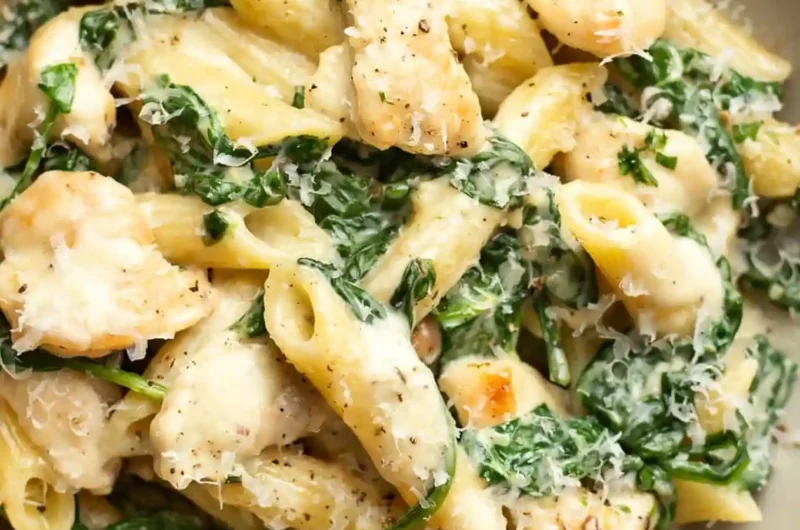
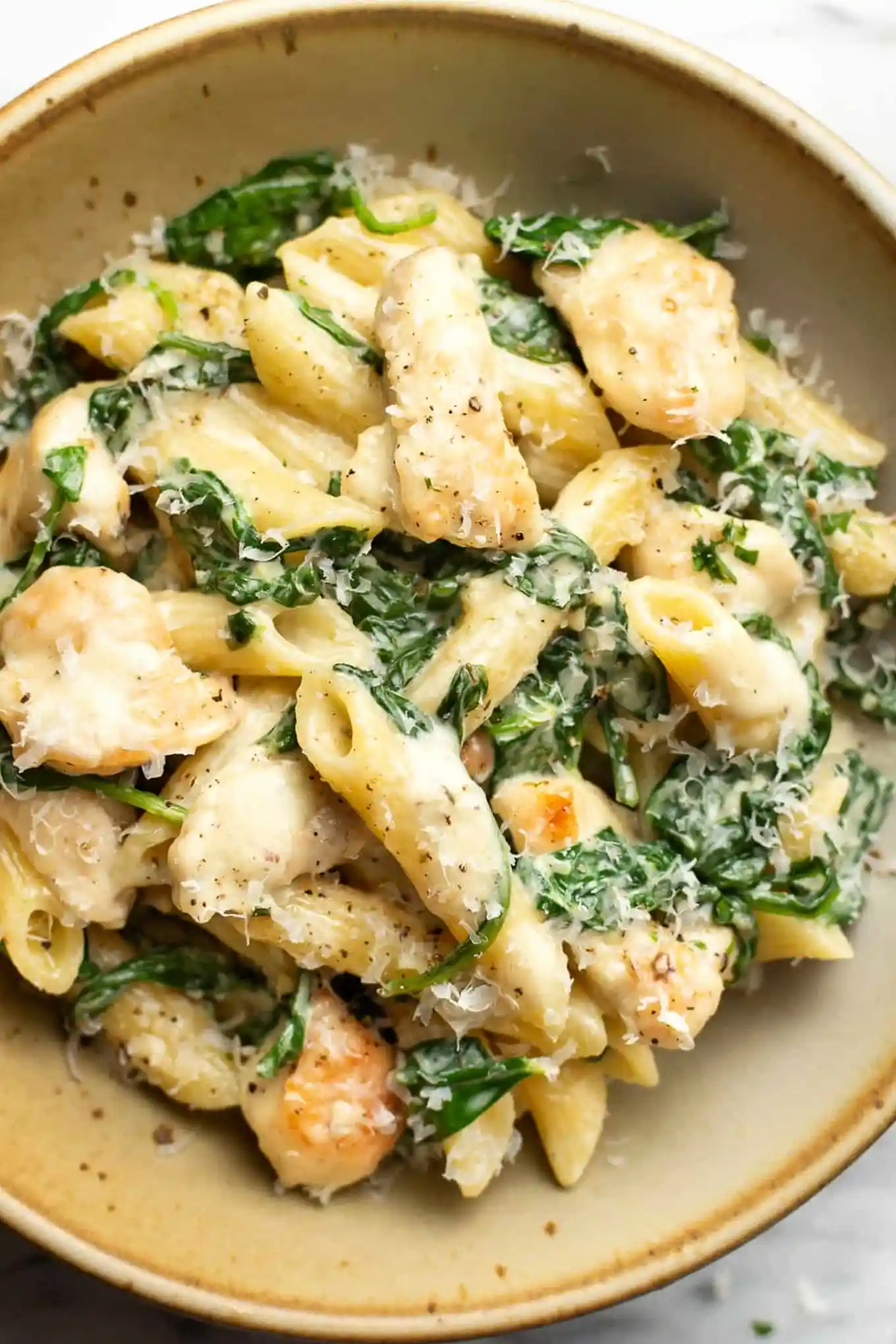
This creamy chicken pasta is a fast 30-minute meal that works well for weeknight dinners. It combines tender pan-seared chicken and fresh baby spinach in a rich garlic parmesan sauce.
List of ingredients
- 8 ounces uncooked pasta – penne or similar shaped pasta works best.
- 2 boneless skinless chicken breasts – cut into bite-size pieces.
- Salt & pepper – used to taste for seasoning.
- Flour – used for dredging the chicken pieces.
- 1 tablespoon butter – for pan frying.
- 1 tablespoon olive oil – to prevent butter from burning.
- 4 cloves garlic – minced finely.
- 1/3 cup chicken broth – used for deglazing the pan.
- 1 teaspoon lemon juice – adds a bright acidity to the sauce.
- 1/2 teaspoon Dijon mustard – enhances the depth of the cream.
- 1/4 teaspoon Italian seasoning – a blend of dried herbs.
- 1 cup heavy/whipping cream – creates a thick and luxurious sauce.
- 5 ounces fresh baby spinach – adds color and nutrients.
- 1/2 cup freshly grated parmesan cheese – for a savory finish.
step-by-step instructions
- Boil the pasta: Prepare a large pot of salted water and bring it to a boil. Cook the pasta until it reaches an al dente texture according to the package directions.
- Prepare the chicken: Cut the chicken breasts into bite-sized pieces. Season them with salt and pepper, then coat each piece thoroughly in flour.
- Sear the chicken: Melt butter and olive oil in a skillet over medium-high heat. Once the pan is hot, add the chicken and cook until the outside is no longer pink, then remove the chicken from the pan and set it aside.
- Deglaze the pan: Remove the skillet from the heat. Stir in the minced garlic, chicken broth, lemon juice, Dijon mustard, and Italian seasoning. Return the skillet to the heat, let it bubble for a minute, and scrape the browned bits from the bottom.
- Simmer the sauce: Add the seared chicken, heavy cream, and fresh spinach back into the skillet. Cook for about 5 minutes until the chicken is cooked through and the sauce thickens. Lower the heat if the sauce bubbles too vigorously.
- Combine and finish: Drain the cooked pasta and toss it directly into the sauce. Stir in the freshly grated parmesan cheese and add additional salt and pepper if needed.
Optimizing Your Pasta Selection
Choosing the Right Pasta Shape
Penne, rigatoni, or fusilli are the best choices for this recipe. These shapes have ridges or hollow centers that trap the heavy cream sauce, ensuring every bite is flavorful. Avoid thin pastas like spaghetti, as the heavy sauce may slide off the noodles.
Achieving Al Dente Texture
Cook the pasta for one to two minutes less than the package suggests for al dente. Since the pasta is tossed in a simmering sauce at the end, it will continue to cook. This prevents the noodles from becoming mushy or overcooked.
The Importance of Salting Pasta Water
Add a generous amount of salt to the boiling water before adding the pasta. This is the only opportunity to season the pasta dough itself. Properly salted water enhances the overall flavor profile of the dish and balances the richness of the cream.
Chicken Preparation Techniques
Creating Uniform Chicken Cuts
Cut the chicken breasts into consistent 1-inch cubes. Uniform pieces ensure that all the chicken cooks at the same rate. This prevents smaller pieces from overcooking and becoming dry while larger pieces remain undercooked.
The Purpose of Flour Dredging
Coating the chicken in flour before searing creates a thin crust that browns quickly. This process, known as the Maillard reaction, adds a nutty flavor to the meat. Additionally, the leftover flour in the pan helps naturally thicken the sauce later.
Verifying Internal Temperature
Use an instant-read meat thermometer to ensure the chicken reaches an internal temperature of 165°F. Overcooking chicken breasts can lead to a rubbery texture. Removing the chicken from the pan once the exterior is seared and finishing it in the sauce keeps it moist.
Developing a Deep Sauce Flavor
Utilizing the Pan Fond
The brown bits left in the pan after searing the chicken are called fond. This concentrated protein and fat provide immense flavor. Deglazing with chicken broth lifts these bits and incorporates them directly into the sauce.
Balancing Richness with Acidity
Heavy cream and parmesan can make a dish feel overly heavy. The addition of lemon juice and Dijon mustard provides a necessary acidic contrast. This brightness cuts through the fat and makes the sauce taste more complex.
Preventing Cream Separation
Avoid boiling the sauce on high heat once the cream is added. High temperatures can cause the emulsion to break, resulting in a greasy appearance. Keep the sauce at a gentle simmer to maintain a smooth and velvety consistency.
Vegetable and Cheese Customizations
Working with Frozen Spinach
If you do not have fresh baby spinach, you can use frozen spinach. Thaw the spinach completely and squeeze out as much excess water as possible using a kitchen towel. Add it to the pan at the same stage as the fresh spinach.
Incorporating Sun-Dried Tomatoes
For an extra layer of savory flavor, add chopped sun-dried tomatoes during the deglazing step. Their concentrated sweetness and tartness pair well with the parmesan and garlic. This addition adds a Mediterranean touch to the flavor profile.
The Benefit of Freshly Grated Parmesan
Always grate your parmesan cheese from a block rather than using pre-shredded options. Pre-shredded cheeses are often coated in cornstarch or cellulose to prevent clumping. Freshly grated cheese melts more smoothly into the sauce without graininess.
Serving and Pairing Advice
Choosing a Side Bread
Serve this pasta with a slice of toasted sourdough or a warm French baguette. The bread is ideal for soaking up the remaining garlic cream sauce on the plate. Garlic bread is another excellent option for those seeking a more indulgent meal.
Adding a Fresh Salad Pairing
A light side salad with a vinaigrette dressing helps balance the richness of the pasta. Use a mix of spring greens, cucumbers, and cherry tomatoes. A lemon-based dressing complements the lemon juice used in the pasta sauce.
Plating and Garnishing
Transfer the pasta to shallow bowls to keep the sauce concentrated around the noodles. Garnish with a sprinkle of fresh parsley or extra parmesan cheese. This adds a pop of color and a fresh herbal note to the presentation.
Storage and Reheating Guidelines
Refrigeration and Shelf Life
Store leftover pasta in an airtight container in the refrigerator for 3 to 4 days. Ensure the pasta is cooled slightly before sealing the container to prevent excess condensation. This helps maintain the integrity of the sauce.
Reviving the Sauce During Reheating
Cream-based sauces tend to thicken and separate when cooled. When reheating on the stove over low heat, add a splash of milk, cream, or pasta water. Stir continuously to bring the sauce back to a smooth, creamy consistency.
Why Freezing is Not Recommended
Avoid freezing this dish, as the dairy components in the sauce often break down during the freezing and thawing process. The spinach may also become overly watery. For the best quality, consume the meal within a few days of cooking.
Troubleshooting Common Issues
Fixing a Sauce That is Too Thick
If the sauce becomes too thick or sticky, stir in a tablespoon of reserved pasta water. The starch in the water helps emulsify the sauce and loosens the texture. Add the water one tablespoon at a time until the desired consistency is reached.
Correcting a Thin or Watery Sauce
If the sauce is too thin, allow it to simmer for an additional 2 to 3 minutes without a lid. This allows more moisture to evaporate and concentrates the cream. Ensure the heat is low to avoid burning the bottom of the pan.
Preventing Overcooked Spinach
Fresh baby spinach wilts very quickly when exposed to heat. Add the spinach at the very end of the simmering process. Stir it in just until it begins to collapse to keep the color vibrant and the texture pleasant.
Frequently Asked Questions
Can I use a different protein instead of chicken?
Yes, you can substitute the chicken with shrimp or sliced smoked sausage. For shrimp, sear them quickly for 2 minutes per side and add them back at the end to avoid overcooking. For sausage, brown the slices before deglazing the pan.
Is there a way to reduce the calories in this recipe?
You can replace some of the heavy cream with a mixture of chicken broth and a small amount of cornstarch slurry. Using whole grain pasta instead of white pasta will increase the fiber content and make the meal more filling.
Can this recipe be made gluten-free?
To make this gluten-free, use a gluten-free pasta alternative and replace the all-purpose flour with a gluten-free flour blend or cornstarch. The rest of the ingredients are naturally gluten-free.
How can I prevent the garlic from burning?
Add the minced garlic only after you have removed the pan from the heat or lowered the temperature significantly. Garlic burns quickly and becomes bitter. Deglazing with broth immediately after adding garlic prevents it from scorching.
What is the best way to store the pasta if I am prepping in advance?
If making this ahead of time, store the cooked pasta and the sauce in separate containers. Toss them together and reheat them just before serving. This prevents the pasta from absorbing all the sauce and becoming mushy.
Print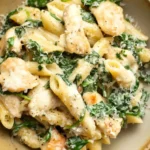
Creamy Chicken and Spinach Pasta
- Total Time: 30 minutes
- Yield: 4 servings 1x
- Diet: General
Description
This creamy chicken spinach pasta recipe is a total comfort food dinner! It comes together quickly and can be on your table in about 30 minutes but feels special.
Ingredients
- 8 ounces uncooked pasta
- 2 boneless skinless chicken breasts
- Salt & pepper (to taste)
- Flour (for dredging)
- 1 tablespoon butter
- 1 tablespoon olive oil
- 4 cloves garlic (minced)
- 1/3 cup chicken broth
- 1 teaspoon lemon juice
- 1/2 teaspoon Dijon mustard
- 1/4 teaspoon Italian seasoning
- 1 cup heavy/whipping cream
- 5 ounces fresh baby spinach
- 1/2 cup freshly grated parmesan cheese
Instructions
- Step: Boil a large, salted pot of water for the pasta. Cook it al dente according to package instructions.
- Step: Meanwhile, cut the chicken into bite-size pieces and season it with salt & pepper. Coat the pieces with flour.
- Step: Add the butter and oil to a skillet over medium-high heat. Once the pan’s hot, add the chicken and cook it until it’s no longer pink on the outside. Take the chicken out of the pan and set it aside.
- Step: Take the pan off the heat and add the garlic, chicken broth, lemon juice, Dijon mustard, and Italian seasoning. Return the pan to the heat and let it bubble for a minute or so. Scrape up any brown bits from the bottom of the pan.
- Step: Add the chicken, cream, and spinach to the pan. Let it cook for around 5 minutes or until the chicken is cooked through. You may want to reduce the heat if it’s bubbling a lot or if the sauce is thickening too fast.
- Step: Drain the pasta and toss with the sauce. Stir in the parmesan. Season with more salt & pepper if needed.
Notes
Store leftover pasta for 3-4 days in the fridge in a covered container. Reheat slowly over a low heat. If using frozen spinach, be sure to thaw it and squeeze the water out really well.
- Prep Time: 10 minutes
- Cook Time: 20 minutes
- Category: Main Course
- Method: Stovetop
- Cuisine: American
Nutrition
- Serving Size: 1 serving
- Calories: 665 kcal
- Sugar: 4 g
- Sodium: 500 mg
- Fat: 35 g
- Saturated Fat: 19 g
- Unsaturated Fat: 12 g
- Trans Fat: 0.1 g
- Carbohydrates: 48 g
- Fiber: 3 g
- Protein: 38 g
- Cholesterol: 158 mg
Keywords: creamy chicken spinach pasta, easy dinner, comfort food, chicken pasta recipe