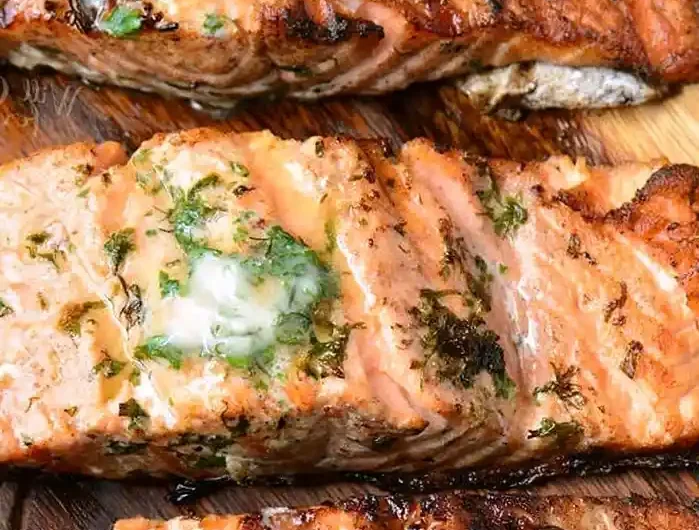
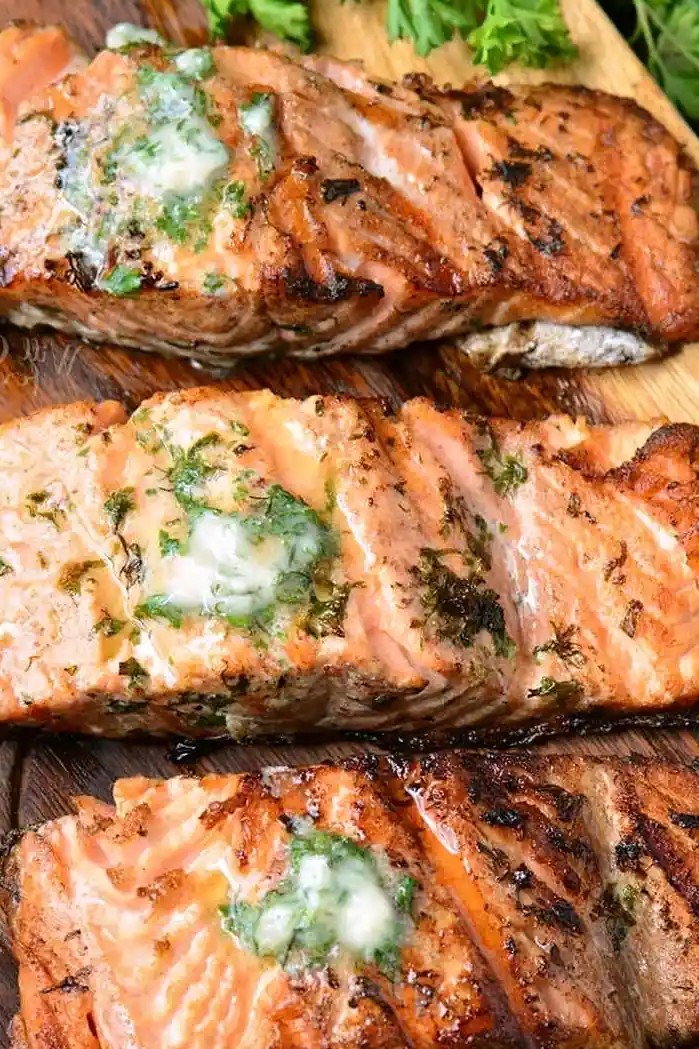
This quick grilled salmon is a healthy and flavorful dinner option that takes less than 30 minutes to cook. The garlic herb butter adds a rich, aromatic finish to juicy, flaky fillets.
List of ingredients
- 6 tbsp salted butter (softened) – serves as the flavorful base for the herb topping.
- 2 garlic cloves – use fresh cloves for the best aromatic punch.
- 2 tbsp fresh minced parsley – adds a bright, clean herbal note.
- 1 tbsp fresh minced dill weed – provides the classic flavor profile for salmon.
- 2 lbs salmon fillets with skin on – skin protects the fish from overcooking and sticking.
- salt – essential for enhancing the natural flavor of the fish.
step-by-step instructions
- Prepare the Garlic Herb Butter: Let the butter sit at room temperature for 30 minutes until softened. In a mixing bowl, combine the butter with pressed garlic and minced herbs, mixing with a fork or blender until fully incorporated.
- Prepare the Grill: Heat your charcoal until it is ashed over and thoroughly clean the grill grate. Position the coals at the lowest level away from the grate to ensure indirect heat.
- Season the Salmon: Use paper towels to pat the salmon fillets completely dry. Season all sides of the fish generously with salt.
- Coat the Fillets: Use the majority of the herb butter to coat each piece of salmon. Set aside a small amount of butter to use as a topping after cooking.
- Initial Grill: Place the salmon fillets on the grill with the skin side up first. Close the lid and cook for 3 to 4 minutes without moving the fish.
- Flip the Fish: Carefully flip each fillet using a fish spatula. Close the grill lid again and cook for another 4 to 6 minutes.
- Verify Doneness: Use a meat thermometer to check the thickest part of the fillet. The salmon is done when it reaches 145°F, though you should remove it at 142°F to let it rest to the final temperature.
- Final Garnish: While the salmon is still hot, place a teaspoon of the reserved herb butter on top of each piece.
Professional Grilling Techniques
Managing Coal Temperature
Ensure your coals are completely ashed over before placing the fish on the grate. This ensures a consistent heat source and prevents flare-ups that could char the butter coating. Keeping coals at the lowest level prevents the fish from cooking too quickly on the outside.
Cleaning the Grill Grates
A clean grate is the most effective way to prevent fish from sticking. Use a sturdy grill brush to remove all carbon buildup and debris while the grill is hot. This creates a smooth surface that allows the salmon to release naturally.
Using a Fish Spatula
A wide, thin fish spatula is the best tool for flipping delicate fillets. It allows you to slide under the skin without tearing the flaky meat. This tool helps maintain the structural integrity of the fillet during the flip.
Maintaining Patience During Searing
Avoid the urge to move or tug at the salmon once it hits the grate. Fish naturally releases from the metal once it has developed a proper sear, usually around 50-60% of the way through the cooking process. Tugging too early will cause the fillet to break apart.
Selecting the Best Salmon
King Salmon Characteristics
King salmon is known for its high fat content and rich, buttery flavor. It is very forgiving on the grill and stays moist even if cooked slightly longer. This variety is ideal for those who prefer a more decadent taste.
Sockeye Salmon Texture
Sockeye salmon has a deeper red color and a more robust, assertive flavor. It is leaner than King salmon, meaning it can overcook more quickly. Keep a close eye on the internal temperature when using Sockeye.
Atlantic Salmon Versatility
Atlantic salmon is widely available and has a mild flavor that pairs perfectly with garlic and herbs. It typically has a consistent texture and thickness, making it easy to time the grilling process. It is a great all-purpose choice for this recipe.
Benefits of Keeping the Skin On
The skin acts as a natural barrier between the heat and the delicate flesh. It prevents the fillet from falling apart and helps retain the natural juices during the grilling process. Additionally, the skin makes it much easier to flip the fish without damage.
Herb Butter Customizations
Using Different Fresh Herbs
While parsley and dill are classic, you can swap them for fresh chives or cilantro for a different flavor profile. Lemon thyme is another excellent alternative that adds a citrusy note. Always use fresh herbs rather than dried for the most vibrant taste.
Adjusting Garlic Intensity
For a milder flavor, you can use one large clove instead of two. If you prefer a very pungent garlic taste, increase the amount to three or four cloves. Pressing the garlic into a paste ensures the flavor is evenly distributed throughout the butter.
Preparing Butter in Advance
You can make the garlic herb butter a few days before you plan to grill. Store it in an airtight container in the refrigerator to keep it fresh. Simply let it soften on the counter before applying it to the fish.
Butter Consistency Tips
The butter should be soft but not melted when you mix in the herbs. If the butter is too liquid, it will run off the salmon instead of coating it. If using a microwave, use half power for a few seconds to reach the desired consistency.
Recommended Side Dish Pairings
Light Salad Options
A crisp cucumber salad with a vinaigrette provides a refreshing contrast to the rich herb butter. A classic Caesar salad with crunchy croutons also complements the smokey flavor of the grilled fish. These options keep the meal feeling light and summer-appropriate.
Hearty Grain Sides
Creamy parmesan rice is an excellent choice for absorbing the extra garlic butter from the salmon. Quinoa or farro can also be used for a nuttier, more textured side. These grains make the meal more filling and satisfying.
Roasted Vegetable Pairings
Roasted fingerling potatoes provide a salty, earthy balance to the fish. Grilled asparagus or sautéed spinach are also great options that cook quickly. Using the grill for the vegetables while the salmon rests is a great time-saver.
Storage and Reheating Guidance
Storing Leftover Salmon
Once the salmon has cooled to room temperature, place it in an airtight container. It can be stored safely in the refrigerator for up to three days. Ensure the container is sealed tightly to prevent the fish from absorbing other fridge odors.
Reheating in a Pan for Crispiness
To maintain the crispy texture of the skin, reheat the salmon in a skillet over medium heat. Place the fillet skin side down and cover the pan with a lid. This allows the heat to penetrate the center while crisping the bottom.
Using the Oven for Juiciness
For a gentler reheat that keeps the meat moist, use the oven at 350°F. Loosely wrap each fillet in aluminum foil to trap the steam. Heat for approximately 15 minutes or until warmed through.
Serving Cold Salmon
Cold grilled salmon is a delicious alternative to reheating. Flake the cold fillets with a fork and add them to a fresh garden salad. You can also place the cold salmon in a wrap with avocado and sprouts for a quick lunch.
Troubleshooting Common Issues
Preventing Fish from Sticking
If you are concerned about the fish sticking, you can lightly brush the grill grate with a neutral oil. However, since the salmon is coated in butter, this is usually unnecessary on a clean grate. Ensure the grill is fully preheated before adding the fish.
Avoiding Overcooked Salmon
The biggest challenge with salmon is overcooking it, which leads to a dry texture. Always use a meat thermometer rather than relying on time alone. Remove the fish from the heat a few degrees early, as carryover cooking will raise the temperature while it rests.
Handling Fillets that Break Apart
If your fillets are breaking, it is usually because they were flipped too early. Wait until the fish releases naturally from the grate. If you must move them, ensure you are using a wide spatula that supports the entire base of the fillet.
Frequently Asked Questions
How long will grilled salmon last?
Grilled salmon stays fresh in an airtight container in the refrigerator for up to 3 days. For longer storage, it can be frozen, though the texture may change slightly upon thawing.
What should I serve with grilled salmon?
You can serve it with light options like cucumber or Caesar salads, or heartier sides like creamy parmesan rice and roasted fingerling potatoes.
Should you grill salmon with the skin on?
Yes, the skin should remain on during grilling. It protects the fillet from falling apart, keeps the meat juicier, and makes the fish easier to remove from the grill.
Print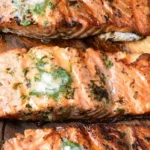
Grilled Salmon with Garlic Butter Recipe
- Total Time: 45 minutes
- Yield: 4 servings 1x
- Diet: Gluten Free
Description
Juicy, flaky salmon fillets are grilled to perfection with a very simple garlic herb butter.
Ingredients
- 6 tbsp salted butter, softened
- 2 garlic cloves
- 2 tbsp fresh minced parsley
- 1 tbsp fresh minced dill weed
- 2 lbs salmon fillets with skin on
- salt
Instructions
- Butter: Take butter out of the refrigerator and let it sit on the counter for about 30 minutes to soften.
- Butter: Add butter to a mixing bowl and add pressed garlic and herbs.
- Butter: Mix it until all ingredients are incorporated throughout the butter.
- Salmon: Prepare the coals for the grill until ashed over and make sure to clean the grill grate.
- Salmon: Set the coals to the lowest level away from the grill grate.
- Salmon: Pat salmon fillets dry with a paper towel.
- Salmon: Season each fillet with salt on all sides.
- Salmon: Use most of the butter to coat each piece and set some aside to top off salmon after it is cooked.
- Salmon: Place each salmon fillet on the grill skin side up first.
- Salmon: Close the lid and cook salmon for 3-4 minutes before flipping.
- Salmon: Flip each fillet using a fish spatula, close the grill, and let it cook for another 4-6 minutes.
- Salmon: Take it off the grill when it is about 142° and let it rest to get to temp all the way.
- Salmon: Top each piece of salmon with a teaspoon or so of herb butter while still hot.
Notes
Ensure the skin is left on to protect the fish and maintain juiciness. Be patient and do not move the fish too soon; it will release naturally from the grill once it is 50-60% cooked.
- Prep Time: 15 minutes
- Cook Time: 10 minutes
- Category: Main Course
- Method: Grilling
- Cuisine: American
Nutrition
- Serving Size: 1 fillet
- Calories: 478 kcal
- Sugar: 1 g
- Sodium: 253 mg
- Fat: 32 g
- Saturated Fat: 13 g
- Unsaturated Fat: 19 g
- Trans Fat: 0 g
- Carbohydrates: 1 g
- Fiber: 0 g
- Protein: 45 g
- Cholesterol: 171 mg
Keywords: grilled salmon, garlic butter, seafood, gluten free, healthy dinner