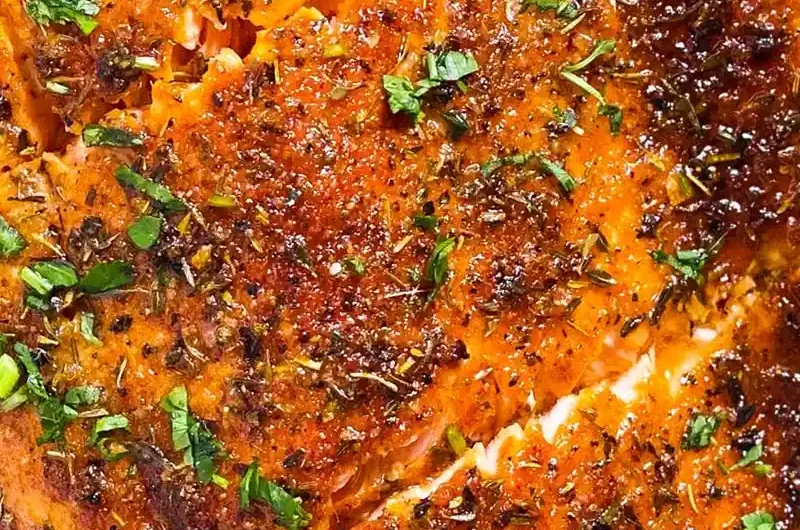
This flavorful salmon fillet is brushed with a rich garlic butter blend and finished with a sweet and savory spice rub. It is a simple, one-pan meal that ensures a moist and tender result every time.
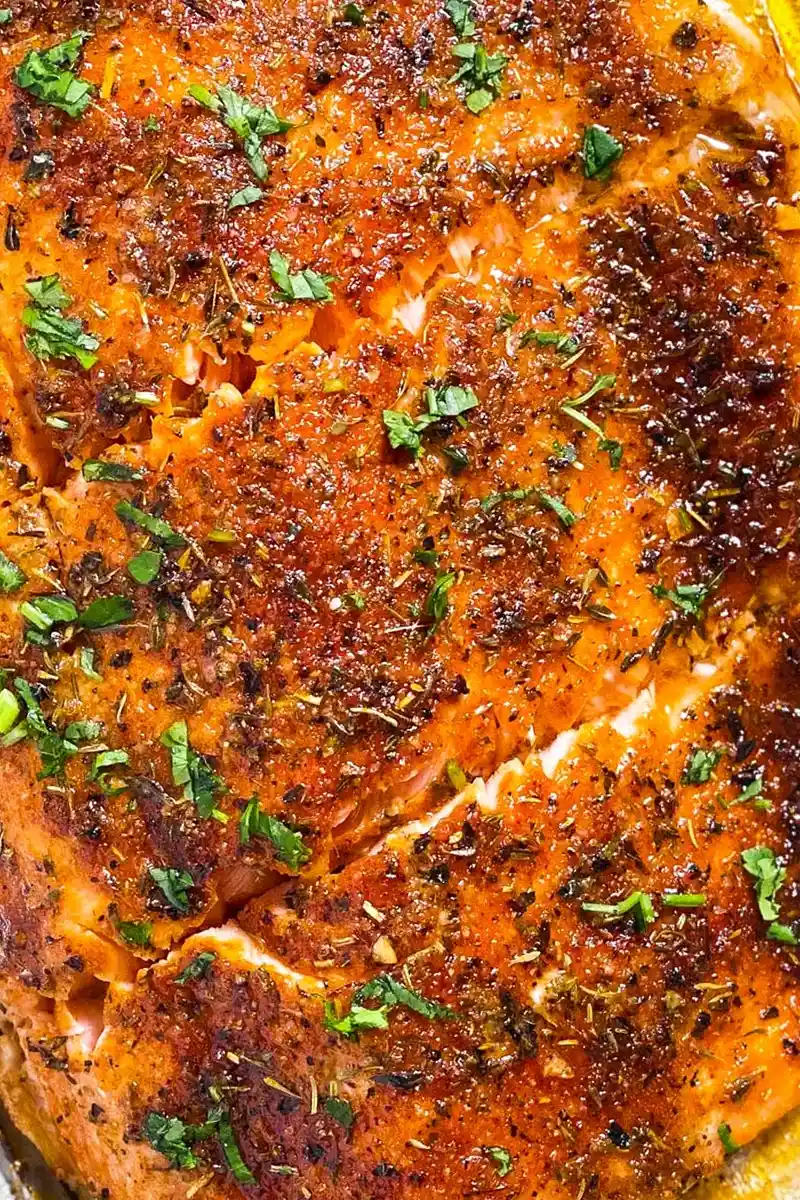
List of ingredients
- 1 (2-pound) whole salmon fillet – skin-on is preferred for moisture.
- 3 tablespoons melted butter – can be substituted with olive oil.
- 2 cloves garlic – minced finely.
- 1 tablespoon brown sugar – provides caramelization.
- 1 teaspoon Italian seasoning – for a herbal note.
- 1 teaspoon ground paprika – adds color and depth.
- 1 teaspoon garlic powder – enhances the garlic flavor.
- ¾ teaspoon salt – to balance the spices.
- ground black pepper – to taste.
step-by-step instructions
- Prepare the oven and pan: Heat your oven to 375°F. Line a rimmed baking sheet with a large piece of aluminum foil and place the salmon fillet on top with the skin side down. Crimp the edges of the foil upward to create a small boat that catches the butter.
- Apply the base seasoning: Mix the melted butter and minced garlic together in a small bowl. Brush approximately half of this garlic butter mixture over the top of the salmon fillet.
- Add the spice rub: In a separate small bowl, combine the brown sugar, Italian seasoning, paprika, garlic powder, salt, and black pepper. Sprinkle this mixture evenly across the entire surface of the salmon.
- Finish the seasoning: Drizzle the remaining garlic butter over the spice-covered salmon to help the seasonings adhere.
- Bake the fish: Place the salmon in the oven and bake for 15-22 minutes. Baste the fillet with the pan juices halfway through the cooking process if you prefer extra moisture.
- Rest and serve: Remove the salmon from the oven once it reaches your desired doneness. Let the fillet rest for 5 minutes before serving to allow the juices to redistribute.
Expert Baking Tips
Optimize Butter Temperature for Brushing
Stir the minced garlic into the butter immediately after melting for the best flavor infusion. Let the butter cool on the counter for about 5 minutes before using. This allows it to thicken slightly, making it easier to brush onto the fish without running off.
Utilize the Foil Boat Technique
Using aluminum foil is highly recommended to prevent the garlic butter from evaporating or spreading across the baking sheet. Creating a foil boat keeps the salmon submerged in its own juices during the baking process. This method also makes cleanup significantly faster and easier.
Basting for Maximum Succulence
Spooning the melted butter and pan juices back over the salmon halfway through baking is a helpful step. While not strictly necessary, this technique keeps the surface of the fish from drying out. It results in a more succulent and glossy finish.
The Importance of the Resting Period
Allowing the salmon to rest for 5 minutes after removing it from the oven is crucial. This prevents the juices from leaking out immediately when you slice into the fillet. Resting ensures that every bite remains moist and tender.
Salmon Temperature Guidelines
Understanding USDA Guidelines
The USDA recommends cooking fish to an internal temperature of 145°F. This ensures that all potential pathogens are eliminated. While safe, some find this temperature to be slightly overdone for salmon.
Achieving Medium Doneness
Many chefs prefer cooking salmon to an internal temperature between 125°F and 130°F. At this range, the fish is perfectly flaky but retains a more succulent, moist texture. This is often the preferred doneness in professional restaurants.
Identifying Visual Cues for Doneness
The salmon is done when the flesh is opaque and flakes easily with a fork. It should still look glossy and shiny on the surface. If the fish looks dull or dry, it has likely been overcooked.
Precise Thermometer Placement
To get an accurate reading, insert a digital food thermometer into the thickest part of the fillet. Avoid touching the pan or the skin with the probe. Pull the salmon from the oven a few degrees before it hits your target temperature, as it will continue to cook while resting.
Ingredient Alternatives
Dairy-Free Oil Options
If you wish to avoid butter, you can use olive oil as a direct substitute. While the flavor profile changes slightly, olive oil provides a healthy fat that carries the garlic and spices well. The result remains delicious and moist.
Sugar-Free Modifications
The brown sugar is used primarily for flavor and to create a caramelized crust. If you are avoiding sugar, you can simply omit it from the recipe. The salmon will still be flavorful, though it will lack the characteristic sweetness and deep color.
White Sugar Substitution
If you do not have brown sugar on hand, you can use granulated white sugar. Use half a tablespoon of white sugar to replace one tablespoon of brown sugar. Note that white sugar will not provide the same molasses-like depth of flavor.
Alternative Dried Herbs
While Italian seasoning is recommended, other dried herbs work well. Oregano or rosemary are excellent choices for a different aromatic profile. You can use any dried herb that complements fish in a 1:1 ratio.
Substituting Garlic Powder for Fresh Garlic
If fresh garlic is unavailable, you can use additional garlic powder. Add one extra teaspoon of garlic powder to the spice mix to compensate for the missing fresh cloves. This provides a more uniform, pungent garlic taste.
Customizing Your Salmon
Cooking Individual Fillets
If you are using individual cut fillets instead of a whole side, adjust the baking time. Bake individual pieces for 10-15 minutes depending on their thickness. Because they have more surface area exposed, they cook faster than a whole fillet.
Adjustments for Skinless Salmon
When using skinless fillets, the risk of the fish sticking to the foil increases. Brush the foil with a thin layer of oil or melted butter before placing the salmon on top. Monitor the cooking time closely, as skinless fish can dry out more quickly.
Adding Fresh Herb Finishes
For a professional presentation, sprinkle finely chopped fresh parsley over the salmon after baking. Fresh dill or chives also pair exceptionally well with the garlic butter flavor. This adds a bright, fresh contrast to the rich buttery crust.
Increasing Heat for a Seared Top
If you prefer a more charred or caramelized top, turn on the broiler for the last 2-3 minutes of cooking. Watch the fish closely to prevent the sugar in the rub from burning. This creates a crispier exterior while keeping the interior tender.
Complementary Side Dishes
Hearty Potato Pairings
Mashed potatoes or roasted red potatoes are excellent sides for this recipe. The creamy texture of mashed potatoes complements the richness of the garlic butter. Roasted potatoes provide a nice textural contrast to the soft salmon.
Grain-Based Accompaniments
Steamed white rice, brown rice, or quinoa are great options for absorbing the extra garlic butter from the pan. A wild rice blend adds an earthy flavor that balances the sweetness of the brown sugar rub. These grains make the meal more filling.
Green Vegetable Options
Roasted broccoli, sautéed green beans, or roasted asparagus are ideal choices. These vegetables can often be cooked on the same baking sheet if there is enough room. Their natural bitterness cuts through the richness of the salmon.
Fresh Cold Salad Combinations
A refreshing cucumber, tomato, and avocado salad provides a cool contrast to the warm fish. The acidity from a lemon vinaigrette in the salad helps cleanse the palate. This makes the overall meal feel lighter and more balanced.
Fruit-Based Salsas
A black bean and mango salsa or a chunky avocado salsa adds a tropical twist to the dish. The sweetness of the fruit echoes the brown sugar in the rub. These salsas provide a vibrant pop of color and flavor.
Storage and Preservation
Refrigerating Leftover Salmon
Place leftover cooked salmon in an airtight container and store it in the refrigerator. It will remain fresh for up to three days. Ensure the salmon is completely cooled before sealing the container to prevent excess moisture buildup.
Low-Heat Reheating Method
The best way to reheat salmon is in the oven at 275°F. Place the fillet on a baking sheet and cover it loosely with foil to prevent drying. Heat for 10-15 minutes until warmed through without overcooking the center.
Microwave Reheating Tips
If using a microwave, use low power settings and heat in short 30-second intervals. Flip the fish gently between bursts to ensure even heating. Be careful not to overheat, as the microwave can quickly make salmon rubbery.
Freezing Cooked Salmon
To freeze cooked salmon, wrap the fillet tightly in aluminum foil and then place it in a heavy-duty freezer bag. It can be stored for up to two months. Thaw the salmon in the refrigerator overnight before reheating.
Troubleshooting Common Issues
Solving Sticking Problems
If the salmon sticks to the foil, it is usually because the foil wasn’t sufficiently greased or the skin was removed. Always use a generous amount of butter or oil on the foil surface. Use a thin metal spatula to gently lift the fish after it has rested.
Correcting Overcooked Salmon
Overcooked salmon often develops white beads of albumin on the surface and becomes dry. To mitigate this, serve overcooked fish with an extra sauce or a squeeze of fresh lemon juice. In the future, use a thermometer to pull the fish at 125°F.
Managing Uneven Fillet Thickness
Salmon fillets often taper from a thick end to a thin end. To prevent the thin end from overcooking, you can slightly fold the foil over the thinner section. This protects the delicate part of the fish from direct heat.
Reducing Excess Oil
If you find the dish too oily, pat the salmon fillet dry with paper towels before applying the butter. Avoid over-brushing the garlic butter mixture. You can also blot the finished fish with a clean paper towel before serving.
Frequently Asked Questions
Can I use frozen salmon for this recipe?
Yes, but you must thaw the salmon completely in the refrigerator before baking. Baking frozen salmon directly can lead to uneven cooking and a mushy texture. Ensure the fish is patted dry after thawing to ensure the rub sticks.
How do I remove the skin after baking?
Once the salmon has rested, the skin should release easily. Slide a thin spatula between the skin and the flesh, starting from the thickest part. Gently lift the fillet away from the skin in one piece.
Is this recipe suitable for air frying?
This recipe works for air frying, but you must use individual fillets rather than a whole side. Reduce the cooking time to 7-12 minutes at 380°F. Be careful with the brown sugar, as it can burn more quickly in an air fryer.
What is the best type of salmon for baking?
Atlantic salmon is widely available and has a higher fat content, making it very forgiving for baking. Sockeye salmon is leaner and has a bolder flavor, but it can overcook more quickly. Choose based on your preference for richness versus intensity.
Print
Garlic Butter Baked Salmon
- Total Time: 30 minutes
- Yield: 6 servings 1x
- Diet: General
Description
This Oven Baked Salmon is brushed with garlic butter, then sprinkled with a delicious brown sugar spice mix for the perfectly baked, flavorful salmon fillet.
Ingredients
- 1 (2-pound) whole salmon fillet (skin-on preferred)
- 3 tablespoons melted butter (OR olive oil)
- 2 cloves garlic (minced)
- 1 tablespoon brown sugar
- 1 teaspoon Italian seasoning
- 1 teaspoon ground paprika
- 1 teaspoon garlic powder
- ¾ teaspoon salt
- ground black pepper (to taste)
Instructions
- Prep: Heat oven to 375°F. Place a large piece of foil on rimmed baking sheet, place salmon fillet on top (skin side down, pink side up). Crimp edges of foil around salmon to make a little “boat”.
- Season: Combine melted butter and minced garlic. Brush half of mixture over salmon. Combine remaining ingredients in a small bowl, evenly sprinkle over salmon. Drizzle with remaining garlic butter.
- Bake: Bake salmon for 15-22 minutes, depending on preferred doneness (see notes for internal temperatures). Baste salmon with juices halfway through baking, if desired. Once done, remove salmon from oven and rest for 5 minutes, then serve.
Notes
Skin-on salmon is recommended for juiciness and to prevent sticking. For cut fillets, bake for 10-15 minutes. Target internal temperature: 125°F-130°F for succulent fish, or 145°F per USDA guidelines.
- Prep Time: 10 minutes
- Cook Time: 20 minutes
- Category: Main Course
- Method: Baking
- Cuisine: Healthy
Nutrition
- Serving Size: 1 serving
- Calories: 348 kcal
- Sugar: 1 g
- Sodium: 368 mg
- Fat: 22 g
- Saturated Fat: 9 g
- Unsaturated Fat: 13 g
- Trans Fat: 0 g
- Carbohydrates: 2 g
- Fiber: 1 g
- Protein: 34 g
- Cholesterol: 124 mg
Keywords: oven baked salmon, garlic butter salmon, healthy dinner, salmon fillet