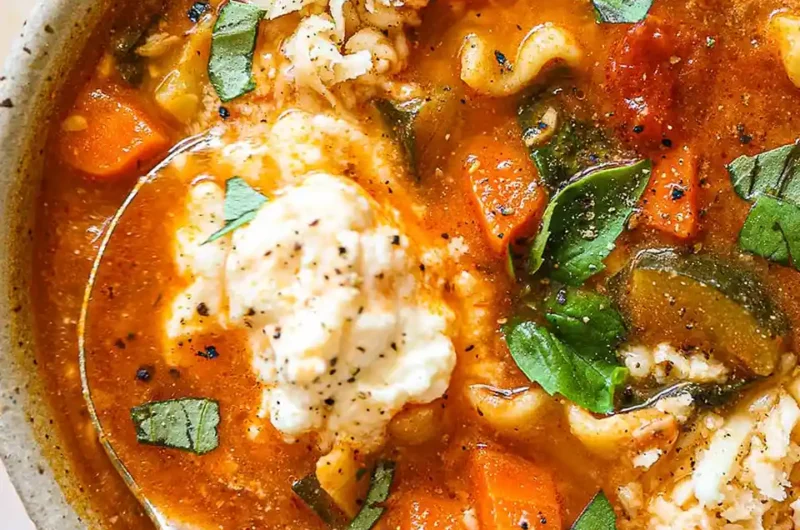
This one-pot vegetarian lasagna soup offers a convenient way to enjoy the flavors of a traditional lasagna. It is packed with nutrients from fresh zucchini, carrots, and spinach, making it a wholesome dinner option.
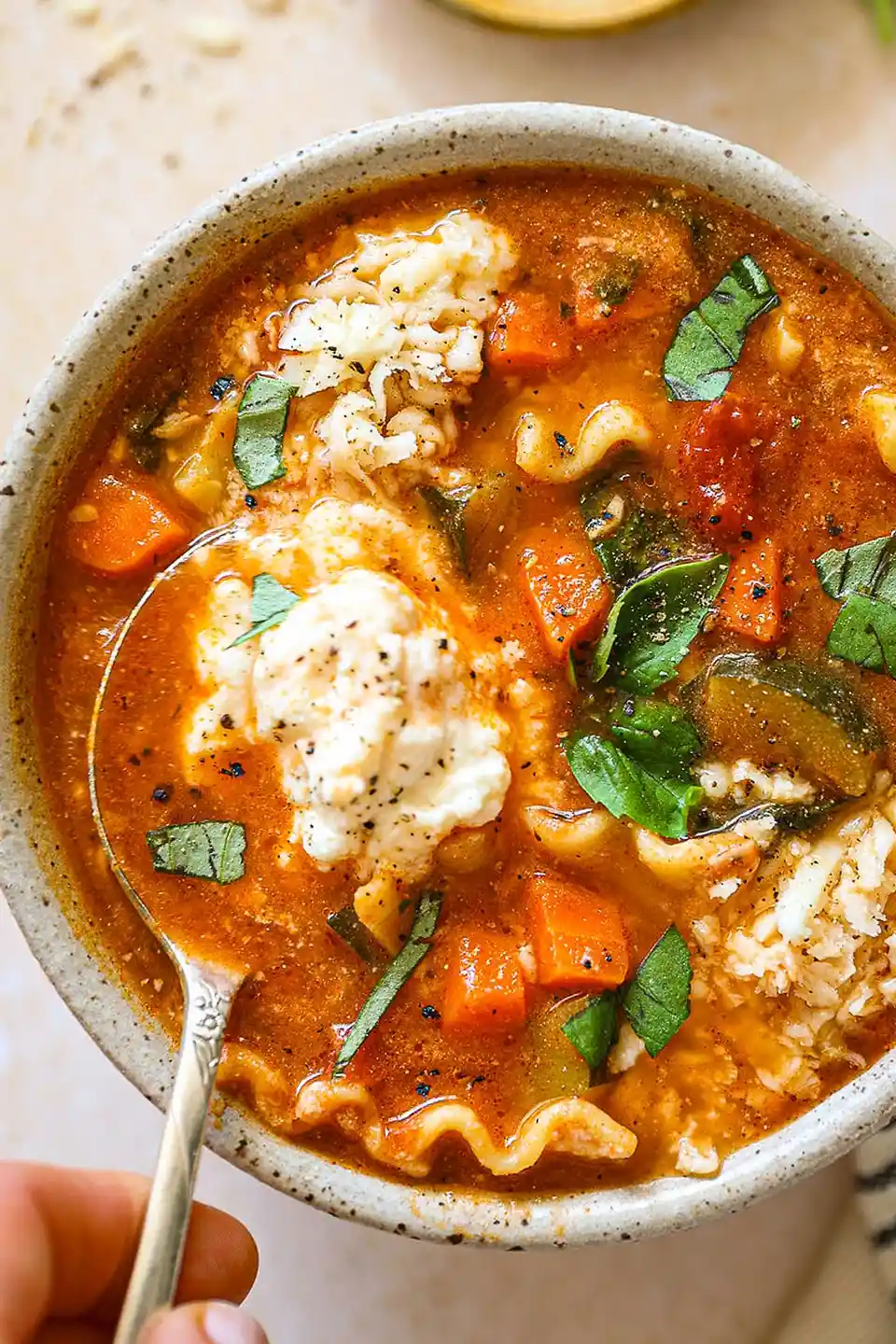
List of ingredients
- 2 tablespoon olive oil – used for sautéing the base vegetables.
- 1 cup diced onion (about 1/2 a large onion) – provides aromatic depth.
- 1 cup diced carrots (about 2 large carrots) – adds sweetness and texture.
- 1 cup diced zucchini (about 1 small zucchini) – adds bulk and nutrients.
- 3/4 teaspoon salt (divided) – used for seasoning throughout the process.
- 2 tablespoons balsamic vinegar – adds a necessary acidic balance to the tomato base.
- 2 cups pasta sauce – provides the primary savory tomato flavor.
- 2 cups vegetable broth – creates the soup base.
- 3-4 cups loosely packed baby spinach (roughly chopped) – adds color and iron.
- 6 ounces lasagna noodles (6-8 sheets, broken into about 2-inch pieces) – the primary starch.
- 1/3 cup grated parmesan cheese (optional) – adds a salty, nutty finish.
- shredded mozzarella cheese and/or ricotta cheese (optional) – for creamy toppings.
- fresh basil, chopped (optional) – used as a fresh garnish.
step-by-step instructions
- Sauté Base: Heat olive oil in a large pot over medium-high heat. Add onion and carrot and cook for 2-3 minutes.
- Soften Zucchini: Add zucchini and cook until it begins to soften, about 2 more minutes. Stir in 1/2 teaspoon of salt.
- Deglaze and Simmer: Add balsamic vinegar and scrape up any browned bits stuck to the bottom of the pot. Stir in marinara and broth and bring soup to a simmer.
- Cook Pasta: Once simmering, add broken lasagna noodles to the pot and cook until noodles are tender, about 10 to 12 minutes or according to the cooking time on the box of your lasagna noodles.
- Finish and Season: After the soup is done cooking, stir in the last 1/4 teaspoon of salt, spinach and grated parmesan (if using) and let the spinach wilt in the hot soup for a minute or two. Taste soup for seasoning and add more salt and pepper as needed.
- Serve: Ladle soup into bowls and sprinkle with a little shredded mozzarella and/or top with a dollop of ricotta cheese, if desired. Sprinkle with fresh basil and enjoy.
Vegetable Preparation Techniques
Dicing Carrots and Onions for Even Cooking
Ensure that the carrots and onions are cut into uniform pieces, approximately 1/4 inch in size. Consistent sizing prevents some pieces from overcooking while others remain hard. This ensures a balanced texture in every spoonful.
Preparing Zucchini to Prevent Mushiness
Cut the zucchini into slightly larger cubes than the carrots. Since zucchini has a higher water content and cooks faster, slightly larger pieces maintain their structural integrity. This prevents the vegetable from dissolving into the broth.
Chopping Spinach for Better Distribution
Roughly chop the baby spinach before adding it to the pot. This makes the greens easier to eat and ensures they are distributed evenly throughout the soup. It also prevents the spinach from clumping together in large masses.
Breaking Lasagna Noodles for Ease of Serving
Break the lasagna sheets by hand into pieces roughly 2 inches long. This size is ideal for fitting onto a standard soup spoon. It also ensures the noodles cook evenly within the broth without sticking together in long sheets.
Customization and Substitutions
Substituting Zucchini with Other Squash
If zucchini is unavailable, yellow summer squash is a direct one-to-one replacement. For a heartier texture, you can use diced butternut squash, although it may require a few extra minutes of simmering. This change adds a slightly sweeter profile to the dish.
Using Alternative Leafy Greens
Kale or Swiss chard can be used instead of baby spinach for a more robust flavor. Since these greens are heartier, add them 3-5 minutes before the soup is finished. This ensures they are tender but not overcooked.
Integrating Vegan Cheese Alternatives
For a dairy-free version, replace parmesan and mozzarella with nutritional yeast or vegan parmesan alternatives. Cashew-based ricotta serves as an excellent dollop on top for the same creamy texture. These swaps maintain the flavor profile while removing animal products.
Selecting Gluten-Free Pasta Options
Brown rice or chickpea-based lasagna noodles can be used for a gluten-free version of this recipe. Be mindful that gluten-free noodles often absorb more liquid than wheat noodles. You may need to add an extra half cup of vegetable broth during the simmering process.
Flavor Enhancement Strategies
The Importance of Balsamic Vinegar
Balsamic vinegar introduces a complex acidity that cuts through the richness of the pasta sauce and cheese. It mimics the slow-cooked depth found in traditional lasagna that takes hours to bake. Always scrape the bottom of the pot when adding vinegar to release caramelized bits.
Adding Fresh Herbs for Aromatics
While basil is the traditional garnish, adding a teaspoon of dried oregano or thyme during the sauté phase enhances the Italian profile. Fresh parsley added at the end provides a bright, clean contrast to the heavy tomato base. This layering of herbs creates a more professional taste.
Increasing Protein Content
To make the soup more filling, stir in a can of rinsed cannellini beans or chickpeas along with the broth. This adds plant-based protein and a creamy texture without altering the flavor significantly. Tofu cubes can also be added for a different protein source.
Serving and Pairing Ideas
Complementary Side Dishes
Serve this soup with a side of toasted garlic bread or a crusty sourdough baguette. The bread is perfect for dipping into the tomato-based broth and scooping up the noodles. A simple side salad with a lemon vinaigrette provides a fresh contrast.
Optimizing Cheese Toppings
For the best melt, use freshly shredded mozzarella rather than pre-shredded versions. Pre-shredded cheese contains cornstarch that can prevent a smooth melt. A small dollop of ricotta in the center of the bowl provides a cool, creamy element.
Non-Alcoholic Beverage Pairings
A chilled sparkling water with a wedge of lime cleanses the palate between bites. For a more festive option, a grape-based spritzer complements the acidity of the balsamic vinegar. Iced tea with lemon also pairs well with the savory tomato notes.
Storage and Reheating Guidelines
Proper Refrigeration Methods
Store leftovers in airtight glass containers to keep the soup fresh for up to four days. Keep in mind that the lasagna noodles will continue to absorb liquid while sitting in the fridge. This will result in a thicker, more stew-like consistency over time.
Freezing and Thawing the Soup
This soup can be frozen, but it is recommended to undercook the noodles slightly if you plan to freeze it. Store in freezer-safe containers with a small amount of headspace for expansion. Thaw overnight in the refrigerator before reheating.
Best Reheating Practices
Reheat the soup on the stovetop over medium heat rather than in the microwave for better texture. Add a splash of vegetable broth or water to restore the original soup consistency. Stir gently to avoid breaking the noodles further.
Troubleshooting Common Issues
Preventing Overcooked Noodles
If you are preparing a large batch, consider cooking the noodles separately and adding them to the bowl just before serving. This prevents the noodles from becoming mushy if the soup is kept warm for a long time. It also allows for better control over the pasta texture.
Adjusting Soup Thickness
If the soup becomes too thick due to the starch in the noodles, stir in additional vegetable broth one quarter-cup at a time. This restores the liquid ratio without diluting the flavors. Avoid adding plain water as it can mute the seasoning.
Balancing Excess Acidity
If the balsamic vinegar or pasta sauce makes the soup too tart, add a pinch of sugar or a small amount of grated carrot. The natural sugars neutralize the excess acid and create a more balanced flavor. Taste after each small addition.
Frequently Asked Questions
Can I use different types of pasta?
Yes, you can use rotini, penne, or bow-tie pasta if lasagna noodles are unavailable. Simply adjust the cooking time based on the pasta type’s package instructions. The flavor will remain the same, though the visual presentation will change.
Is this soup freezer-friendly?
Yes, the soup freezes well, although the noodles may soften more during the reheating process. For the best results, freeze the vegetable and broth base separately from the cooked noodles. Combine them during the final reheating stage.
How can I make the soup creamier?
To achieve a creamier texture, stir in a tablespoon of heavy cream or a dairy-free alternative like coconut cream at the very end. Alternatively, blending a small portion of the cooked vegetables and stirring them back into the pot adds natural creaminess.
Print
Hearty Vegetable Lasagna Soup
- Total Time: 32 minutes
- Yield: 6 servings 1x
- Diet: Vegetarian
Description
This Vegetarian Lasagna Soup is everything we love about lasagna… just easier. One pot, ready in a little over 30 minutes, and brimming with cozy flavor, tender noodles, and bonus veggies like carrot, spinach, and zucchini in every bite.
Ingredients
- 2 tablespoon olive oil
- 1 cup diced onion
- 1 cup diced carrots
- 1 cup diced zucchini
- 3/4 teaspoon salt, divided
- 2 tablespoons balsamic vinegar
- 2 cups pasta sauce
- 2 cups vegetable broth
- 3–4 cups loosely packed baby spinach, roughly chopped
- 6 ounces lasagna noodles, broken into about 2-inch pieces
- 1/3 cup grated parmesan cheese (optional)
- shredded mozzarella cheese and/or ricotta cheese, for serving (optional)
- fresh basil, chopped (for garnish, optional)
Instructions
- Sauté: Heat olive oil in a large pot over medium-high heat. Add onion and carrot and cook for 2-3 minutes.
- Soften: Add zucchini and cook until it begins to soften, about 2 more minutes. Stir in ½ teaspoon of salt.
- Simmer: Add balsamic vinegar and scrape up any browned bits stuck to the bottom of the pot. Stir in marinara and broth and bring soup to a simmer.
- Cook Pasta: Once simmering, add broken lasagna noodles to the pot and cook until noodles are tender, about 10 to 12 minutes.
- Wilt: Stir in the last 1/4 teaspoon of salt, spinach and grated parmesan (if using) and let the spinach wilt in the hot soup for a minute or two.
- Serve: Ladle soup into bowls and sprinkle with a little shredded mozzarella and/or top with a dollop of ricotta cheese. Sprinkle with fresh basil and enjoy.
Notes
The balsamic vinegar adds a necessary depth of flavor. For a dairy-free or vegan version, simply omit the cheese.
- Prep Time: 10 minutes
- Cook Time: 22 minutes
- Category: Main Course
- Method: One Pot
- Cuisine: Italian
Nutrition
- Serving Size: 1.5 cups
- Calories: 225 kcal
- Sugar: 8 g
- Sodium: 1149 mg
- Fat: 7 g
- Saturated Fat: 2 g
- Unsaturated Fat: 5 g
- Trans Fat: 0 g
- Carbohydrates: 33 g
- Fiber: 4 g
- Protein: 8 g
- Cholesterol: 5 mg
Keywords: vegetarian lasagna soup, one pot meal, veggie-loaded soup, Italian comfort food