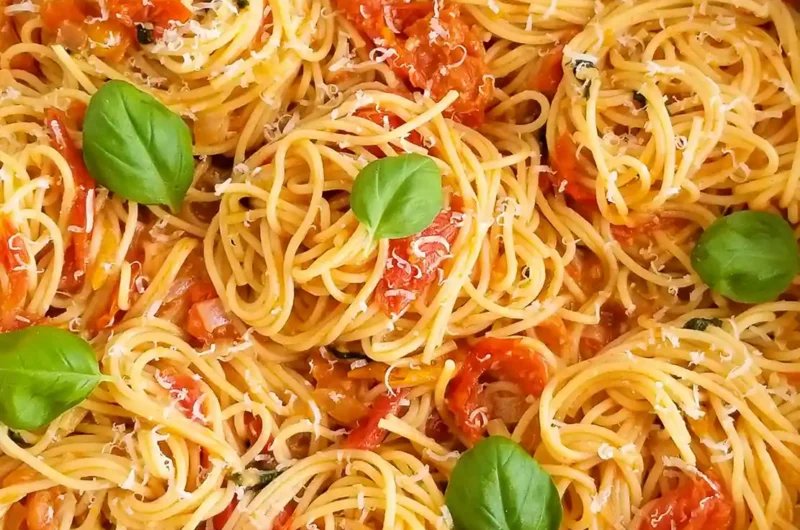
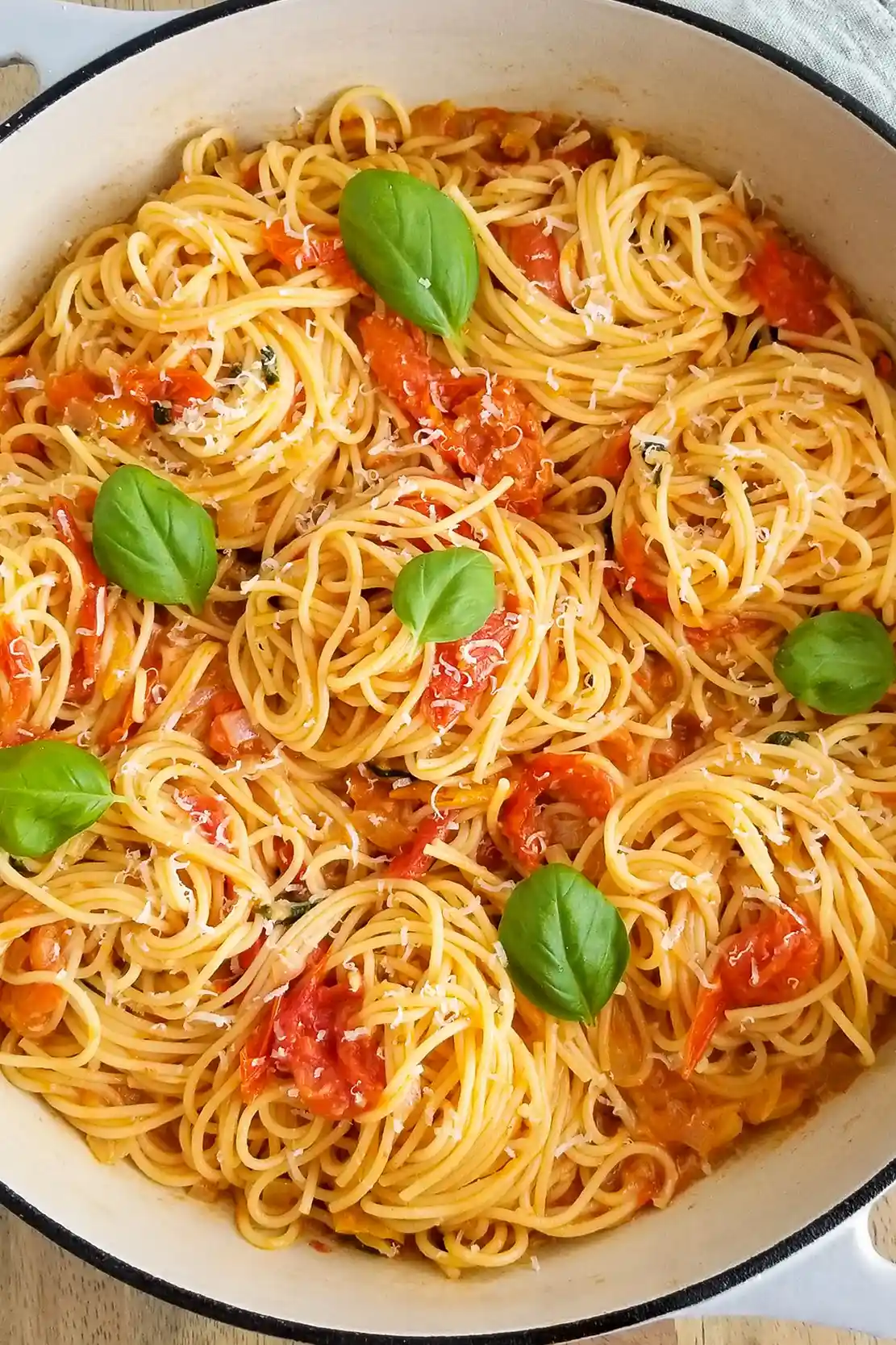
This dish features a vibrant, homemade tomato sauce made from bursting cherry tomatoes and aromatic fresh basil. It is a light yet satisfying meal that emphasizes the quality of simple, fresh ingredients.
List of ingredients
- 1/2 lb Thin Spaghetti – serves as the base for the sauce.
- 1 lb Grape or Cherry Tomatoes (cut in half) – these provide the natural sweetness and body of the sauce.
- 4 Garlic Cloves (minced) – adds a pungent, aromatic depth.
- 1 cup Onion (diced) – creates a savory foundation.
- 1 tsp Salt – enhances the natural flavors of the vegetables.
- 3 tbsp Olive Oil – used for sautéing and adding richness.
- 3 tbsp Butter – provides a velvety texture and smooth finish.
- 8-10 Fresh Basil Leaves (chopped) – adds a fresh, peppery herb note.
- 1/4 cup Parmesan Cheese (grated) – adds salty, nutty complexity.
- 3/4 cup Hot Pasta Water (reserved from cooking spaghetti) – emulsifies the sauce and helps it cling to the pasta.
step-by-step instructions
- Boil the Pasta: Cook the thin spaghetti according to the package directions until it reaches an al dente texture. Be sure to reserve 3/4 cup of the hot pasta water before draining the noodles in a colander.
- Sauté the Aromatics: Place a large saucepan over medium-low heat and add the olive oil, butter, and diced onions. Cook the mixture until the onions are tender and translucent.
- Simmer the Tomatoes: Stir in the minced garlic, halved tomatoes, and salt. Cover the pan and continue cooking over medium-low heat for about 25 minutes, stirring occasionally, until the tomatoes have become very soft.
- Finish the Sauce: Use a cooking spoon or spatula to break up the softened tomatoes. Stir in the reserved hot pasta water, then fold in the grated parmesan cheese and chopped fresh basil. Cook for another 5 minutes until the sauce lightly thickens.
- Combine and Serve: Toss the cooked spaghetti directly into the pomodoro sauce until every strand is well coated. Serve immediately with additional fresh grated parmesan and optional red pepper flakes for heat.
Professional Cooking Tips
Select a High-Quality Extra Virgin Olive Oil
Use a cold-pressed extra virgin olive oil to ensure a fruity and peppery flavor profile. This oil adds a layer of richness that complements the acidity of the fresh tomatoes. Avoid using light or refined olive oils as they lack the necessary aromatic qualities.
Maintain an Al Dente Texture
Remove the spaghetti from the water one minute before the package directions suggest. The pasta will continue to cook slightly when tossed in the hot sauce. This prevents the noodles from becoming mushy and ensures they hold their shape.
Utilize Starchy Pasta Water for Emulsification
The reserved pasta water is essential because it contains starch released during the boiling process. When stirred into the butter and oil, it helps create a smooth emulsion. This process ensures the sauce adheres to the pasta instead of sliding off.
Sauté Onions on Low Heat
Cooking the onions over medium-low heat allows them to soften without browning too quickly. This method extracts the natural sugars slowly, providing a mellow sweetness. Overheating the onions can lead to a bitter taste in the final sauce.
Practical Ingredient Substitutions
Using Canned Tomatoes as a Backup
If fresh cherry tomatoes are unavailable, you can use a can of high-quality crushed tomatoes. To mimic the flavor of fresh pomodoro, add a teaspoon of sugar to balance the acidity. Simmer the canned version for a shorter time since the tomatoes are already processed.
Alternative Pasta Shapes
While thin spaghetti is traditional, penne or fusilli work well with this sauce. Short pasta shapes are excellent for capturing the small pieces of broken-down cherry tomatoes. Adjust the cooking time based on the specific pasta type you choose.
Replacing Fresh Basil with Dried Herbs
If fresh basil is not available, you can substitute it with 1 teaspoon of dried basil. Add the dried herbs earlier in the simmering process to allow the flavors to rehydrate. Keep in mind that dried herbs have a more concentrated and less bright flavor.
Switching Parmesan for Other Hard Cheeses
Pecorino Romano is a great alternative if you prefer a saltier, sharper taste. You can also use Grana Padano for a slightly milder, nuttier profile. Ensure the cheese is finely grated to help it melt seamlessly into the sauce.
Using Plant-Based Butter Alternatives
For a dairy-free version, replace the butter with an equal amount of vegan butter or additional olive oil. Most plant-based butters provide a similar richness without changing the flavor profile significantly. Ensure the substitute has a high smoke point.
Sauce Flavor Variations
Integrating Red Pepper Flakes for Heat
Add 1/2 teaspoon of red pepper flakes during the garlic sauté step. This allows the heat to infuse into the oil, distributing the spice evenly throughout the sauce. This creates a spicy pomodoro variant often referred to as Arrabiata.
Adding a Splash of Heavy Cream
To create a creamier, milder sauce, stir in two tablespoons of heavy cream at the very end. This neutralizes some of the tomato acidity and adds a luxurious mouthfeel. It transforms the dish into a pink sauce variation.
Incorporating Fresh Baby Spinach
Stir in a handful of fresh baby spinach just before tossing in the pasta. The residual heat of the sauce will wilt the spinach in about 60 seconds. This adds a boost of nutrients and a pop of green color to the dish.
Adding Sliced Mushrooms for Earthiness
Sauté thinly sliced cremini or button mushrooms along with the onions. The mushrooms add an earthy depth and a meatier texture to the vegetarian sauce. Cook them until they release their moisture and turn golden brown.
Serving and Pairing Ideas
Pairing with Homemade Garlic Bread
Serve the pasta with toasted baguette slices brushed with garlic butter and parsley. The crunchy texture of the bread provides a contrast to the soft pasta. It also serves as a tool for scooping up any remaining sauce from the plate.
Adding a Fresh Side Caesar Salad
A crisp Caesar salad with romaine lettuce and croutons balances the richness of the butter and cheese. The acidic lemon dressing in the salad cuts through the density of the pomodoro sauce. This creates a balanced and complete Italian-style meal.
Supplementing with Lean Proteins
Add grilled chicken breast or sautéed shrimp to the dish for extra protein. Cook the protein separately and place it on top of the plated pasta. This keeps the protein juicy while maintaining the integrity of the sauce.
Topping with Fresh Burrata Cheese
Place a ball of fresh burrata cheese in the center of the pasta serving. Breaking the burrata allows the creamy interior to flow into the tomato sauce. This adds a luxurious, creamy contrast to the bright tomato flavors.
Storage and Reheating Instructions
Refrigerating Leftover Pasta
Store leftover spaghetti pomodoro in an airtight glass or plastic container. Ensure the pasta has cooled slightly before sealing the lid to prevent excess moisture. The dish will stay fresh in the refrigerator for up to two days.
Best Microwave Reheating Method
Heat the pasta in 30-second intervals, stirring in between each session. Add a teaspoon of water to the container to replenish the moisture lost during storage. This prevents the pasta from drying out or becoming rubbery.
Stovetop Reheating for Better Texture
Place the leftovers in a skillet over low heat with a tablespoon of water or olive oil. Stir frequently until the sauce becomes fluid again and the pasta is heated through. This method better preserves the texture of the noodles compared to the microwave.
Freezing the Pomodoro Sauce
If you have extra sauce without the pasta, you can freeze it in portions for up to three months. Thaw the sauce in the refrigerator overnight before reheating on the stove. Avoid freezing the pasta itself, as it often becomes mushy upon thawing.
Troubleshooting Common Issues
Fixing a Sauce That Is Too Acidic
If the tomatoes are too tart, stir in a small pinch of granulated sugar. The sugar neutralizes the acidity without making the sauce taste sweet. Add the sugar in very small increments and taste after each addition.
Handling a Sauce That Is Too Thin
If the sauce has not thickened enough, simmer it uncovered for an additional 5 to 10 minutes. You can also stir in an extra tablespoon of grated parmesan cheese. The cheese acts as a thickening agent while adding more flavor.
Preventing Garlic from Burning
Ensure the heat is on medium-low before adding the minced garlic. Garlic burns quickly and becomes bitter if the pan is too hot. Add the tomatoes immediately after the garlic becomes fragrant to lower the pan temperature.
Managing Overcooked Pasta
If the pasta is overcooked, avoid tossing it in the sauce for too long. Serve it immediately to prevent further softening. For future batches, start tasting the pasta two minutes before the recommended cook time.
Frequently Asked Questions
Can I use regular tomatoes instead of cherry tomatoes?
Yes, you can use Roma or vine-ripened tomatoes, but you must dice them into very small pieces. Since larger tomatoes have more water, you may need to simmer the sauce for a few extra minutes to achieve the same thickness.
Is this recipe suitable for vegetarians?
This recipe is vegetarian-friendly. To ensure it meets strict vegetarian standards, use a parmesan cheese that is made with microbial rennet rather than animal rennet.
How do I make the sauce smoother?
If you prefer a uniform texture over a chunky one, use an immersion blender. Pulse the sauce carefully after the tomatoes have softened but before adding the fresh basil and cheese.
Can I prepare the sauce in advance?
Yes, you can make the sauce a day ahead and store it in the fridge. When ready to eat, reheat the sauce in a pan and toss in freshly cooked pasta. This can save significant time during a busy weeknight.
Print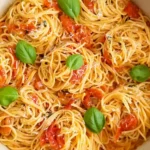
Fresh Spaghetti Pomodoro
- Total Time: 45 minutes
- Yield: 4 servings 1x
- Diet: General
Description
Best easy homemade pomodoro sauce made with fresh tomatoes, basil, onions, and garlic. Tossed in spaghetti and finished with fresh grated parmesan cheese.
Ingredients
- 1/2 lb Thin Spaghetti
- 1 lb Grape or Cherry Tomatoes (cut in half)
- 4 Garlic Cloves (minced)
- 1 cup Onion (diced)
- 1 tsp Salt
- 3 tbsp Olive Oil
- 3 tbsp Butter
- 8–10 Fresh Basil Leaves (chopped)
- 1/4 cup Parmesan Cheese (grated)
- 3/4 cup Hot Pasta Water (reserved from cooking spaghetti)
Instructions
- Step 1: Cook spaghetti according to package instructions for al dente. RESERVE 3/4 CUP PASTA WATER for pomodoro sauce. When done, drain pasta and set aside.
- Step 2: In a large saucepan over medium-low heat, add olive oil, butter and onions. Cook until onions are tender.
- Step 3: Add minced garlic, tomatoes and salt to the onions. Cover and cook over medium-low heat for about 25 minutes until tomatoes are very soft. Stir occasionally.
- Step 4: Break up tomatoes using your cooking spoon or spatula. Add hot pasta water to the sauce and stir to combine. Sprinkle in parmesan cheese and fresh chopped basil. Cook for another 5 minutes or so until sauce lightly thickens.
- Step 5: Toss spaghetti into the pomodoro sauce and serve with more fresh grated parmesan cheese and red pepper flakes(optional). Enjoy!!
Notes
Store leftover pasta completely cooled in an airtight container in the fridge for up to two days. To reheat, use the microwave in 30 second increments or the stovetop by adding a couple tablespoons of water over low heat.
- Prep Time: 5 minutes
- Cook Time: 40 minutes
- Category: Main Course
- Method: Stovetop
- Cuisine: Italian
Nutrition
- Serving Size: 1 serving
- Calories: 444 kcal
- Sugar: 6 g
- Sodium: 763 mg
- Fat: 22 g
- Saturated Fat: 8 g
- Unsaturated Fat: 14 g
- Trans Fat: 0.3 g
- Carbohydrates: 52 g
- Fiber: 4 g
- Protein: 11 g
- Cholesterol: 27 mg
Keywords: fresh spaghetti pomodoro, pomodoro pasta, pomodoro sauce, pomodoro sauce with fresh tomatoes, spaghetti pomodoro