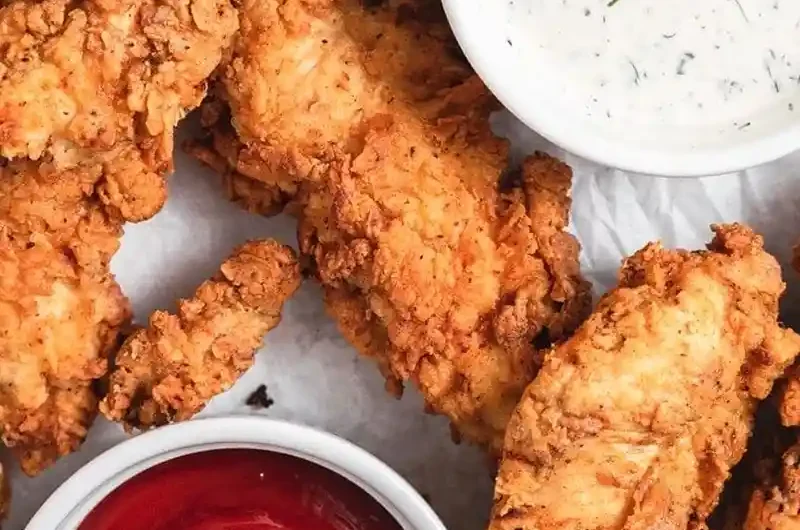
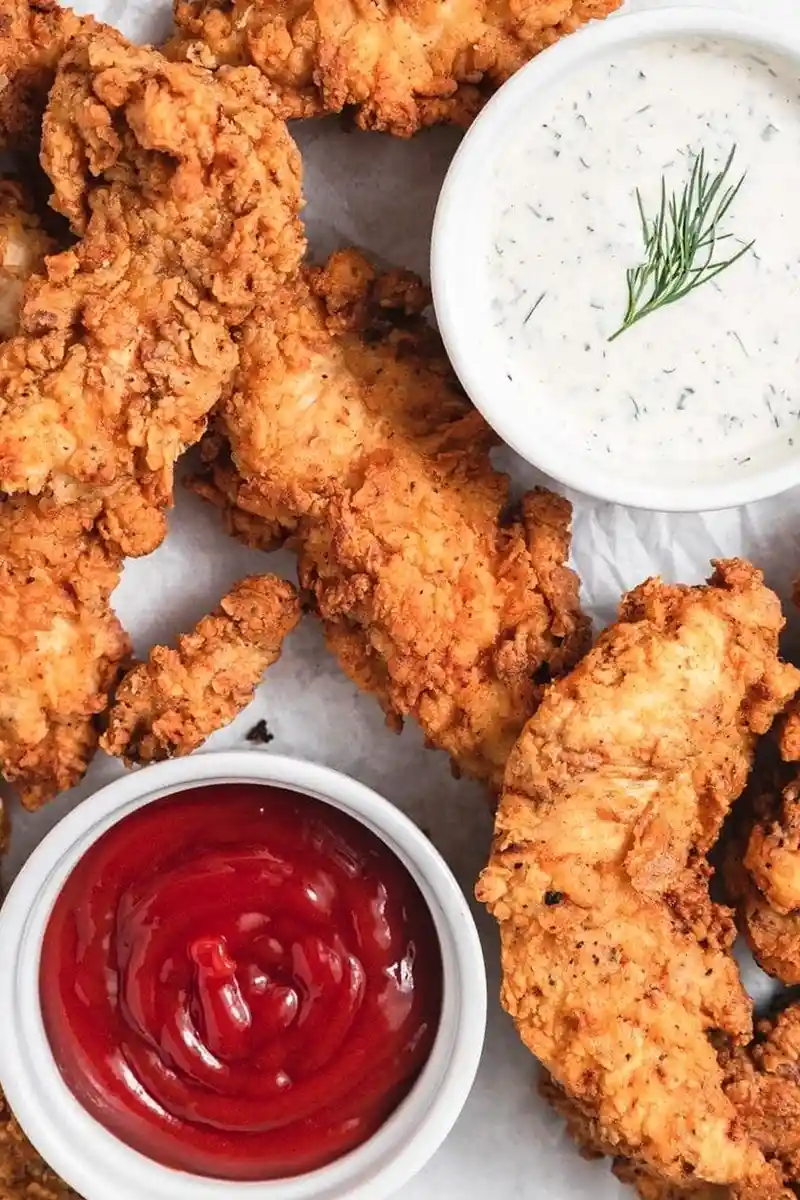
Achieve restaurant-quality crunch and juicy interiors with these buttermilk-marinated chicken tenders. This recipe includes a tangy homemade ranch dipping sauce to complement the seasoned breading perfectly.
List of ingredients
- 2 pounds chicken tenderloins – provides uniform size for even cooking.
- 1 1/2 cups buttermilk – tenderizes the meat and adds tang.
- 1 1/2 teaspoons kosher salt – essential for seasoning the marinade.
- 1/2 teaspoon black pepper – adds a subtle spicy bite.
- 1 teaspoon garlic powder – provides a savory depth of flavor.
- 1/2 teaspoon cayenne – introduces a mild heat to the marinade.
- 1/2 teaspoon smoked paprika – adds a deep, woody aroma.
- 1/2 teaspoon poultry seasoning (optional) – enhances the classic chicken flavor.
- 1 cup all purpose flour – creates the base for the crispy crust.
- 2 tablespoons cornstarch – ensures a lighter, crunchier texture.
- 1 teaspoon kosher salt – seasons the exterior breading.
- 1/2 teaspoon black pepper – adds pepperiness to the crust.
- 1/4 teaspoon cayenne – adds a touch of heat to the outer layer.
- 1/2 teaspoon smoked paprika – gives the tenders a golden-red color.
- 1/2 teaspoon garlic powder – ensures the crust is flavorful.
- 1/2 cup mayonnaise – provides a creamy base for the ranch.
- 1/2 cup sour cream – adds thickness and tang to the sauce.
- 1/2 cup buttermilk – adjusts the consistency of the ranch.
- 1 tablespoon fresh dill – adds a bright, herbal note.
- 1 tablespoon fresh chives – provides a mild onion flavor.
- 1/2 teaspoon garlic powder – adds savory punch to the dressing.
- 1/2 teaspoon black pepper – adds mild spice to the dip.
- 2 teaspoons lemon juice – brightens the overall flavor of the ranch.
- kosher salt (to taste) – used to balance the final flavor of the sauce.
step-by-step instructions
- Prepare the Buttermilk Ranch: Whisk together the mayonnaise, sour cream, fresh dill, fresh chives, garlic powder, black pepper, and lemon juice in a large bowl until the mixture is smooth and thick. Slowly whisk in the buttermilk until you reach your preferred dipping consistency. Transfer to an airtight container and refrigerate for up to one week.
- Marinate the Chicken: In a separate large bowl, combine the buttermilk, 1 1/2 teaspoons salt, 1/2 teaspoon pepper, 1 teaspoon garlic powder, 1/2 teaspoon cayenne, 1/2 teaspoon smoked paprika, and optional poultry seasoning. Add the chicken tenderloins and massage the marinade into the meat to ensure every piece is fully coated. Cover the bowl tightly and refrigerate for at least 4 hours, though 8-24 hours is ideal for maximum flavor.
- Heat the Frying Oil: Pour 2-4 cups of vegetable oil into a heavy-bottomed pot or Dutch oven, ensuring the oil is 2-3 inches deep. Heat over medium-high heat until a thermometer reads exactly 375°F. Set up a wire cooling rack over a baking sheet next to the stove for easy drainage.
- Bread the Tenders: On a large plate, whisk together the flour, cornstarch, 1 teaspoon salt, 1/2 teaspoon pepper, 1/4 teaspoon cayenne, 1/2 teaspoon smoked paprika, and 1/2 teaspoon garlic powder. Remove chicken from the marinade and gently shake off the excess liquid while keeping the surface wet. Press the chicken firmly into the flour mixture until a textured, clumpy coating forms.
- Fry the Chicken: Carefully add 3-4 tenders to the 375°F oil, being careful not to overcrowd the pot to prevent the temperature from dropping. Fry for 7-9 minutes, turning occasionally, until the crust is dark golden brown and the internal temperature reaches 160°F. Remove the tenders and place them on the wire rack to drip off excess oil.
- Keep Warm and Serve: To maintain crispiness, place the baking sheet with the wire rack in an oven preheated to 200°F. This low heat keeps the chicken warm without overcooking the interior or softening the breading. Serve immediately with the chilled buttermilk ranch.
Selecting the Best Chicken Cuts
Using Chicken Tenderloins for Uniformity
Chicken tenderloins are the preferred choice because they are naturally uniform in size and shape. This consistency ensures that every piece cooks at the same rate, preventing some tenders from overcooking while others remain raw.
Cutting Whole Chicken Breasts into Strips
If tenderloins are unavailable, you can slice whole chicken breasts into long strips. Aim to make the strips approximately the same thickness and length to ensure they all reach 160°F internal temperature at the same time.
Secrets for a Superior Crust
The Impact of Cornstarch on Texture
Adding cornstarch to the flour mixture inhibits the development of gluten, which can make breading tough or gluey. Cornstarch absorbs moisture more efficiently, resulting in a lighter, crispier exterior that stays crunchy longer.
Achieving a Clumpy Breading Texture
When dredging the chicken, press the meat firmly into the flour and let the buttermilk create small clumps of dough. These irregular bits of breading fry up into the extra-crunchy ridges found in professional fried chicken.
Preventing the Breading from Peeling
To prevent the crust from separating from the meat, avoid shaking the chicken too vigorously after breading. Ensure the chicken is wet with buttermilk before it hits the flour, as this acts as the glue that binds the coating to the meat.
Oil Temperature and Frying Techniques
Choosing High Smoke Point Oils
Use oils like canola, vegetable, or peanut oil, as these can withstand high temperatures without breaking down or smoking. Avoid extra virgin olive oil or butter for this process, as their smoke points are too low for deep frying.
Managing Oil Temperature Drops
Adding cold chicken to hot oil causes the temperature to drop instantly. Fry only 3-4 tenders at a time to maintain a steady heat, which prevents the chicken from absorbing too much oil and becoming greasy.
Using an Instant-Read Thermometer
Rely on a digital thermometer rather than timing alone, as oil temperatures fluctuate. Remove the chicken when it hits 160°F; the temperature will rise to the safe 165°F mark during the resting period due to carry-over cooking.
Flavor Enhancements and Variations
Adding Tang with Pickle Juice
For a more pungent and tangy flavor profile, replace a quarter cup of the buttermilk in the marinade with pickle juice. This adds an acidic brightness that cuts through the richness of the fried breading.
Increasing Heat with Hot Sauce
To create spicy tenders, whisk 1 to 2 tablespoons of a vinegar-based hot sauce into the buttermilk marinade. This infuses the heat directly into the meat rather than just relying on the cayenne in the breading.
Adjusting the Smoked Paprika Ratio
If you prefer a more traditional savory flavor without the woody notes of smoke, reduce the smoked paprika or swap it for sweet paprika. This will maintain the golden color without adding the smoky aroma.
Alternative Cooking and Serving Methods
Baking Tenders for a Lighter Result
For a baked version, swap the flour breading for breadcrumbs and place the tenders on a wire rack over a baking sheet. Bake at 425°F for 10-15 minutes per side, spraying them lightly with oil to encourage browning.
The Importance of the Wire Rack
Always drain fried chicken on a wire rack rather than paper towels. Placing fried food directly on a flat surface traps steam underneath, which quickly turns the bottom of the crust soggy.
Maintaining Heat in the Oven
Storing the finished tenders in a 200°F oven is the best way to manage large batches. This temperature is high enough to prevent sogginess but low enough to keep the meat juicy until everything is ready to serve.
Storage and Reheating Guidelines
Refrigerator Storage Limits
Store leftover chicken tenders in an airtight container in the refrigerator for up to 3 days. The homemade ranch sauce can be stored separately in a sealed jar for up to one week.
Reheating for Maximum Crispiness
Avoid the microwave, as it steams the breading and makes it soft. Instead, place the tenders on a baking sheet and heat them in a 400°F oven for 10-15 minutes until the exterior is crisp again.
Preventing Sauce Separation
Since the ranch contains fresh buttermilk and sour cream, it may separate slightly in the fridge. Give the sauce a quick whisk or shake before serving to restore its creamy, emulsified consistency.
Troubleshooting Common Problems
Fixing Breading That Falls Off
If the coating slips off, it is usually because the chicken was too wet or not pressed firmly enough into the flour. Ensure you shake off excess marinade so the chicken is damp but not dripping before dredging.
Correcting Over-Salted Coating
If the breading tastes too salty, you can balance it by serving the chicken with a dip that has a higher acid content. Adding a squeeze of fresh lemon juice over the finished tenders can also neutralize excess salt.
Dealing with Oil Overheating
If the crust browns too quickly before the inside is cooked, your oil is too hot. Remove the pot from the heat for a few minutes or add a small amount of room-temperature oil to bring the temperature back down to 375°F.
Frequently Asked Questions
How long can chicken marinate in buttermilk?
For the best results, marinate the chicken for 8 to 12 hours (overnight). While 4 hours is the minimum for flavor, you should not exceed 48 hours, as the acid in the buttermilk can eventually break down the meat too much, affecting the texture.
Can I use a different dipping sauce?
Yes, these tenders pair well with honey mustard, barbecue sauce, buffalo sauce, or hot honey. The seasoned breading is versatile enough to complement both sweet and spicy condiments.
What if I do not have buttermilk?
You can make a substitute by adding 1 tablespoon of lemon juice or white vinegar to 1 cup of whole milk. Let the mixture sit for 5 to 10 minutes until it thickens slightly before using it in the marinade.
Why is my chicken not browning?
This usually happens if the oil temperature has dropped below 350°F. Ensure you are not overcrowding the pan and allow the oil to return to 375°F between each batch of tenders.
Print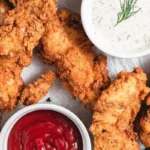
Crispy Buttermilk Fried Chicken Tenders with Zesty Homemade Ranch
- Total Time: 4 hours 50 minutes
- Yield: 4 servings 1x
- Diet: General
Description
These buttermilk fried chicken tenders are super crispy and crunchy on the outside while still being juicy and tender on the inside, served with a tangy homemade buttermilk ranch.
Ingredients
- 2 pounds chicken tenderloins
- 1 1/2 cups buttermilk
- 1 1/2 teaspoons kosher salt
- 1/2 teaspoon black pepper
- 1 teaspoon garlic powder
- 1/2 teaspoon cayenne
- 1/2 teaspoon smoked paprika
- 1/2 teaspoon poultry seasoning (optional)
- 1 cup all purpose flour
- 2 tablespoons cornstarch
- 1 teaspoon kosher salt
- 1/2 teaspoon black pepper
- 1/4 teaspoon cayenne
- 1/2 teaspoon smoked paprika
- 1/2 teaspoon garlic powder
- 1/2 cup mayonnaise
- 1/2 cup sour cream
- 1/2 cup buttermilk
- 1 tablespoon fresh dill
- 1 tablespoon fresh chives
- 1/2 teaspoon garlic powder
- 1/2 teaspoon black pepper
- 2 teaspoons lemon juice
- kosher salt to taste
Instructions
- Buttermilk Ranch: Whisk together all ingredients except the buttermilk until smooth, then slowly whisk in the buttermilk until the desired consistency is reached.
- Marinate: Whisk together marinade ingredients in a large bowl, add chicken tenderloins and massage to coat, then cover and refrigerate for 4 to 24 hours.
- Heat Oil: Pour 2-4 cups of vegetable oil into a heavy bottomed pot and heat over medium-high until it reaches 375°F.
- Bread Chicken: Combine flour, cornstarch, salt, pepper, cayenne, smoked paprika, and garlic powder on a plate; remove chicken from marinade and coat generously.
- Fry: Add 3-4 tenders to the oil and fry for 7-9 minutes or until the internal temperature reaches 160°F.
- Drain and Serve: Place fried tenders on a wire rack to drip, then serve immediately with the homemade ranch.
Notes
Store chicken tenders in the fridge for up to 3 days and ranch for up to a week. To reheat, place tenders on a baking sheet in a 400°F oven for 10-15 minutes.
- Prep Time: 20 minutes
- Cook Time: 30 minutes
- Category: Appetizer, Dinner, Lunch, Snack
- Method: Frying
- Cuisine: American
Nutrition
- Serving Size: 1 serving
- Calories: 452 kcal
- Sugar: 5 g
- Sodium: 1813 mg
- Fat: 9 g
- Saturated Fat: 3 g
- Unsaturated Fat: 6 g
- Trans Fat: 0.03 g
- Carbohydrates: 34 g
- Fiber: 1 g
- Protein: 55 g
- Cholesterol: 155 mg
Keywords: buttermilk fried chicken, chicken tenders, homemade ranch, crispy chicken, American cuisine