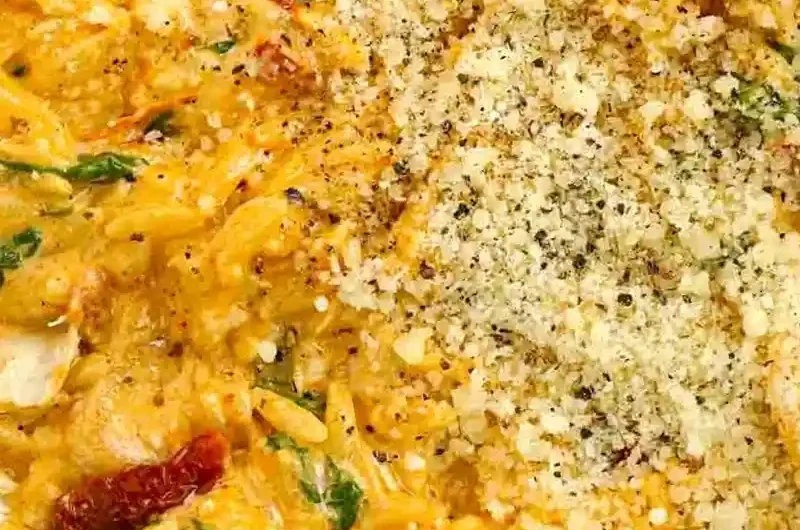
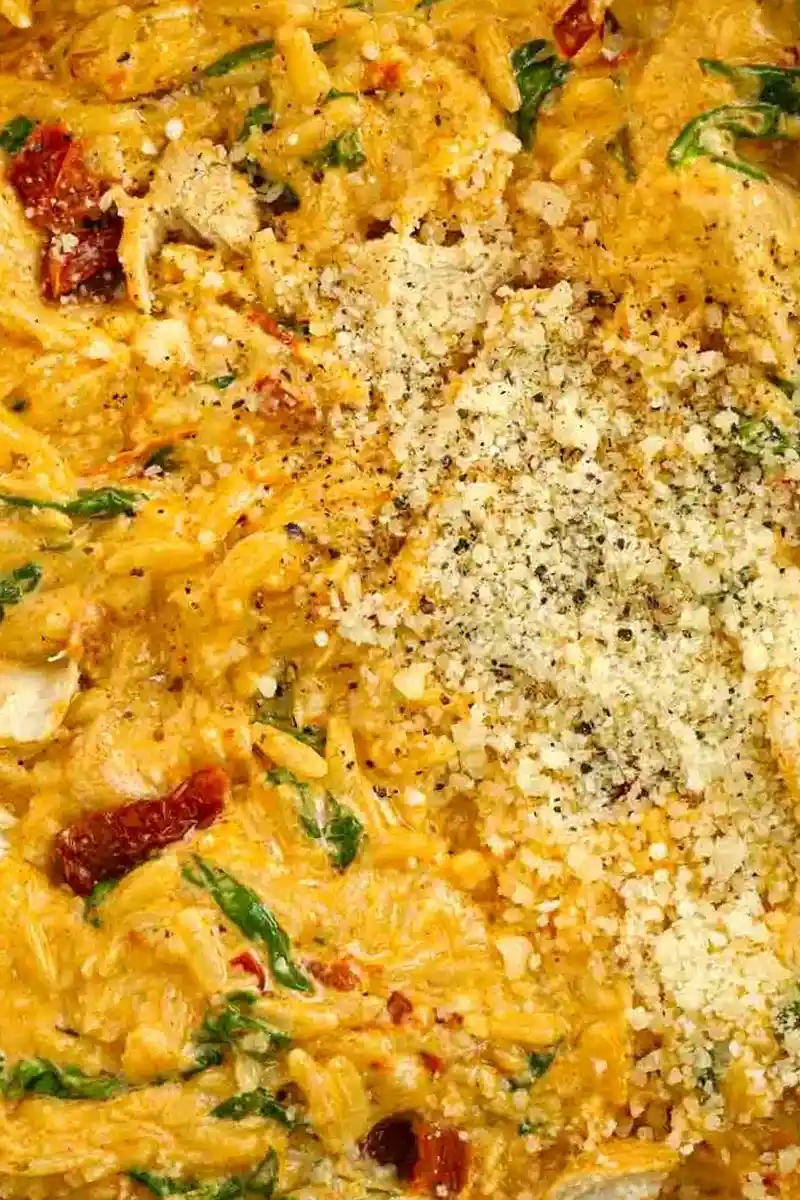
This one-pot meal combines tender chicken and rice-shaped pasta in a rich, creamy sauce. It provides a complete dinner solution that simplifies cleanup by using a single pan for all steps.
List of ingredients
- 650 g Chicken breast (about 4 pieces) – skinless and boneless, chopped into bite-sized pieces.
- 1 tbsp Olive oil – use the oil from the sun-dried tomatoes jar for extra flavor.
- 3 Garlic cloves – peeled and crushed.
- 170 g Sun-dried tomatoes – stored in oil and drained.
- 1 tsp Oregano – dried.
- 2 tsp Paprika – standard or smoked.
- 250 g Orzo – dried pasta.
- 650 ml Hot chicken stock – prepared with a stock cube or bouillon.
- 150 ml Double cream – heavy cream or thickened cream.
- 50 g Parmesan – finely grated.
- 120 g Spinach – fresh baby spinach.
- Freshly ground black pepper – to taste.
step-by-step instructions
- Brown the chicken: Heat the oil in a large, deep frying pan over medium heat. Add the chicken pieces and cook for 5 minutes, stirring occasionally, until all sides show a golden color.
- Sauté aromatics: Reduce the heat setting. Stir in the crushed garlic, drained sun-dried tomatoes, oregano, and paprika, cooking for 3 to 5 minutes until the garlic is soft.
- Simmer the pasta: Stir in the orzo, hot chicken stock, and black pepper. Place a lid on the pan and cook for 10 minutes, stirring occasionally, until the orzo is nearly tender.
- Finish the sauce: Lower the heat to the minimum setting. Add the spinach and cream, stirring well for 1 to 3 minutes until the spinach wilts and the cream is heated. Verify the chicken is fully cooked.
- Final touch: Remove the pan from the heat. Stir in the grated parmesan until fully melted and incorporated.
Cooking Optimization Tips
Selecting the Correct Pan
Use a wide, deep-sided frying pan or a heavy-bottomed skillet. These pans ensure that the chicken sears evenly and provide enough room for the orzo to expand without overcrowding. A tight-fitting lid is also necessary to maintain the temperature during the simmering phase.
Managing Heat Distribution
Maintain a medium heat during the initial browning of the chicken to avoid burning the exterior while leaving the center raw. When adding garlic and spices, lowering the heat prevents the garlic from scorching, which would introduce a bitter taste to the sauce.
Searing for Maximum Flavor
Pat the chicken dry with paper towels before adding it to the hot oil. This removes surface moisture and allows for a better brown crust. The browned bits left in the pan, known as fond, integrate into the sauce for a deeper flavor profile.
Controlling Liquid Ratios
The 650 ml of stock is calibrated for 250 g of orzo, but absorption rates can vary by pan type. If the pasta is still hard but the liquid is gone, add 50 ml of water at a time. Avoid adding too much liquid to prevent the dish from becoming soupy.
Using the Lid Effectively
Keeping the lid on during the orzo simmering stage is essential for trapping steam. This allows the pasta to cook evenly through the absorption of the chicken stock. Without a lid, the liquid evaporates too quickly, which may lead to undercooked pasta.
Ingredient Selection and Preparation
Choosing the Right Chicken Cuts
Skinless, boneless chicken breasts are the standard for this recipe to keep it lean. For a juicier result, boneless skinless chicken thighs can be used. If using thighs, increase the initial searing time by 2 to 3 minutes to ensure they are cooked through.
Ensuring Uniform Chicken Pieces
Cut the chicken into consistent, bite-sized cubes of roughly 2 centimeters. Uniform sizes ensure that every piece cooks at the same rate. This prevents some pieces from drying out while others remain undercooked.
Using Sun-Dried Tomatoes in Oil
Select sun-dried tomatoes that come packed in oil rather than the dry-packed variety. The oil-packed tomatoes are more tender and release their flavors more readily into the sauce. Drain them well to avoid adding excess fat to the pan.
Fresh Garlic vs. Pre-minced
Freshly crushed garlic provides a sharper, more aromatic flavor than pre-minced jarred garlic. If using jarred garlic, reduce the amount slightly as the flavor is often more muted. Always add garlic after the chicken has browned to prevent burning.
Selecting a High-Quality Chicken Stock
Use a low-sodium chicken stock or bouillon to maintain control over the salt levels. Since parmesan cheese is naturally salty, using a concentrated stock can make the final dish too salty. Hot stock is used to keep the pan temperature stable when adding the pasta.
Customizing the Flavor Profile
Adjusting the Spice Level
To add a subtle heat, stir in a pinch of crushed red pepper flakes along with the paprika. For those who prefer a milder taste, ensure the paprika used is sweet rather than smoked. The balance of heat should complement the richness of the cream.
Enhancing with Fresh Herbs
While dried oregano is used during cooking, adding fresh chopped parsley or basil at the end provides a bright contrast. Stir these in at the same time as the parmesan. Fresh herbs add a layer of freshness that cuts through the heavy cream.
Adding Citrus Brightness
A squeeze of fresh lemon juice added just before serving can brighten the overall flavor. The acidity helps balance the fats from the cream and cheese. Lemon zest added during the sauté phase also enhances the aromatic quality of the dish.
Exploring Different Paprika Types
Smoked paprika adds a woody, outdoor-grilled flavor to the chicken. Standard sweet paprika provides a more traditional, mild sweetness. Depending on the desired outcome, you can use a 50/50 blend of both.
Balancing the Salt Content
Taste the sauce after adding the parmesan before adding any extra salt. The combination of stock, sun-dried tomatoes, and cheese usually provides enough sodium. If the dish is too salty, a small splash of water or a pinch of sugar can help balance it.
Vegetable and Protein Substitutions
Swapping Chicken for Thighs
Chicken thighs are more forgiving and remain moist even if slightly overcooked. They offer a richer flavor than breast meat. Be sure to trim any excess fat before chopping them into pieces.
Creating a Vegetarian Version
Replace the chicken with sliced mushrooms or cauliflower florets for a vegetarian alternative. Swap the chicken stock for a high-quality vegetable stock. Use a plant-based parmesan alternative to make the dish fully meat-free.
Adding Extra Seasonal Vegetables
Diced zucchini or frozen peas can be added during the final 5 minutes of simmering. These vegetables cook quickly and add color and nutrients. Avoid adding water-heavy vegetables like raw mushrooms at the end, as they release too much moisture.
Using Different Leafy Greens
If baby spinach is unavailable, chopped kale or swiss chard can be used. These greens are heartier and may require an extra 2 minutes of cooking time to soften. Stir them in before the cream to ensure they wilt completely.
Alternative Cheese Options
Pecorino Romano is a saltier, sharper alternative to Parmesan. For a nuttier flavor, try Gruyère or a mild Provolone. Always grate the cheese fresh to ensure it melts smoothly into the sauce.
Creamy Sauce Variations
Using Heavy Cream Alternatives
If double cream is unavailable, heavy cream or thickened cream serves as a direct substitute. In the US, heavy whipping cream is the closest match. Ensure the substitute has a high fat content to maintain the sauce thickness.
Incorporating Crème Fraîche
Crème fraîche or sour cream can be used instead of double cream for a slightly tangy profile. These ingredients are thicker and may require a tablespoon of extra stock to reach the desired consistency. Stir them in on very low heat to prevent curdling.
Dairy-Free Creamy Options
Full-fat coconut milk or cashew cream can be used as a dairy-free alternative. Note that coconut milk will introduce a slight coconut flavor to the dish. Use a nutritional yeast-based powder instead of parmesan for a vegan version.
Preventing Sauce Separation
When adding the cream, ensure the heat is reduced to the lowest setting. High heat can cause the fats in the cream to separate, resulting in an oily appearance. Stirring constantly for a few minutes helps emulsify the sauce into a smooth consistency.
Achieving the Ideal Consistency
The sauce should be thick enough to coat the back of a spoon but not so thick that it becomes a paste. If it is too thick, stir in a tablespoon of warm water. If it is too thin, let it simmer uncovered for 2 more minutes before adding the cheese.
Serving and Presentation Ideas
Complementary Bread Pairings
Serve this dish with toasted garlic bread or a warm baguette. The bread is useful for scooping up the remaining creamy sauce from the plate. A crusty sourdough also provides a nice textural contrast to the soft orzo.
Balancing with Fresh Salads
A simple arugula or mixed green salad with a balsamic vinaigrette balances the richness of the cream. The acidity of the vinegar cleanses the palate between bites. Avoid creamy dressings for the side salad to prevent flavor overlap.
Plating for a Family Meal
This recipe is best served family-style directly from the pan to keep it warm. Use a wide bowl to allow the pasta to spread, preventing it from clumping together. This presentation emphasizes the one-pot nature of the meal.
Final Garnish Recommendations
A sprinkle of freshly chopped parsley and a few extra gratings of parmesan enhance the visual appeal. A final crack of black pepper adds a sharp finish. These simple additions make the home-cooked meal look professionally plated.
Non-Alcoholic Drink Pairings
A sparkling water with a slice of lemon or a chilled iced tea complements the creamy flavors. The carbonation in sparkling water helps cut through the richness of the parmesan and cream. Avoid overly sweet drinks that might clash with the savory stock.
Storage and Preservation
Proper Refrigeration Methods
Store leftovers in an airtight container in the refrigerator for up to 3 days. Ensure the dish has cooled slightly before sealing the lid to prevent excessive condensation. This keeps the pasta from becoming too mushy.
Managing Leftover Texture
Orzo continues to absorb liquid as it sits in the fridge, which can make the dish appear dry or gloopy. Do not be alarmed by the thickness of the cold pasta. This is easily fixed during the reheating process.
Freezing Considerations
Freezing is not recommended for this dish due to the cream and cheese content. The cream can split during the freezing and thawing process, leading to a grainy texture. If you must freeze it, undercook the orzo slightly.
Thawing Guidelines
If the dish was frozen, thaw it slowly in the refrigerator overnight. Avoid thawing it at room temperature to ensure food safety. After thawing, reheat it gently on the stove rather than in the microwave.
Shelf Life and Safety
Discard any leftovers that have been in the fridge for more than 72 hours. Ensure the dish is reheated to an internal temperature of 74 degrees Celsius to ensure all bacteria are destroyed. Always store the dish in the coldest part of the fridge.
Reheating Best Practices
Stove-top Reheating Method
The best way to reheat this orzo is in a small saucepan over low to medium heat. Stir frequently to ensure the heat is distributed evenly. This method allows you to monitor the consistency and add liquid as needed.
Microwave Reheating Tips
If using a microwave, heat the pasta in short 30-second intervals. Stir between each interval to prevent hot spots and ensure the cream is evenly warmed. Cover the dish with a damp paper towel to retain moisture.
Restoring Creaminess with Water
Add a splash of water, milk, or chicken stock when reheating to restore the creamy texture. One to two tablespoons is usually sufficient to loosen the pasta. This prevents the dish from becoming too thick or dry.
Avoiding Overcooking during Reheat
Heat the pasta only until it is warmed through. Excessive reheating can cause the orzo to break down and become mushy. Keep the temperature low and stop as soon as the dish is hot.
Temperature Safety for Reheating
Only reheat the portion you intend to eat. Repeatedly heating and cooling the entire pot can degrade the quality of the cream and increase the risk of foodborne illness. Use a clean spoon to portion out leftovers.
Troubleshooting Common Problems
Fixing Undercooked Orzo
If the liquid is absorbed but the orzo is still firm, add 1/4 cup of hot water or stock. Cover the pan again and simmer on low for another 2 to 3 minutes. Stir once before replacing the lid to prevent sticking.
Handling Excess Liquid
If the sauce is too thin after the simmering time, remove the lid and increase the heat slightly. Simmer for 3 to 5 minutes, stirring frequently to allow the liquid to reduce. The addition of parmesan at the end will also help thicken the sauce.
Preventing Burnt Garlic
If the garlic begins to brown too quickly, immediately add the sun-dried tomatoes or a splash of stock. The moisture from the tomatoes lowers the pan temperature and stops the garlic from burning. Always keep the garlic moving in the pan.
Correcting Over-salted Sauce
If the final dish tastes too salty, stir in a small amount of unsalted cream or a squeeze of lemon juice. The acidity and fat help mask the excess salt. In extreme cases, adding a few more chopped cooked vegetables can dilute the saltiness.
Dealing with Clumped Pasta
If the orzo clumps together, it is likely due to a lack of stirring or too little liquid. Use a whisk or a fork to gently break up the clumps while adding a small amount of warm water. Stir slowly to avoid breaking the pasta grains.
Frequently Asked Questions
What is orzo?
Orzo is a small, rice-shaped pasta made from durum wheat. Despite its appearance, it is pasta, not grain. It is prized for its ability to absorb sauces and its versatility in both soups and main courses.
Can I use rice instead?
You can use rice, but the cooking time and liquid ratios will change significantly. Arborio rice would be the best choice for a similar creamy consistency, but it requires more frequent stirring and a longer cooking time than orzo.
Is it possible to use a slow cooker?
This specific recipe is designed for a pan to ensure proper searing. For a slow cooker, sear the chicken separately, then add everything except the cream and spinach. Stir in the dairy and greens during the last 30 minutes of cooking.
Can I make this without Parmesan?
Yes, the recipe will still work without parmesan, although it will be slightly less salty and less thick. You can substitute it with nutritional yeast for a similar savory flavor or simply omit it and add a bit more black pepper.
How do I prevent the chicken from drying out?
Avoid overcooking the chicken during the initial searing phase; it does not need to be fully cooked through at that stage. The chicken will finish cooking gently during the orzo simmering and cream-heating phases.
Print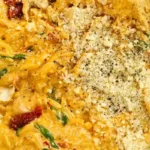
One-Pot Creamy Marry Me Chicken Orzo
- Total Time: 30 minutes
- Yield: 4 servings 1x
- Diet: General
Description
This Marry Me Chicken Orzo is a treat of a one pot pasta recipe – super simple and takes just 30 minutes to make. All the flavours of our favourite Tuscan inspired chicken dish, made into a complete dinner.
Ingredients
- 650 g chicken breast, skinless and boneless, chopped
- 1 tbsp olive oil
- 3 garlic cloves, peeled and crushed
- 170 g sun-dried tomatoes in oil, drained
- 1 tsp oregano
- 2 tsp paprika
- 250 g orzo
- 650 ml hot chicken stock
- 150 ml double cream
- 50 g parmesan, grated
- 120 g spinach
- Freshly ground black pepper
Instructions
- Step 1: In a large, deep frying pan, heat the oil over a medium heat. When it’s hot, carefully add the chicken pieces. Cook for 5 minutes stirring occasionally until all sides are starting to colour.
- Step 2: Reduce the heat and add the garlic, sun-dried tomatoes, oregano and paprika. Stir for 3-5 minutes until the garlic is softened.
- Step 3: Add the orzo, stock, and some pepper and give everything a good stir and put the lid on. Cook for 10 minutes, stirring occasionally, until the orzo is almost cooked.
- Step 4: Turn the heat to the lowest setting add the spinach and cream and stir very well for 1-3 minutes until the spinach is wilted and the cream is heated through. Check the chicken is cooked through.
- Step 5: Turn off the heat and stir in the parmesan.
Notes
If the mixture becomes too dry before the orzo is cooked, add a splash of water. You can use boneless, skinless chicken thighs, adjusting cooking time. Double cream can be substituted with heavy cream, crème fraiche, or sour cream.
- Prep Time: 5 minutes
- Cook Time: 25 minutes
- Category: Main Course
- Method: One Pot
- Cuisine: Family Food
Nutrition
- Serving Size: 1 serving
- Calories: 790 kcal
- Sugar: 6 g
- Sodium: 776 mg
- Fat: 34 g
- Saturated Fat: 14 g
- Unsaturated Fat: 16 g
- Trans Fat: 0.02 g
- Carbohydrates: 67 g
- Fiber: 6 g
- Protein: 56 g
- Cholesterol: 160 mg
Keywords: one pot, chicken orzo, marry me chicken, creamy pasta, dinner, Tuscan chicken