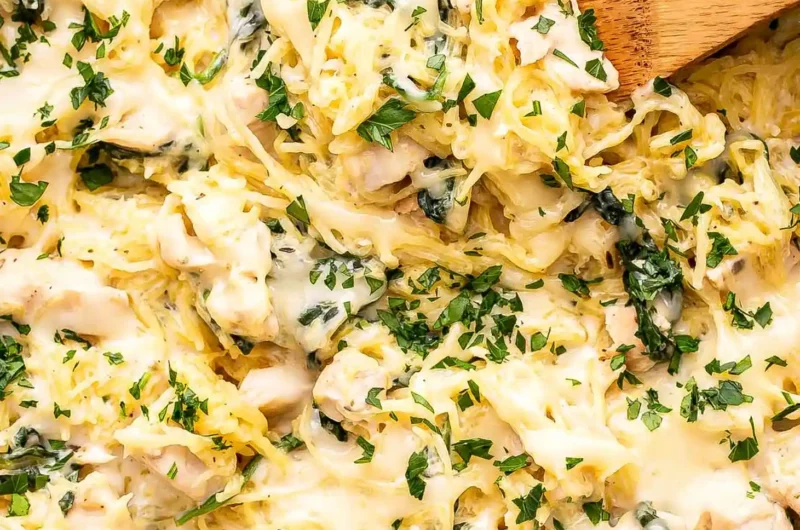
Enjoy a nutritious, lower-carb version of a classic Italian-style dish by swapping traditional pasta for roasted spaghetti squash. This meal combines lean protein and fresh greens in a creamy cheese sauce for a satisfying dinner. It is a practical way to increase vegetable intake without sacrificing the rich flavor of Alfredo.
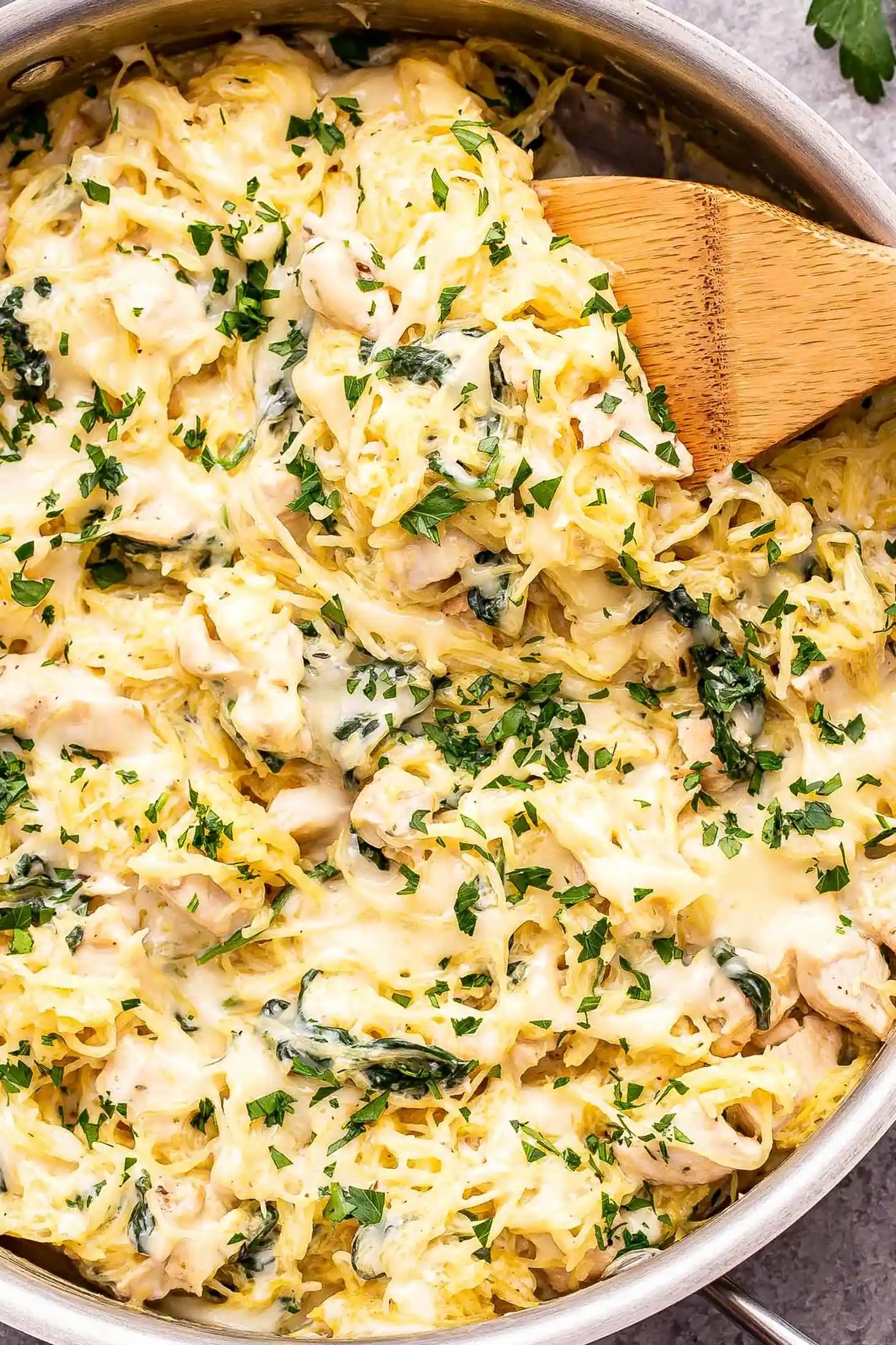
List of ingredients
- 1 large spaghetti squash (about 5 cups) – serves as the nutrient-dense base.
- 1 tablespoon olive oil – used for searing the chicken.
- 1 pound boneless skinless chicken breasts (cut into bite sized pieces) – the main lean protein.
- 1 teaspoon Italian seasoning – provides a balanced herb profile.
- 1 teaspoon dried oregano – adds a classic savory note.
- 1/2 teaspoon garlic powder – enhances the overall depth of flavor.
- 3 cups baby spinach – adds vitamins and a pop of color.
- Kosher salt and fresh ground black pepper to taste – essential for basic seasoning.
- 2 ounces low fat cream cheese – creates a thick, creamy sauce base.
- 1/3 cup low fat milk (or milk of choice) – adjusts the consistency of the sauce.
- 1/4 cup shredded Parmesan cheese – gives the sauce its characteristic saltiness.
- 1/4 cup plain low fat Greek yogurt – provides tang and a smoother texture.
- 1/2 cup shredded part skim mozzarella cheese – used for the melted topping.
- Chopped parsley for garnish (optional) – adds a fresh herbal finish.
step-by-step instructions
- Prepare the oven: Preheat oven to 400° F., line a baking sheet with foil and spray it with cooking oil to prevent sticking.
- Roast the squash: Cut the spaghetti squash in half lengthwise, scoop out the seeds and season with salt and pepper. Place the squash cut side down on the baking sheet and roast until tender, about 35-45 minutes depending on the size.
- Extract strands: Let the squash cool for about 10 minutes before scooping out the strands with a fork to avoid burns.
- Season the protein: Combine the spices together in a small bowl. Cut the chicken into bite sized pieces and sprinkle with the spice mixture, salt and pepper.
- Sauté chicken and greens: Add the olive oil to a large skillet and heat it over medium-high heat. Add in the chicken and sauté until it’s nearly cooked through. Add in the baby spinach and cook until the spinach wilts and the chicken is thoroughly cooked.
- Create the sauce: Add the cream cheese, Parmesan cheese and milk to the skillet and stir until a sauce forms. Put the spaghetti squash strands into the skillet along with the Greek yogurt. Toss everything together until it’s coated in the sauce.
- Melt the cheese: Top with shredded mozzarella and either cover with a lid until the cheese is melted 2-3 minutes or stick the skillet in the oven and broil for several minutes or until the cheese is melted and lightly browned. Garnish with chopped parsley and serve.
Optimizing Your Spaghetti Squash
Selecting the Ideal Squash
Choose a squash that feels heavy for its size and has a firm, golden-yellow skin. Avoid any squash with soft spots or bruises, as these indicate the vegetable is overripe or damaged. A uniform shape helps ensure the squash roasts evenly in the oven.
Preventing Excess Moisture
Roasting the squash cut-side down allows the interior to steam while the excess water drains away. Avoid overcooking the squash, as this can lead to mushy strands and more water releasing into your sauce. Once roasted, let it cool slightly before scooping to maintain the structure.
Using the Right Roasting Temperature
Maintaining an oven temperature of 400° F ensures that the exterior caramelizes slightly while the inside softens. If the oven is too cool, the squash may take too long and become watery. Always use a foil-lined sheet for easier cleanup and consistent heat distribution.
Efficiently Extracting Strands
Use a sturdy metal fork to scrape the flesh from the skin in long, vertical motions. This technique creates the “spaghetti” effect and ensures you get most of the usable vegetable. Be careful not to scrape too hard, or you may include bits of the skin in the dish.
Mastering the Alfredo Sauce
Selecting Milk for Sauce Consistency
Low-fat milk works well for a lighter version, but whole milk or half-and-half will create a richer, denser sauce. If using a non-dairy milk, choose an unsweetened variety to avoid altering the savory flavor profile. The amount of milk can be adjusted slightly based on your preferred thickness.
Using Room Temperature Cream Cheese
Ensure the cream cheese is softened to room temperature before adding it to the skillet. Cold cream cheese can clump, making it difficult to achieve a smooth, homogenous sauce. If you are in a rush, you can microwave it for a few seconds to soften it.
Upgrading the Parmesan Quality
Using freshly grated Parmesan cheese provides a better melt and a more intense flavor than pre-shredded options. Pre-shredded cheeses often contain anti-clumping agents that can prevent the sauce from becoming perfectly smooth. Parmigiano Reggiano is a high-quality choice for a traditional taste.
Adding Greek Yogurt for Texture
Plain Greek yogurt adds a slight tang and creaminess while keeping the calorie count lower than heavy cream. It should be stirred in at the end of the process to prevent it from curdling under high heat. This ingredient helps bind the sauce to the squash strands.
Chicken Preparation and Cooking
Uniform Cutting for Even Cooking
Cut the chicken breasts into equal, bite-sized pieces to ensure they cook at the same rate. Uneven pieces lead to some chunks being overcooked and dry while others remain raw. A size of roughly one inch per side is generally ideal for this recipe.
Avoiding Overcooked Protein
Sauté the chicken over medium-high heat just until it is nearly cooked through before adding the spinach. This prevents the chicken from becoming tough and rubbery during the final sauce-simmering phase. The residual heat from the sauce will finish the cooking process.
Using Chicken Thighs for More Juiciness
While breasts are leaner, boneless skinless chicken thighs are a great alternative for those who prefer more flavor and moisture. Thighs are more forgiving during the sauté process and are less likely to dry out. Adjust the cooking time slightly as thighs may take a few minutes longer.
Customizing the Spice Blend
The combination of Italian seasoning, oregano, and garlic powder creates a classic profile, but you can add a pinch of red pepper flakes for heat. Ensure the spices are mixed in a bowl first so they are evenly distributed across the meat. This prevents concentrated clumps of salt or garlic.
Vegetable Add-ins and Variations
Adding Sautéed Mushrooms
Sliced cremini or button mushrooms can be added to the skillet along with the chicken. Sauté them until they release their moisture and brown slightly before adding the spinach. This adds an earthy depth and more texture to the final dish.
Using Kale Instead of Spinach
Lacinato or curly kale is a sturdy alternative to baby spinach. Since kale is tougher, add it to the pan a few minutes before the spinach would normally go in to ensure it softens. Remove the woody stems before adding the leaves to the skillet.
Incorporating Sun-dried Tomatoes
Chopped sun-dried tomatoes add a concentrated sweetness and tartness that cuts through the richness of the cheese. Stir them in during the last few minutes of sautéing the chicken. Use tomatoes packed in oil for extra flavor, but drain them first.
Adding Red Bell Peppers
Diced red bell peppers provide a mild sweetness and vibrant color to the meal. Sauté them with the chicken to soften them and integrate the flavors. This addition increases the nutrient density and visual appeal of the dish.
Serving and Presentation Ideas
Serving in the Squash Shell
Instead of using a skillet, scoop the finished mixture back into the roasted squash halves. This creates a beautiful presentation and makes the dish feel more like a gourmet meal. You can then broil the shells to melt the mozzarella directly on top.
Pairing with a Side Salad
A crisp green salad with a lemon vinaigrette balances the creaminess of the Alfredo sauce. Use mixed greens, cucumbers, and radishes for a refreshing contrast. The acidity in the dressing helps cleanse the palate between bites of the rich pasta alternative.
Adding a Crunch with Toasted Breadcrumbs
To add texture, sprinkle toasted panko or Italian breadcrumbs over the melted mozzarella. This provides a contrast to the soft squash and creamy sauce. Toast the breadcrumbs in a pan with a little butter and garlic for extra flavor.
Garnish Options for Freshness
Freshly chopped parsley is the standard garnish, but fresh basil leaves also work well. These herbs add a bright, fresh note that offsets the heavy cheeses. A sprinkle of extra red pepper flakes can also add a visual pop of color.
Storage and Reheating Guide
Refrigeration Limits
Store leftovers in an airtight container in the refrigerator for up to three to four days. Ensure the food has cooled slightly before sealing the lid to prevent excess condensation. This helps maintain the quality of the squash strands.
Best Way to Reheat
Reheat the dish in a skillet over low to medium heat, adding a splash of milk or water to loosen the sauce. Avoid using the microwave on high power, as this can make the chicken rubbery and the sauce oily. Stir gently to avoid breaking the squash strands.
Freezing Considerations
Spaghetti squash does not always freeze and thaw well, often becoming watery or grainy. However, the chicken and sauce mixture can be frozen if the squash is omitted. If freezing the full dish, be aware that the texture of the vegetables will change significantly.
Managing Sauce Separation
When reheating, it is common for the fats in the cheese and yogurt to separate. Stirring in a small amount of warm milk or cream can help re-emulsify the sauce. Keep the heat low and stir constantly until the sauce is smooth again.
Make-Ahead Strategies
Pre-roasting the Squash
You can roast the spaghetti squash several days in advance and store the strands in the fridge. When ready to cook, simply add the cold strands to the hot sauce in the skillet. This reduces the active cooking time on a weeknight significantly.
Preparing the Chicken in Advance
Sauté the seasoned chicken and spinach ahead of time and store them together. Reheat the mixture in the skillet before adding the dairy components. This ensures the protein is ready and allows you to focus on the sauce consistency.
Mixing the Spice Blend Early
Combine the Italian seasoning, oregano, garlic powder, salt, and pepper in a small jar a week before you plan to cook. This makes the preparation process faster and ensures you have all ingredients on hand. Store the blend in a cool, dry place.
Staging the Assembly
Prepare all your cheeses and liquids in measuring cups before you start the stove. Having the milk, Greek yogurt, and shredded cheeses ready prevents the sauce from overcooking while you search for ingredients. This “mise en place” approach ensures a smoother workflow.
Troubleshooting Common Issues
Fixing a Too-Thick Sauce
If the sauce becomes too thick or paste-like, stir in additional milk one tablespoon at a time. Continue stirring over low heat until the desired consistency is reached. This usually happens if the sauce simmers for too long or the heat is too high.
Correcting a Too-Thin Sauce
If the sauce is too runny, allow it to simmer for a few extra minutes without a lid to reduce the liquid. You can also stir in an extra tablespoon of Parmesan cheese or a small amount of cream cheese to thicken it. Avoid adding flour, as it can change the flavor.
Preventing Curdled Dairy
To prevent the yogurt or milk from curdling, keep the heat at a low simmer once the dairy is added. Avoid boiling the sauce vigorously, as extreme heat breaks the emulsion of the cream cheese and yogurt. Stirring constantly helps distribute the heat evenly.
Handling Overcooked Squash
If the squash is too mushy, drain any excess liquid from the strands using a colander before adding them to the skillet. This prevents the extra water from thinning out your Alfredo sauce. In the future, reduce the roasting time by 5-10 minutes.
Frequently Asked Questions
Can I make this vegetarian?
Yes, you can omit the chicken and replace it with a hearty vegetable like cannellini beans or extra mushrooms. Sauté the spinach and your chosen vegetable in olive oil before proceeding with the sauce steps. The flavor profile remains creamy and satisfying.
What is the best substitute for Greek yogurt?
Sour cream is the closest substitute for Greek yogurt, providing a similar tang and thickness. Alternatively, you can use an extra ounce of cream cheese or more milk, though the flavor will be slightly less bright. Ensure the substitute is stirred in at the end.
Can I use frozen spinach?
Yes, but you must thaw the frozen spinach completely and squeeze out all excess water using a kitchen towel. Adding watery spinach will dilute the Alfredo sauce and make it runny. Stir the thawed spinach in at the same step as the fresh baby spinach.
Is this recipe gluten-free?
This recipe is naturally gluten-free as it uses spaghetti squash instead of wheat-based pasta. Ensure that your store-bought Italian seasoning and cream cheese are certified gluten-free if you have a severe allergy. All other ingredients are naturally free of gluten.
Print
Chicken and Spinach Spaghetti Squash Alfredo
- Total Time: 60 minutes
- Yield: 4 servings 1x
- Diet: Low Carb
Description
This Chicken and Spinach Spaghetti Squash Alfredo is a lighter, lower carb way to enjoy chicken Alfredo.
Ingredients
- 1 large spaghetti squash (about 5 cups)
- 1 tablespoon olive oil
- 1 pound boneless skinless chicken breasts, cut into bite sized pieces
- 1 teaspoon Italian seasoning
- 1 teaspoon dried oregano
- 1/2 teaspoon garlic powder
- 3 cups baby spinach
- Kosher salt and fresh ground black pepper to taste
- 2 ounces low fat cream cheese
- 1/3 cup low fat milk
- 1/4 cup shredded Parmesan cheese (microbial-rennet)
- 1/4 cup plain low fat Greek yogurt
- 1/2 cup shredded part skim mozzarella cheese (microbial-rennet)
- Chopped parsley for garnish (optional)
Instructions
- Step 1: Preheat oven to 400° F., line a baking sheet with foil and spray it with cooking oil.
- Step 2: Cut the spaghetti squash in half lengthwise, scoop out the seeds and season with salt and pepper. Place the squash cut side down on the baking sheet and roast until tender, about 35-45 minutes depending on the size.
- Step 3: Let the squash cool for about 10 minutes before scooping out the strands with a fork.
- Step 4: Combine the spices together in a small bowl. Cut the chicken into bite sized pieces and sprinkle with the spice mixture, salt and pepper.
- Step 5: Add the olive oil to a large skillet and heat it over medium-high heat. Add in the chicken and sauté until it’s nearly cooked through. Add in the baby spinach and cook until the spinach wilts and the chicken is thoroughly cooked.
- Step 6: Add the cream cheese, Parmesan cheese and milk to the skillet and stir until a sauce forms. Put the spaghetti squash strands into the skillet along with the Greek yogurt. Toss everything together until it’s coated in the sauce.
- Step 7: Top with shredded mozzarella and either cover with a lid until the cheese is melted 2-3 minutes or stick the skillet in the oven and broil for several minutes or until the cheese is melted and lightly browned. Garnish with chopped parsley and serve.
Notes
Roast the spaghetti squash in advance to save time. You can also use rotisserie chicken (skin removed) for a faster preparation.
- Prep Time: 10 minutes
- Cook Time: 50 minutes
- Category: Chicken + Poultry
- Method: Roasting, Sautéing
- Cuisine: American
Nutrition
- Serving Size: 1 serving
- Calories: 352 kcal
- Sugar: 9 g
- Sodium: 442 mg
- Fat: 14 g
- Saturated Fat: 5 g
- Unsaturated Fat: 9 g
- Trans Fat: 0.01 g
- Carbohydrates: 22 g
- Fiber: 5 g
- Protein: 35 g
- Cholesterol: 95 mg
Keywords: Chicken Alfredo, Spaghetti Squash, Low Carb, Gluten Free, Healthy Dinner