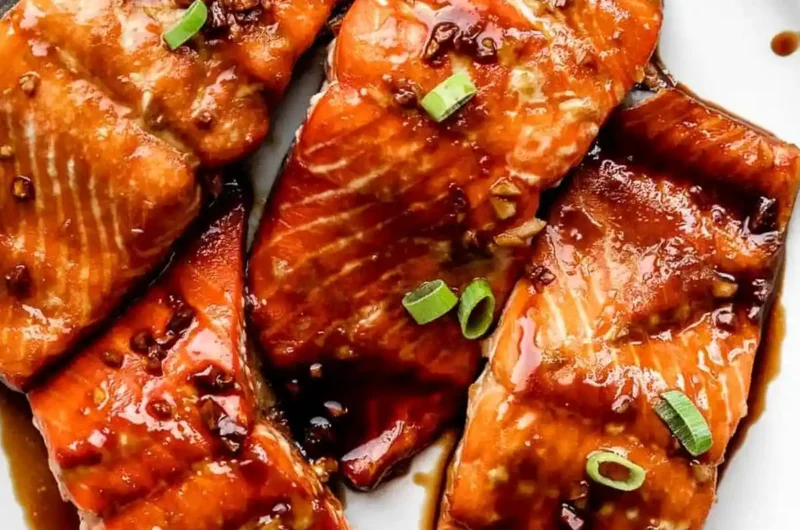
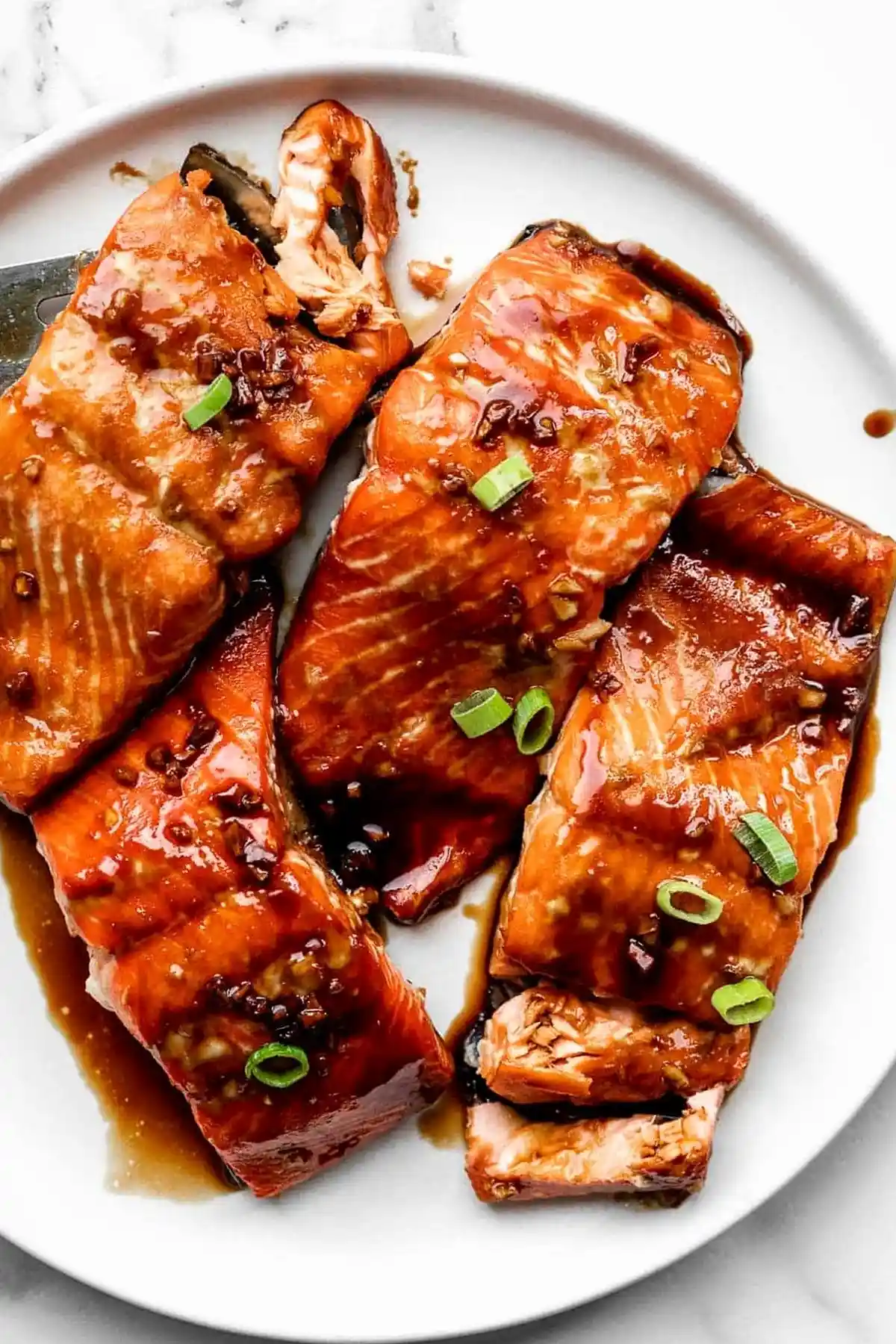
This baked salmon dish features a savory and sweet glaze that is ready in under 35 minutes. It is an efficient meal for weeknights that provides high protein and bold flavors.
List of ingredients
- 4 salmon fillets, about 6 ounces (170g) each – use even thickness for uniform cooking.
- 1/3 cup (80ml) reduced sodium soy sauce (or regular) – provides the salty base.
- 1/3 cup (113g) honey – adds sweetness and helps with caramelization.
- 1 Tablespoon (15ml) sesame oil (or olive oil) – improves the marinade adhesion.
- 3 garlic cloves, minced (or 2 teaspoons jarred/minced) – adds pungent aromatic flavor.
- 1 teaspoon peeled minced fresh ginger – provides a warm, zesty element.
- Optional for garnish: chopped green onion and/or sesame seeds – for added color and texture.
step-by-step instructions
- Marinate the fish: Place salmon fillets into a large zippered food storage bag or a shallow container. In a medium bowl, whisk together the soy sauce, honey, sesame oil, garlic, and ginger. Pour roughly half of the mixture over the salmon, turn to coat, and refrigerate for 15 minutes to 4 hours.
- Prepare the oven: Preheat your oven to 375°F (191°C). Line a baking sheet with aluminum foil, parchment paper, or a silicone baking mat to prevent sticking.
- Bake the salmon: Arrange fillets on the baking sheet skin side down. Bake for 15-20 minutes, or about 10 minutes per inch of thickness. Ensure the thickest part reaches an internal temperature of 145°F (63°C). You may broil for the final minute for crispier edges.
- Thicken the glaze: While the fish bakes, pour the remaining unused marinade (and the used marinade if desired) into a small saucepan. Bring to a boil over medium-high heat, then simmer on medium-low for 3-4 minutes until it thickens. Monitor closely to prevent burning.
- Final Assembly: Drizzle the reduced glaze over the cooked salmon fillets. Add chopped green onions or sesame seeds as a garnish before serving.
Guidelines for Cooking Salmon
Using an Instant Read Thermometer
The most reliable way to avoid overcooking salmon is using a digital meat thermometer. Insert the probe into the thickest part of the fillet to ensure it reaches 145°F (63°C). This prevents the fish from becoming dry and chalky.
Managing Fillet Thickness
Different cuts of salmon cook at different speeds based on their thickness. If you have a mix of thin and thick fillets, remove the thinner ones from the oven earlier. Always calculate cooking time based on the thickest part of the piece.
Handling the Skin Side
Baking the salmon skin side down protects the delicate flesh from direct contact with the hot pan. This helps maintain moisture within the fillet. The skin also acts as a barrier that prevents the fish from sticking to the baking sheet.
Glaze Customizations and Substitutions
Replacing Honey with Maple Syrup
If honey is unavailable, pure maple syrup serves as an excellent substitute. It provides a similar viscosity and sweetness level. The flavor profile will shift slightly toward a woodsy sweetness but remains compatible with soy and ginger.
Using Tamari for Gluten-Free Diets
For those avoiding gluten, replace the soy sauce with tamari. Tamari is typically made without wheat and offers a richer, deeper saltiness. This substitution does not require any change in the measurement or cooking method.
Adjusting Garlic and Ginger Intensity
If you prefer a milder taste, reduce the garlic to two cloves. For a more pungent, zesty finish, increase the fresh ginger to two teaspoons. Always use fresh aromatics when possible for the brightest flavor.
Substituting Sesame Oil with Olive Oil
Sesame oil provides a distinct nutty aroma, but olive oil is a practical alternative. Olive oil is neutral and allows the honey and soy flavors to stand out more. Use a light-flavored olive oil to avoid overpowering the dish.
Recommended Side Dish Pairings
Preparing Steamed Broccoli
Broccoli pairs well with the sweetness of the honey glaze. Steam the florets for 5-7 minutes until tender-crisp. Drizzle some of the extra salmon glaze over the broccoli for a cohesive meal.
Cooking Brown Rice
Brown rice provides a nutty contrast and absorbs the excess sauce effectively. Rinse the rice thoroughly before boiling to remove excess starch. Cook according to package directions while the salmon is in the oven.
Serving with Quinoa
Quinoa is a high-protein alternative to rice that works well with Asian-inspired glazes. Simmer quinoa in vegetable broth instead of water for extra depth. Fluff with a fork and serve the salmon directly on top.
Adding Roasted Asparagus
Asparagus can be roasted on the same baking sheet as the salmon if space permits. Toss the spears in a small amount of oil and salt. Roast them for the same 15-20 minute window as the fish.
Adapting the Recipe for Other Proteins
Using Boneless Chicken Breasts
This glaze works effectively on chicken breasts or thighs. Increase the marinating time to at least one hour to allow the flavors to penetrate the denser meat. Bake the chicken until the internal temperature reaches 165°F (74°C).
Preparing Chicken Thighs
Boneless, skinless chicken thighs remain juicier than breasts when baked. Use the same marinade and reduction process. Increase the bake time to 25-30 minutes depending on the size of the thighs.
Applying the Glaze to Tofu
Extra-firm tofu is a great plant-based alternative. Press the tofu to remove excess water before marinating. Bake or air-fry the tofu until golden brown before applying the reduced glaze.
Cooking with Shrimp
Shrimp cook much faster than salmon. Marinate the shrimp for only 15-30 minutes to avoid the soy sauce curing the meat. Sauté the shrimp in a pan with the glaze for 2-3 minutes per side.
Storage and Reheating Instructions
Refrigeration Limits
Cooked salmon keeps well in an airtight container for up to three days. Store the leftover glaze in a separate small jar to keep the fish from becoming too soggy. Ensure the fish is cooled slightly before sealing the container.
The Best Reheating Method
To avoid overcooking the fish during reheating, use a low-temperature oven or an air fryer. Heat at 275°F (135°C) for a few minutes until just warmed through. Avoid the microwave, as it often makes salmon rubbery.
Freezing Cooked Salmon
While fresh is best, cooked salmon can be frozen for up to two months. Wrap the fillets tightly in foil and place them in a freezer-safe bag. Thaw slowly in the refrigerator overnight before reheating.
Troubleshooting the Glaze
Preventing the Sauce from Burning
The high sugar content in honey causes the glaze to burn quickly. Keep the heat at medium-low once the sauce begins to bubble. Stir constantly during the final minutes of reduction to ensure even heating.
Fixing a Glaze That Is Too Thin
If the sauce has not thickened enough, simmer it for another 2-3 minutes. If it remains too thin, you can whisk in a tiny pinch of cornstarch dissolved in water. Heat for one more minute to activate the thickening agent.
Managing Excessive Saltiness
If the glaze tastes too salty, add a small amount of additional honey or a squeeze of lime juice. The acidity of the lime or the sweetness of the honey balances the sodium from the soy sauce. This is especially helpful if using regular soy sauce instead of reduced sodium.
Frequently Asked Questions
Can I use frozen salmon?
Yes, frozen uncooked salmon fillets can be used. You must thaw them completely in the refrigerator before marinating and baking. Do not bake salmon from a frozen state as it will cook unevenly.
How long can I marinate the fish?
The minimum marinating time is 15 minutes. You can extend this up to 4 hours for deeper flavor. If necessary, you can stretch the time to 8 hours, but avoid marinating overnight as the salt may change the texture of the fish.
What if I don’t have fresh ginger?
You can use ground ginger powder as a substitute. Use 1/4 teaspoon of ground ginger for every 1 teaspoon of fresh minced ginger. Note that the flavor will be less bright and more concentrated.
Can I make this in an air fryer?
Yes, you can air fry the marinated fillets at 380°F (193°C) for about 8-12 minutes. The glaze should still be reduced in a saucepan on the stove. Brush the glaze on the salmon during the last 2 minutes of air frying.
Print
Honey Garlic Soy Glazed Salmon
- Total Time: 35 minutes
- Yield: 4 servings 1x
- Diet: Dairy-Free
Description
This simple baked salmon is smothered with a 5-ingredient salty-sweet glaze and is ready in under 35 minutes!
Ingredients
- 4 salmon fillets, about 6 ounces (170g) each
- 1/3 cup (80ml) reduced sodium soy sauce
- 1/3 cup (113g) honey
- 1 Tablespoon (15ml) sesame oil
- 3 garlic cloves, minced
- 1 teaspoon peeled minced fresh ginger
- chopped green onion and sesame seeds (optional)
Instructions
- Marinate: Place salmon fillets in a zippered bag or dish, pour half of the whisked soy sauce, honey, sesame oil, garlic, and ginger mixture over them, and refrigerate for 15 minutes to 4 hours.
- Prepare: Preheat oven to 375°F (191°C) and line a baking sheet with foil, parchment paper, or a silicone mat.
- Bake: Place salmon on the baking sheet skin side down and bake for 15–20 minutes until the internal temperature reaches 145°F (63°C).
- Reduce Glaze: Simmer the remaining marinade in a small saucepan over medium-high, then medium-low heat for 3–4 minutes until slightly thickened.
- Serve: Drizzle the thickened glaze over the baked salmon and serve with optional garnish.
Notes
Marinate salmon up to 4 hours in advance. Can be substituted with boneless chicken breasts or thighs; increase bake time and marinate for 1 hour.
- Prep Time: 15 minutes
- Cook Time: 20 minutes
- Category: Dinner
- Method: Baking
- Cuisine: Asian
Nutrition
- Serving Size: 1 salmon fillet
- Calories: 408 kcal
- Sugar: 21.7 g
- Sodium: 922.9 mg
- Fat: 11.5 g
- Saturated Fat: 2.5 g
- Unsaturated Fat: 9 g
- Trans Fat: 0 g
- Carbohydrates: 28.6 g
- Fiber: 0.5 g
- Protein: 48 g
- Cholesterol: 86.7 mg
Keywords: honey garlic salmon, soy glazed salmon, baked salmon, easy dinner, Asian salmon