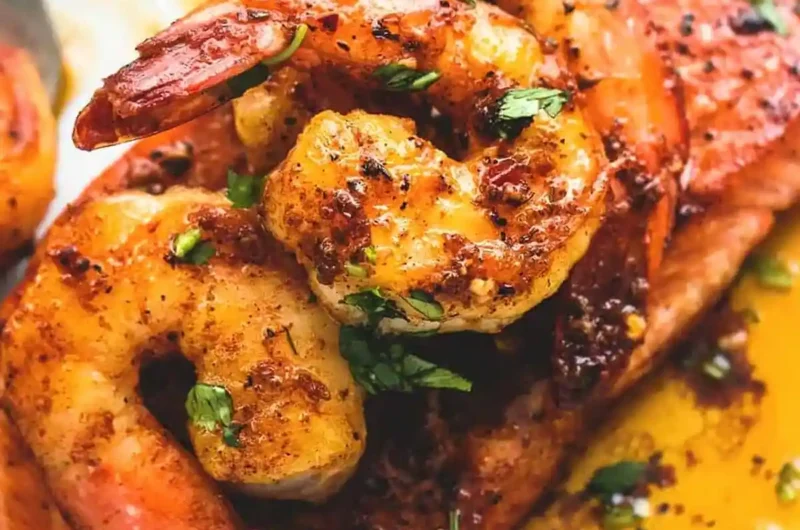
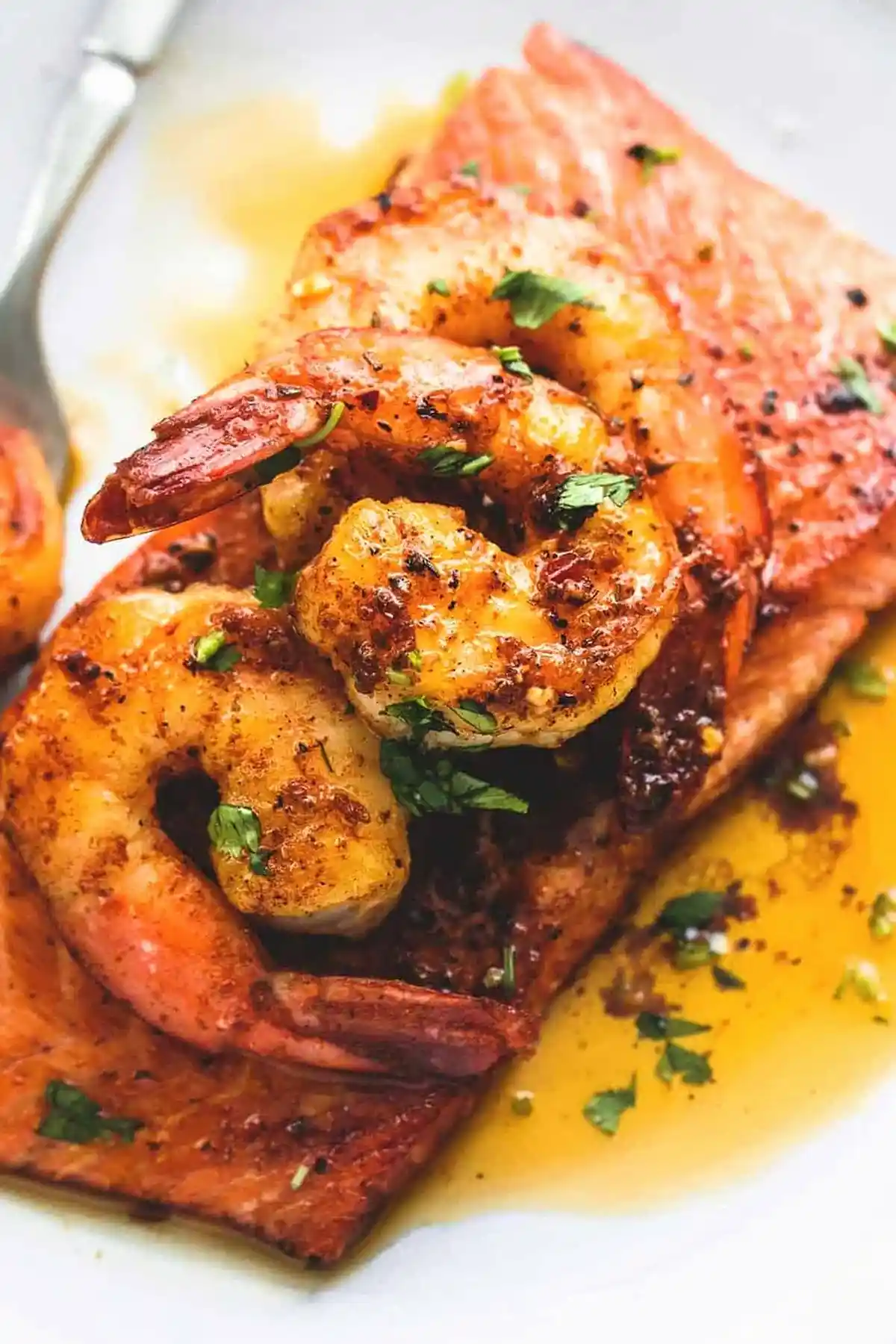
Enjoy a restaurant-quality dinner at home with this honey-glazed salmon paired with spicy Cajun butter shrimp. This one-pan meal delivers a sophisticated balance of sweet and savory flavors in only 30 minutes.
List of ingredients
- 4 6-ounce salmon fillets – center cut for uniform cooking.
- Salt and pepper – to taste for seasoning.
- 1 pound large shrimp – peeled and de-veined.
- 8 tablespoons butter – divided between salmon searing and shrimp sauce.
- 2 tablespoons honey – creates a caramelized glaze on the fish.
- 1/2 teaspoon salt – for the cajun spice blend.
- 1 teaspoon garlic powder – provides a savory aromatic base.
- 1 teaspoon paprika – adds color and mild sweetness.
- 1/4 teaspoon pepper – for foundational seasoning.
- 1/2 teaspoon onion powder – enhances the overall savory profile.
- 1/2 teaspoon cayenne pepper – provides the signature cajun heat.
- 1/2 teaspoon dried oregano – adds a subtle earthy herbal note.
- 1/4 teaspoon crushed red pepper flakes – adds a sharp spicy kick.
step-by-step instructions
- Prepare the spice blend: Stir together the salt, garlic powder, paprika, pepper, onion powder, cayenne pepper, dried oregano, and crushed red pepper flakes in a small bowl. Set this mixture aside for later use.
- Sear the salmon: Season the salmon fillets with salt and pepper. Melt 2 tablespoons of butter in a large skillet over medium-high heat and whisk in the honey until the mixture is bubbling.
- Cook the fish: Place the salmon fillets in the pan and cook for 5-6 minutes. Flip the fillets and cook for another 7-8 minutes until the fish is browned and flakes easily with a fork.
- Rest the salmon: Transfer the cooked fillets to a platter and cover them loosely with foil to maintain temperature while preparing the shrimp.
- Make the cajun butter: Add the remaining butter to the same skillet over medium-high heat. Once melted, stir in the prepared cajun seasoning blend.
- Sauté the shrimp: Add the shrimp to the pan and sauté for 5-6 minutes, stirring occasionally, until they turn opaque and pink.
- Plate and serve: Place the shrimp on top of the salmon fillets. Drizzle any remaining butter sauce from the pan over the top and garnish with chopped parsley.
Expert Searing Techniques
Pat Dry the Salmon Fillets
Use paper towels to remove all surface moisture from the salmon before seasoning. Excess water creates steam in the pan, which prevents the fish from developing a proper brown crust.
Maintain High Pan Temperature
Ensure the butter is shimmering and bubbling before adding the fish. A hot pan ensures the honey caramelizes quickly, locking in moisture while creating a sweet exterior.
Avoid Overcrowding the Skillet
If your pan is too small for four fillets, sear them in two batches. Overcrowding lowers the pan temperature and causes the salmon to boil in its own juices rather than sear.
Minimize Flipping
Let the salmon cook undisturbed for the full 5-6 minutes on the first side. Frequent flipping disrupts the caramelization process and increases the risk of the fillet breaking.
Ingredient Substitutions and Alternatives
Using Maple Syrup Instead of Honey
Maple syrup can be substituted in a 1:1 ratio for honey. This provides a woodier, more autumnal sweetness that pairs well with the spicy cajun seasonings.
Substituting Salmon with Steelhead Trout
Steelhead trout is a visually and nutritionally similar alternative to salmon. It has a slightly milder flavor and works perfectly with the honey-butter glaze.
Adjusting the Heat Level
To reduce the spice, omit the cayenne pepper and red pepper flakes. To increase the heat, add an extra 1/4 teaspoon of cayenne to the spice blend.
Using Frozen Shrimp
If using frozen shrimp, thaw them completely in a bowl of cold water and pat them dry. Adding frozen shrimp directly to the pan will release too much water and dilute the butter sauce.
Swapping Butter for Ghee
Ghee has a higher smoke point than regular butter, making it ideal for high-heat searing. Use it in the same quantities to achieve a richer, nuttier flavor.
Recommended Side Dish Pairings
Steamed Asparagus Spears
The snap and freshness of steamed asparagus balance the richness of the butter sauce. Season them with a squeeze of lemon juice to cut through the fat.
Garlic Mashed Potatoes
Creamy mashed potatoes provide a hearty base that absorbs the extra Cajun butter. Use roasted garlic in the mash to complement the garlic powder in the shrimp.
Wild Rice Pilaf
Wild rice offers a nutty texture and earthy flavor that complements the sweetness of the honey glaze. Cook the rice in vegetable broth for added depth.
Sautéed Spinach or Kale
Quickly sautéing greens in the same pan after removing the shrimp adds a nutritional boost. The leftover spices in the pan will flavor the greens perfectly.
Quinoa with Fresh Parsley
Fluffy quinoa mixed with chopped parsley and a touch of olive oil provides a light, protein-rich side. It keeps the meal feeling fresh and balanced.
Storage and Reheating Guidelines
Refrigerating Leftovers
Store leftover salmon and shrimp in an airtight glass container. Keep them refrigerated and consume within two to three days to ensure food safety and quality.
Oven Reheating Method
Preheat the oven to 275 degrees Fahrenheit. Place the seafood on a baking sheet and heat for 10-12 minutes to avoid overcooking the delicate proteins.
Stovetop Reheating
Place the salmon and shrimp in a skillet over low heat with a tablespoon of water or butter. Cover the pan to create steam, which prevents the fish from drying out.
Microwave Precautions
If using a microwave, use the lowest power setting and heat in 30-second intervals. Overheating in the microwave often makes shrimp rubbery and salmon tough.
Common Cooking Troubleshooting
Preventing the Honey from Burning
Honey contains natural sugars that burn quickly at high temperatures. If the glaze darkens too rapidly, lower the heat slightly or add a teaspoon of water to the pan.
Avoiding Rubbery Shrimp
Shrimp cook very quickly and become tough if overdone. Remove them from the heat the moment they turn opaque and form a ‘C’ shape rather than an ‘O’.
Managing Salmon Sticking
If the salmon sticks to the pan, it usually means it hasn’t developed a crust yet. Wait another minute before attempting to flip the fillet.
Fixing a Broken Butter Sauce
If the butter separates from the spices, whisk in a teaspoon of warm water or a squeeze of lemon. This helps emulsify the sauce and creates a smooth consistency.
Frequently Asked Questions
Can I leave the skin on the salmon?
Yes, leaving the skin on helps hold the fillet together. Sear the skin side first to achieve a crispy texture before flipping to the flesh side.
What is the best size of shrimp for this recipe?
Large or jumbo shrimp (16-20 count) are ideal. They hold up better to the sautéing process and provide a better visual contrast against the salmon fillets.
Can I use a non-stick pan for this dish?
A non-stick pan works, but stainless steel or cast iron is preferred. These materials allow for better caramelization of the honey and better browning of the fish.
How do I know when the salmon is perfectly cooked?
The salmon is done when it reaches an internal temperature of 145 degrees Fahrenheit. Alternatively, it should flake easily when pressed with a fork.
Is it possible to make this in an air fryer?
You can air fry the salmon and shrimp separately, but you will lose the pan-sauce emulsion. The skillet method is highly recommended for the butter sauce.
Can I prepare the spice blend in advance?
Yes, the Cajun seasoning can be made in large batches and stored in an airtight jar. It remains potent for several months if kept in a cool, dark place.
Print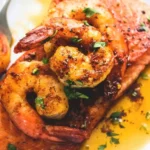
Salmon New Orleans
- Total Time: 30 minutes
- Yield: 4 servings 1x
- Diet: General
Description
Sweet and savory pan-seared salmon topped with sautéed shrimp in cajun butter sauce. Salmon New Orleans is an unforgettable 30 minute meal your family will crave!
Ingredients
- 4 6-ounce salmon fillets
- salt and pepper to taste
- 1 pound large shrimp (peeled and de-veined)
- 8 tablespoons butter (divided)
- 2 tablespoons honey
- ½ teaspoon salt
- 1 teaspoon garlic powder
- 1 teaspoon paprika
- ¼ teaspoon pepper
- ½ teaspoon onion powder
- ½ teaspoon cayenne pepper
- ½ teaspoon dried oregano
- ¼ teaspoon crushed red pepper flakes
Instructions
- Step 1: In a small bowl stir together all cajun seasoning ingredients and set aside.
- Step 2: Season salmon with salt and pepper to taste. Melt 2 tablespoons butter in a large skillet over medium-high heat. Add honey and whisk to combine (mixture should be bubbly). Add salmon fillets to pan and cook for 5-6 minutes, then flip and cook another 7-8 minutes until salmon is cooked through, flaky, and browned. Transfer salmon to a platter and cover to keep warm.
- Step 3: Add remaining butter to the pan over medium-high heat. Once butter is melted, stir in cajun seasoning. Add shrimp to pan and saute until opaque, about 5-6 minutes.
- Step 4: Serve salmon topped with shrimp. Drizzle any extra pan sauce over the top and garnish with chopped parsley if desired. Serve immediately.
Notes
Flavor tip: add a squeeze of fresh lime juice on top just before serving.
- Prep Time: 10 minutes
- Cook Time: 20 minutes
- Category: Main Course
- Method: Pan-searing
- Cuisine: American
Nutrition
- Serving Size: 1 serving
- Calories: 171 kcal
- Sugar: 10 g
- Sodium: 1207 mg
- Fat: 3 g
- Saturated Fat: 1 g
- Unsaturated Fat: 2 g
- Trans Fat: 0 g
- Carbohydrates: 11 g
- Fiber: 1 g
- Protein: 25 g
- Cholesterol: 290 mg
Keywords: Salmon New Orleans, cajun butter sauce, pan-seared salmon, shrimp and salmon