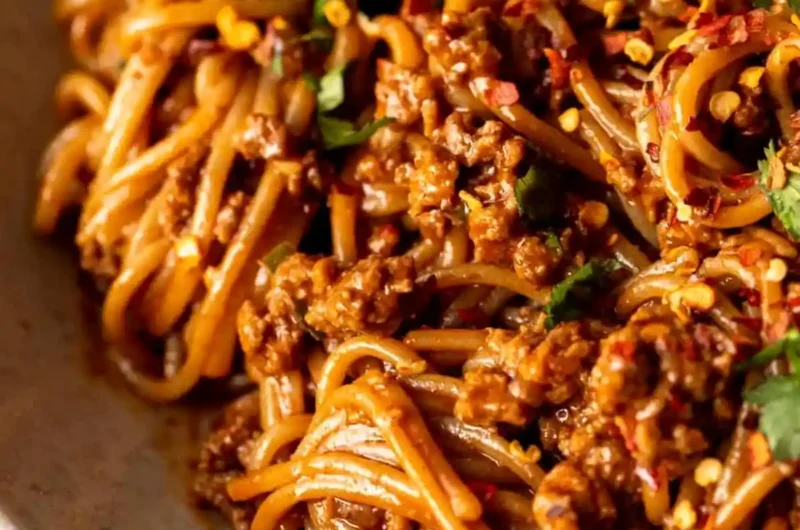
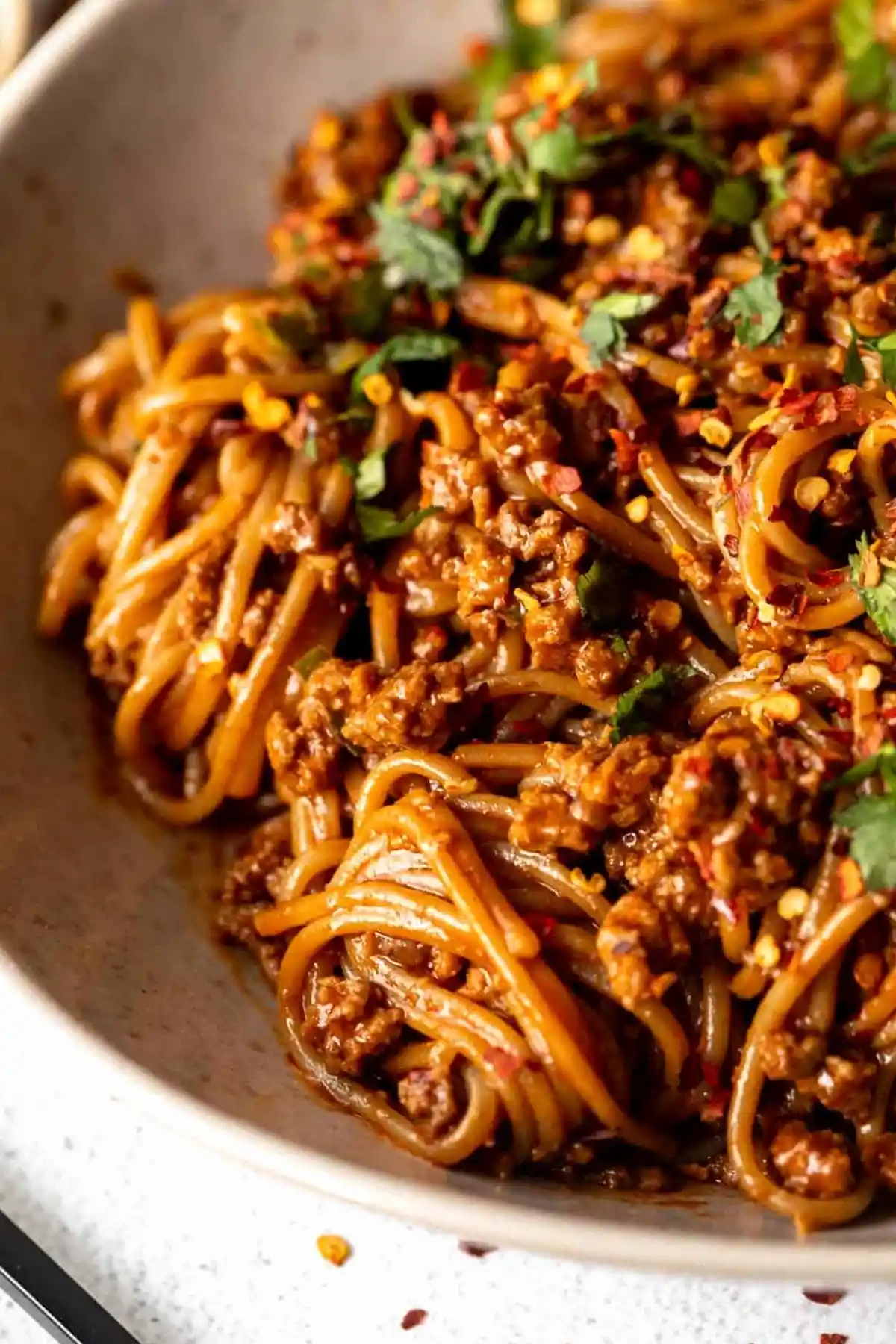
These savory and spicy noodles bring a bold Korean-inspired flavor to your dinner table in just 30 minutes. They are an excellent choice for healthy meal prep and are easily customizable with your favorite proteins and vegetables.
List of ingredients
- 1 pound ground beef, turkey, or chicken – provides a hearty protein base.
- 12 ounces rice noodles (or noodles of your choice) – the primary starch for the dish.
- 1/4 cup low sodium gluten free soy sauce (tamari) – adds deep saltiness and umami.
- 1/4 cup gochujang paste – the key fermented chili paste for heat and sweetness.
- 2 tablespoons coconut cream – adds a rich, creamy texture to the sauce.
- 2 teaspoons tomato paste – thickens the sauce and adds a slight tang.
- 2 tablespoons water – used to thin the paste for easier mixing.
- 2 tablespoons honey or brown sugar – balances the spice with sweetness.
- 1 tablespoon toasted sesame oil – provides a nutty, aromatic finish.
- 1 tablespoon rice vinegar – adds a necessary acidic brightness.
- 2 teaspoons minced garlic – delivers sharp, savory notes.
- 1 teaspoon fresh grated ginger – adds a zesty, warm flavor.
- 1/2 teaspoon red pepper flakes – allows you to adjust the spice level to your preference.
step-by-step instructions
- Prepare the noodles: Bring a pot of salted water to a boil and cook the noodles according to the package directions. Drain and rinse them immediately, then toss with 2 tablespoons of butter while warm to prevent them from sticking together.
- Brown the meat: Place the ground beef, turkey, or chicken in a large skillet over medium-high heat. Saute the meat until it is completely cooked through and lightly browned.
- Mix the sauce: While the meat is cooking, whisk together the tamari, gochujang paste, coconut cream, tomato paste, water, honey or brown sugar, sesame oil, rice vinegar, garlic, ginger, and red pepper flakes in a small bowl. Do not worry if the coconut cream remains slightly chunky, as it will melt during the cooking process.
- Initial coating: Add approximately half of the prepared sauce to the cooked noodles in the pot. Toss them thoroughly to ensure they are evenly coated.
- Combine everything: Add the browned ground meat and the remaining sauce to the noodles. Toss everything together and let the mixture simmer over low heat for a few minutes to allow the flavors to meld.
- Final touch: Serve the dish immediately. Garnish with chopped scallions, toasted sesame seeds, fresh cilantro, and extra red pepper flakes if desired.
Protein Selection Guide
Ground Beef for Richness
Using ground beef creates a deep, savory profile that pairs exceptionally well with the fermented notes of the gochujang. For the best results, choose a lean blend like 90/10 to avoid excessive grease in the final sauce. Brown the beef thoroughly to develop a caramelized crust for extra flavor.
Ground Turkey for a Leaner Option
Ground turkey is a fantastic alternative for those seeking a lighter meal without sacrificing protein. Since turkey is leaner, you may want to add a teaspoon of olive oil to the skillet to prevent sticking. The mild flavor of turkey allows the spicy sauce to be the star of the show.
Ground Chicken for Mild Flavor
Ground chicken offers a very neutral base that absorbs the sauce beautifully. It is a great choice for families with children who prefer a less intense meat flavor. Ensure the chicken is cooked until no longer pink to maintain safety and texture.
Tofu for a Plant-Based Alternative
For a vegan or vegetarian version, replace the ground meat with crumbled extra-firm tofu or pre-pressed tofu cubes. Saute the tofu in a skillet with a bit of oil until the edges are golden and crisp. This provides a satisfying texture that holds up well against the thick sauce.
Best Vegetable Pairings
Leafy Greens like Bok Choy and Kale
Bok choy adds a crisp texture and a mild pepper flavor that complements the gochujang. Sauté the stems first, then add the leaves at the very end of the meat-browning process. Kale is another great option, as it wilts down and clings to the noodles.
Crunchy Peppers and Snap Peas
Sliced bell peppers bring a natural sweetness and bright color to the dish. Snap peas add a fresh, crunch factor that breaks up the softness of the rice noodles. Stir-fry these vegetables quickly over high heat to keep them vibrant and crisp.
Broccoli and Cauliflower Florets
Broccoli florets are excellent for absorbing the sauce in their small crevices. Steam them lightly before adding them to the skillet, or saute them with a splash of water. This ensures the stems are tender while the tops remain firm.
Carrots and Zucchini Strips
Julienned carrots add a subtle sweetness and a beautiful orange hue. Zucchini strips, or “zoodles,” can be mixed in to increase the volume of the meal without adding many calories. Add these during the last few minutes of cooking to avoid over-softening.
Choosing Your Noodles
Brown Rice Soba Noodles
Brown rice soba noodles offer a nuttier flavor and a slightly heartier bite than white rice noodles. They are a great gluten-free option that holds the heavy sauce very well. Be careful not to overcook them, as they can become mushy quickly.
Traditional Rice Noodles
Standard white rice noodles provide a clean, neutral base and a slippery texture. They are the most traditional choice for this style of dish and are very easy to find. Always rinse them under cold water after draining to remove excess surface starch.
Udon Noodles for Thickness
Udon noodles are thick and chewy, providing a more substantial mouthfeel. They are perfect for those who enjoy a “bouncy” noodle texture. Ensure you find a gluten-free version if necessary, or use traditional wheat udon for a classic experience.
Wheat Spaghetti as a Pantry Staple
If you don’t have Asian noodles on hand, standard spaghetti works surprisingly well. It provides a sturdy structure that can handle the weight of the ground meat and thick sauce. Cook the pasta al dente so it doesn’t overcook when tossed in the pan.
Zucchini Noodles for Low Carb
For a low-carb or grain-free version, use a spiralizer to create zucchini noodles. Sauté them briefly in the pan with the meat just before adding the sauce. Avoid boiling them, as they release too much water and can dilute the sauce.
Mastering the Gochujang Sauce
Balancing Heat and Sweetness
Gochujang is naturally spicy and salty, which is why the addition of honey or brown sugar is crucial. The sweetness rounds out the sharp edges of the chili paste. Taste the sauce before adding it to the pan and adjust the sweetener based on your preference.
The Role of Coconut Cream
Coconut cream provides a velvety richness that mimics the texture of a cream sauce. It helps the sauce adhere to the noodles more effectively and tempers the intensity of the spice. If you prefer a lighter sauce, you can omit it entirely without ruining the dish.
Using Tamari for Gluten-Free Needs
Tamari is a Japanese soy sauce that is naturally gluten-free and often has a richer, darker flavor than standard soy sauce. It provides the necessary salt and depth to the sauce. Always check the label of your gochujang paste as well, as some brands contain wheat.
The Importance of Fresh Ginger and Garlic
Using fresh ginger and garlic instead of powdered versions creates a much more vibrant flavor profile. The aromatic punch of these ingredients cuts through the richness of the coconut cream and meat. Grate the ginger finely to ensure it distributes evenly throughout the sauce.
Cooking and Preparation Tips
Preventing Noodles from Sticking
Rice noodles are notorious for clumping together once they cool. Rinsing them under cold water immediately after cooking stops the cooking process and removes starch. Tossing them with butter or a neutral oil creates a barrier that keeps the strands separate.
Ensuring Even Meat Browning
To get the best flavor, do not crowd the skillet when browning the meat. If the pan is too full, the meat will steam in its own juices rather than sear. Cook in batches if necessary to achieve a deep brown color and a savory crust.
Emulsifying the Sauce Properly
Whisk the sauce ingredients vigorously to ensure the coconut cream and tomato paste are well integrated. While some lumps may remain initially, they will melt once they hit the heat of the pan. Stirring constantly during the final simmering stage helps create a smooth emulsion.
Controlling the Heat Level
If you are sensitive to spice, start with a smaller amount of gochujang and red pepper flakes. You can always add more at the end, but you cannot remove it once it is mixed. Adding a bit more honey or coconut cream can also help mute the heat.
Storage and Meal Prep Advice
Refrigerator Storage Guidelines
Store the leftover noodles in an airtight container in the refrigerator for up to three days. Because rice noodles absorb liquid over time, the dish may appear drier the next day. This makes them an ideal meal-prep option for weekday lunches.
Reheating on the Stovetop
The best way to reheat these noodles is in a skillet over medium heat. Add a tablespoon of water or broth to the pan to loosen the sauce. Toss gently until heated through to avoid breaking the noodles.
Reheating in the Microwave
Place the noodles in a microwave-safe dish and cover with a damp paper towel. Heat in short 30-second intervals, stirring in between. The damp towel creates steam, which prevents the noodles from drying out in the microwave.
Freezing Considerations
Freezing cooked rice noodles is generally not recommended as they often lose their structure and become mushy upon thawing. If you wish to freeze the meal, freeze the cooked meat and sauce together. Thaw them and then toss with freshly cooked noodles.
Serving and Presentation Ideas
Essential Garnishes
Fresh scallions provide a sharp, oniony contrast to the sweet and spicy sauce. Toasted sesame seeds add a nutty flavor and a professional visual touch. A sprinkle of fresh cilantro brings a citrusy brightness that cleanses the palate between bites.
Pairing with Side Dishes
Serve these noodles with a side of steamed broccoli or a crisp cucumber salad dressed in rice vinegar. A bowl of miso soup is also a traditional pairing that complements the flavors of the gochujang. For a refreshing contrast, try a side of kimchi.
Plating for Family Style
For a family-style meal, pile the noodles high on a large platter and scatter the meat evenly across the top. Garnish generously with all the toppings in the center. This allows everyone to scoop their own portion and enjoy the visual appeal of the colorful ingredients.
Common Troubleshooting
What to do if the sauce is too thick
If the sauce becomes too thick or sticky, simply stir in a tablespoon of water or unsweetened coconut milk. Do this over low heat and stir constantly until the desired consistency is reached. Be careful not to add too much, or the sauce will become watery.
How to fix an overly spicy dish
To reduce the heat, add an extra tablespoon of honey or a squeeze of lime juice. The acidity and sweetness help neutralize the capsaicin in the chili paste. Adding more coconut cream or serving the dish with a side of steamed rice can also dilute the spice.
Addressing bland flavors
If the dish tastes flat, it likely needs more acidity or salt. Add a teaspoon of rice vinegar or an extra splash of tamari. A pinch of sugar can also help wake up the other flavors and bring the sauce to life.
Fixing Mushy Noodles
Mushy noodles are usually the result of overcooking or failing to rinse them. To prevent this in the future, cook them for one minute less than the package suggests. If they are already mushy, avoid over-stirring them in the pan to prevent further breakage.
Frequently Asked Questions
What is Gochujang?
Gochujang is a savory, sweet, and spicy fermented condiment made from chili powder, glutinous rice, fermented soybeans, and salt. It is a staple in Korean cuisine and provides a thick, pungent base for many sauces and marinades.
Can I use brown sugar instead of honey?
Yes, brown sugar is a perfect substitute for honey. It provides a similar molasses-like sweetness that balances the spice of the gochujang. Use an equal 1:1 ratio for the substitution.
How do I make this vegan?
To make this dish vegan, use brown sugar instead of honey and replace the ground meat with crumbled tofu or tempeh. Ensure your gochujang paste and tamari are certified vegan and free from any animal-derived additives.
Are there soy-free alternatives for tamari?
You can use coconut aminos as a soy-free and gluten-free alternative to tamari. Coconut aminos are slightly sweeter and less salty, so you may need to add a pinch of extra salt to maintain the flavor balance.
Print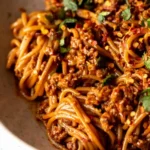
Spicy Korean Gochujang Noodles
- Total Time: 30 minutes
- Yield: 4 servings 1x
- Diet: Gluten-free
Description
These spicy Korean Gochujang noodles are so easy to make, saucy, spicy yet sweet and perfect for a simple 30 minute dinner! Served with ground meat of choice such as beef, turkey or chicken for a simple and protein packed recipe.
Ingredients
- 1 pound ground beef, turkey or chicken
- 12 ounces rice noodles (or noodles of choice)
- 1/4 cup low sodium gluten free soy sauce (tamari)
- 1/4 cup gochujang paste
- 2 tablespoons coconut cream
- 2 teaspoons tomato paste
- 2 tablespoons water
- 2 tablespoons honey or brown sugar
- 1 tablespoon toasted sesame oil
- 1 tablespoon rice vinegar
- 2 teaspoons minced garlic
- 1 teaspoon fresh grated ginger
- 1/2 teaspoon red pepper flakes
Instructions
- Cook Noodles: Bring a pot of salted water to a boil and cook noodles according to package instructions. Drain and rinse, then toss with 2 tablespoons of butter after cooking and let melt so they don’t all stick together.
- Cook Meat: Add the ground meat to a large skillet and saute until cooked through.
- Prepare Sauce: Whisk together all ingredients in a bowl and set aside.
- Combine Sauce and Noodles: Add in about half of the sauce to the noodles and toss to combine.
- Combine Meat and Sauce: Add in the ground meat and the rest of the sauce. Toss until well coated and let the flavors combine over low heat for a few minutes.
- Serve: Serve with chopped scallions, sesame seeds, cilantro and/or red pepper flakes.
Notes
The coconut cream is optional, you can easily do without, but it does add a nice richness to the sauce that I love.
- Prep Time: 10 minutes
- Cook Time: 20 minutes
- Category: Dinner
- Method: Stir-fry
- Cuisine: Korean
Nutrition
- Serving Size: 1 bowl
- Calories: 509 kcal
- Sugar: 11 g
- Sodium: 1150 mg
- Fat: 16 g
- Saturated Fat: 6 g
- Unsaturated Fat: 10 g
- Trans Fat: 0 g
- Carbohydrates: 67 g
- Fiber: 2 g
- Protein: 25 g
- Cholesterol: 85 mg
Keywords: Korean, Gochujang, Rice Noodles, Spicy Noodles, Gluten Free