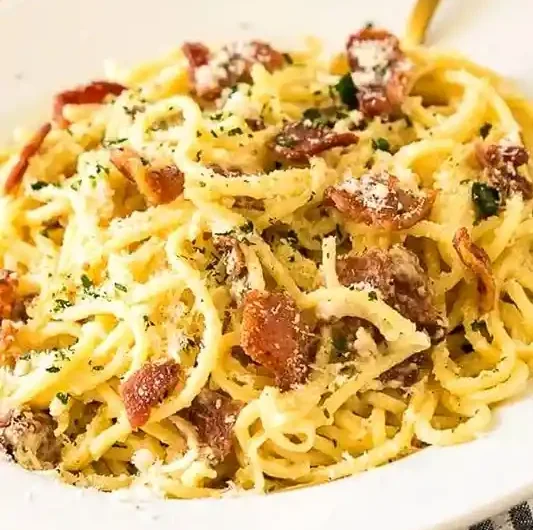
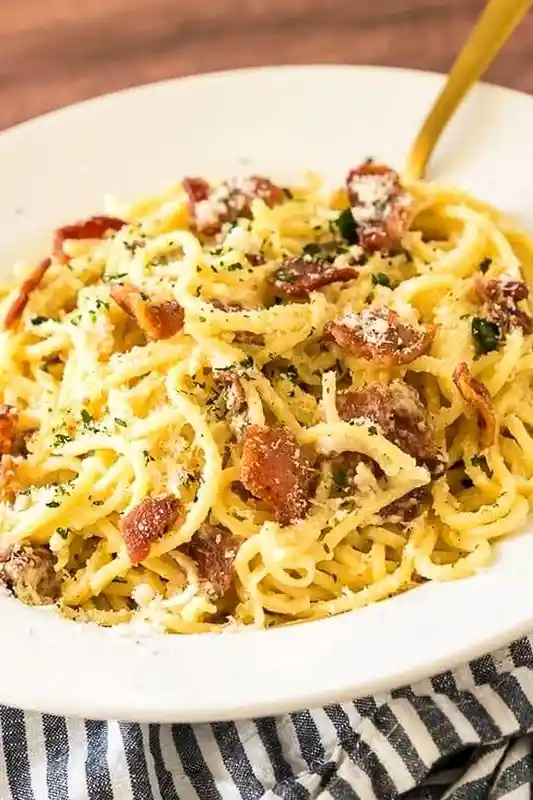
This rich and creamy pasta dish combines savory beef bacon with a smooth cheese sauce for a satisfying meal. It is a straightforward recipe that delivers a deep, salty flavor profile with a velvety texture.
List of ingredients
- 1 pound spaghetti – use a high-quality durum wheat variety for the best texture.
- 1 pound beef bacon – sliced and diced for even crisping.
- 5-6 cloves garlic – minced finely to release maximum flavor.
- 2 eggs – large, room temperature to prevent sauce shocking.
- 2 tablespoons heavy cream – helps stabilize the emulsion and adds richness.
- Black pepper – freshly cracked to provide a sharp contrast to the cream.
- 5 ounces parmigiano reggiano – grated on the finest side of a box grater for fast melting.
step-by-step instructions
- Cook the Pasta: Boil a large pot of salted water and cook the spaghetti until it is al dente according to the package directions. Do not drain the pasta water.
- Crisp the Meat: While the pasta boils, cook the beef bacon in a large skillet over medium heat. Once crispy, remove the bacon from the skillet and crumble it, leaving about 3-4 tablespoons of the rendered fat in the pan.
- Sauté Garlic: Return the skillet to the stovetop over low heat. Stir in the minced garlic and cook until it is fragrant and golden brown, ensuring it does not burn.
- Prepare Sauce Base: In a bowl, beat together the eggs, heavy cream, and black pepper. Stir in half of the finely grated parmigiano reggiano. Add one or two ladles of the hot pasta water and stir well to temper the eggs.
- Combine Ingredients: Using tongs, transfer the pasta directly from the boiling water into the skillet with the garlic. Add the crumbled beef bacon, the egg mixture, and the remaining cheese.
- Emulsify: Toss everything together over very low heat or off the heat until the sauce is creamy and well-combined. Serve immediately, adding reserved pasta water or a splash of heavy cream if the sauce is too thick. Garnish with extra pepper and cheese.
Mastering the Sauce Emulsion
The Science of Pasta Water
Pasta water contains released starches that act as a natural thickening agent. When mixed with the fat from the beef bacon and the proteins in the egg, it creates a stable emulsion. This prevents the sauce from separating and ensures it clings to the noodles.
The Importance of Tempering Eggs
Tempering involves adding a small amount of hot liquid to the egg mixture before combining it with the hot pasta. This gradually raises the temperature of the eggs, preventing them from curdling or scrambling. It ensures the final sauce remains smooth and velvety.
Utilizing Heavy Cream as a Stabilizer
While traditional versions vary, adding heavy cream provides additional fat and proteins that shield the egg proteins from coagulating too quickly. This makes the sauce more forgiving and less likely to break under heat. It also contributes to a denser, creamier mouthfeel.
Managing Residual Pan Heat
The skillet retains significant heat even after being removed from the burner. To avoid scrambling the eggs, toss the pasta and sauce together off the heat or on the lowest possible setting. The carry-over heat is usually sufficient to cook the eggs safely while maintaining a liquid sauce.
Ingredient Selection and Quality
Choosing the Right Beef Bacon
Select a beef bacon that is well-smoked to mimic the depth of traditional cured meats. Look for a balance of lean meat and fat, as the rendered fat is essential for sautéing the garlic. Higher quality beef bacon provides a cleaner salt profile.
Evaluating Pasta Shapes
Spaghetti is the classic choice because its long strands provide ample surface area for the sauce to coat. However, bucatini, with its hollow center, or rigatoni, with its ridges, are excellent alternatives. These shapes can trap more of the beef bacon bits and cheese sauce.
The Role of Finely Grated Cheese
Using the finest side of a box grater is critical for the cheese to melt instantly. Large shreds or chunks can lead to clumps of cheese in the sauce. Finely grated Parmigiano Reggiano integrates seamlessly into the egg mixture for a uniform consistency.
Selecting Garlic Varieties
Fresh garlic cloves provide a pungent, sharp flavor that cuts through the richness of the cheese and cream. Ensure the garlic is minced evenly so that every piece cooks at the same rate. Avoid pre-minced jarred garlic, as it lacks the necessary aromatic intensity.
Advanced Technical Execution
Achieving Perfect Al Dente Texture
Al dente pasta should have a slight firmness in the center, which prevents it from becoming mushy during the final tossing phase. Since the pasta continues to cook in the skillet, remove it from the water 1-2 minutes before the package suggests. This ensures a professional, firm bite.
Preventing Garlic Carbonization
Garlic burns quickly over high heat, which introduces a bitter taste to the dish. Keep the heat on low and stir constantly until the garlic is golden. If the pan seems too hot, add a small splash of pasta water to lower the surface temperature.
Optimal Whisking Techniques
When combining eggs and cream, whisk vigorously to incorporate air and ensure the ingredients are fully homogenized. This helps the sauce aerate, leading to a lighter texture. Ensure no streaks of egg remain before adding the cheese.
Balancing the Salt Profile
Beef bacon and Parmigiano Reggiano are naturally salty, so be cautious when salting the pasta water. Use a moderate amount of salt in the pot to season the pasta from within. Taste the final sauce before adding any additional salt to avoid over-seasoning.
Serving and Presentation Strategies
Pre-warming Serving Bowls
Carbonara cools down quickly because the egg-based sauce thickens as the temperature drops. Warm your pasta bowls in a low oven or with hot water before plating. This keeps the meal at the ideal temperature for longer.
Garnishing for Visual Appeal
A final dusting of finely grated cheese and a generous crack of black pepper add visual contrast. Freshly chopped parsley can be added for a pop of color and a hint of freshness. Avoid overloading the garnish to maintain the balance of flavors.
Plating for Sauce Retention
Twirl the pasta using a carving fork or tongs to create a neat mound in the center of the bowl. This technique keeps the sauce concentrated around the noodles rather than pooling at the bottom. Ensure any remaining beef bacon bits are scooped from the pan onto the top.
Storage and Reheating Advice
Safe Refrigeration Practices
Store leftover carbonara in an airtight container in the refrigerator for up to three days. Because of the egg and cream content, it is important to cool the pasta quickly before sealing it. This prevents the growth of unwanted bacteria.
Restoring Creaminess During Reheating
Reheated carbonara often becomes dry or clumpy because the starches set and the fats solidify. To fix this, add a tablespoon of milk, cream, or water to the pasta before reheating. Heat it slowly over low flame or in short microwave bursts, stirring frequently.
Avoiding Overheating Leftovers
Applying too much heat during the reheating process will cause the eggs to scramble. Stop heating as soon as the pasta is warmed through. Using a skillet on low heat is generally more effective than a microwave for maintaining texture.
Troubleshooting Common Issues
Fixing a Clumpy or Curdled Sauce
If the sauce breaks and becomes clumpy, it is usually due to excessive heat. You can attempt to fix it by adding a small amount of hot pasta water and whisking vigorously. If it is severely curdled, a small amount of additional heavy cream can help smooth out the texture.
Addressing a Dry Sauce Consistency
A dry sauce occurs when too much water is drained or the pasta absorbs the liquid too quickly. Gradually spoon in reserved pasta water one tablespoon at a time while tossing the pasta. This will re-emulsify the sauce and restore the glossy sheen.
Correcting Over-salted Pasta
If the dish tastes too salty, avoid adding more salt to the garnish. You can balance the saltiness by adding a small amount of unsalted heavy cream or an extra splash of pasta water. In some cases, adding a squeeze of lemon juice can brighten the flavor and mask excess salt.
Dealing with Undercooked Garlic
If the garlic is still raw and pungent, the sauce may taste unbalanced. You can briefly return the pan to medium-low heat for 30 seconds while tossing the pasta. Be very careful not to overheat the eggs while doing this.
Frequently Asked Questions
Can I use only egg yolks instead of whole eggs?
Yes, using only yolks results in a richer, more yellow sauce with a denser texture. If you omit the whites, you may need to increase the number of yolks to maintain the volume of the sauce. This method is often used in more traditional preparations.
Is the addition of heavy cream necessary?
The cream is not strictly traditional, but it acts as a stabilizer that prevents the eggs from curdling. For beginners, it provides a safety net and a smoother finish. If you prefer a leaner sauce, you can omit it and rely solely on pasta water for emulsification.
Can I substitute the beef bacon with another meat?
Smoked turkey bacon is a suitable alternative if you prefer a leaner option. For a different flavor, you can use diced beef salami or cured beef brisket, provided they are fried until crisp. The key is to have a salty, fatty component that renders grease for the garlic.
How do I prevent the pasta from sticking together?
Ensure you use a large enough pot with plenty of water so the pasta has room to move. Toss the pasta immediately after transferring it to the skillet. The fat from the beef bacon and the cream sauce will naturally lubricate the noodles.
What is the best way to grate Parmigiano Reggiano?
A microplane or the smallest holes on a box grater are ideal. This produces a fluffy, powder-like cheese that melts instantly upon contact with the hot pasta. Coarser grates can leave visible lumps in the final sauce.
Can this recipe be made with gluten-free pasta?
Yes, you can use gluten-free spaghetti or fusilli. Be aware that gluten-free pasta releases different types of starch, which may affect the thickness of the sauce. You may need to adjust the amount of pasta water added to achieve the desired creaminess.
Print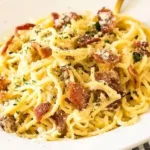
Savory Beef Bacon Carbonara
- Total Time: 25 minutes
- Yield: 6 servings 1x
- Diet: General
Description
This Creamy Carbonara is a simple, traditional Italian recipe. With beef bacon, garlic, and fresh grated cheese, it is full of flavor!
Ingredients
- 1 pound spaghetti
- 1 pound beef bacon
- 5–6 cloves garlic
- 2 eggs
- 2 tablespoons heavy cream
- pepper (to taste)
- 5 ounces parmigiano reggiano (grated)
Instructions
- Step: Cook pasta to al dente according to package instructions in a large pot of salted water. DO NOT DRAIN.
- Step: While pasta is cooking, cook beef bacon in a large skillet. When beef bacon is cooked and slightly crispy, remove from skillet and drain all but about 3-4 tablespoons of the remaining grease from the skillet. Crumble beef bacon.
- Step: Return skillet to stovetop and reduce heat to low. Stir in garlic and heat until garlic becomes golden brown and fragrant.
- Step: Beat together eggs, cream, and pepper. Stir in about 1/2 of the grated cheese to the egg mixture. Add a ladle or two of the hot pasta water and stir well.
- Step: Using tongs, take pasta directly from pasta water to the skillet. Add crumbled beef bacon, egg mixture, and remaining Parmesan to pasta. Toss together until everything is mixed together.
- Step: Serve immediately. If the pasta becomes too dry, spoon in some of the reserved pasta water or heavy cream a little at a time. Garnish with black pepper and extra grated cheese.
Notes
Be VERY careful when adding the egg mixture. If the pan is too hot the egg will curdle. This dish is best right out of the warm pan. Leftovers will not be as creamy. Add grilled chicken or shrimp for extra protein.
- Prep Time: 15 minutes
- Cook Time: 10 minutes
- Category: Dinner, Main Course
- Method: Stovetop
- Cuisine: Italian
Nutrition
- Serving Size: 1 serving
- Calories: 730 kcal
- Sugar: 2 g
- Sodium: 907 mg
- Fat: 41 g
- Saturated Fat: 16 g
- Unsaturated Fat: 25 g
- Trans Fat: 0 g
- Carbohydrates: 59 g
- Fiber: 2 g
- Protein: 30 g
- Cholesterol: 127 mg
Keywords: Creamy Carbonara, Italian pasta, beef bacon pasta, dinner