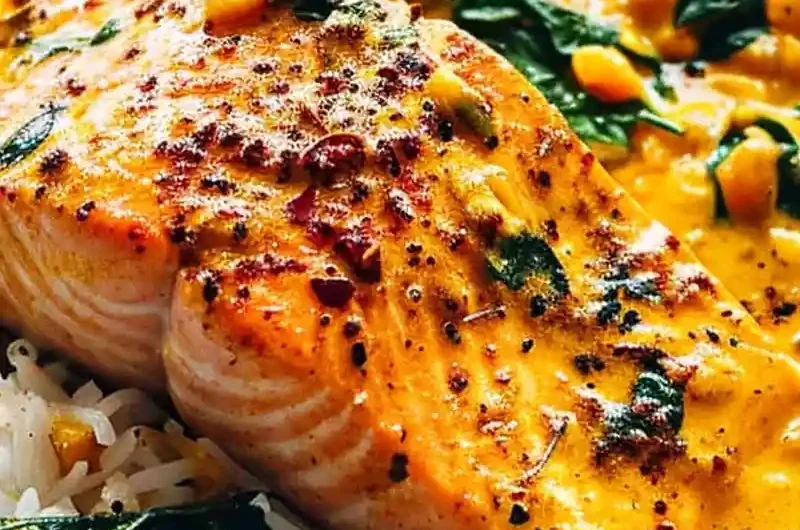
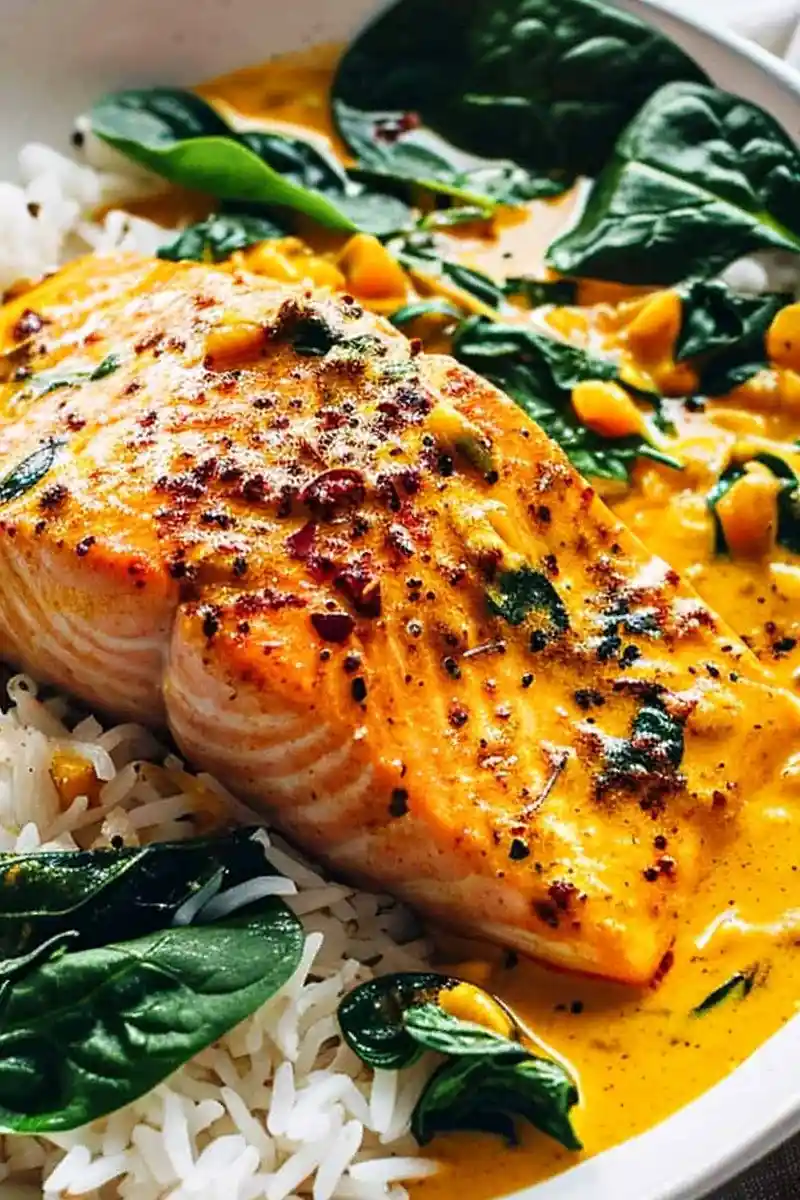
This high-protein dinner combines succulent oven-roasted salmon with a fragrant, creamy Thai-inspired coconut sauce. It is a nutritious meal that can be prepared in just 30 minutes, making it ideal for busy weeknights.
List of ingredients
- 500 g salmon fillets (2 fillets with skin on)
- 1 tablespoon demerara sugar – for the spice rub
- 1 teaspoon curry powder – for the spice rub
- Pinch ground ginger – for the spice rub
- 1 teaspoon garlic powder – for the spice rub
- Pinch sea salt – for the spice rub
- 1 tablespoon olive oil – for sautéing
- 3 garlic cloves, minced – for the sauce
- 2 tablespoons fresh ginger, minced – for the sauce
- 2 tablespoons demerara sugar – for the sauce
- 1 tablespoon Thai red curry paste – for the sauce
- 400 ml coconut milk (full fat or low fat) – for the sauce
- 2 teaspoons soy sauce – for the sauce
- 1 lime, juice only – for the sauce
- 100 g fresh spinach, washed and chopped – for the sauce
- 2 tablespoons fresh basil, chopped – for the sauce
- 2 tablespoons fresh coriander, chopped – for the sauce
step-by-step instructions
- Prepare the Oven: Preheat your oven to 190ºC (375ºF).
- Create the Spice Rub: In a small bowl, mix together the demerara sugar, curry powder, garlic powder, and ground ginger. Add a pinch of sea salt and stir in one teaspoon of water until a thick, spreadable paste forms.
- Coat and Roast Salmon: Evenly spread the spice rub over the salmon fillets. Place them in the oven and bake for approximately 6 minutes to develop a flavorful crust.
- Sauté Aromatics: Heat olive oil in a high-sided skillet over medium heat. Add the minced garlic and fresh ginger, sautéing for 3 to 5 minutes until soft and fragrant.
- Build the Curry Base: Stir in the demerara sugar and Thai red curry paste. Whisk the mixture and let it simmer for a few seconds until it thickens.
- Simmer the Sauce: Pour in the coconut milk and soy sauce. Bring the mixture to a boil, then reduce heat and simmer for about 2 minutes until the sauce is thick enough to coat the back of a spoon.
- Wilt the Greens: Stir the chopped spinach into the simmering sauce and cook for about 2 minutes until wilted.
- Finish the Salmon: Stir in the chopped basil and coriander. Place the partially cooked salmon fillets into the sauce and cook for an additional 5 minutes until the fish is cooked through.
- Serve: Place the salmon on a bed of cooked basmati or jasmine rice and drizzle generously with the coconut curry sauce.
Mastering the Salmon Texture
Identify the Perfect Doneness
Salmon is cooked through when the flesh changes from a translucent raw look to an opaque pink. Use a fork to gently press the thickest part of the fillet; it should flake easily but still feel moist. For precision, use a meat thermometer to ensure an internal temperature of 145°F (63°C).
Avoid the White Protein Ooze
The white substance that sometimes appears on the surface of salmon is called albumin. This protein is pushed out when the fish is cooked too quickly or for too long. To prevent this, remove the salmon from the heat just before it reaches full doneness, as residual heat will finish the process.
Manage the Skin Side
When roasting the salmon initially, ensure the skin side is in contact with the baking tray. This protects the delicate flesh from direct heat and helps the spice rub adhere better to the top. The brief oven roast creates a crust that locks in moisture before the fish enters the sauce.
Optimizing the Coconut Curry Sauce
Balance the Flavor Profile
A great curry relies on the balance of salt, sweet, and acid. The demerara sugar provides sweetness, while the soy sauce adds salt and umami. If the sauce feels too heavy, add an extra squeeze of fresh lime juice to brighten the overall flavor.
Control the Sauce Consistency
The desired consistency should be a velvety coating rather than a thin soup. If your sauce is too thin after simmering, let it bubble for another 2-3 minutes on medium heat. If it becomes too thick, stir in a tablespoon of water or additional coconut milk to loosen it.
Sautéing Aromatics Correctly
Ensure the garlic and ginger are sautéed until fragrant but not brown. Burning the garlic can introduce a bitter taste that clashes with the creamy coconut milk. Keep the heat at a steady medium and stir frequently to ensure even cooking.
Ingredient Substitutions and Modifications
Gluten-Free Alternatives
Standard soy sauce contains wheat, which is not suitable for gluten-free diets. Replace the soy sauce with tamari or coconut aminos for a similar savory profile. Both alternatives provide the necessary umami depth without adding gluten to the dish.
Adjusting the Heat Level
Thai red curry paste varies in intensity depending on the brand. If you prefer a milder flavor, start with half a tablespoon of paste and taste the sauce before adding more. For those who enjoy more heat, add a pinch of cayenne pepper or a sliced bird’s eye chili during the sautéing phase.
Alternative Greenery
If spinach is unavailable, baby kale or bok choy are excellent substitutes. Kale requires a slightly longer wilting time than spinach, so add it a minute earlier. Bok choy should be sliced thinly to ensure it integrates well with the salmon fillets.
Sugar Variations
Demerara sugar is used for its slight molasses flavor and texture. However, brown sugar or white granulated sugar can be used in equal measurements. Brown sugar will maintain a similar depth, while white sugar will provide a cleaner, sharper sweetness.
Serving and Pairing Suggestions
Choosing the Right Rice
Jasmine rice is the traditional choice for Thai curries due to its floral aroma and slightly sticky texture, which holds the sauce well. Basmati rice is a great alternative if you prefer a nuttier flavor and distinct, separate grains. For a low-carb option, serve the salmon over steamed cauliflower rice.
Adding Complementary Vegetables
To make the meal more filling, serve the curry with a side of steamed snap peas or roasted carrots. Broccoli florets also pair well, as their heads absorb the coconut sauce. These vegetables add a crunch that contrasts the softness of the baked salmon.
Fresh Garnishing Techniques
Always add fresh herbs like coriander and basil at the very end of the cooking process. Excessive heat destroys the delicate oils in these herbs, causing them to lose their vibrant color and flavor. A final wedge of lime on the side allows diners to adjust the acidity to their liking.
Storage and Reheating Guidelines
Refrigeration Best Practices
Store any leftover salmon and sauce in an airtight glass container in the refrigerator. This dish is best consumed within 2 days to maintain the quality of the fish. Keep the rice in a separate container to prevent it from absorbing all the sauce and becoming mushy.
Gentle Reheating Methods
Avoid reheating salmon in the microwave on high power, as this often overcooks the fish and makes it rubbery. Instead, heat the sauce and salmon gently in a skillet over low heat. Add a splash of water or coconut milk to the pan to restore the creamy consistency of the sauce.
Freezing Considerations
While the coconut sauce can be frozen, the spinach and salmon are not recommended for freezing. Frozen spinach often becomes overly mushy upon thawing, and the texture of cooked salmon degrades significantly. It is better to freeze the base sauce (before adding spinach) and use it for other proteins later.
Troubleshooting Common Issues
Correcting a Too-Salty Sauce
If you accidentally add too much soy sauce or salt, you can neutralize the flavor by adding more coconut milk. A small amount of extra sugar or a squeeze of lime juice can also help mask the excess saltiness. Always taste the sauce before adding the salmon fillets.
Dealing with Sauce Separation
Coconut milk can sometimes separate if it is boiled too aggressively. To fix a broken sauce, reduce the heat to low and whisk vigorously. If separation persists, a tiny amount of cornstarch slurry (cornstarch mixed with water) can help stabilize the emulsion.
Preventing Salmon Sticking
To ensure the salmon doesn’t stick to the pan during the final cooking phase, use a high-quality non-stick skillet or ensure the oil is properly heated. Avoid moving the fish too often; let it sear in the sauce for a few minutes before gently turning it.
Frequently Asked Questions
Can I use frozen salmon for this recipe?
Yes, frozen salmon fillets work well. Ensure they are completely thawed in the refrigerator overnight and pat them dry with paper towels before applying the spice rub. Excess moisture on the surface of the fish will prevent the rub from sticking and can lead to steaming rather than roasting.
Is it possible to make the sauce in advance?
You can prepare the coconut curry sauce up to 24 hours in advance. Keep it chilled in the refrigerator and reheat it in a skillet when you are ready to cook the salmon. Only add the spinach and fresh herbs during the final reheating process to keep them fresh.
What if I don’t have red curry paste?
If red curry paste is unavailable, you can use a combination of red chili powder, garlic, ginger, and a touch of lemongrass. However, commercial Thai red curry paste contains shrimp paste and other aromatics that are difficult to replicate perfectly with dry spices.
Can I use a different type of fish?
While salmon is recommended for its richness, this recipe works well with other oily fish like trout or Arctic char. Leaner white fish like cod or halibut can also be used, but reduce the final simmering time by 2-3 minutes to avoid overcooking the more delicate flesh.
Print
Creamy Coconut Salmon Curry
- Total Time: 30 minutes
- Yield: 2 servings 1x
- Diet: General
Description
Easy coconut salmon curry! Salmon fillets roasted with a spice rub and finished in a Thai red curry coconut sauce with spinach. An easy 30-minute dinner.
Ingredients
- 500 g salmon fillets (2 fillets with skin on)
- 1 tablespoon demerara sugar
- 1 teaspoon curry powder
- pinch ground ginger
- 1 teaspoon garlic powder
- pinch sea salt
- 1 tablespoon olive oil
- 3 garlic cloves, minced
- 2 tablespoons fresh ginger, minced
- 2 tablespoons demerara sugar
- 1 tablespoon Thai red curry paste
- 400 ml coconut milk
- 2 teaspoons soy sauce
- 1 lime, juice only
- 100 g fresh spinach, washed and chopped
- 2 tablespoons fresh basil, chopped
- 2 tablespoons fresh coriander, chopped
Instructions
- Step 1: Preheat the oven to 190ºC.
- Step 2: Mix the brown sugar, curry powder, garlic powder, powdered ginger, and sea salt with a teaspoon of water to form a thick paste.
- Step 3: Spread this paste over the salmon and bake in the preheated oven for about 6 minutes.
- Step 4: Heat the olive oil in a high-sided skillet over medium heat.
- Step 5: Sauté the garlic and ginger in the pan until they are soft and fragrant, about 3-5 minutes.
- Step 6: Add in the sugar and red curry paste, whisk to combine and let it simmer for a second or two.
- Step 7: Pour in the coconut milk and soy sauce, bring to a boil, and then simmer for about 2 minutes to thicken.
- Step 8: Add the spinach to the sauce and stir to wilt it.
- Step 9: Add the chopped basil, coriander, and salmon fillets, and continue to cook for a further 5 minutes until the salmon is cooked through.
Notes
Salmon should be opaque and reach an internal temperature of 145°F (63°C). Store leftovers in an airtight container in the fridge for up to 2 days. Use tamari or coconut aminos for a gluten-free option.
- Prep Time: 10 minutes
- Cook Time: 20 minutes
- Category: Easy Dinner
- Method: Baking and Sautéing
- Cuisine: Asian
Nutrition
- Serving Size: 1 serving
- Calories: 463 kcal
- Sugar: 19 g
- Sodium: 454 mg
- Fat: 17 g
- Saturated Fat: 3 g
- Unsaturated Fat: 14 g
- Trans Fat: 0 g
- Carbohydrates: 24 g
- Fiber: 1 g
- Protein: 51 g
- Cholesterol: 138 mg
Keywords: coconut salmon curry, Thai red curry, 30 minute dinner, easy salmon recipe