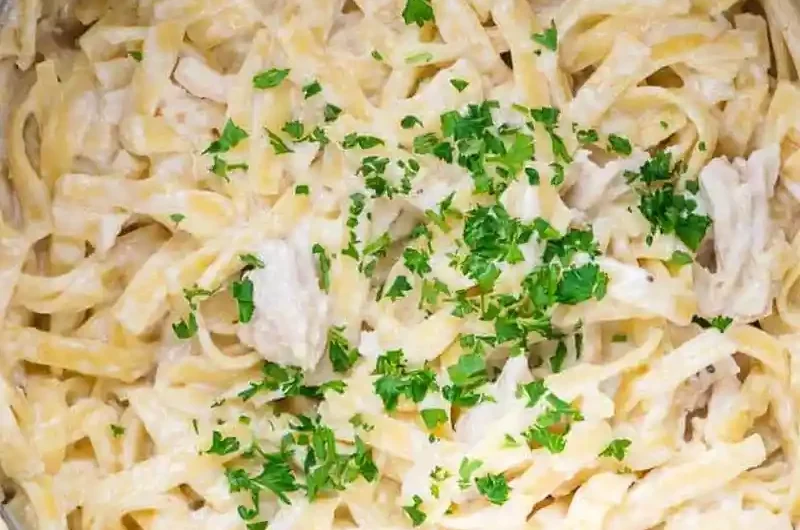
This one-pot chicken Alfredo is a streamlined meal designed for efficiency and rich flavor. It combines tender pasta and juicy chicken in a creamy sauce with minimal cleanup.
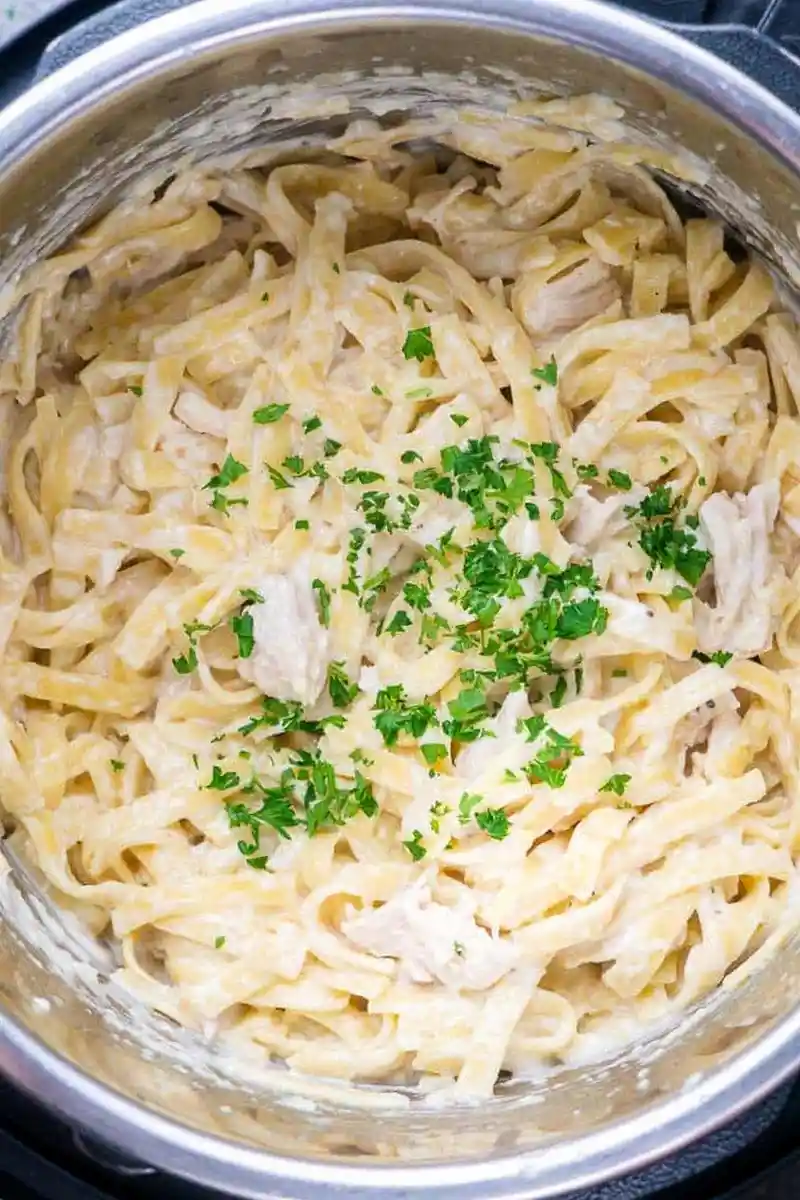
List of ingredients
- 1 pound uncooked fettuccine noodles – break in half for better layering.
- 4 cups water or broth – broth adds more depth of flavor.
- 1 pound boneless skinless chicken breasts – keep whole for maximum juiciness.
- 1 cup heavy cream – provides the necessary fat to prevent curdling.
- 3 tablespoons unsalted butter – cut into chunks for even melting.
- 3 cloves garlic – minced fresh for the best aroma.
- 1 teaspoon salt – adjust based on the saltiness of your broth.
- 1/2 teaspoon black pepper – freshly ground is preferred.
- 1 cup Parmesan cheese – shaved, shredded, or fresh grated.
- 1/4 cup chopped parsley – optional garnish for color and freshness.
step-by-step instructions
- Layer the Pasta: Break the fettuccine noodles in half and scatter them in a crisscross pattern in the Instant Pot. Add the water or broth, then press the noodles down to ensure they are fully submerged.
- Add Proteins and Aromatics: Lay the whole chicken breasts flat on top of the noodles. Pour in the heavy cream and add the butter chunks, minced garlic, salt, and pepper.
- Pressure Cook: Secure the lid and turn the pressure release valve to the ‘Sealing’ position. Select the Manual or Pressure Cook setting on HIGH pressure for 5 minutes.
- Natural Release: When the cooking cycle ends, let the pot sit undisturbed for a full 10-minute natural pressure release. This ensures the chicken is cooked through and the pasta doesn’t overcook.
- Vent and Open: After the 10-minute release, carefully turn the valve to ‘Venting’ to release any remaining steam. Press Cancel and open the lid.
- Incorporate Liquid: Gently stir the pasta to combine the ingredients. It is normal to see some extra liquid on top; stir it in to begin the thickening process.
- Verify Doneness: Insert a meat thermometer into the thickest part of the chicken breast to confirm it has reached a minimum internal temperature of 165°F.
- Rest the Chicken: Transfer the chicken to a covered plate and let it rest for 5 minutes. This keeps the juices inside the meat.
- Thicken the Sauce: Cover the pasta and let it rest for 5 minutes. This allows the noodles to absorb the remaining liquid and helps the sauce form.
- Add Cheese: Add the Parmesan cheese to the pasta and gently toss until the cheese is melted and the noodles are evenly coated.
- Combine and Serve: Shred the chicken into bite-sized pieces and return it to the pasta. Garnish with optional chopped parsley and serve immediately.
Advanced Cooking Tips for Best Results
Ensure Chicken is Fully Thawed
Always use completely thawed chicken breasts to ensure they reach the safe internal temperature of 165°F within the 5-minute cook time. Frozen chicken will take longer to cook, which will result in overcooked, mushy pasta.
Adhere to the Natural Pressure Release
The 10-minute natural pressure release is critical for the texture of both the chicken and the noodles. Quick-releasing the steam can cause the chicken to toughen and the pasta to lose its structural integrity.
Master the Crisscross Pasta Pattern
Layering the noodles in a crisscross pattern prevents them from clumping together into a single mass. This ensures that the liquid and heat are distributed evenly across every strand of pasta.
Monitor Temperature Carefully
Use an instant-read thermometer to check the center of the chicken breast. If the chicken is under 165°F, return it to the pot and run a 1-minute high-pressure cycle with a 5-minute natural release.
Ingredient Substitutions and Modifications
Using Alternative Pasta Shapes
You can substitute fettuccine with other thick pastas like bow ties or elbow macaroni. Avoid using thin pastas like angel hair or spaghetti, as they will overcook and break down during the pressure cooking process.
Substituting Water with Broth
Using chicken or vegetable broth instead of water increases the savory profile of the dish. If using broth, reduce the added salt by a quarter teaspoon to prevent the final sauce from becoming too salty.
Dairy Alternatives for Heavy Cream
Heavy cream is the most stable dairy for pressure cooking. If you prefer half-and-half or milk, add them after the pressure cooking cycle is complete to prevent the dairy from curdling under high heat.
Swapping Chicken Breast for Thighs
Boneless skinless chicken thighs can be used for a richer flavor and more moisture. Since thighs are more forgiving than breasts, they cook well in the same time frame, though they should still reach 165°F.
Using Different Types of Cheese
While Parmesan is traditional, Pecorino Romano offers a saltier, sharper flavor profile. You can use a blend of both or substitute Romano entirely if you prefer a more pungent cheese taste.
Flavor Variations to Enhance the Dish
Integrating Cream Cheese for Richness
For a thicker and more velvety sauce, stir in 4 to 8 ounces of softened cream cheese after the pressure cooking cycle. Gently whisk it into the pasta before adding the Parmesan cheese.
Adding Sautéed Vegetables
Stir in steamed broccoli florets, sautéed mushrooms, or baby spinach at the very end. These additions provide color and nutrients without affecting the cooking time of the pasta.
Adding Heat with Red Pepper Flakes
To add a subtle spicy kick, stir in a pinch of red pepper flakes during the initial seasoning step. This infuses the cream sauce with a mild heat that cuts through the richness of the butter.
Enhancing Aromatics with Onion Powder
Adding a half teaspoon of onion powder along with the minced garlic creates a more complex savory base. This adds a sweetness that complements the salty Parmesan cheese.
Serving and Pairing Suggestions
Best Side Salad Pairings
Balance the richness of the Alfredo sauce with a bright, acidic salad. A cucumber and tomato salad with a lemon vinaigrette or a lemony kale salad provides a refreshing contrast.
Bread Options for Dipping
Serve this dish with warm garlic bread or homemade French bread crostini. These are ideal for scooping up any remaining cream sauce left on the plate.
Fresh Herb Garnish Options
While parsley is the standard garnish, fresh basil leaves provide a classic Italian aroma. Finely chopped chives also work well to add a mild onion flavor to the finished dish.
Storage and Reheating Guide
Refrigeration and Shelf Life
Allow the pasta to cool completely before transferring it to an airtight container. Store it in the refrigerator for up to 5 days, ensuring the lid is sealed tightly to prevent the pasta from drying out.
Proper Reheating Techniques
Reheat the pasta on the stove over medium heat or in the microwave. Add a splash of milk, cream, or broth to the pasta before heating to restore the creamy emulsion of the sauce.
Freezing Potential
Cream-based sauces often separate when frozen and thawed. If you must freeze this dish, undercook the pasta slightly and be prepared to whisk in extra cream during the reheating process.
Troubleshooting Common Issues
What to do if the Sauce is Too Thin
If the sauce appears watery after the 5-minute rest, simply stir in more Parmesan cheese. The cheese acts as a thickening agent and will bind the liquid into a creamy coating.
Fixing Overcooked Pasta
If the noodles are too soft, avoid over-stirring the dish, as this will break the pasta further. In the future, ensure you are not exceeding the recommended high-pressure cook time.
Preventing Dairy Curdling
Curdling usually happens when low-fat dairy is exposed to high heat for too long. Use heavy cream as specified, or stir in lighter dairy options only after the pressure has been released and the heat is off.
Frequently Asked Questions
Can I double this recipe in a 6-quart pot?
No, doubling this recipe will likely exceed the maximum fill line of a 6-quart pressure cooker. To double the ingredients, you will need an 8-quart pressure cooker to ensure safe operation.
Can I use pre-cooked chicken?
Yes, you can use pre-cooked or rotisserie chicken. However, do not pressure cook it; instead, stir the shredded cooked chicken into the pasta after the cooking cycle and resting periods are complete.
Is it possible to make this dairy-free?
You can replace the heavy cream with full-fat coconut milk and use a vegan Parmesan alternative. Be aware that coconut milk may alter the flavor profile and have a different thickening consistency.
Do I have to break the noodles?
Breaking the noodles in half helps them fit better in the pot and prevents them from clumping. It ensures a more even distribution of the sauce and liquid during the pressure cooking process.
Can I use garlic powder instead of fresh garlic?
Yes, garlic powder is a suitable substitute if fresh garlic is unavailable. Use about 1/4 teaspoon of garlic powder for every clove of fresh garlic required by the recipe.
Print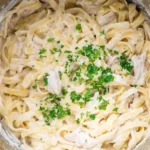
Instant Pot Chicken Alfredo
- Total Time: 25 minutes
- Yield: 8 cups 1x
- Diet: General
Description
Instant Pot Chicken Alfredo is a toss-and-go one pot pasta with tender noodles and juicy chicken in a silky cream sauce (not from a jar). Chicken Alfredo for Instant Pot is perfect for busy people AND pressure cooker beginners.
Ingredients
- 1 pound uncooked fettuccine noodles
- 4 cups water or broth
- 1 pound boneless skinless chicken breasts
- 1 cup heavy cream
- 3 tablespoons unsalted butter
- 3 cloves garlic, minced
- 1 teaspoon salt
- 1/2 teaspoon black pepper
- 1 cup parmesan cheese
- 1/4 cup chopped parsley
Instructions
- Step 1: Break FETTUCCINE noodles in half and scatter in a crisscross pattern in the Instant Pot. Add WATER, then press the noodles down to fully submerge.
- Step 2: Lay whole CHICKEN BREASTS on top of the noodles. Add HEAVY CREAM, BUTTER, GARLIC, SALT, and PEPPER.
- Step 3: Secure the lid and turn the pressure release valve to the “Sealing” position. Select Manual or Pressure Cook on HIGH pressure for 5 minutes.
- Step 4: When the cooking cycle ends, let the pot sit undisturbed for a full 10-minute natural pressure release.
- Step 5: After the 10-minute natural release, carefully turn the valve to “Venting” to release any remaining steam. Press Cancel and open the lid.
- Step 6: Gently stir to combine.
- Step 7: Insert a meat thermometer into the chicken breast to confirm it has reached a minimum internal temperature of 165°F.
- Step 8: Transfer chicken to a covered plate and let it rest for 5 minutes.
- Step 9: Cover the pasta and let it rest for 5 minutes to absorb the remaining liquid.
- Step 10: Add PARMESAN CHEESE and gently toss to coat the noodles.
- Step 11: Shred the chicken and return it to the pasta. Garnish with optional PARSLEY and serve.
Notes
Use fully thawed chicken breasts for safe cooking. Do not skip the 10-minute natural pressure release. If using half-and-half or milk instead of heavy cream, stir it in after pressure cooking to prevent curdling. For a richer sauce, stir in 4 to 8 ounces of cream cheese after cooking.
- Prep Time: 5 minutes
- Cook Time: 5 minutes
- Category: Dinner Recipes, Main Course
- Method: Pressure Cooking
- Cuisine: American, Italian
Nutrition
- Serving Size: 1 cup
- Calories: 474 kcal
- Sugar: 1 g
- Sodium: 588 mg
- Fat: 23 g
- Saturated Fat: 13 g
- Unsaturated Fat: 9 g
- Trans Fat: 1 g
- Carbohydrates: 42 g
- Fiber: 2 g
- Protein: 25 g
- Cholesterol: 144 mg
Keywords: Instant Pot, Chicken Alfredo, One Pot Pasta, Creamy Pasta, Pressure Cooker