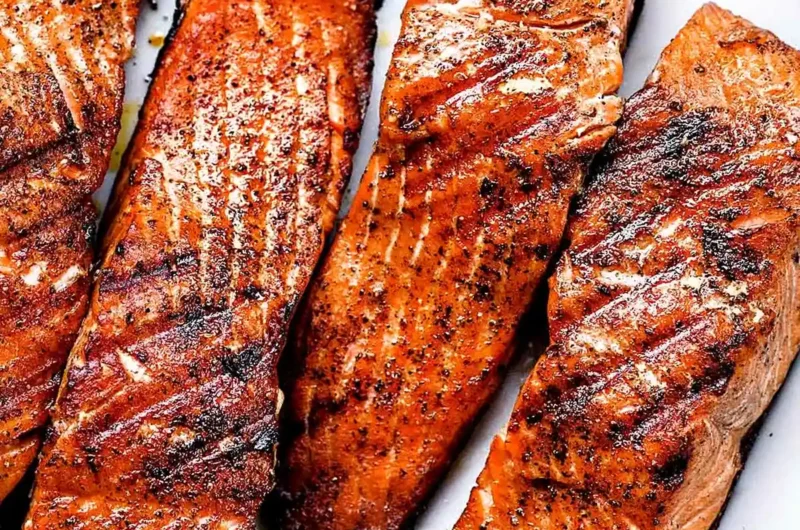
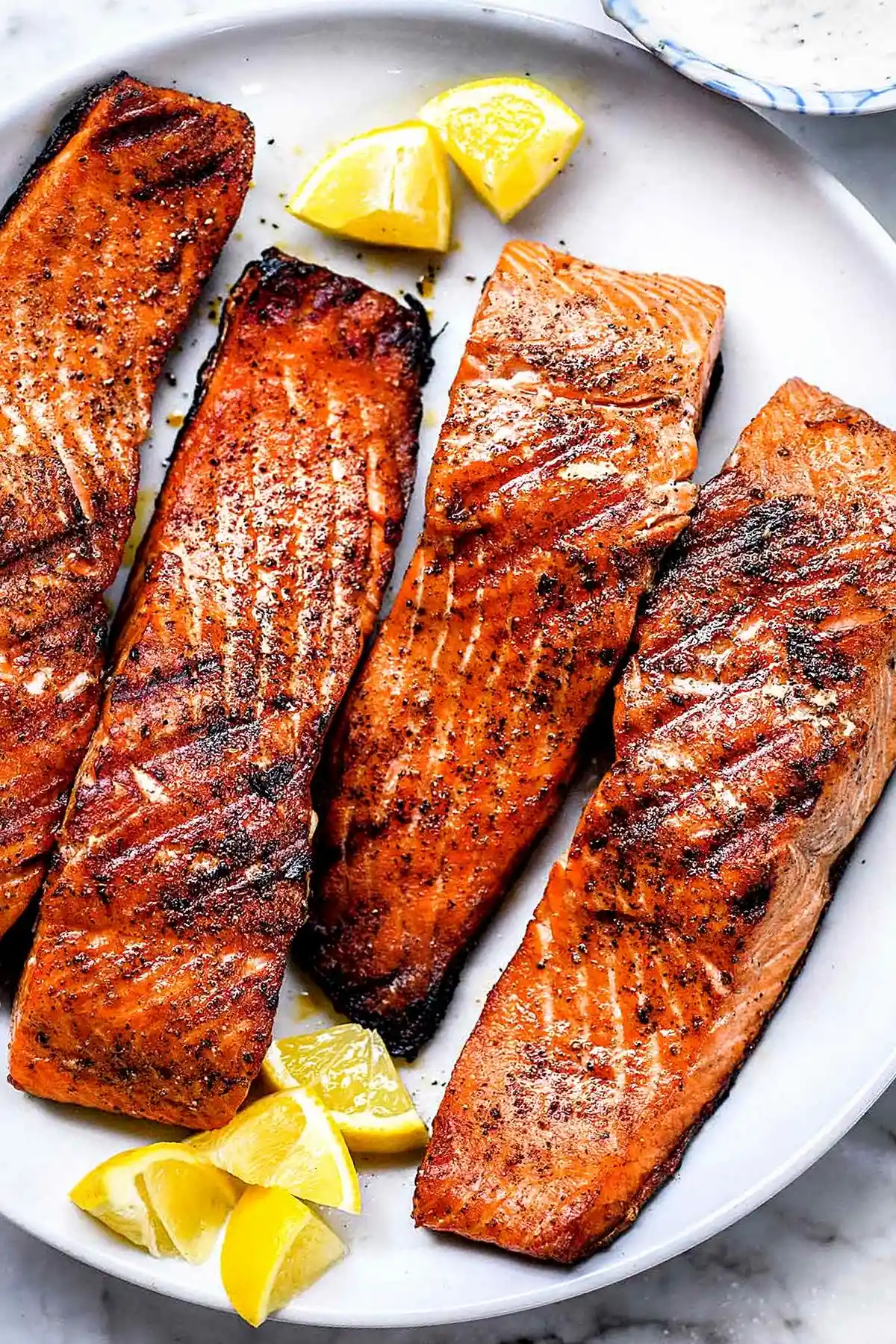
Achieve restaurant-quality results with this straightforward method for grilling salmon. This approach focuses on skin-side searing to prevent sticking and ensure a moist interior.
List of ingredients
- 4 (6-8 ounce) skin-on salmon fillets (about 1-inch thick) – Skin-on cuts protect the meat from direct heat.
- 2 tablespoons grapeseed oil – A high smoke point oil prevents burning at high temperatures.
- 2 teaspoons kosher salt – Used for deep seasoning and moisture control.
- 2 teaspoons freshly ground black pepper – Adds a sharp, aromatic contrast to the rich fish.
- 1 lemon (cut into wedges) – Fresh acidity balances the fattiness of the salmon.
step-by-step instructions
- Prepare the heat: Preheat your grill for direct cooking over high heat between 450°F and 550°F. Clean the grates thoroughly and close the lid to maintain a steady temperature.
- Season the fillets: Apply a generous coating of grapeseed oil to the flesh side of each salmon fillet. Season both sides evenly with the kosher salt and freshly ground black pepper.
- Initial sear: Place the salmon skin side down on the hot grates and close the lid. Grill for 6-8 minutes until the fish lightens in color and the skin releases easily from the grill.
- Finish cooking: Flip the fillets over and close the lid again. Cook for 2-4 minutes until the internal temperature reaches 130°F for medium rare or longer for your preferred doneness.
- Rest and serve: Transfer the fish to a platter and let it rest for 1-2 minutes to allow juices to redistribute. Slide the skin off and serve immediately with lemon wedges and your choice of sauce.
Advanced Grilling Techniques
Utilizing Charcoal for Depth
Charcoal grills provide a distinct smoky flavor that gas grills cannot replicate. Use all-natural hardwood briquettes to avoid chemical additives and ensure a consistent high heat. A chimney starter is the most efficient way to ignite coals without using lighter fluid.
Precise Temperature Management
Maintaining a grill temperature between 450°F and 550°F is critical for a proper sear. If you do not have a thermometer, hold your hand 3-4 inches above the grates. When you can only count to three before the heat becomes too intense, the grill is ready.
The Logic of Oiling the Fish
Avoid oiling the grill grates directly, as the oil often burns off before the fish touches the metal. Instead, apply the oil directly to the salmon fillets. This creates a protective barrier that reduces sticking and helps the skin crisp up more effectively.
Managing the Lid for Oven-Like Heat
Keeping the grill lid closed is essential for creating a convection-like environment. This ensures the heat surrounds the fillet, cooking the interior evenly while the skin sears. It also prevents flare-ups from dripping oil from reaching the flesh side too quickly.
Salmon Selection Guide
Comparing Wild-Caught and Farmed Salmon
Wild-caught salmon typically offers a more robust, fishy flavor and a leaner texture. Farm-raised salmon is generally fattier, which results in a more buttery mouthfeel and a milder taste. Both are excellent for grilling, depending on your flavor preference.
The Importance of Skin-On Fillets
The skin acts as a natural insulator, protecting the delicate flesh from the intense direct heat of the grill. It also prevents the fillet from falling apart during the flip. Once cooked, the skin can be easily removed or eaten for added nutrients.
Ideal Fillet Thickness
Aim for fillets that are approximately one inch thick for the most consistent results. Thinner fillets overcook very quickly and can become chalky. Thicker cuts may require a slightly longer skin-side cook time to ensure the center is warmed through.
Identifying Freshness
Fresh salmon should have a mild, clean scent and a vibrant color without any dull grey spots. The flesh should spring back immediately when pressed lightly with a finger. Avoid any fillets that feel slimy or have a strong, unpleasant odor.
Flavor Customizations and Variations
Implementing Dry Spice Rubs
Once the basic method is mastered, replace salt and pepper with a blackened seasoning or a fajita rub. Apply the rub after oiling the fish to help the spices adhere. Be cautious with rubs containing sugar, as they can burn at 500°F.
Using Citrus-Based Marinades
A marinade of lemon juice, olive oil, and minced garlic can enhance the brightness of the dish. Marinate the fillets for no more than 30 minutes to avoid the acid breaking down the proteins too much. Pat the fish dry before oiling and grilling to ensure a good sear.
Integrating Compound Butters
Top the resting salmon with a slice of compound butter made from softened butter, fresh parsley, and lemon zest. The residual heat of the fish melts the butter, creating a rich, built-in sauce. This is particularly effective for leaner wild-caught varieties.
Alcohol-Free Glaze Options
A glaze made from honey, soy sauce, and grated ginger adds a savory-sweet dimension. Brush the glaze on during the last two minutes of cooking on the flesh side. This prevents the sugars in the honey from burning while still creating a sticky coating.
Complementary Side Dish Ideas
Fresh and Zesty Salads
Arugula salad with a simple lemon vinaigrette provides a peppery contrast to the rich salmon. Alternatively, a Mediterranean chickpea salad with cucumbers, tomatoes, and feta adds a hearty, refreshing element to the meal. Keep the dressings light to let the fish remain the star.
Grilled Vegetable Pairings
Take advantage of the hot grill by adding asparagus or zucchini spears alongside the salmon. Toss them in olive oil and salt, and grill for 3-5 minutes. These vegetables mirror the charred flavor of the fish perfectly.
Starch and Grain Options
Lemon-infused basmati rice or a side of quinoa provides a neutral base that absorbs the salmon’s juices. For a heartier meal, consider roasted baby potatoes with rosemary. These options add necessary bulk and texture to the plate.
Creamy Sauce Pairings
A classic tartar sauce or a cucumber-dill yogurt sauce complements the smokiness of the grill. For a more sophisticated touch, try a homemade basil pesto or a lemon-caper cream sauce. Serve these on the side to allow guests to control the amount of sauce.
Storage and Food Safety
Proper Refrigeration Methods
Store leftover grilled salmon in an airtight container in the refrigerator for up to three days. To prevent the fish from drying out, place a damp paper towel over the fillets before sealing the lid. Keep the container in the coldest part of the fridge.
Reheating Without Overcooking
Avoid using a high-power microwave, which can make salmon rubbery. Instead, warm the fish in a low oven (275°F) for 10-15 minutes. Adding a teaspoon of water or a small pat of butter to the foil wrap helps maintain moisture during reheating.
Freezing Guidelines
Grilled salmon can be frozen for up to two months if wrapped tightly in foil and then placed in a freezer bag. Thaw the fillets slowly in the refrigerator overnight before reheating. This preserves the texture better than rapid thawing methods.
Handling Raw Salmon Safely
Always keep raw salmon chilled until the moment you are ready to oil and season it. Use a dedicated cutting board for seafood to avoid cross-contamination with other ingredients. Wash all surfaces and utensils with hot, soapy water immediately after use.
Troubleshooting Common Issues
Preventing Salmon from Sticking
Sticking usually happens when the grill is not hot enough or the fish is flipped too early. Wait until the salmon naturally releases from the grates. If it resists, give it another minute to develop a stronger crust.
Avoiding the “Chalky” Texture
Chalky white albumin is a sign that the salmon is being cooked too quickly or overcooked. While harmless, it indicates the muscle fibers are contracting too tightly. Use a meat thermometer to pull the fish at 130°F for a silky texture.
Managing Fillet Breakage
Use a wide, thin metal spatula to flip the salmon in one confident motion. Avoid poking the fish with a fork, as this can tear the delicate flesh. Letting the fish rest for two minutes before removing the skin also helps it hold its shape.
Correcting Under-Seasoning
If the salmon tastes bland after grilling, increase the amount of fresh lemon juice squeezed over the top. A sprinkle of flaky sea salt just before serving can also enhance the existing flavors. Avoid adding heavy sauces that mask the natural taste of the fish.
Frequently Asked Questions
What is the best type of salmon for grilling?
Wild-caught salmon is preferred for its intense flavor, while farm-raised salmon is better for those who prefer a milder, fattier taste. Higher fat content generally makes the fish more forgiving on the grill.
What grill temperature is best for cooking salmon?
The ideal temperature is between 450°F and 500°F. A very hot grill is the most effective way to ensure the skin crisps and releases without sticking to the metal grates.
How long do charcoal briquettes last?
A batch of 80 to 100 briquettes typically lasts about an hour. You should add more coals as needed to maintain the high heat required for searing the fish.
How long should I grill salmon fillets?
Cook the fillets skin-side down for 6-8 minutes and then flip them to cook the flesh side for 2-4 minutes. The exact time depends on the thickness of the fillet and the heat of the grill.
What temperature is grilled salmon considered done?
Salmon is officially done at 145°F, but it is best to remove it from the grill at 125°F to 130°F. Carry-over cooking will bring the internal temperature up to the safe zone while resting.
Print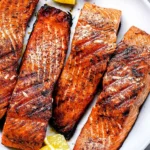
Perfectly Seared Grilled Salmon
- Total Time: 43 minutes
- Yield: 4 servings 1x
- Diet: Pescatarian
Description
Generously coat the flesh side of the salmon with oil and cook it 90% of the way skin side down until the skin releases easily from the grill, about 6-8 minutes, before turning to the flesh side for 2-4 more minutes.
Ingredients
- 4 (6-8 ounce) skin-on salmon fillets, about 1-inch thick
- 2 tablespoons grapeseed oil
- 2 teaspoons kosher salt
- 2 teaspoons freshly ground black pepper
- 1 lemon, cut into wedges
Instructions
- Preheat the grill: Prepare the grill for direct cooking over high heat, 450°F-550°F. Brush the cooking grates clean and close the lid to heat.
- Season the salmon: Generously coat the flesh side of the salmon fillets with oil and season evenly with kosher salt and black pepper.
- Grill the salmon: Grill the salmon skin side down over direct high heat with the lid closed, for about 6-8 minutes or until the fish lightens in color, becomes more firm to the touch and you can lift the fillets off the cooking grates without them sticking. Turn the salmon over, close the lid, and cook to 130°F or about 2-4 minutes for medium rare or longer to desired doneness.
- Rest before serving: Transfer to a platter to rest for 1-2 minutes. Slide the salmon skin from the fillets and serve with wedges of lemon and tartar sauce or cucumber dill sauce.
Notes
For the best smokey flavor, use a charcoal grill. Ensure the grill is smoking hot to prevent the salmon from sticking to the grates.
- Prep Time: 20 minutes
- Cook Time: 20 minutes
- Category: Main Course
- Method: Grilling
- Cuisine: American
Nutrition
- Serving Size: 1 fillet
- Calories: 410 kcal
- Sugar: 1 g
- Sodium: 1163 mg
- Fat: 26 g
- Saturated Fat: 4 g
- Unsaturated Fat: 22 g
- Trans Fat: 0 g
- Carbohydrates: 3 g
- Fiber: 1 g
- Protein: 38 g
- Cholesterol: 85 mg
Keywords: grilled salmon, skin-on salmon, healthy dinner, summer grilling