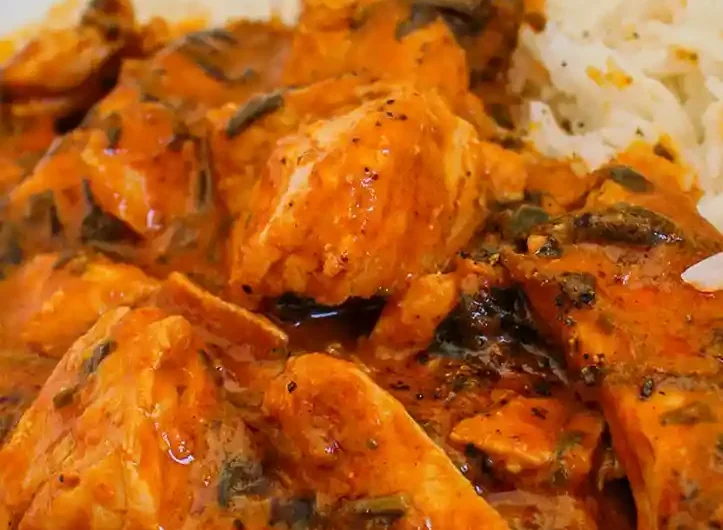
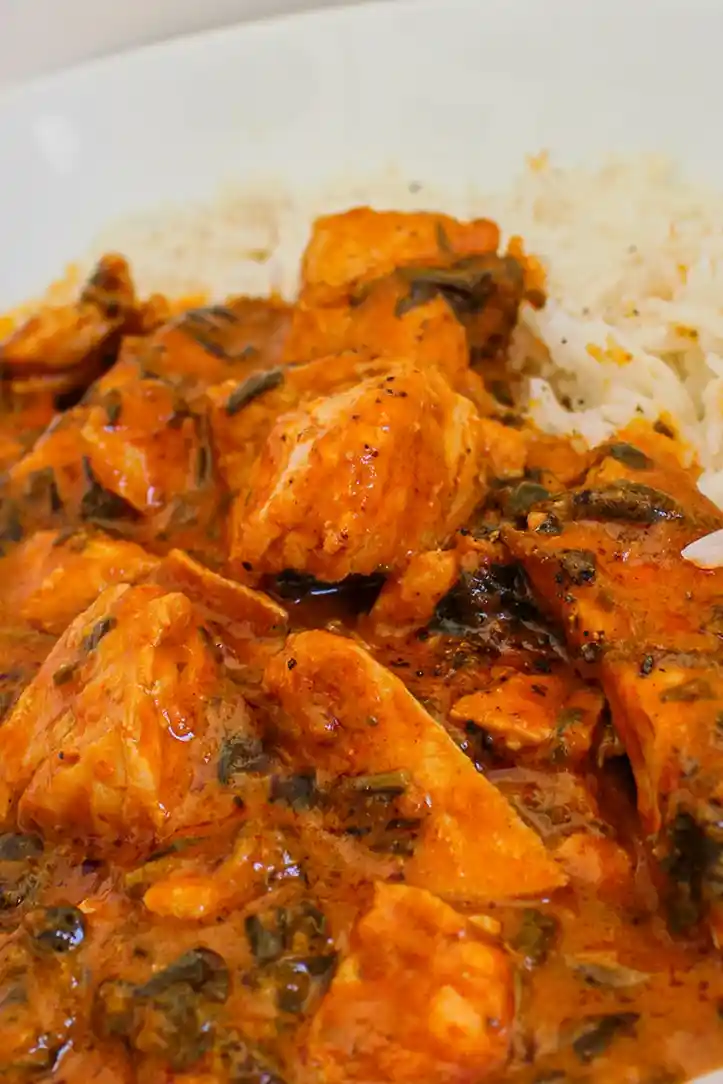
This quick coconut curry salmon combines savory and sweet flavors for a balanced, nutrient-dense meal. The one-pot poaching method ensures the fish remains tender while absorbing the aromatic curry sauce.
List of ingredients
- 1½ lbs. salmon fillet (skin-off) – cut into uniform chunks.
- 1½ cups unsweetened coconut milk (approx. 1 can) – provides the creamy base.
- 1 tablespoon grated ginger – adds a fresh, zesty heat.
- 1 tablespoon brown sugar – balances the spice and acidity.
- 1 teaspoon fish sauce – adds a salty, umami depth.
- 3 tablespoon red curry paste – the primary source of heat and aroma.
- ½ lime, juiced – adds brightness to the rich sauce.
- 2 cups chopped spinach – adds color and nutrients.
- pepper, to taste – for final seasoning.
- rice – for serving as a base.
step-by-step instructions
- Simmer the sauce: In a large saucepan over medium heat, whisk together the coconut milk, grated ginger, brown sugar, fish sauce, red curry paste, chopped spinach, and lime juice.
- Reduce the liquid: Let the mixture simmer for 30 minutes to allow the flavors to meld and the sauce to thicken slightly.
- Prepare the fish: While the curry is simmering, cut the salmon into roughly 1-inch chunks. Ensure all skin is removed before cutting.
- Cook the rice: Start preparing your rice according to the package directions so it is ready when the salmon is finished.
- Poach the salmon: Place the salmon chunks into the simmering sauce. Cover the saucepan with a lid and cook for 5 minutes.
- Finish and serve: Gently turn the salmon pieces to ensure all sides are evenly cooked. Serve the curry over the prepared rice and top with pepper to taste.
Expert Salmon Preparation Tips
Choosing the Right Cut
Select a center-cut salmon fillet for the most consistent thickness. This ensures that each 1-inch chunk cooks at the same rate, preventing some pieces from overcooking while others remain raw.
Uniform Cubing Technique
Use a sharp chef’s knife to cut the salmon into precise 1-inch cubes. Uniform sizes are critical in this recipe because the salmon poaches quickly; uneven pieces will result in varying textures.
Removing the Skin Efficiently
If your fillet has skin, use a long knife to slide between the flesh and the skin starting from the tail end. This prevents tearing the delicate meat and ensures a cleaner presentation in the sauce.
Ingredient Substitutions and Adjustments
Alternative Curry Pastes
You can replace red curry paste with green curry paste for a more herbal, spicy flavor. Yellow curry paste is another option if you prefer a milder, turmeric-forward taste profile.
Coconut Milk Variations
Full-fat coconut milk provides the richest texture. If you prefer a lighter sauce, use light coconut milk, though you may need to simmer the sauce for an additional 5 to 10 minutes to achieve the desired thickness.
Leafy Green Alternatives
While spinach is the standard, baby kale or chopped bok choy work well. These heartier greens should be added 5 minutes earlier than spinach to ensure they soften properly.
Replacing Fish Sauce
If fish sauce is unavailable, use a mixture of soy sauce and a pinch of salt. This maintains the salty, savory element necessary to balance the sweetness of the coconut milk and brown sugar.
Serving and Pairing Ideas
Selecting the Ideal Rice
Jasmine rice is highly recommended for this dish due to its natural fragrance and ability to absorb the curry sauce. Basmati rice is also a great choice for a fluffier, separate grain texture.
Fresh Garnish Additions
Top the finished dish with fresh cilantro leaves or thinly sliced green onions for a pop of color. A sprinkle of toasted sesame seeds can add a subtle nutty flavor and a bit of crunch.
Complementary Side Dishes
Serve this curry with steamed broccoli or roasted carrots to increase the vegetable content. A side of sliced cucumbers marinated in rice vinegar helps cut through the richness of the coconut milk.
Storage and Reheating Guidelines
Refrigeration Limits
Store leftovers in an airtight container in the refrigerator for up to two days. Keep the salmon and sauce together to prevent the fish from drying out during storage.
Gentle Reheating Methods
Reheat the curry on a stovetop over low heat, adding a tablespoon of water or coconut milk if the sauce has thickened too much. Avoid high heat or long microwave sessions, which can make the salmon rubbery.
Freezing Considerations
It is not recommended to freeze this dish. The coconut milk may separate upon thawing, and the texture of the cooked salmon often becomes grainy when frozen and reheated.
Make-Ahead Strategies
Preparing the Curry Base
The sauce can be made up to 24 hours in advance and stored in the fridge. When ready to eat, simply bring the sauce back to a simmer before adding the fresh salmon chunks.
Pre-Cutting the Salmon
You can cube the salmon a few hours before cooking and store it in a sealed container. Keep it chilled at all times to maintain freshness and food safety.
Troubleshooting Common Issues
Managing Excessive Heat
If the curry is too spicy, stir in an extra two tablespoons of coconut milk or a small amount of additional brown sugar. These ingredients neutralize the heat of the red curry paste.
Preventing Fish Fragmentation
Avoid stirring the salmon vigorously once it is added to the pan. Gently turn the pieces with a slotted spoon to keep the chunks intact and prevent them from breaking into flakes.
Correcting Thin Sauce
If the sauce is too thin after 30 minutes, increase the heat slightly and simmer without the lid for another 5 to 10 minutes. This allows more moisture to evaporate, concentrating the flavor and thickness.
Frequently Asked Questions
Can I use frozen salmon for this recipe?
Yes, frozen salmon works well in this recipe. Thaw the fillet completely in the refrigerator before cubing it to ensure the cooking time remains accurate.
How do I tell when the salmon is perfectly cooked?
The salmon is done when it reaches an internal temperature of 145°F (63°C) or when the flesh transitions from translucent to an opaque pink and flakes easily with a fork.
Is this recipe suitable for a slow cooker?
This recipe is designed for a saucepan, but you can adapt it. Simmer the sauce on low for 4 hours, then add the salmon during the last 30 minutes to avoid overcooking the fish.
Nutritional Optimization Tips
Increasing Omega-3 Content
Use wild-caught sockeye salmon to maximize the omega-3 fatty acid content. Wild salmon often has a deeper color and a more robust flavor that stands up well to strong curry spices.
Reducing Refined Sugars
To lower the sugar content, replace the brown sugar with a small amount of maple syrup or a mashed date. This provides the necessary sweetness to balance the lime and curry while using less refined sugar.
Print
Creamy Coconut Curry Salmon
- Total Time: 45 minutes
- Yield: 4 servings 1x
- Diet: General
Description
A home-run recipe. This coconut curry salmon recipe is sweet, savoury and a little spicy. A great recipe for all those “on the fence,” about salmon!
Ingredients
- 1½ lbs. salmon fillet (skin-off)
- 1½ cups unsweetened coconut milk
- 1 tablespoon grated ginger
- 1 tablespoon brown sugar
- 1 teaspoon fish sauce
- 3 tablespoon red curry paste
- ½ lime, juiced
- 2 cups chopped spinach
- pepper, to taste
- rice
Instructions
- Step: In a large saucepan over medium heat, whisk together coconut milk, ginger, brown sugar, fish sauce, red curry paste, spinach, and lime juice.
- Step: Let mixture simmer for 30 minutes.
- Step: While the curry is simmering begin to prepare the salmon. Cut the salmon into roughly 1 inch chunks. If your salmon has the skin-on, remove before cooking. Place aside.
- Step: Begin preparing rice if you are going to eat the curry right away. Cook desired amount, and follow directions on the package.
- Step: Once the sauce has simmered for 30 minutes, place the chunked salmon in the sauce and place a lid over the saucepan, let cook for 5 minutes. Gently turn the salmon to ensure all sides are cooked.
- Step: Serve over rice and top with pepper, to taste. Enjoy!
Notes
Fresh salmon is recommended, but frozen salmon works just as well and is a more affordable option without sacrificing quality.
- Prep Time: 10 minutes
- Cook Time: 35 minutes
- Category: Main Course
- Method: Simmering
- Cuisine: Thai-Inspired
Nutrition
- Serving Size: 1 serving
- Calories: 680 kcal
- Sugar: 11 g
- Sodium: 820 mg
- Fat: 31 g
- Saturated Fat: 21 g
- Unsaturated Fat: 10 g
- Trans Fat: 0 g
- Carbohydrates: 48 g
- Fiber: 4 g
- Protein: 34 g
- Cholesterol: 92 mg
Keywords: coconut curry, salmon curry, salmon recipe, seafood curry