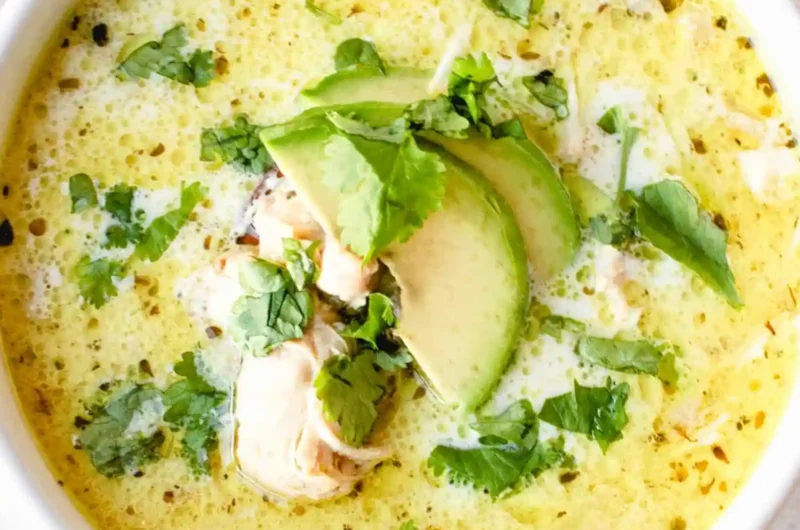
This one-pot creamy white chicken chili provides a rich and comforting meal without the use of beans or dairy. It combines shredded chicken thighs with a coconut-based broth and zesty lime for a satisfying dinner.
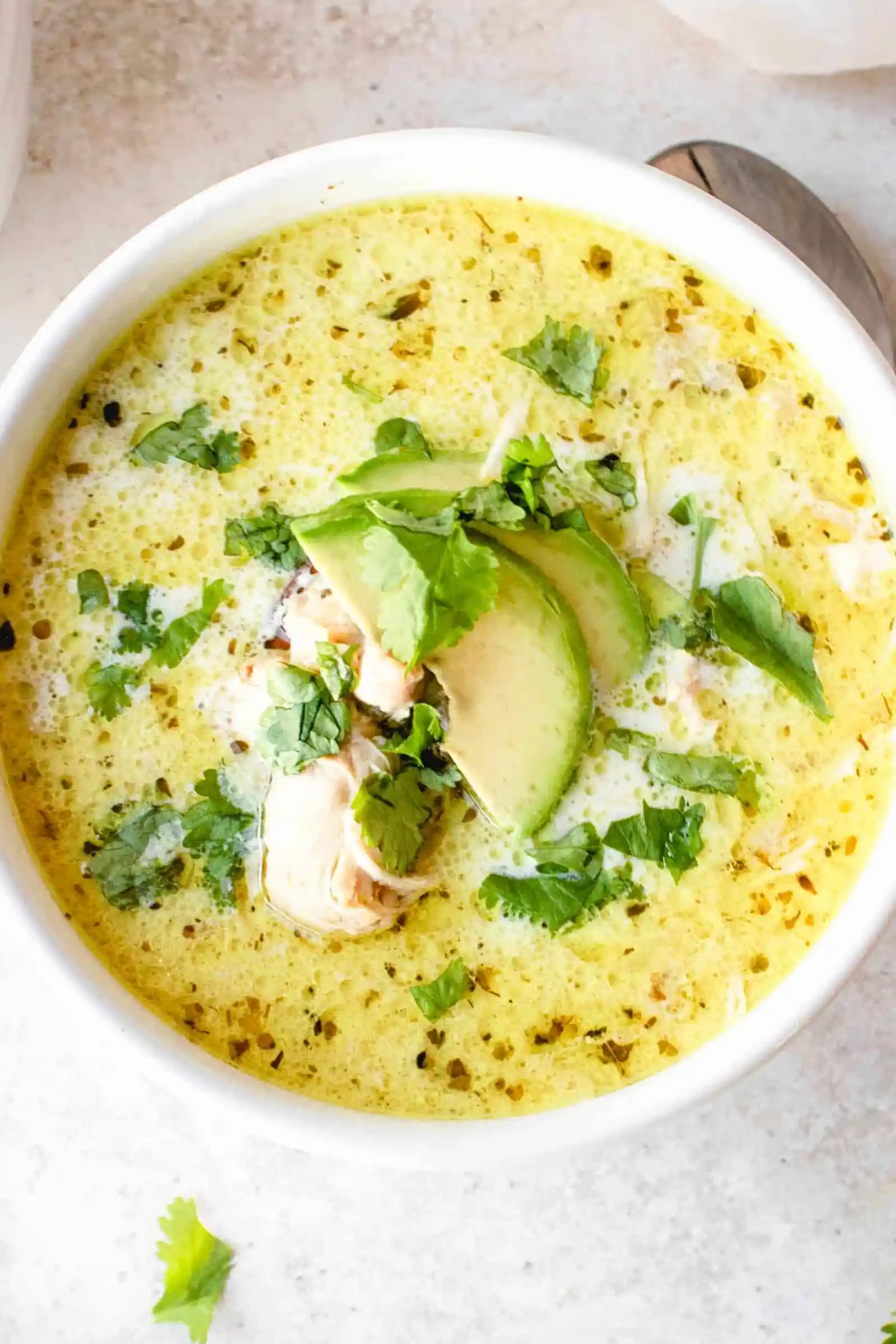
List of ingredients
- 2 TBSP olive oil – for sautéing aromatics.
- 1 large yellow onion, diced – adds a savory base.
- 2 cups celery, diced – provides texture and flavor.
- 3 large cloves garlic, sliced – enhances the aromatic profile.
- 6 boneless, skinless chicken thighs – chosen for juiciness.
- 2.5 tsp sea salt – for seasoning.
- 1 tsp dried oregano – adds herbal depth.
- 1 tsp onion powder – reinforces the savory flavor.
- 1/4 tsp garlic powder – adds a concentrated garlic note.
- 1/2 tsp ground ginger – provides a subtle warmth.
- zest of one lime – for citrus fragrance.
- juice of one lime – adds necessary acidity.
- 3 cups sodium free chicken bone broth – ensure ingredients are AIP compliant.
- 1/2 cup cilantro, roughly chopped – adds fresh herbal notes (plus more for garnish).
- 2 cups full fat, additive free coconut cream – for a rich, creamy texture.
- avocado – for garnish.
- green or red onions – for garnish.
step-by-step instructions
- Sauté Aromatics: Heat olive oil in a large stockpot over medium heat. Add the diced onion, celery, and sliced garlic, cooking until the mixture is fragrant and the onions become translucent.
- Brown the Chicken: Add chicken thighs, sea salt, dried oregano, onion powder, garlic powder, ground ginger, and lime zest to the pot. Stir occasionally to ensure the chicken browns on all sides, which takes about 5 minutes.
- Simmer: Lower the heat slightly and stir in the lime juice, chicken bone broth, and chopped cilantro. Allow the mixture to simmer for 20 to 25 minutes.
- Shred Meat: Remove the chicken thighs from the pot and transfer them to a bowl. Use two forks to shred the meat completely before returning it to the soup.
- Add Cream: Return the pot to medium heat and stir in the coconut cream. Bring the chili to a boil to incorporate the cream.
- Final Seasoning: Taste the chili and adjust the amount of salt if needed.
- Garnish: Remove the pot from the heat. Serve in individual bowls and garnish with sliced avocado, fresh cilantro, and green or red onions.
Optimizing Chili Texture and Consistency
Thickening with a Starch Slurry
If you prefer a thicker consistency, create a slurry using arrowroot starch or tapioca starch. Mix one tablespoon of the starch with two tablespoons of cold water until smooth, then stir it into the boiling chili. Simmer for an additional two minutes until the sauce reaches your desired thickness.
Reducing Liquid Through Simmering
To thicken the chili without adding extra ingredients, increase the heat slightly after adding the coconut cream. Let the liquid simmer uncovered for an additional 10 to 15 minutes. This allows water to evaporate, concentrating the flavors and thickening the base.
Increasing Solid Ingredients for Bulk
You can make the chili heartier by adding more diced celery or extra shredded chicken. Adding more solids naturally reduces the ratio of liquid to meat and vegetables. This makes the dish feel more like a thick stew than a creamy soup.
Thinning the Chili for a Soupier Base
If the coconut cream makes the chili too thick for your preference, add more chicken bone broth. Stir in a quarter cup of broth at a time until the consistency is light enough to be considered a soup. This is especially useful if you are reheating the dish, as it often thickens in the fridge.
Ingredient Substitutions and Alternatives
Using Chicken Breast Instead of Thighs
You can substitute chicken thighs with boneless, skinless chicken breasts for a leaner protein option. Be aware that breast meat cooks faster and can dry out more easily. Reduce the simmering time by about 5 minutes to ensure the meat remains tender.
Replacing Coconut Cream with Cashew Cream
For those who prefer a different nutty flavor, substitute coconut cream with homemade cashew cream. Soak raw cashews in water for four hours, rinse them, and blend with fresh water until completely smooth. This provides a similar richness and creaminess without the distinct coconut taste.
Switching Bone Broth for Standard Broth
If bone broth is unavailable, use a high-quality chicken stock. Ensure the stock is sodium-free and free of additives like sugar or nightshade-based flavorings. Bone broth is recommended for higher protein and collagen content, but stock works well for the base flavor.
Using Different Fresh Herbs
While cilantro is traditional, you can use fresh parsley if you prefer a more neutral herbal taste. Basil can also work for a different flavor profile, though it will move the dish away from Tex-Mex inspirations. Always add fresh herbs toward the end of cooking to preserve their brightness.
Creative Serving and Garnish Options
Adding Fresh Avocado Slices
Slicing a ripe avocado on top of each bowl adds a healthy dose of fats and a buttery texture. The coolness of the avocado balances the warmth of the spices and the richness of the coconut cream. Cube the avocado or slice it thinly for a professional presentation.
Utilizing Sliced Green or Red Onions
Freshly sliced green onions provide a sharp, crisp contrast to the creamy base of the chili. Red onions can be used for a stronger bite and a pop of color. Finely dice them to ensure an even distribution of flavor in every spoonful.
Enhancing with Extra Lime Wedges
Serving the chili with a lime wedge on the side allows each person to adjust the acidity to their liking. A fresh squeeze of lime juice just before eating brightens the coconut cream and cuts through the richness. This helps refresh the palate between bites.
Adding Fresh Cilantro Leaves
Beyond the cilantro cooked into the base, topping the dish with whole cilantro leaves adds a fresh, peppery finish. This improves the visual appeal and reinforces the citrusy notes of the lime. Chop the leaves coarsely for a more rustic look.
Storage and Reheating Guidelines
Refrigeration and Container Choice
Store leftover white chicken chili in an airtight glass container to maintain freshness. It will stay safe to eat in the refrigerator for 4 to 5 days. Glass containers are preferred over plastic to avoid flavor transfer and to make reheating easier.
Freezing and Long-Term Storage
This chili can be frozen for up to two months in freezer-safe bags or glass containers. Leave a small amount of space at the top of the container to allow the liquid to expand as it freezes. Label the containers with the date of preparation for easy tracking.
Proper Thawing Procedures
To thaw frozen chili, move the container from the freezer to the refrigerator 24 hours before you plan to eat it. Avoid thawing at room temperature to prevent bacterial growth. This gradual thaw helps maintain the emulsion of the coconut cream.
Stovetop Reheating Method
Reheat the chili in a small pot over medium-low heat. Stir frequently to ensure the coconut cream does not separate or burn on the bottom. If the chili has thickened too much during storage, stir in a tablespoon of water or broth to loosen it.
Microwave Reheating Instructions
Place the chili in a microwave-safe bowl and heat in 1-minute intervals. Stir the mixture between each heating cycle to ensure an even temperature throughout. Be careful not to overheat, as the coconut cream can bubble over quickly.
Meal Prep and Make-Ahead Advice
Preparing Vegetable Aromatics in Advance
Save time on cooking nights by dicing the onion and celery and slicing the garlic a few days early. Store these vegetables in a single container or separate bags in the refrigerator. This simplifies the sautéing process and reduces active prep time.
Pre-Cooking and Shredding Chicken
You can poach or roast the chicken thighs ahead of time and shred them before starting the chili. If using pre-cooked chicken, omit the browning step in the pot and add the shredded meat during the simmering stage. This reduces the total cook time significantly.
Storing the Base Separately from Cream
If you are prepping the chili for the week, cook the base without the coconut cream. Store the broth and chicken mixture together, and add the fresh coconut cream only when you are ready to reheat and serve. This prevents the cream from breaking during multiple reheating cycles.
Common Cooking Troubleshooting
Preventing Coconut Cream Separation
To prevent the coconut cream from separating, avoid boiling the chili vigorously for long periods. Once the cream is added, bring it to a gentle boil and then remove it from the heat immediately. Constant stirring during the addition of cream helps create a stable emulsion.
Balancing Excessive Lime Acidity
If the lime juice makes the chili too tart, add a small pinch of salt or a tiny amount of honey. Salt helps balance the perception of acidity, while a natural sweetener can neutralize the sharp citrus notes. Add these corrections in very small increments.
Correcting an Oversalted Dish
If you accidentally add too much salt, increase the volume of the liquid by adding more coconut cream or bone broth. You can also add more diced vegetables, like celery, which can help absorb some of the saltiness. Stir well and taste again before serving.
Ensuring Chicken Remains Tender
If the chicken feels tough, it may have simmered for too long or at too high a temperature. Ensure the heat is reduced to a simmer after adding the broth. Using chicken thighs instead of breasts is the best way to guarantee a tender result regardless of cook time.
Frequently Asked Questions
Can I use a slow cooker for this recipe?
Yes, you can adapt this for a slow cooker. Sauté the aromatics and brown the chicken in a pan first, then transfer everything except the coconut cream to the slow cooker. Cook on low for 6-8 hours or high for 3-4 hours, stirring in the coconut cream at the end.
Why are chicken thighs preferred over breasts?
Chicken thighs have a higher fat content, which makes them more flavorful and less likely to dry out during the simmering process. They maintain a juicy texture even after being shredded and reheated, whereas breasts can become stringy or dry.
Is coconut cream different from coconut milk?
Yes, coconut cream is thicker and has a higher fat content than coconut milk. It provides the rich, velvety texture necessary to mimic a dairy-based cream sauce. If you only have coconut milk, you may need to use a thickening agent like arrowroot starch.
How do I ensure the bone broth is additive-free?
Check the ingredient label for added sugars, cornstarch, or nightshade-derived flavorings like paprika or chili powder. Look for brands that list only animal bones, water, and perhaps apple cider vinegar or vegetables for flavor.
Can I add other vegetables to this chili?
You can add diced carrots or zucchini to increase the nutritional value. Add these at the same time as the celery and onion to ensure they are fully cooked. Avoid adding high-water vegetables like mushrooms unless you plan to simmer the chili longer to reduce the extra liquid.
Print
Creamy White Chicken Chili
- Total Time: 40 minutes
- Yield: 4–5 servings 1x
- Diet: AIP, Paleo
Description
This creamy AIP/Paleo White Chicken Chili is the ultimate quick and easy one-pot meal — rich, comforting, and perfect for cozy weeknight dinners. With juicy shredded chicken, savory herbs and spices, creamy coconut broth, and vibrant, fresh flavors, this beanless white chicken chili with coconut cream is sure to be a family favorite!
Ingredients
- 2 TBSP olive oil
- 1 large yellow onion, diced
- 2 cups celery, diced
- 3 large cloves garlic, sliced
- 6 boneless, skinless chicken thighs
- 2.5 tsp sea salt
- 1 tsp dried oregano
- 1 tsp onion powder
- 1/4 tsp garlic powder
- 1/2 tsp ground ginger
- zest of one lime
- juice of one lime
- 3 cups sodium free chicken bone broth
- 1/2 cup cilantro, roughly chopped
- 2 cups full fat, additive free coconut cream
- avocado, for garnish
- green or red onions, for garnish
Instructions
- Step: To a large stockpot add olive oil and heat on medium heat.
- Step: Add onion, celery and garlic and cook until fragrant and onions turn translucent.
- Step: Add chicken thighs, sea salt, dried oregano, onion powder, garlic powder, ground ginger, and lime zest. Stir the pot occasionally so that the chicken browns on all sides (approximately 5 minutes).
- Step: Reduce heat slightly and add lime juice, chicken broth and cilantro. Allow to simmer 20 – 25 minutes.
- Step: Transfer the chicken to a bowl and use two forks to shred it completely before returning to soup.
- Step: Return to medium heat, add coconut cream and allow to come to a boil.
- Step: Taste and adjust salt as necessary.
- Step: Remove from heat and garnish individual portions with sliced avocado, cilantro, green or red onions, as desired.
Notes
Store leftovers in an airtight container in the fridge for 4-5 days. Freeze in ziplock bags or glass containers for up to 2 months. To thicken, you can allow liquids to reduce longer or add a slurry of tapioca or arrowroot starch.
- Prep Time: 10 minutes
- Cook Time: 30 minutes
- Category: Mains
- Method: Stovetop
- Cuisine: Tex-Mex inspired
Nutrition
- Serving Size: 1 serving
- Calories: 820 kcal
- Sugar: 6 g
- Sodium: 680 mg
- Fat: 62 g
- Saturated Fat: 41 g
- Unsaturated Fat: 18 g
- Trans Fat: 0 g
- Carbohydrates: 14 g
- Fiber: 4 g
- Protein: 38 g
- Cholesterol: 135 mg
Keywords: white chicken chili, AIP, paleo, dairy-free, beanless chili, one-pot meal, coconut cream