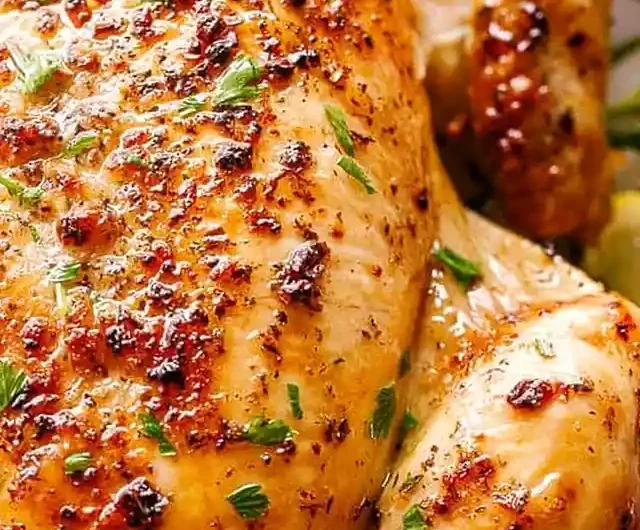
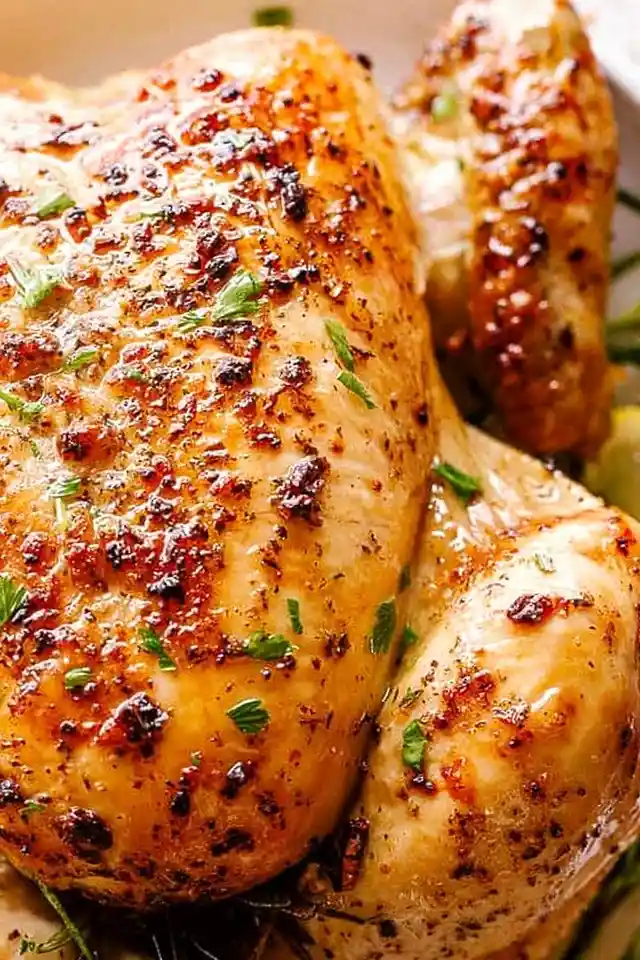
This method combines a high-heat start with a slow roast to ensure a juicy interior and perfectly crisp skin. It uses a blend of aromatic herbs and butter to create a timeless, flavor-packed dinner.
List of ingredients
- 3 to 4 pound whole broiler-fryer chicken – ensure the bird is well-proportioned for even cooking.
- 3 tablespoons butter, melted – essential for achieving a rich, golden-brown skin.
- 3 cloves garlic, minced – used to rub the exterior for a pungent, savory aroma.
- ¾ teaspoon salt – enhances the natural flavor of the meat and helps crisp the skin.
- 1 teaspoon dried basil – adds a classic herbal sweetness to the rub.
- ½ teaspoon dried thyme – provides an earthy, woodsy balance to the other herbs.
- ¼ teaspoon lemon pepper seasoning – adds a bright, zesty note; fresh ground black pepper is a suitable alternative.
- 1 lemon, quartered – stuffed into the cavity to infuse the meat with moisture and citrus.
- 3 sprigs fresh rosemary – provides a strong, aromatic fragrance from the inside out.
- 4 cloves garlic, peeled – whole cloves used for internal seasoning and depth.
step-by-step instructions
- Prepare the Oven: Preheat your oven to 450°F. This high initial temperature is key to searing the skin quickly.
- Prep the Chicken: Remove the giblets from the cavity. Thoroughly pat the entire exterior of the chicken dry with paper towels to remove excess moisture, then place it breast side up on a roasting rack set over a shallow roasting pan.
- Apply Butter and Garlic: Brush the melted butter evenly over the skin. Rub the minced garlic across the entire surface of the bird.
- Mix the Herb Rub: In a small mixing bowl, combine the salt, dried basil, dried thyme, and lemon pepper seasoning.
- Season the Bird: Rub the herb mixture firmly into the chicken skin. Sprinkle a pinch of salt inside the cavity, then fill it with the lemon quarters, fresh rosemary sprigs, and peeled garlic cloves.
- Secure and Initial Roast: Tie the legs together with kitchen twine and tuck the wing tips under the body. Roast uncovered at 450°F for exactly 10 minutes.
- Slow Roast: Reduce the oven temperature to 350°F. Continue roasting for approximately 1 hour and 10 minutes, or until an instant-read thermometer reaches 165°F in the thickest part of the breast.
- Baste and Rest: Remove the chicken from the oven and baste the skin with the pan juices. Let the chicken rest for 10 to 15 minutes before carving to allow juices to redistribute.
Expert Tips for the Perfect Roast
Temper the Meat Before Cooking
Take the chicken out of the refrigerator about 30 minutes before you plan to roast it. Bringing the meat closer to room temperature ensures that it cooks more evenly throughout. This prevents the outside from overcooking while the center remains underdone.
Ensure the Skin is Bone Dry
Moisture is the enemy of crispiness. Use paper towels to pat every inch of the chicken skin dry before applying the butter and seasonings. Dry skin allows the fat to render and brown more efficiently in the high heat of the oven.
Use an Instant-Read Meat Thermometer
Relying on time alone can be risky due to oven variations and bird size. Insert a thermometer into the thickest part of the breast, avoiding the bone. The chicken is safely done and most juicy when it hits exactly 165°F.
Avoid Overfilling the Cavity
While aromatics add flavor, stuffing the cavity too tightly can block hot air from circulating inside the bird. This can lead to uneven cooking or a longer roasting time. Place the lemon and herbs loosely to allow air flow.
Utilize a Roasting Rack
Elevating the chicken on a rack prevents the bottom from sitting in its own juices. This ensures that the underside does not steam, allowing the skin to stay crisp all the way around. If you lack a rack, a bed of thick-cut carrots and onions can act as a natural lift.
Ingredient Substitutions and Alternatives
Replacing Butter with Plant-Based Fats
If you prefer not to use butter, olive oil or melted ghee are excellent alternatives. Olive oil provides a cleaner taste and a high smoke point, while ghee offers a similar richness to butter. Both will help the herbs adhere to the skin and promote browning.
Adjusting the Herb Blend
If you do not have dried basil or thyme, dried oregano or a general Italian seasoning blend work well. Ensure you use dried herbs for the exterior rub, as fresh herbs can burn at the initial 450°F temperature. Keep the fresh rosemary reserved for the inside of the cavity.
Swapping Lemon Pepper for Black Pepper
For a more traditional flavor, replace the lemon pepper seasoning with freshly cracked black pepper. If you still want the citrus element, you can rub a small amount of lemon zest onto the skin along with the salt. This provides a bright flavor without changing the spice profile.
Flavor Variations to Explore
Citrus-Infused Roast
Swap the lemon for an orange or a lime in the cavity for a different aromatic profile. Orange provides a sweeter, warmer scent that pairs beautifully with the thyme. Lime offers a sharper, more tropical acidity that complements the garlic.
Spicy Herb Roast
Add a half teaspoon of smoked paprika or a pinch of cayenne pepper to the herb rub. Smoked paprika adds a deep, woody color and a hint of BBQ flavor to the skin. Cayenne provides a gentle heat that cuts through the richness of the butter.
Honey-Butter Glaze
Mix one tablespoon of honey into the melted butter before brushing it on the chicken. The sugars in the honey caramelize quickly, resulting in a deeper mahogany color and a subtle sweetness. Be mindful that honey-glazed skin can brown faster, so keep a close eye on the bird.
Serving and Pairing Suggestions
Hearty Root Vegetables
Roast carrots, parsnips, and halved baby potatoes in the same pan as the chicken. The vegetables will cook in the rendered chicken fat and butter, absorbing all the herbal flavors. Add them to the pan when you reduce the oven temperature to 350°F.
Fresh Green Accompaniments
Serve the roast chicken with steamed lemon butter green beans or roasted asparagus. The brightness of the greens balances the richness of the roasted meat. A squeeze of fresh lemon juice over the vegetables right before serving adds a professional touch.
Grain-Based Side Dishes
A side of mushroom rice or garlic butter cauliflower rice provides a satisfying base for the chicken. These options absorb the pan drippings well. For a lighter version, try a wild rice pilaf with toasted almonds.
Refreshing Contrast Salads
Pair the meal with an heirloom tomato salad or a crisp kale Caesar salad. The acidity of a vinaigrette helps cleanse the palate between bites of the rich, buttery chicken. Add sliced cucumbers or radishes for extra crunch.
Storage and Reheating Guide
Proper Refrigeration
Once the chicken has cooled, carve the meat from the bone and store it in an airtight container. Leftover roast chicken stays fresh in the refrigerator for up to 4 days. Keep the skin and meat together to prevent the meat from drying out.
Freezing Instructions
Roasted chicken freezes well if carved first. Store the pieces in heavy-duty freezer bags, removing as much air as possible to prevent freezer burn. The meat will remain high quality for 3 to 4 months.
Reheating Without Drying the Meat
To reheat, avoid high microwave settings which can make the meat rubbery. Instead, place the chicken in a baking dish with a tablespoon of water or broth and cover with foil. Heat in the oven at 350°F until warmed through.
Creative Uses for Leftovers
Hearty Chicken Soup
Do not discard the carcass after the first meal. Simmer the bones with celery, onions, and carrots to create a rich, homemade chicken stock. Add the leftover shredded meat and noodles for a comforting soup.
Cold Chicken Salads
Chop the chilled roast chicken into cubes and toss with mayonnaise, celery, and a touch of Dijon mustard. Alternatively, use a lemon-olive oil vinaigrette for a lighter, Mediterranean-style chicken salad served over greens.
Gourmet Sandwich Fillings
Shred the leftover breast and thigh meat and warm it in a pan with a bit of the remaining pan juices. Use this as a filling for a toasted ciabatta sandwich with melted provolone cheese and arugula.
Troubleshooting Common Issues
Skin is Not Crispy Enough
This usually happens if the chicken was not patted dry or if the oven temperature was too low. Ensure you start at 450°F and do not cover the bird with foil during the roasting process. Avoid opening the oven door too frequently, as this lets heat escape.
The Meat is Dry
Dry meat is often the result of overcooking or skipping the resting phase. Always use a thermometer to pull the chicken at 165°F. Resting the meat for 15 minutes is critical, as it allows the juices to move back into the fibers of the meat.
Uneven Browning on the Skin
If one side of the chicken is browning faster than the other, rotate the roasting pan 180 degrees halfway through the 350°F cooking stage. This ensures the heat is distributed evenly across the bird’s surface.
Frequently Asked Questions
Should you cover a chicken when roasting?
No, the chicken should remain uncovered to allow the skin to crisp and brown. If you notice the skin is darkening too quickly before the meat is done, you can loosely tent the pan with aluminum foil to protect the surface.
What is the ideal temperature for roasting a whole chicken?
The best result comes from a dual-temperature approach. Starting at 450°F for 10 minutes creates the initial sear and skin crispiness, while finishing at 350°F ensures the interior cooks through without drying out.
How do I prevent the chicken from drying out?
The combination of a butter coating and a generous application of salt helps retain moisture. Additionally, using a meat thermometer to avoid overcooking and allowing the bird to rest before carving are the most effective ways to ensure succulence.
Print
Golden Garlic and Herb Roasted Chicken
- Total Time: 1 hour 40 minutes
- Yield: 4 servings 1x
- Diet: General
Description
Make succulent whole roasted chicken that’s golden brown, crispy, and full of flavor! This is a simple method for perfect roasted chicken with butter, garlic, and herbs.
Ingredients
- 3 to 4 pound whole broiler-fryer chicken
- 3 tablespoons butter, melted
- 3 cloves garlic, minced
- ¾ teaspoon salt
- 1 teaspoon dried basil
- ½ teaspoon dried thyme
- ¼ teaspoon lemon pepper seasoning
- 1 lemon, quartered
- 3 sprigs fresh rosemary
- 4 cloves garlic, peeled
Instructions
- Prep the oven: Preheat oven to 450˚F.
- Prep the chicken: Remove the giblets from inside of the chicken’s cavity. Thoroughly dry the chicken with paper towels, then place it breast side UP on a rack set over a shallow roasting pan or jelly roll pan.
- Add melted butter and garlic: Brush the chicken with the melted butter. Sprinkle or rub the minced garlic all over the chicken.
- Make the seasoning: In a small bowl, combine the salt, basil, thyme, and lemon pepper.
- Season the chicken: Rub the prepared seasoning onto the chicken. Add some salt to the inside of the cavity and fill the cavity with lemon slices, rosemary, and garlic cloves.
- Roast: Tie the legs together with kitchen twine and tuck the wings under the body of the chicken. Roast, uncovered, for 10 minutes.
- Reduce the temperature: Reduce the oven temperature to 350˚F and continue to cook until done, about 1 more hour and 10 minutes, or until the internal temperature of the chicken reaches 165˚F.
- Finish and serve: Remove the roasted chicken from the oven and baste it with the juices. Let it rest for 10 to 15 minutes before cutting and serving.
Notes
Take the chicken out of the fridge 30 minutes ahead of roasting so it cooks evenly. Use an instant-read meat thermometer to ensure the internal temperature reaches 165ºF.
- Prep Time: 10 minutes
- Cook Time: 1 hour 15 minutes
- Category: Dinner
- Method: Roasting
- Cuisine: American
Nutrition
- Serving Size: 1 serving
- Calories: 443 kcal
- Sugar: 1 g
- Sodium: 627 mg
- Fat: 33 g
- Saturated Fat: 12 g
- Unsaturated Fat: 21 g
- Trans Fat: 0 g
- Carbohydrates: 5 g
- Fiber: 1 g
- Protein: 31 g
- Cholesterol: 145 mg
Keywords: roast chicken, whole roasted chicken, dinner, crispy chicken skin, easy roast chicken recipe