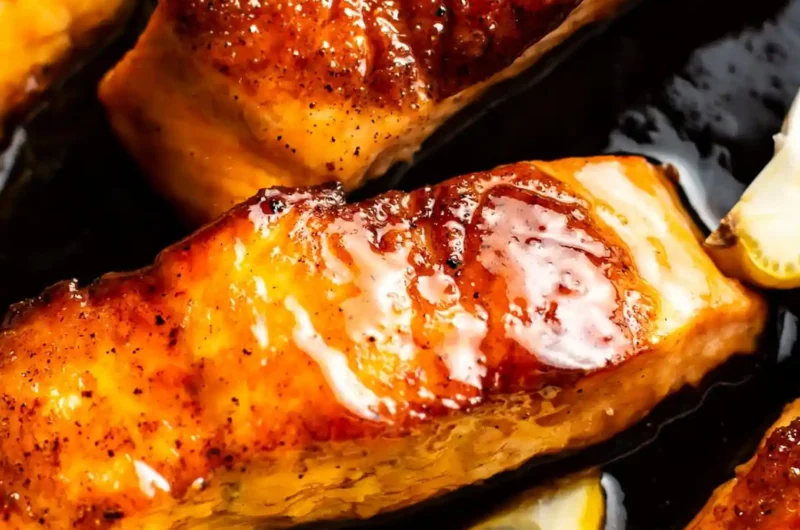
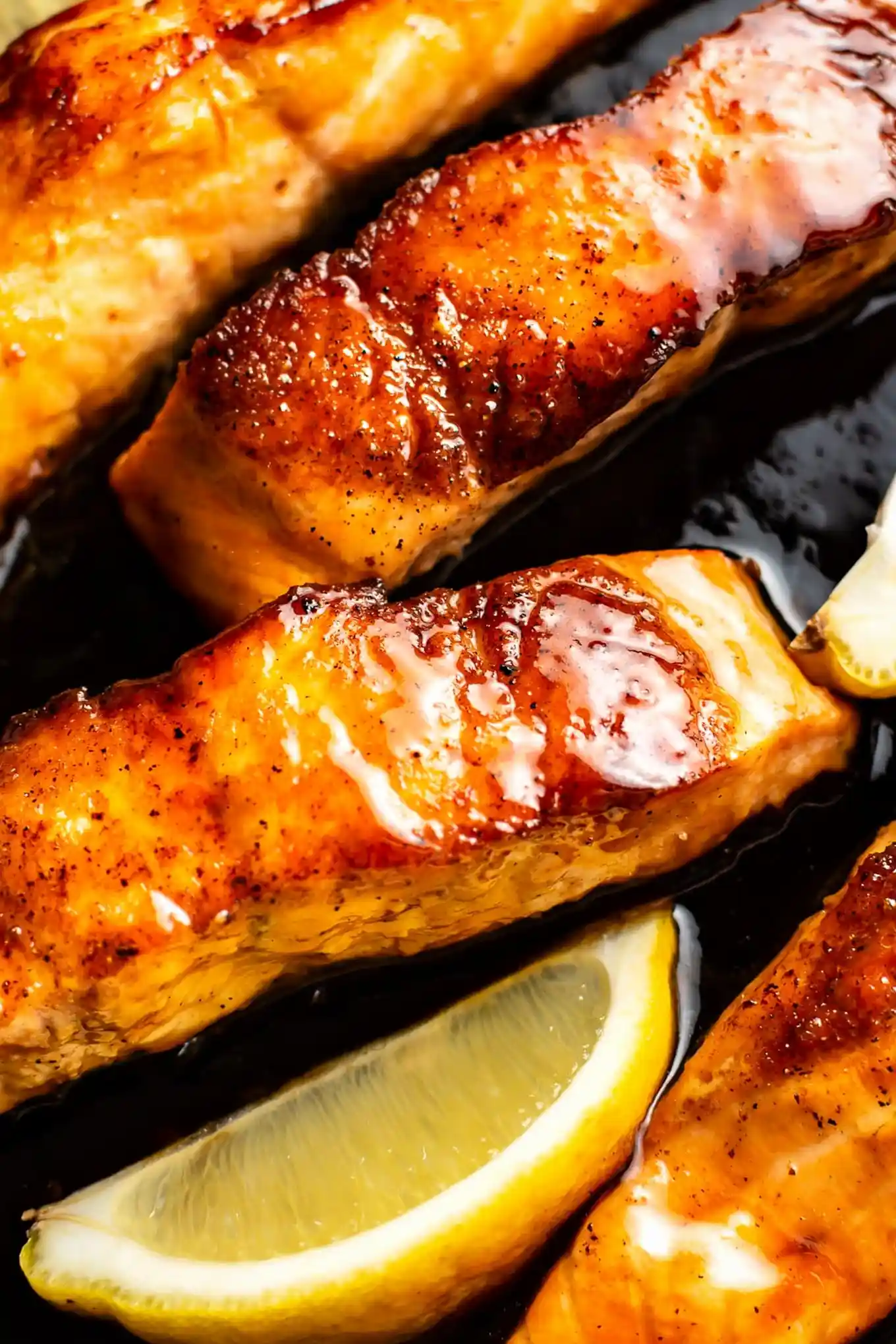
This honey soy sauce glazed salmon is a fast, high-protein meal that balances sweet and savory flavors. It is an ideal choice for a healthy weeknight dinner that provides restaurant-quality results in 30 minutes.
List of ingredients
- 1 pound fresh salmon – cut into 4 equal portions.
- Salt & pepper – to taste for seasoning.
- 1 tablespoon olive oil – for high-heat searing.
- 2 tablespoons butter – divided for frying and glazing.
- Fresh lemon juice – to taste for brightness.
- 1/4 cup low-sodium soy sauce – the base for the savory glaze.
- 1/4 cup honey – provides sweetness and thickness.
- 1/2 tablespoon cornstarch – used to thicken the sauce.
- 1/4 teaspoon garlic powder – for aromatic depth.
step-by-step instructions
- Prepare the fish: Remove salmon from the refrigerator 15-20 minutes before cooking. Cut the fillet into 4 equal pieces, pat them dry with paper towels, and season with salt and pepper.
- Heat the pan: Place olive oil and 1 tablespoon of butter in a skillet over medium-high heat. Let the pan heat for several minutes until the butter is bubbling.
- Whisk the glaze: Combine the soy sauce, honey, cornstarch, and garlic powder in a medium bowl. Whisk until the cornstarch is fully dissolved and set aside.
- Sear the salmon: Place the salmon in the skillet skin-side down. Cook for 5 minutes, then reduce heat to medium, flip the pieces, and cook for another 2-3 minutes until nearly done.
- Apply the glaze: Add the remaining 1 tablespoon of butter to the pan. Pour the sauce mixture between the salmon pieces and let it bubble and thicken for about 30 seconds.
- Finish and serve: Remove the pan from the heat to prevent burning. Flip the salmon one last time to spoon the thickened glaze over the top. Squeeze fresh lemon juice over each piece and serve immediately.
Preparation Secrets for Professional Results
Temper the Salmon to Ensure Even Cooking
Allowing the salmon to sit at room temperature for 15-20 minutes prevents the center from staying raw while the outside overcooks. This step ensures the heat penetrates the fillet consistently from the edge to the middle.
Remove Surface Moisture for a Crispier Sear
Use paper towels to pat the salmon completely dry before seasoning. Excess moisture on the skin creates steam in the pan, which prevents the fish from searing and causes it to stick to the surface.
Select a High-Heat Skillet for Better Browning
A cast iron or stainless steel skillet is preferred for this recipe due to superior heat retention. These materials allow for a more consistent sear, which creates the Maillard reaction responsible for the savory crust.
Cut Fillets into Equal Sizes for Uniform Timing
Slicing the salmon into four equal portions ensures that every piece cooks at the same rate. This prevents smaller pieces from becoming overdone while larger pieces remain undercooked.
Glaze Mastery and Flavor Adjustments
Whisk Cornstarch Thoroughly to Prevent Clumps
Ensure the cornstarch is fully integrated into the soy sauce and honey before adding it to the pan. If the cornstarch is not dissolved, you will find small, chalky lumps in your finished glaze.
Use Low-Sodium Soy Sauce to Control Saltiness
Low-sodium soy sauce allows you to build a deep savory flavor without overpowering the salmon with salt. This balance is critical since the salmon is also seasoned with salt before searing.
Opt for Liquid Honey for Easier Mixing
Using a liquid honey or warming solid honey slightly makes it easier to whisk into the soy sauce. A smooth emulsion leads to a more consistent glaze that coats the fish evenly.
Add Fresh Garlic for a Pungent Flavor Profile
While garlic powder provides a subtle background note, you can replace it with two cloves of minced fresh garlic. Sauté the fresh garlic in the butter for 30 seconds before adding the liquid glaze for more intensity.
Advanced Searing Techniques
Maintain Medium-High Heat for Initial Searing
The pan must be hot enough that the oil shimmers before the fish is added. This immediate high heat locks in the moisture and creates the characteristic crispy skin that defines a great pan-sear.
Avoid Moving the Fish to Build a Proper Crust
Once the salmon hits the pan, leave it undisturbed for the full 5 minutes. Moving the fish too early disrupts the searing process and increases the likelihood of the fillet sticking to the pan.
Control the Glaze Temperature to Prevent Burning
Honey contains natural sugars that caramelize quickly and can burn if left on high heat. Removing the pan from the stove as soon as the sauce bubbles ensures a glossy finish without a bitter, burnt taste.
Monitor the Color Change for Doneness
Watch for the light pink color of the salmon to transition to an opaque pale pink, moving from the bottom up. This visual cue is more reliable than a timer, as fillet thickness varies between different cuts.
Serving Suggestions and Pairings
Pair with Jasmine Rice for Sauce Absorption
Steamed jasmine rice is an excellent accompaniment because its neutral flavor and fluffy texture absorb the extra honey soy glaze. This ensures that none of the savory sauce goes to waste on the plate.
Serve with Steamed Broccoli for Nutritional Balance
The slight bitterness of steamed broccoli or broccolini cuts through the sweetness of the honey glaze. This creates a balanced palate and adds necessary fiber and vitamins to the meal.
Add a Side of Arugula Salad for Acidity
A simple arugula salad with a light lemon vinaigrette provides a peppery contrast to the rich salmon. The acidity of the greens helps cleanse the palate between bites of the buttery glaze.
Garnish with Sesame Seeds for Visual Appeal
Sprinkle toasted white or black sesame seeds over the finished fillets just before serving. This adds a subtle nuttiness and a professional aesthetic to the presentation.
Storage and Preservation
Store in Airtight Containers to Prevent Odors
Place leftover salmon in a glass airtight container to keep the fish fresh and prevent the soy aroma from spreading in the fridge. This protects the texture of the fish from drying out.
Limit Refrigerated Storage to Three Days
Cooked salmon is best consumed within 48 to 72 hours for optimal flavor and safety. After three days, the fats in the salmon can begin to oxidize, altering the taste of the glaze.
Avoid Freezing Cooked Glazed Salmon
Freezing already cooked salmon often results in a mushy texture upon thawing. The honey-based glaze also tends to separate during the freezing process, compromising the sauce’s integrity.
Reheating Guidelines
Use a Low-Heat Pan for Reheating
The best way to reheat this dish is in a saucepan over low heat with a teaspoon of water. This gently warms the fish without overcooking the center and helps re-emulsify the glaze.
Avoid High Microwave Power to Prevent Rubbery Texture
Microwaves often overcook fish rapidly, turning the salmon rubbery. If using a microwave, use the medium power setting and heat in 30-second intervals to maintain moisture.
Use a Splash of Water When Reheating
Adding a small amount of water or broth during reheating creates steam. This steam re-hydrates the glaze and prevents the salmon from drying out during the warming process.
Common Troubleshooting
Thicken a Runny Glaze with Extra Cornstarch Slurry
If the sauce remains too thin after bubbling, mix a pinch of cornstarch with a teaspoon of cold water. Stir this slurry into the pan over medium heat for one minute to achieve a thicker consistency.
Allow Salmon to Release Naturally from the Pan
If the salmon feels stuck when you try to flip it, wait another 30 to 60 seconds. The fish will naturally release from the pan once a proper crust has formed on the bottom.
Reduce Heat Immediately if the Glaze Bubbles Too Violently
Excessive bubbling can lead to the sauce breaking or evaporating too quickly. Lower the heat or lift the pan off the burner to maintain a slow, steady simmer for a smooth glaze.
Balance Excess Salt with Additional Lemon Juice
If the soy sauce makes the dish too salty, increase the amount of fresh lemon juice squeezed over the fish. The citric acid helps neutralize the saltiness and brightens the overall flavor.
Frequently Asked Questions
Can I use frozen salmon fillets?
Yes, but they must be completely thawed in the refrigerator overnight. Ensure you pat them extra dry, as frozen fillets tend to release more moisture than fresh ones during cooking.
Should I leave the skin on the salmon?
Leaving the skin on is recommended as it protects the flesh from direct heat and provides a crispy texture. However, the skin is entirely optional and can be peeled off before eating.
Can this recipe be adapted for the oven?
You can sear the fish in a pan and then transfer the skillet to a 400°F oven to finish. This is useful for very thick fillets that are not cooking through in the center on the stovetop.
What is the best way to prevent the sauce from separating?
Ensure the honey and soy sauce are whisked thoroughly before they hit the pan. Adding the butter at the end helps create a stable emulsion that keeps the glaze glossy and smooth.
How do I know when the salmon is perfectly medium-rare?
The internal temperature should reach 125°F to 130°F. The fish should flake easily with a fork but still have a slightly translucent center.
Can I use maple syrup instead of honey?
Maple syrup is a suitable substitute and will provide a deeper, woodsy sweetness. You may need to slightly increase the cornstarch amount as maple syrup is generally thinner than honey.
Print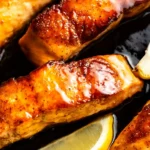
Honey Soy Sauce Glazed Salmon
- Total Time: 30 minutes
- Yield: 4 servings 1x
- Diet: General
Description
This 30-minute honey glazed salmon recipe has an addictive savory-sweet sauce! It’s simple to make with a handful of everyday ingredients and is sure to impress.
Ingredients
- 1 pound fresh salmon
- Salt and pepper, to taste
- 1 tablespoon olive oil
- 2 tablespoons butter, divided
- Fresh lemon juice, to taste
- 1/4 cup low-sodium soy sauce
- 1/4 cup honey
- 1/2 tablespoon cornstarch
- 1/4 teaspoon garlic powder
Instructions
- Step: Take the salmon out of the fridge 15-20 minutes prior to starting the recipe if possible. Cut the salmon into 4 equal pieces and pat it dry with paper towel. Season with salt & pepper.
- Step: Add the olive oil and 1 tablespoon of the butter to a skillet over medium-high heat. Let the pan heat up for a few minutes.
- Step: Meanwhile, add the sauce ingredients to a medium bowl and whisk it together. Set aside.
- Step: Cook the salmon (skin-side down) for 5 minutes, then reduce the heat to medium and flip the salmon over and cook for another 2-3 minutes.
- Step: Add the remaining 1 tablespoon of butter to the skillet and let it melt, then pour in the sauce. Let it bubble/thicken for 30 seconds or so, and then take the pan off the heat. Flip the salmon over & spoon the sauce over it.
- Step: Squeeze some lemon juice over the salmon and then serve immediately.
Notes
The salmon used in this recipe was about 1 inch thick. Adjust cooking time if your salmon is thicker or thinner. Avoid overcrowding the pan to ensure the salmon cooks properly.
- Prep Time: 10 minutes
- Cook Time: 20 minutes
- Category: Main Course
- Method: Pan Searing
- Cuisine: American
Nutrition
- Serving Size: 1 piece of salmon
- Calories: 319 kcal
- Sugar: 18 g
- Sodium: 632 mg
- Fat: 16 g
- Saturated Fat: 5 g
- Unsaturated Fat: 11 g
- Trans Fat: 0 g
- Carbohydrates: 20 g
- Fiber: 1 g
- Protein: 23 g
- Cholesterol: 77 mg
Keywords: honey glazed salmon, pan seared salmon, soy sauce glaze, quick dinner