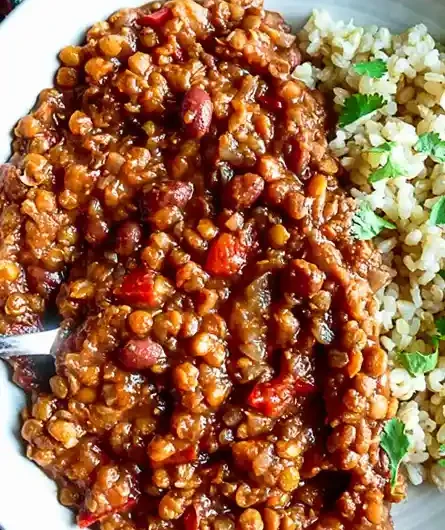
Enjoy a comforting bowl of flavor-packed Madras lentils that are entirely plant-based and nutrient-dense. This versatile dish can be prepared using a pressure cooker, slow cooker, or traditional pot to suit your schedule.
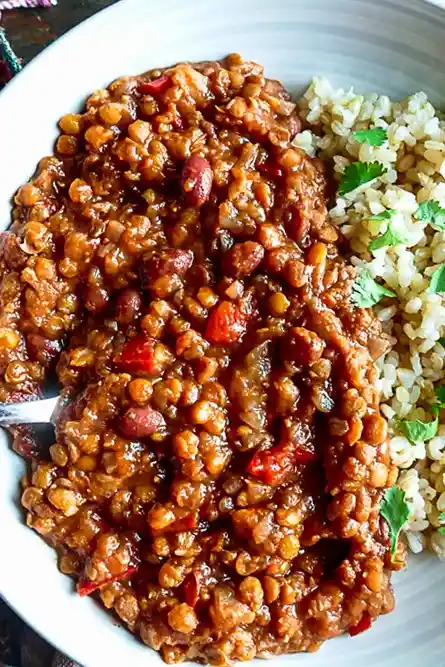
List of ingredients
- 1 onion, chopped – provides a savory base.
- 1 red bell pepper, chopped – adds sweetness and vitamin C.
- 4 cloves garlic, minced – for pungent aromatic depth.
- 2 tbsp grated ginger root – adds a fresh, zingy heat.
- 2 cups vegetable broth – the primary cooking liquid.
- 1 14-oz can tomato sauce – adds richness and tang (add at the end if not pressure cooking).
- 1 cup lentils, uncooked – brown, black, or green for texture; red for a softer consistency.
- 2 tsp chili powder – for warmth and color.
- 1 tsp smoked paprika – provides a deep, woody flavor.
- 1 tsp cumin – adds earthy undertones.
- 1 tsp salt – enhances all existing flavors.
- 1 tsp garam masala (optional) – adds traditional Indian spice complexity.
- 1 can small red beans or kidney beans – adds bulk and extra protein.
- 1/2 cup coconut milk or plant-based cream (optional) – for a creamier finish.
- Chopped cilantro – for a fresh garnish.
- Sliced green onions – for a crisp garnish.
- Rice or naan (optional) – for serving as a side.
step-by-step instructions
- Instant Pot Method: Set the Instant Pot to the Saute setting for 6 minutes. Saute the onion, bell pepper, garlic, ginger, and spices until the onions are fragrant and starting to soften. Add the tomato sauce, vegetable broth, and lentils. Set to High Pressure for 10 minutes if using red lentils, or 15 minutes for brown, black, or green lentils. Use a quick release or natural release depending on your time.
- Slow Cooker Method: Combine all ingredients in the crock pot except for the tomato sauce. Cook on HIGH for 2.5 to 3 hours, or on LOW for 6 to 8 hours, until the lentils are tender. Once the lentils are soft, stir in the tomato sauce. Finally, stir in the can of red beans and coconut milk or cream if desired.
- Stovetop Method: Saute onions, bell pepper, and ginger in a splash of water on high for 5 to 10 minutes until the onions are soft. Add garlic and spices and cook for an additional 2 minutes. Add all remaining ingredients except for the tomato sauce and bring the mixture to a simmer. Cover and cook at a slow simmer for 25 to 30 minutes, adding more water or vegetable broth if necessary to prevent burning. Once lentils are tender, add the tomato sauce and heat through. Stir in the red beans and coconut milk or cream if desired.
- Final Garnish: Serve the lentils warm with rice or naan, and garnish with fresh chopped cilantro and sliced green onions.
Lentil Selection and Textures
Using Brown or Green Lentils for Structure
Brown and green lentils are the best choice if you prefer a dish with a distinct bite. These varieties hold their shape well during the cooking process and do not break down easily. They provide a hearty, chewy texture that pairs perfectly with the softness of the beans.
Choosing Red Lentils for a Creamier Consistency
Red lentils cook much faster than other types and tend to dissolve as they soften. This results in a thick, porridge-like consistency that naturally thickens the sauce. They are an excellent choice for those who prefer a smoother, more comforting texture similar to a dal.
Incorporating Black Beluga Lentils for Elegance
Black lentils, often called Beluga lentils, are smaller and maintain a firm, caviar-like texture. They add a striking visual contrast to the red and orange hues of the Madras sauce. While harder to find, they offer a sophisticated mouthfeel and a slightly nuttier flavor.
Optimizing Your Cooking Method
Efficiency with the Instant Pot
The pressure cooker is the fastest way to achieve tender lentils while maintaining a high concentration of flavor. Because it seals in steam, the aromatics are forced into the lentils quickly. It is also the only method where adding the acidic tomato sauce at the beginning does not hinder the softening process.
The Set-and-Forget Convenience of Slow Cooking
Using a crockpot allows the flavors to meld slowly over several hours, which can result in a deeper taste profile. It is ideal for meal prepping during a busy workday. Just remember to keep the tomato sauce out until the end to ensure the lentils cook through properly.
Precision and Control via Stovetop Simmering
The stovetop method gives you the most control over the reduction of the sauce. You can easily monitor the thickness and add small amounts of broth to keep the consistency perfect. It is the best method for those who enjoy the process of stirring and smelling the aromatics develop.
Flavor Enhancement Secrets
The Impact of Smoked Paprika
Switching from regular paprika to smoked paprika adds a layer of complexity that mimics a slow-roasted flavor. This subtle smokiness complements the earthy cumin and the sweetness of the red bell pepper. It provides a depth that makes the dish taste more professional and layered.
Maximizing Fresh Aromatics
Using freshly grated ginger root rather than powdered ginger provides a sharp, bright contrast to the heavy spices. The zestiness of fresh ginger cuts through the richness of the coconut milk. For the best results, peel the ginger with a spoon before grating it finely.
Balancing the Heat with Coconut Milk
If the chili powder makes the dish too spicy for some palates, stirring in coconut milk is the perfect solution. The fats in the coconut milk neutralize the capsaicin in the spices, creating a mellow, creamy finish. This also adds a subtle tropical note that complements the Indian flavor profile.
Nutritional Value and Health Benefits
Plant-Based Protein and Fiber
Lentils and beans are powerhouse ingredients that provide a significant amount of plant-based protein. This combination ensures a complete amino acid profile when served with rice. Additionally, the high fiber content supports digestive health and keeps you feeling full longer.
Enhancing Iron Absorption with Vitamin C
Lentils provide non-heme iron, which is absorbed more efficiently when paired with vitamin C. The red bell pepper and tomato sauce are rich in ascorbic acid, which helps your body take up the iron from the lentils. This makes the dish a functional choice for those focusing on iron intake.
Low-Fat Nutrient Density
Unlike store-bought packaged lentils, this homemade version avoids seed oils and excessive butter. By using vegetable broth and plant-based cream, you reduce saturated fats while keeping the calories manageable. It provides essential vitamins A and C without the processed additives.
Serving and Pairing Suggestions
The Classic Basmati Rice Pairing
Serving Madras lentils over a bed of fluffy basmati rice is the traditional choice. The long grains of basmati absorb the flavorful sauce without becoming mushy. For extra flavor, you can toast the rice in a bit of coconut oil before boiling.
Using Warm Naan or Flatbread
Naan provides a chewy, charred bread option that is perfect for scooping up the thick lentil stew. If you cannot find naan, a warm whole-wheat tortilla or pita bread works as a suitable alternative. Heating the bread slightly on a skillet improves the texture significantly.
Adding Fresh Vegetable Sides
To balance the richness of the lentils, serve them with a side of steamed spinach or a crisp cucumber salad. A squeeze of fresh lime juice over the final dish can also brighten the flavors. This adds a fresh element that contrasts with the warm, earthy spices.
Storage and Reheating Advice
Refrigeration Guidelines
Store leftover lentils in an airtight container in the refrigerator for up to five days. The flavors often improve after a day or two as the spices continue to infuse. Ensure the container is fully sealed to prevent the lentils from absorbing other fridge odors.
Freezing for Long-Term Storage
This recipe freezes exceptionally well, making it perfect for batch cooking. Allow the lentils to cool completely before transferring them to freezer-safe bags or containers. They can be stored in the freezer for up to three months without losing quality.
Best Practices for Reheating
When reheating on the stove, add a splash of water or vegetable broth to loosen the sauce, as lentils absorb liquid over time. If using a microwave, heat in short bursts and stir in between to ensure even warming. Avoid overheating, which can cause the lentils to become too soft.
Troubleshooting Common Issues
Preventing Hard Lentils
If your lentils remain hard after the cooking time, they may be old or stored improperly. Always use fresh lentils from an airtight package. Also, ensure you do not add acidic ingredients like tomato sauce too early when using a slow cooker or stovetop.
Correcting a Sauce That is Too Thick
Lentils continue to absorb liquid even after they are removed from the heat. If the stew becomes too thick, simply stir in a few tablespoons of vegetable broth or water. Do this slowly until you reach your desired consistency.
Adjusting the Spice Intensity
If the dish is too mild, add a pinch more chili powder or a dash of cayenne pepper at the end. For those who find it too spicy, increase the amount of coconut milk or serve it with a dollop of plant-based yogurt. This helps mellow the heat without ruining the flavor.
Frequently Asked Questions
Can I use dried beans instead of canned?
Yes, but you must soak the dried beans overnight and pre-cook them until tender before adding them to the lentils. Canned beans are used in this recipe for convenience and to maintain the quick cooking time.
Is this recipe suitable for toddlers?
Yes, this dish is generally kid-friendly because it is flavorful rather than spicy. To make it even milder for very young children, reduce the chili powder and increase the coconut milk for a creamier, sweeter taste.
What is the best substitute for garam masala?
If you do not have garam masala, you can create a simple substitute by mixing small amounts of cinnamon, cloves, and cardamom. Alternatively, adding a bit more cumin and smoked paprika will provide a similar, though less complex, warmth.
Print
Hearty Madras Lentils
- Total Time: 35 minutes
- Yield: 6 servings 1x
- Diet: Vegan
Description
Delicious lentils in a flavorful (but not spicy) sauce. Quick to make in an Instant Pot, slow-cooker, or on the stove.
Ingredients
- 1 onion, chopped
- 1 red bell pepper, chopped
- 4 cloves garlic, minced
- 2 tbsp grated ginger root
- 2 cups vegetable broth
- 1 14-oz can tomato sauce
- 1 cup uncooked lentils (brown, black, or green)
- 2 tsp chili powder
- 1 tsp smoked paprika
- 1 tsp cumin
- 1 tsp salt
- 1 tsp garam masala (optional)
- 1 can small red beans or kidney beans
- 1/2 cup coconut milk or plant-based cream (optional)
- Chopped cilantro for garnish
- Sliced green onions for garnish
Instructions
- Instant Pot: Set to Saute setting for 6 minutes. Saute onion, bell pepper, garlic, ginger, and spices until onions are fragrant and soft. Add tomato sauce, vegetable broth, and lentils. Set to High Pressure for 10 minutes (red lentils) or 15 minutes (brown, black, or green lentils). Quick or naturally release.
- Slow Cooker: Combine all ingredients except tomato sauce. Cook on HIGH for 2.5-3 hours, or on LOW for 6-8 hours, until lentils are tender. Stir in tomato sauce.
- Stove top: Saute onions, bell pepper, and ginger in a splash of water on high for 5-10 minutes. Add garlic and spices and cook 2 minutes more. Add remaining ingredients except tomato sauce and simmer, covered, for 25-30 minutes until lentils are tender. Stir in tomato sauce and heat through.
- Finish: For any method, stir in the can of red beans and coconut milk or cream if desired. Serve with cilantro, green onions, rice, or naan.
Notes
Using smoked paprika provides a better flavor than regular paprika. Use red lentils for a softer, mushier texture.
- Prep Time: 15 minutes
- Cook Time: 25 minutes
- Category: Main Course
- Method: Pressure Cooking
- Cuisine: Indian
Nutrition
- Serving Size: 1 serving
- Calories: 222 kcal
- Sugar: 6 g
- Sodium: 634 mg
- Fat: 1.2 g
- Saturated Fat: 0.2 g
- Unsaturated Fat: 1.0 g
- Trans Fat: 0 g
- Carbohydrates: 41 g
- Fiber: 8.3 g
- Protein: 13.9 g
- Cholesterol: 0 mg
Keywords: indian, instant pot, lentils, madras