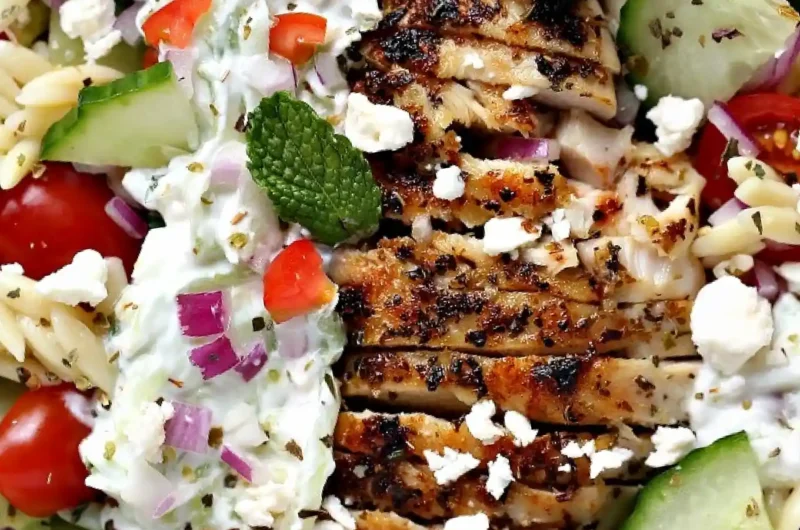
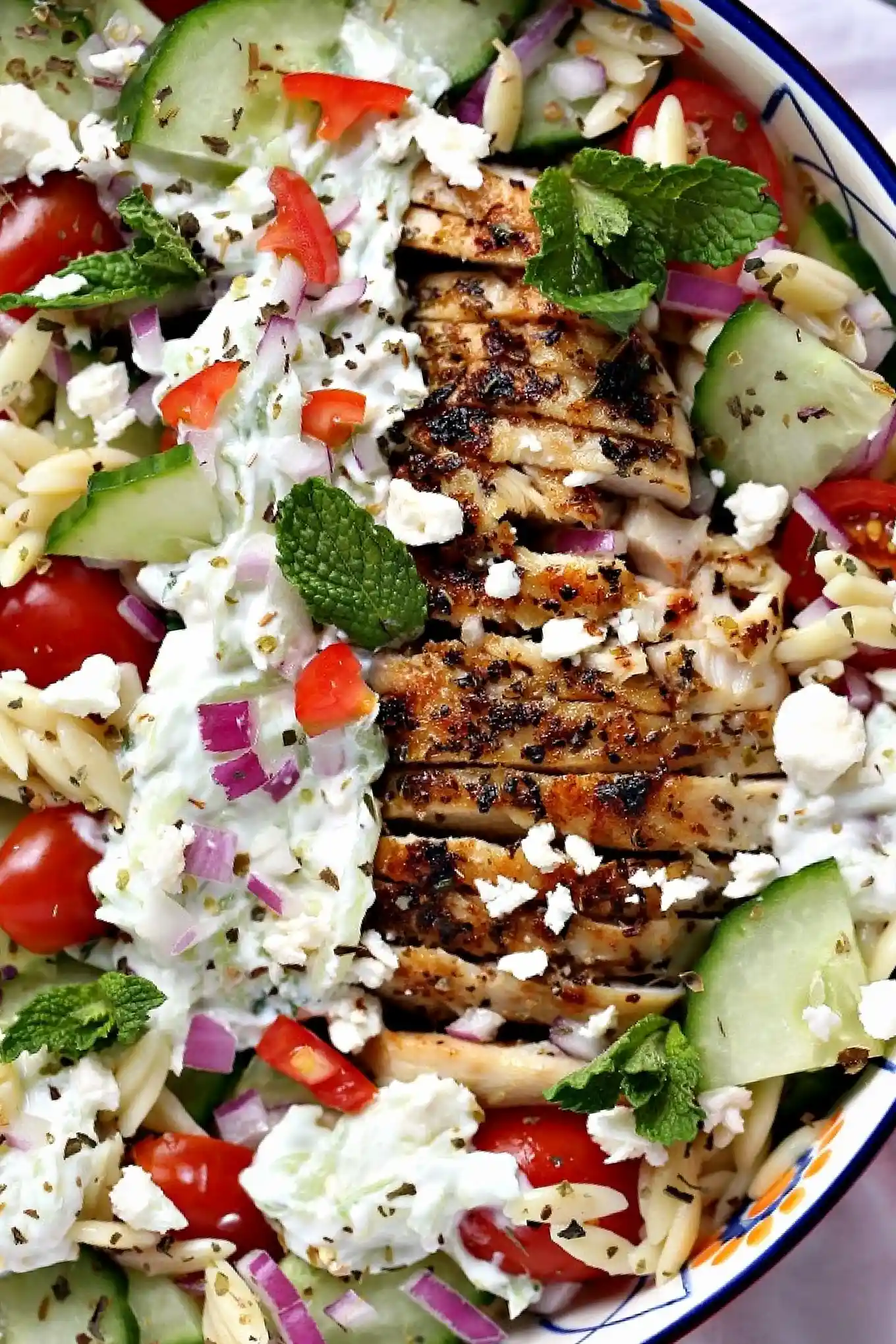
These Greek chicken orzo power bowls provide a balanced, nutrient-dense meal perfect for dinner or weekly meal prep. They combine seasoned chicken with fresh vegetables and creamy tzatziki over a satisfying pasta base.
List of ingredients
- 4 cups prepared orzo pasta – cooked al dente.
- 2 tablespoons extra virgin olive oil – for searing the chicken.
- 4 pieces boneless skinless chicken breasts – cut to even sizes.
- 2 tablespoons dried oregano – split between seasoning stages.
- 1 tablespoon dried basil – split between seasoning stages.
- 1 teaspoon salt – for seasoning chicken and vegetables.
- 1/2 teaspoon pepper – for seasoning chicken and vegetables.
- 1 medium cucumber – sliced and quartered.
- 2 large shallots – finely diced.
- 12 cherry tomatoes – halved or diced.
- 2 tablespoons lemon juice – for dressing the vegetables.
- 1 cup Tzatziki sauce – used as a creamy topping.
- 1/2 cup feta cheese – crumbled for saltiness.
- 1 bunch fresh mint – optional garnish for freshness.
step-by-step instructions
- Prepare the pasta: Cook the orzo in advance following the package directions. Set it aside to cool slightly before assembling.
- Heat the pan: Warm the olive oil in a large skillet or non-stick pan over medium heat.
- Season and sear chicken: Place the chicken breasts in the pan. Sprinkle half of the oregano, basil, salt, and pepper over the top. Cook for 6 to 8 minutes.
- Flip and finish: Turn the chicken over and sprinkle with the remaining oregano, basil, salt, and pepper. Cook for another 6 to 8 minutes until juices run clear and the exterior is golden brown.
- Rest and slice: Remove the chicken from the pan and let it rest for 5 minutes. Slice the meat into thin strips.
- Prepare the vegetable mix: Chop the cucumbers, shallots, and tomatoes. Combine them in a bowl and drizzle with lemon juice. Season with salt and pepper if desired.
- Assemble the bowls: Scoop a portion of cooked orzo into the bottom of each bowl. Top with sliced chicken and the seasoned vegetable mixture.
- Add final toppings: Place dollops of Tzatziki sauce randomly around the bowl. Sprinkle with crumbled feta cheese.
- Garnish and serve: Add sprigs of fresh mint if desired and serve the bowls immediately.
Guide to Perfect Orzo Pasta
The Uncooked to Cooked Ratio
To obtain the 4 cups of prepared orzo required for this recipe, you should start with 2 cups of uncooked pasta. Orzo typically doubles in volume during the cooking process as it absorbs water. Planning for this expansion helps you select the correct size of saucepan.
Achieving the Ideal Al Dente Texture
Cook the orzo for one minute less than the package instructions suggest to ensure it stays al dente. This prevents the pasta from becoming mushy when combined with other ingredients in the bowl. Firm pasta provides a better structural contrast to the soft vegetables and creamy sauce.
Preventing Pasta From Clumping
Once the orzo is drained, toss it with a small amount of olive oil or a splash of lemon juice. This creates a light barrier between the grains of pasta, preventing them from sticking together as they cool. This step is particularly important if you are preparing the pasta several hours in advance.
Proper Salt Concentration in Pasta Water
Generously salt the boiling water before adding the orzo to season the pasta from the inside out. Since the pasta is a neutral base, internal seasoning enhances the overall flavor profile of the bowl. Use about one tablespoon of salt per quart of water for optimal results.
Optimizing Your Chicken Preparation
Pounding Chicken for Even Cooking
Use a meat mallet or a rolling pin to flatten the thickest part of the chicken breasts. Ensuring a uniform thickness prevents the thinner edges from drying out while the center cooks. This technique reduces total cooking time and results in a more tender texture.
Monitoring Internal Temperature
Use an instant-read meat thermometer to check that the chicken has reached an internal temperature of 165°F. Relying solely on visual cues like golden brown skin can sometimes be misleading. Accurate temperature monitoring ensures the meat is safe to eat without being overcooked.
The Importance of Meat Resting
Allow the chicken to rest for at least five minutes before slicing it into strips. This allows the juices to redistribute throughout the meat, preventing them from leaking out onto the cutting board. Resting ensures each slice remains moist and flavorful.
Developing a Golden Brown Sear
Avoid crowding the skillet when searing the chicken breasts to maintain a high pan temperature. If the pan is too full, the chicken will steam in its own juices rather than brown. A proper sear creates a Maillard reaction, adding deep savory notes to the dish.
Fresh Vegetable Selection and Prep
Using English Cucumbers for Less Seeds
Choose English or greenhouse cucumbers because they have thinner skins and fewer seeds than standard cucumbers. This reduces the amount of excess water released into the bowl, keeping the base crisp. If using regular cucumbers, scoop out the seeds with a spoon before slicing.
Reducing Shallot Pungency with Water
If you find raw shallots too sharp, soak the diced pieces in cold water for ten minutes before adding them to the bowl. Drain them well and pat them dry before mixing with the lemon juice. This removes the harsh sulfur compounds while retaining the aromatic flavor.
Selecting Sweet Cherry Tomatoes
Select cherry tomatoes that are firm to the touch and bright red for maximum sweetness. Halving the tomatoes allows the lemon juice to penetrate the interior, creating a cohesive dressing. Avoid over-ripe tomatoes that may collapse and make the bowl soggy.
Balancing Acidity with Lemon Juice
Use fresh-squeezed lemon juice rather than bottled concentrates for a brighter, cleaner taste. The acidity of the lemon cuts through the richness of the feta and tzatziki. Stir the juice into the vegetables immediately before serving to keep the colors vibrant.
Customization and Flavor Variations
Replacing Orzo with Quinoa or Brown Rice
For a gluten-free alternative, replace the orzo with cooked quinoa or brown rice. Quinoa adds an extra boost of protein and a slightly nutty flavor that complements the Greek seasonings. Brown rice provides a heartier texture and more fiber for a more filling meal.
Adding Kalamata Olives for Saltiness
Incorporate a handful of pitted Kalamata olives to add a salty, briny punch to the bowls. These olives are a staple of Greek cuisine and pair perfectly with the feta cheese. Slice them into rounds to ensure an even distribution of flavor in every bite.
Integrating Sliced Red Peppers
Add thinly sliced red bell peppers to the vegetable mix for extra crunch and vitamin C. The sweetness of the peppers balances the acidity of the lemon juice and the saltiness of the cheese. Raw peppers provide a refreshing contrast to the warm chicken and pasta.
Using Grilled Tofu for a Plant-Based Option
Substitute the chicken with extra-firm tofu that has been pressed and grilled. Use the same oregano, basil, salt, and pepper seasoning to maintain the flavor profile. Tofu absorbs these dried herbs well when seared in olive oil.
Sauce and Cheese Enhancements
Creating a Home-Made Tzatziki Sauce
Blend plain Greek yogurt, grated cucumber, minced garlic, lemon juice, and fresh dill for a fresh tzatziki. Straining the cucumber first is essential to prevent the sauce from becoming too watery. This homemade version often has a bolder garlic flavor than store-bought options.
Choosing Brined Feta for Creaminess
Select feta cheese that is stored in brine rather than pre-crumbled varieties. Brined feta has a creamier texture and a more authentic, tangy flavor. Crumble it by hand just before serving to keep the cheese from drying out.
Substituting Fresh Dill for Mint
If you prefer a more traditional Greek flavor, replace the fresh mint garnish with fresh dill. Dill has a grassy, citrusy profile that aligns closely with the flavors in the tzatziki sauce. Both herbs work well, but dill offers a more classic aromatic experience.
Incorporating Fresh Parsley for Earthiness
Add chopped flat-leaf parsley to the vegetable mixture for a boost of earthy freshness. Parsley acts as a bridge between the acidity of the lemon and the richness of the olive oil. It also adds a vibrant green color to the visual presentation.
Storage and Preservation Techniques
Layering in Mason Jars
When preparing these bowls for the week, use the layering method in mason jars to preserve freshness. Place the lemon-dressed vegetables at the bottom, followed by the orzo, then the chicken. Top with feta and keep the tzatziki in a separate small container.
Optimal Refrigerator Temperature
Store your prepared bowls in the refrigerator at or below 40°F to prevent spoilage. Airtight glass containers are preferable to plastic as they keep the ingredients fresher and prevent odors from leaking. This method keeps the components viable for up to three days.
Freezing Orzo and Chicken
The cooked orzo and seasoned chicken can be frozen for up to three months. Store them in freezer-safe bags with as much air removed as possible to prevent freezer burn. Thaw them in the refrigerator overnight before reheating.
Avoid Freezing Fresh Cucumbers
Never freeze the fresh cucumber mixture or the tzatziki sauce. The high water content in cucumbers causes them to lose their structure and become mushy upon thawing. Always add fresh vegetables and cold sauce after reheating the base components.
Reheating and Serving Methods
Using the Stovetop for Best Texture
Reheat the orzo and chicken in a skillet over medium heat for 5 to 7 minutes. Adding a teaspoon of olive oil helps refresh the pasta and prevents it from sticking. This method maintains the sear on the chicken better than other options.
Restoring Moisture in the Microwave
When using a microwave, place the chicken and orzo in a microwave-safe bowl and add a tablespoon of water or vegetable broth. Cover the bowl with a damp paper towel to trap steam. Heat for 1 to 2 minutes, stirring halfway through to ensure even warmth.
Keeping Vegetables Crisp During Reheat
Always reheat only the pasta and the protein, leaving the vegetable mix and tzatziki cold. Mixing cold vegetables with hot pasta creates a temperature contrast that is characteristic of a power bowl. Heating the cucumbers would destroy their refreshing crunch.
Maintaining Sauce Consistency
If the tzatziki sauce thickens too much in the refrigerator, stir in a teaspoon of water or lemon juice. This restores the creamy consistency without altering the flavor. Stir gently to avoid breaking the emulsion of the yogurt.
Common Cooking Challenges
Fixing Dry Chicken Breasts
If the chicken breasts seem dry, try reducing the cooking time by one minute and relying on a 10-minute rest. You can also slice the chicken and toss it in a small amount of the lemon-olive oil dressing. This adds immediate moisture and brightness back into the meat.
Handling Overcooked Orzo
If the orzo becomes too soft, avoid adding any more liquid or sauces during the assembly phase. Serve the pasta cold or at room temperature to mask the softness. In the future, check the pasta two minutes before the timer expires.
Managing Excess Water in Vegetables
If the vegetable mix releases too much liquid, drain the bowl through a colander before adding it to the orzo. Excess moisture can make the pasta base soggy and dilute the flavors. Salting the cucumbers 10 minutes early and rinsing them can prevent this.
Reducing the Searing Smoke Point
If the olive oil begins to smoke excessively, lower the heat slightly or switch to an oil with a higher smoke point like avocado oil. Smoke indicates that the oil is breaking down, which can introduce a bitter taste. Keep the heat at a steady medium to avoid burning the dried herbs.
Frequently Asked Questions
Can I use frozen chicken breasts?
Yes, but you must thaw them completely in the refrigerator before cooking. Cooking frozen chicken directly in the pan results in uneven cooking, where the outside burns before the inside is safe to eat.
What is a good substitute for shallots?
Red onion is the best alternative to shallots. Dice it very finely and consider soaking it in cold water to reduce the intensity of the raw onion flavor.
How can I make this dish vegan?
Replace the chicken with grilled tofu or chickpeas, swap the feta for a plant-based almond feta, and use a vegan yogurt-based tzatziki. The orzo and vegetables are naturally vegan.
How do I stop the orzo from absorbing the sauce?
Add the tzatziki sauce as dollops on top of the other ingredients rather than mixing it in. This keeps the sauce concentrated in specific areas and prevents the pasta from soaking up all the moisture.
Print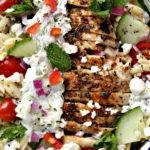
Greek Chicken Orzo Power Bowls
- Total Time: 22 minutes
- Yield: 6 servings 1x
- Diet: General
Description
Greek Chicken Orzo Power Bowls are perfect for lunch or dinner. They are super easy to make and packed with delicious ingredients. These bowls are ideal for meal prep!
Ingredients
- 4 cups prepared orzo pasta
- 2 tablespoons extra virgin olive oil
- 4 pieces boneless skinless chicken breasts
- 2 tablespoons dried oregano
- 1 tablespoons dried basil
- 1 teaspoon salt
- 1/2 teaspoon pepper
- 1 medium cucumber (sliced and quartered)
- 2 large shallots (diced)
- 12 cherry tomatoes (halved or diced)
- 2 tablespoons lemon juice
- 1 cup Tzatziki sauce
- 1/2 cup feta cheese (crumbled, made with microbial rennet)
- 1 bunch fresh mint (for garnish if desired)
Instructions
- Step 1: Prepare orzo in advance according to package directions. Set aside.
- Step 2: In a large skillet or non-stick pan, heat olive oil over medium heat.
- Step 3: Place chicken in pan and sprinkle half of your oregano, basil, salt and pepper over top. Cook for about 6 to 8 minutes. Flip chicken over and sprinkle with remaining oregano, basil, salt and pepper. Cook for another 6 to 8 minutes, or until juices run clear and chicken is golden brown. Remove from pan and allow to cool for 5 minutes. Slice thinly.
- Step 4: Cut up cucumbers, shallots and tomatoes. Mix in bowl and drizzle with lemon juice. Season with salt and pepper, if desired.
- Step 5: Place orzo in bottom of each bowl. Place sliced chicken in bowl. Add veggie mixture in bowl. Add dollops of Tzatziki sauce randomly around bowl.
- Step 6: Sprinkle with feta cheese.
- Step 7: Add sprigs of mint, if desired.
- Step 8: Serve immediately.
Notes
2 cups of uncooked orzo pasta should equal approximately 4 cups cooked orzo. Cook the orzo al dente so it’s not mushy.
- Prep Time: 5 minutes
- Cook Time: 12 minutes
- Category: Dinner
- Method: Stovetop
- Cuisine: Greek
Nutrition
- Serving Size: 1 bowl
- Calories: 531 kcal
- Sugar: 7 g
- Sodium: 738 mg
- Fat: 14 g
- Saturated Fat: 4 g
- Unsaturated Fat: 10 g
- Trans Fat: 0 g
- Carbohydrates: 84 g
- Fiber: 5 g
- Protein: 17 g
- Cholesterol: 18 mg
Keywords: greek chicken, greek chicken power bowl, power bowl