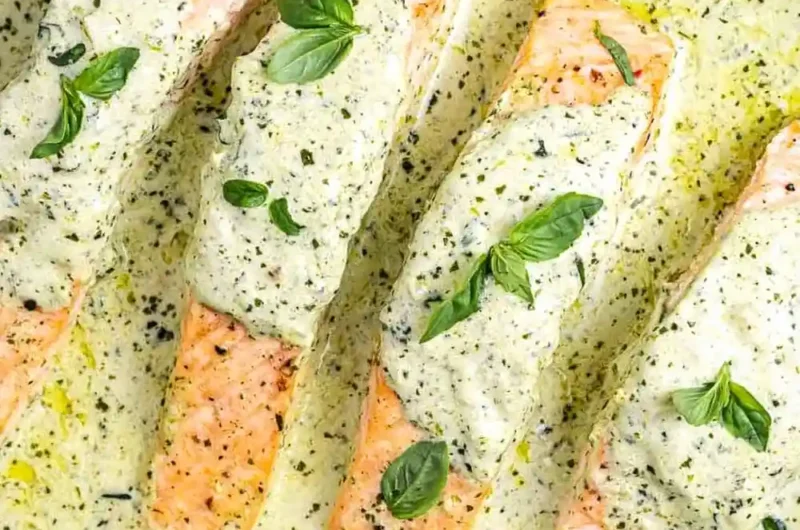
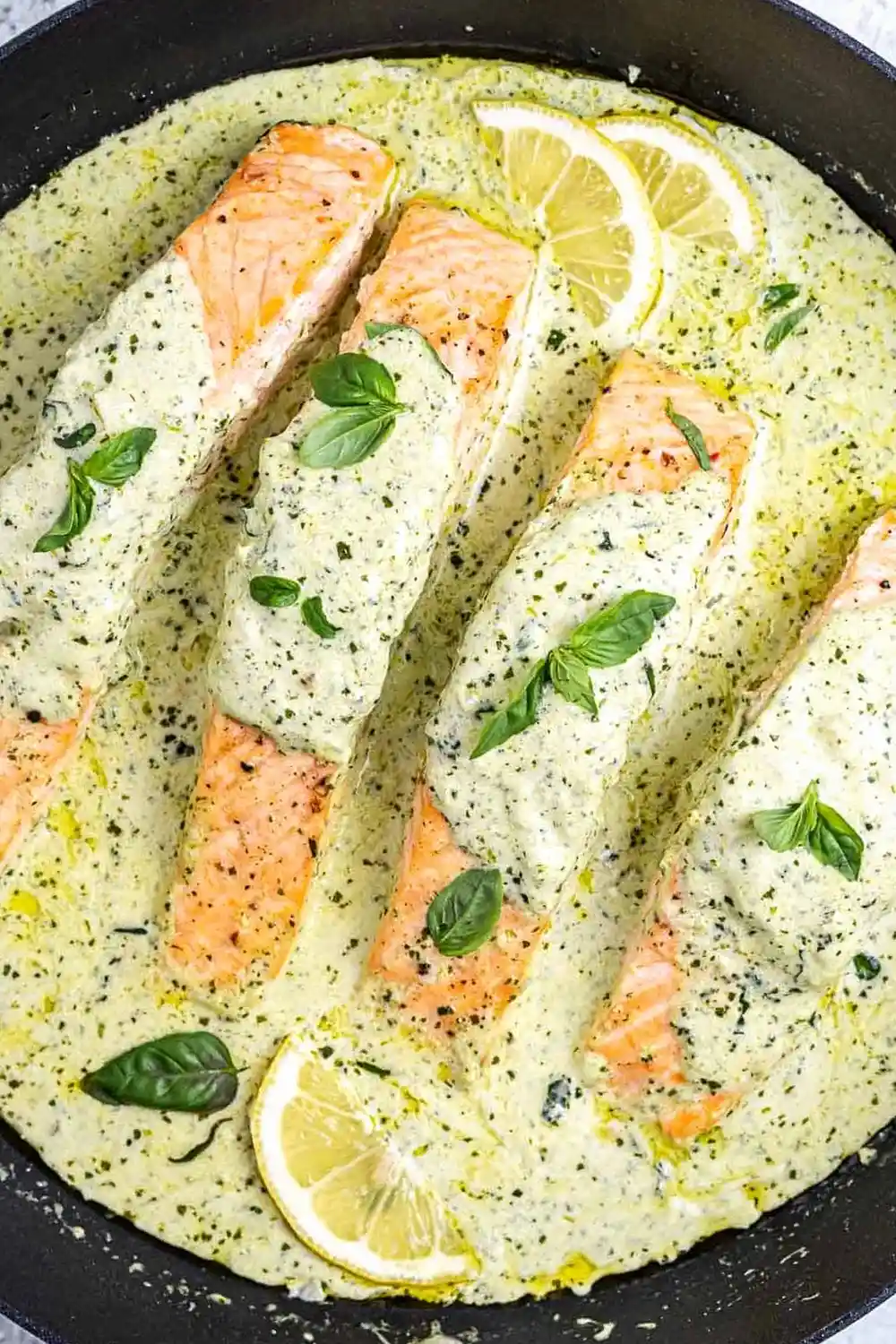
This quick weeknight meal features pan-seared salmon filets smothered in a rich, velvety pesto cream sauce. It is a sophisticated dinner that requires minimal effort and comes together in under 30 minutes.
List of ingredients
- 2 teaspoons olive oil – used for searing the fish.
- 4 (6 oz) skinless salmon filets – high-quality wild salmon is recommended.
- Kosher salt and ground pepper – to taste for seasoning.
- 2 garlic cloves, minced – adds aromatic depth to the sauce.
- 2/3 cup almond milk – serves as the creamy liquid base.
- 3 ounces cream cheese – provides thickness and richness.
- 1/4 cup homemade pesto sauce – can be swapped for store-bought variety.
- Fresh basil – for a colorful and aromatic garnish.
- 1 lemon, cut into wedges – adds brightness to balance the richness.
step-by-step instructions
- Sear the Salmon: Heat 2 teaspoons of olive oil in a large skillet over medium heat. Place the 4 salmon filets in the pan and season with salt and pepper. Cook for 2-4 minutes per side until they are flaky and cooked through, then move them to a plate.
- Sauté Aromatics: Use the same skillet and add 2 minced garlic cloves. Sauté for approximately 1 minute until fragrant.
- Prepare the Sauce: Pour in 2/3 cup almond milk to deglaze the pan. Stir in 3 ounces of cream cheese and 1/4 cup of pesto sauce, whisking until the mixture is smooth and creamy.
- Combine and Serve: Place the cooked salmon back into the skillet and drizzle the pesto cream sauce over the filets. Garnish with fresh basil and lemon wedges before serving warm.
Expert Cooking Tips
Selecting Premium Wild Salmon
Choose wild-caught salmon for a more robust flavor and firmer texture. Check the seafood counter for filets that have a vibrant, consistent color without any gaping or bruising. Ensure the filets are of similar thickness to ensure they all cook at the same rate.
Achieving a Golden Sear
Heat the olive oil until it shimmers but does not smoke before adding the fish. Avoid overcrowding the pan, as this drops the temperature and causes the salmon to steam rather than sear. Let the fish sit undisturbed for several minutes to develop a proper crust.
Using an Instant-Read Thermometer
Insert a digital thermometer into the thickest part of the filet to ensure accuracy. Aim for an internal temperature of 130°F to 145°F depending on your preference. This prevents the fish from becoming dry and overcooked.
Visual Cues for Doneness
If you lack a thermometer, use a fork to gently press the top of the filet. The salmon is done when the flesh flakes easily along the natural lines. The center should look slightly translucent but not raw or red.
Ingredient Substitutions
Alternative Milk Options
While almond milk is used here, you can substitute it with soy milk or oat milk for a similar consistency. For a traditional dairy version, whole milk or heavy cream will make the sauce even richer. Ensure the milk is at room temperature to prevent the sauce from curdling.
Swapping Cream Cheese
Neufchâtel cheese is a great lower-calorie alternative that maintains the same creamy texture. For a tangier flavor profile, try using softened goat cheese. Mascarpone can also be used for a more luxurious, buttery finish.
Using Store-Bought Pesto
High-quality refrigerated pesto is a convenient substitute for homemade sauce. Look for brands that use fresh basil and olive oil rather than processed fillers. Stir the pesto well before adding it to the pan to ensure the oil is incorporated.
Alternative Fish Choices
If salmon is unavailable, trout is an excellent substitute due to its similar fat content and flavor. Arctic char is another great option that sears beautifully in a skillet. Adjust the cooking time slightly based on the thickness of the alternative filet.
Dairy-Free Creamy Alternatives
Use a vegan cream cheese alternative to keep the dish entirely plant-based regarding the sauce. Combine this with full-fat coconut milk for a thick, decadent consistency. Ensure the vegan cheese is fully melted before adding the pesto.
Customizing the Pesto Flavor
Try using a sun-dried tomato pesto for a different Mediterranean twist. A walnut-based pesto provides a deeper, earthier taste compared to traditional pine nuts. You can also add a pinch of red pepper flakes for a subtle heat.
Suggested Serving Pairings
Classic Grain Accompaniments
Serve the salmon over a bed of fluffy jasmine rice or wild rice for a hearty meal. Quinoa is another excellent choice that adds protein and a nutty flavor. These grains are perfect for absorbing the extra pesto cream sauce.
Pasta Pairing Ideas
Fettuccine or linguine are the best pasta shapes to pair with this creamy sauce. Toss the pasta directly into the pan with the sauce before adding the salmon back in. This ensures every strand of pasta is coated in the pesto cream.
Low-Carb Vegetable Bases
Mashed cauliflower provides a creamy, low-carb alternative to potatoes. Sautéed spinach or steamed kale offers a nutrient-dense base that complements the richness of the fish. Roasted zucchini noodles are also a fresh and light option.
Roasted Root Vegetables
Pair this dish with roasted carrots or parsnips for a touch of sweetness. Mashed potatoes are a comfort-food classic that pairs perfectly with the creamy sauce. Roasted Brussels sprouts provide a charred, bitter contrast to the rich pesto.
Fresh Salad Combinations
A simple arugula salad with a lemon vinaigrette cuts through the richness of the cream cheese. A cucumber and tomato salad with red onion adds a refreshing crunch. Mixed baby greens with a light balsamic glaze also work well.
Complementary Bread Options
Toasted garlic bread is ideal for soaking up the remaining sauce on the plate. A crusty sourdough baguette provides a nice textural contrast to the tender salmon. Warm focaccia with rosemary is another sophisticated pairing.
Storage and Reheating Guide
Refrigeration Guidelines
Store any leftover salmon and sauce in an airtight glass container. Keep it in the main part of the refrigerator, not the door, to maintain a consistent temperature. The dish will remain fresh and safe to eat for up to 4 days.
Stovetop Reheating Method
Place the salmon and sauce in a skillet over medium-low heat. Add a tablespoon of water or milk to loosen the sauce as it warms. Heat gently to avoid overcooking the fish, which can make it tough.
Microwave Reheating Tips
Heat the salmon in 20-second increments using a medium power setting. This prevents the cream cheese in the sauce from separating or breaking. Stir the sauce gently between intervals to ensure even heating.
Avoiding Texture Loss
Do not overheat the salmon, as it can quickly become rubbery. Stop reheating as soon as the center is warm to the touch. Adding a fresh squeeze of lemon after reheating can revive the flavors.
Make-Ahead Strategies
Preparing the Pesto in Advance
Make your homemade pesto several days before you plan to cook the salmon. Store it in a jar with a thin layer of olive oil on top to prevent oxidation. This saves significant prep time on the day of cooking.
Pre-Measuring Ingredients
Measure out the almond milk, cream cheese, and pesto into small bowls before starting. Mince the garlic and cut the lemon wedges in advance. Having all components ready allows you to focus on the searing process.
Salmon Prep Work
Pat the salmon filets dry with paper towels an hour before cooking. Season them with salt and pepper and keep them in the fridge uncovered. This helps the skin side dry out, leading to a better sear.
Sauce Base Preparation
You can whisk the almond milk and cream cheese together before the salmon hits the pan. Keep this mixture chilled until the garlic is sautéed. This streamlines the deglazing process and prevents clumping.
Troubleshooting Common Issues
Fixing a Separated Sauce
If the sauce looks grainy or separates, whisk in a tablespoon of warm almond milk. Keep the heat low and stir constantly to re-emulsify the fats. Avoid boiling the sauce, as high heat causes dairy to split.
Managing Excess Pan Oil
If there is too much oil left after searing the salmon, carefully wipe the pan with a paper towel. Leave just a thin film of oil to sauté the garlic. This prevents the final sauce from becoming overly greasy.
Preventing Salmon from Sticking
Ensure the pan is fully preheated before adding the fish. Do not move or flip the salmon too early; it will naturally release from the pan once a crust has formed. Use a non-stick skillet if you are concerned about adhesion.
Handling Burnt Garlic
If the garlic browns too quickly, remove it from the pan immediately and start over. Burnt garlic adds a bitter taste that can ruin the delicate pesto sauce. Keep the heat at medium and sauté only until fragrant.
Adjusting Sauce Thickness
If the sauce is too thick, stir in more almond milk one tablespoon at a time. For a thicker sauce, let it simmer for an extra minute before returning the salmon to the pan. Ensure the cream cheese is fully incorporated for a smooth texture.
Frequently Asked Questions
How to make salmon taste better?
Season the filets generously with salt and pepper before searing to build a flavor base. Avoid overcooking the fish to preserve its natural moisture and tenderness. Finishing the dish with fresh lemon juice brightens the overall flavor profile.
Is the skin edible?
Salmon skin is safe to eat and provides a great crunch when seared properly. If you prefer not to eat it, you can easily remove it with a fork after the fish is cooked. The skin typically lifts away easily when the salmon is warm.
Which side should I sear first?
If the salmon has skin, sear the skin side first to achieve maximum crispiness. This creates a protective layer that makes flipping the filet easier. For skinless filets, it does not matter which side is cooked first.
Print
Creamy Pesto Salmon
- Total Time: 30 minutes
- Yield: 4 servings 1x
- Diet: Gluten-Free
Description
This Creamy Pesto Salmon recipe is an easy and delicious dinner that comes together in under 30 minutes. Made with juicy, tender salmon and a homemade creamy pesto sauce, it’s the perfect weeknight meal to pair with pasta or rice!
Ingredients
- 2 teaspoons olive oil
- 4 (6 oz) skinless salmon filets
- Kosher salt and ground pepper, to taste
- 2 garlic cloves, minced
- 2/3 cup almond milk
- 3 ounces cream cheese
- 1/4 cup homemade pesto sauce
- Fresh basil, to garnish
- 1 lemon, cut into wedges
Instructions
- Cook the salmon: Heat the 2 teaspoons olive oil in a large skillet over medium heat. Add the 4 (6 oz) skinless salmon filets and season with Kosher salt and ground pepper. Cook for 2-4 minutes per side or until cooked through and flaky. Set aside on a plate.
- Sauté garlic: To the same preheated pan, add 2 garlic cloves (minced) and sauté for 1 minute.
- Prepare sauce: Stir in the 2/3 cup almond milk and deglaze the pan. Add the 3 ounces cream cheese and 1/4 cup homemade pesto sauce, and stir until it incorporates and forms a creamy sauce.
- Finish and serve: Return the salmon to the pan and drizzle with the creamy sauce. Garnish with Fresh basil and wedges of 1 lemon and serve warm.
Notes
Store leftovers in an airtight container in the refrigerator for up to 4 days. Reheat in a skillet over medium heat or in the microwave in 20-second increments until heated through.
- Prep Time: 10 minutes
- Cook Time: 20 minutes
- Category: Main Course
- Method: Pan-searing
- Cuisine: American
Nutrition
- Serving Size: 1 serving
- Calories: 410 kcal
- Sugar: 2 g
- Sodium: 414 mg
- Fat: 26 g
- Saturated Fat: 7 g
- Unsaturated Fat: 19 g
- Trans Fat: 0 g
- Carbohydrates: 6 g
- Fiber: 1 g
- Protein: 36 g
- Cholesterol: 116 mg
Keywords: creamy pesto salmon, pan-seared salmon, low carb dinner, gluten-free