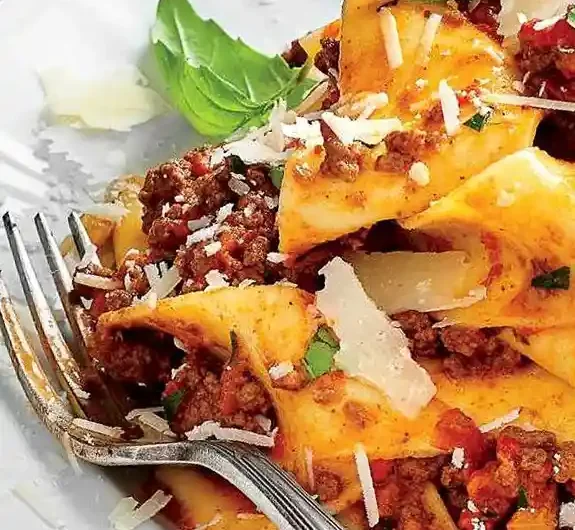
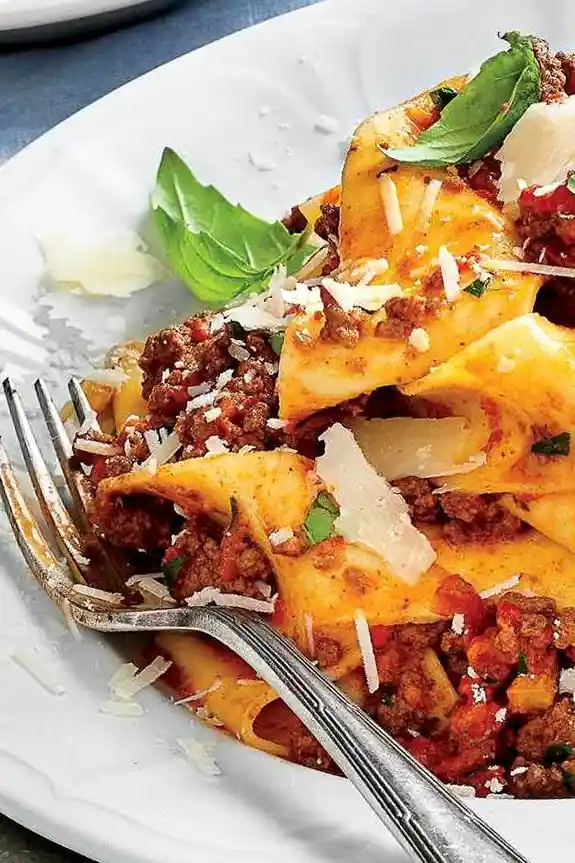
This hearty meal features a rich, slow-simmered meat sauce served over wide ribbons of pappardelle pasta. The slow cooker method allows the flavors to develop deeply over several hours without constant monitoring.
List of ingredients
- 1 medium-size yellow onion, finely chopped – provides a sweet aromatic base.
- 2 celery ribs, finely chopped – adds depth and earthy flavor.
- 1 medium carrot, finely chopped – contributes natural sweetness.
- 1 tablespoon olive oil – used for sautéing vegetables.
- 2 garlic cloves, minced – adds pungent flavor.
- 2 tablespoons tomato paste – thickens the sauce and intensifies tomato taste.
- 2 pounds lean ground beef – the primary protein for a meaty texture.
- 1 tablespoon kosher salt – enhances all other flavors.
- 2 teaspoons sugar – balances the acidity of the tomatoes.
- 2 teaspoons dried Italian seasoning – provides a blend of traditional herbs.
- 1/2 teaspoon ground black pepper – adds a subtle spicy kick.
- 1/4 teaspoon ground nutmeg – a classic Bolognese addition for warmth.
- 1 bay leaf – infuses the sauce with a herbal aroma.
- 1/2 cup beef broth – provides liquid for deglazing and simmering.
- 2 (28-oz.) cans whole peeled tomatoes – the base of the sauce.
- 2/3 cup heavy cream – creates a silky, creamy finish.
- 1 pound pappardelle pasta or wide fettuccine – wide noodles that hold heavy sauces well.
- Freshly shaved or grated Parmigiano-Reggiano cheese – for a salty, nutty topping.
step-by-step instructions
- Sauté Aromatics: Heat olive oil in a large skillet over medium-high heat. Add the chopped onion, celery, and carrot, cooking for about 8 minutes until the vegetables are tender.
- Add Paste and Garlic: Stir in the minced garlic and tomato paste. Cook for 30 seconds while stirring constantly to toast the paste without burning the garlic. Transfer this mixture to a 6-quart slow cooker.
- Brown the Beef: In the same skillet, add the ground beef. Cook for 7 minutes, stirring often, until the meat is crumbled and no longer pink. Drain off any excess fat.
- Season and Deglaze: Stir the kosher salt, sugar, Italian seasoning, black pepper, nutmeg, and bay leaf into the beef. Pour in the beef broth and cook for 7 minutes, stirring occasionally, until the liquid has almost evaporated. Transfer the beef mixture to the slow cooker and stir it into the vegetables.
- Prepare Tomatoes: Drain the canned tomatoes, but reserve the liquid. Use your hands to crush the whole tomatoes into smaller pieces. Add the crushed tomatoes to the slow cooker and stir to combine.
- Slow Cook: Cover the slow cooker and cook on the LOW setting for 6 hours.
- Finish the Sauce: Stir in the heavy cream. If the sauce is too thin, uncover it and cook for an additional 30 minutes. If the sauce is too dry, stir in the reserved tomato liquid one tablespoon at a time until the desired consistency is reached. Remove and discard the bay leaf.
- Combine and Serve: Cook the pappardelle pasta according to the package directions and drain well. Toss the pasta with 4 cups of the sauce. Spoon into bowls and sprinkle with Parmigiano-Reggiano cheese.
Expert Tips for Sauce Consistency
Browning Meat Thoroughly
Ensure the ground beef is well-browned before adding it to the slow cooker. This creates a Maillard reaction, which develops complex, savory flavors that cannot be achieved by slow cooking alone. Drain the excess grease to prevent a layer of oil from forming on top of your finished sauce.
Managing Liquid Levels
Slow cookers trap steam, which means less liquid evaporates compared to stovetop simmering. Always check the thickness of your sauce before adding the cream. If the sauce appears soupy after 6 hours, the quickest fix is to cook it uncovered on high for a short period.
Using the Reserved Tomato Juice
The liquid in the canned tomato tins is packed with flavor and acidity. Instead of adding water to thin your sauce, use this reserved liquid. It maintains the integrity of the tomato flavor while adjusting the viscosity of the meat sauce.
Ingredient Substitutions and Alternatives
Alternative Meat Options
While lean ground beef is traditional, you can use a mix of ground beef and ground veal for a more authentic texture. For a leaner version, ground turkey can be used, though you may need to add an extra tablespoon of olive oil to compensate for the lack of fat.
Dairy-Free Cream Alternatives
To make this recipe dairy-free, replace the heavy cream with full-fat coconut milk or cashew cream. These alternatives provide the same creamy mouthfeel and help mellow the acidity of the tomatoes without adding dairy.
Vegetable Variations
If you do not have celery or carrots, you can use finely diced bell peppers or parsnips. These vegetables provide similar aromatic properties and sweetness, ensuring the sauce base remains complex and balanced.
Pasta Shape Alternatives
Pappardelle is ideal because its wide surface area catches the heavy meat sauce. If unavailable, wide fettuccine or tagliatelle are excellent substitutes. Avoid using thin spaghetti or angel hair, as the heavy chunks of beef will overwhelm the delicate noodles.
Flavor Variations
Increasing the Heat
For a spicier Bolognese, add a teaspoon of crushed red pepper flakes during the sautéing process. Alternatively, stir in a tablespoon of Calabrian chili paste with the tomato paste for a deeper, smokier heat.
Adding Extra Umami
To deepen the savory profile, add a tablespoon of soy sauce or a teaspoon of anchovy paste when browning the beef. These ingredients blend into the background but enhance the overall richness of the meat.
Incorporating Fresh Herbs
While dried Italian seasoning is convenient, stirring in freshly chopped parsley or basil at the very end adds a brightness to the dish. Fresh herbs should be added after the slow cooking process to preserve their color and volatile oils.
Serving and Presentation Ideas
Garnish Enhancements
Beyond Parmigiano-Reggiano, try topping the dish with a dollop of fresh ricotta cheese for a creamy contrast. A sprinkle of freshly cracked black pepper and a drizzle of high-quality extra virgin olive oil can also elevate the presentation.
Recommended Side Dishes
Serve this pasta with a crisp green salad dressed in a light vinaigrette to cut through the richness of the cream and beef. Garlic bread or focaccia is also a classic accompaniment for mopping up any remaining sauce on the plate.
Plating for Visual Appeal
Use a meat fork or tongs to twirl the pappardelle into a nest in the center of the bowl. Spoon the thick Bolognese sauce over the top rather than mixing it entirely in the pot, which allows the texture of the pasta to remain visible.
Storage and Reheating Guide
Refrigerator Storage
Store the leftover sauce and pasta separately in airtight glass containers. The sauce will keep well in the refrigerator for up to 4 days. Keeping them separate prevents the pasta from absorbing all the sauce and becoming mushy.
Freezing the Sauce
The Bolognese sauce freezes exceptionally well. Place the sauce in freezer-safe bags or containers, leaving a small amount of headspace for expansion. It can be stored in the freezer for up to 3 months.
Best Reheating Methods
To reheat the sauce, place it in a small saucepan over low heat and add a splash of water or beef broth to loosen it. For the pasta, toss it in a pan with a bit of butter or oil to refresh the texture before combining it with the hot sauce.
Troubleshooting Common Issues
Preventing Grainy Meat Texture
To avoid clumps of meat, use a wooden spoon or meat masher to break the beef into very small pieces while browning. Ensuring the beef is fully crumbled before it enters the slow cooker results in a more uniform sauce.
Fixing Overly Acidic Sauce
If the sauce tastes too acidic despite the sugar, add a small pinch of baking soda. The baking soda neutralizes the acid in the tomatoes, smoothing out the flavor profile without making the sauce taste sweet.
Avoiding Overcooked Pasta
Always cook your pappardelle slightly under the package directions (al dente). Since the pasta will be tossed with hot sauce and potentially sit for a few minutes before serving, undercooking it slightly prevents it from becoming soggy.
Frequently Asked Questions
Can I use a different slow cooker setting?
Yes, you can cook this sauce on HIGH for 3 to 4 hours if you are short on time. However, the LOW setting for 6 hours is recommended for the most tender meat and a deeper integration of flavors.
How do I prevent the sauce from burning?
Ensure your slow cooker is properly filled and that you use the LOW setting. If you are using a very small slow cooker, be careful not to overfill it, as this can lead to uneven heating near the edges.
Which type of tomatoes work best?
Whole peeled tomatoes are preferred because they typically have a higher quality and less processing than diced or crushed canned tomatoes. Hand-crushing them allows you to control the texture of the sauce.
Can I skip the browning step?
While you can technically put raw meat in a slow cooker, it is not recommended for Bolognese. Browning the meat and sautéing the vegetables provides the essential flavor depth and texture that defines this classic sauce.
Print
Slow Cooker Bolognese Sauce with Pappardelle
- Total Time: 6 hours 40 minutes
- Yield: 8 servings 1x
- Diet: General
Description
Your slow cooker will allow the Bolognese sauce to simmer all day without having to stand by the stove.
Ingredients
- 1 medium-size yellow onion, finely chopped
- 2 celery ribs, finely chopped
- 1 medium carrot, finely chopped
- 1 tablespoon olive oil
- 2 garlic cloves, minced
- 2 tablespoons tomato paste
- 2 pounds lean ground beef
- 1 tablespoon kosher salt
- 2 teaspoons sugar
- 2 teaspoons dried Italian seasoning
- 1/2 teaspoon ground black pepper
- 1/4 teaspoon ground nutmeg
- 1 bay leaf
- 1/2 cup beef broth
- 2 (28-oz.) cans whole peeled tomatoes
- 2/3 cup heavy cream
- 1 pound pappardelle pasta or wide fettuccine
- Freshly shaved or grated microbial-rennet Parmigiano-Reggiano cheese
Instructions
- Sauté: Sauté onion, celery, and carrot in hot oil in a large skillet over medium-high heat 8 minutes or until tender. Add garlic and tomato paste; cook, stirring constantly, 30 seconds. Transfer to a 6-qt. slow cooker.
- Brown: Add beef to skillet, and cook, stirring often, 7 minutes or until crumbled and no longer pink; drain. Stir in kosher salt, sugar, dried Italian seasoning, ground black pepper, and ground nutmeg. Stir in beef broth, and cook, stirring occasionally, 7 minutes or until almost all liquid evaporates. Add to slow cooker, and stir to combine.
- Prepare Tomatoes: Drain tomatoes, reserving liquid. Using your hands, crush tomatoes, and break them apart. Add to slow cooker, and stir to combine.
- Slow Cook: Cover and cook on LOW 6 hours. Stir in cream. Check sauce; it should be thick and creamy. (If soupy, uncover and cook 30 more minutes. If dry, stir in reserved canned tomato liquid, 1 Tbsp. at a time, to thin sauce.) Discard bay leaf.
- Assemble: Cook pasta according to package directions. Drain well. Toss together pasta and 4 cups sauce. (Reserve remaining sauce for another use.) Spoon into serving dishes, and sprinkle with desired amount of cheese. Serve immediately.
Notes
Reserve remaining sauce for another use.
- Prep Time: 30 minutes
- Cook Time: 6 hours 10 minutes
- Category: Dinner
- Method: Slow Cooking
- Cuisine: Italian
Nutrition
- Serving Size: 1 serving
- Calories: 650 kcal
- Sugar: 8 g
- Sodium: 950 mg
- Fat: 32 g
- Saturated Fat: 15 g
- Unsaturated Fat: 15 g
- Trans Fat: 0 g
- Carbohydrates: 45 g
- Fiber: 5 g
- Protein: 38 g
- Cholesterol: 110 mg
Keywords: slow cooker, bolognese, pappardelle, Italian dinner, beef sauce