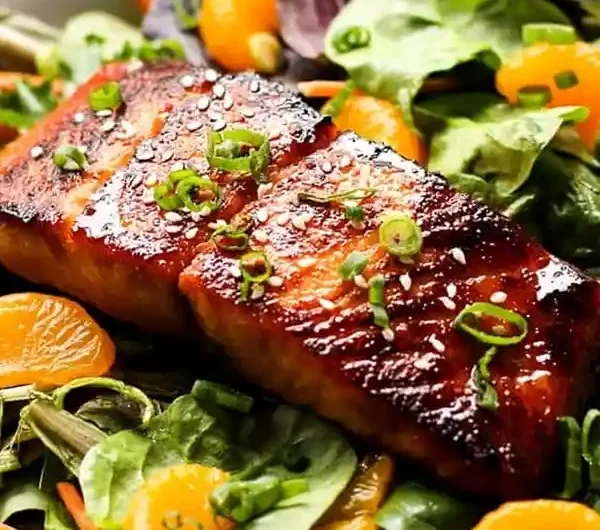
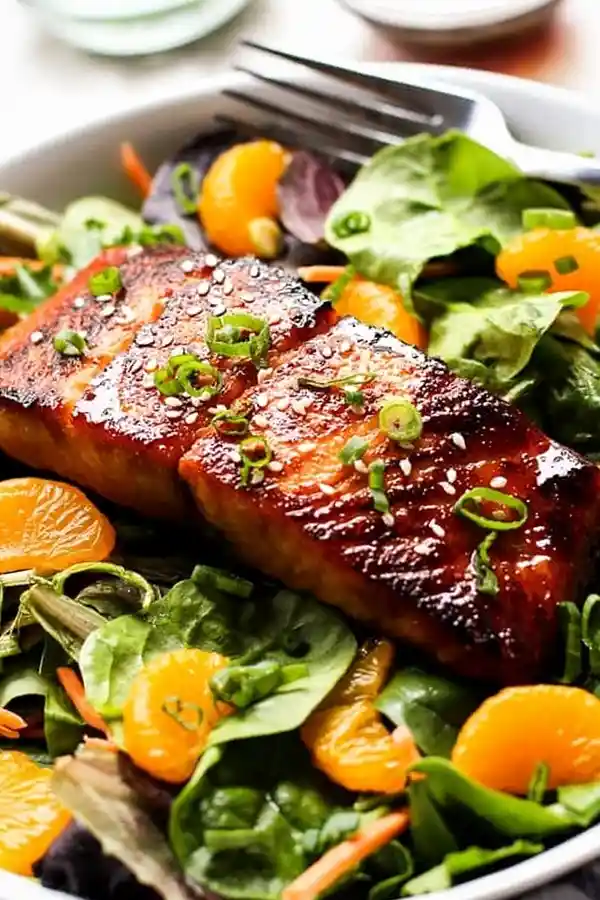
This refreshing meal combines savory, glazed salmon with a crisp vegetable base and a zesty ginger soy vinaigrette. It is a nutrient-dense option that balances sweet and umami flavors in under 30 minutes. Perfect for a healthy lunch or a light dinner.
List of ingredients
- 1 lbs fresh salmon – cut into three equal fillets.
- 1/2 tsp salt – for seasoning the flesh.
- 2 tbsp soy sauce – used in the salmon glaze.
- 2 tbsp honey – provides stickiness and sweetness.
- 2 tbsp sugar – adds depth to the glaze.
- 2 tbsp olive oil – for the glaze, plus extra for pan-frying.
- 1-2 cloves garlic, minced – for aromatic flavor.
- 1/2 tsp ground ginger – adds a warm, spicy note.
- Sesame seeds – optional garnish for texture.
- 6-9 cups lettuce of choice – such as romaine or mixed greens.
- 1 1/2 cups canned mandarin oranges, drained – for a citrus burst.
- ~1 cup shredded carrots – adds crunch and color.
- 2-3 tbsp green onions, sliced – for a fresh onion bite.
- 3 tbsp soy sauce – for the salad dressing.
- 3 tbsp rice vinegar – provides a tangy acidity.
- 3 tbsp sugar – balances the vinegar in the dressing.
- 1 tbsp sesame oil – adds a toasted, nutty aroma.
- 1 tbsp olive oil – helps emulsify the dressing.
- 1/2 tsp ground ginger – for the dressing’s zing.
step-by-step instructions
- Prepare the Salmon: Ensure the salmon is completely defrosted if using frozen fillets. Cut the fish into three portions for three servings and sprinkle the flesh side with salt.
- Create the Glaze: In a small mixing bowl, whisk together the soy sauce, honey, sugar, olive oil, minced garlic, and ginger powder until smooth.
- Sear the Salmon: Heat olive oil in a non-stick skillet over medium heat. Once the oil is shimmering, place the salmon in the pan skin side up and cook for several minutes until the flesh is golden brown.
- Cook the Skin: Flip the fillets over to cook the skin side. Cover the skillet and reduce the heat if the pan is too hot to ensure the fish cooks through without burning.
- Check Doneness: Once the salmon is nearly cooked, turn it flesh side up again. Use a meat thermometer to ensure the thickest part reaches an internal temperature of 145°F.
- Apply the Glaze: Pour the prepared glaze directly into the skillet. The sauce will thicken almost immediately due to the heat.
- Coat the Fish: Use a spoon to generously scoop the thickening sauce over the fillets, brushing it on to ensure an even, sticky layer.
- Final Step for Salmon: Remove the skillet from the heat promptly to prevent the glaze from burning or the salmon from overcooking.
- Assemble the Salad: Prep your lettuce, shredded carrots, and mandarin oranges, then divide them evenly into three bowls.
- Prepare the Dressing: Combine soy sauce, rice vinegar, sugar, sesame oil, olive oil, and ground ginger in a mason jar and shake well, or whisk in a bowl.
- Combine and Serve: Drizzle the ginger soy dressing over the salad greens. Place the glazed salmon on top of the lettuce and garnish with sesame seeds if desired.
Pro Techniques for Perfect Salmon
Pat Salmon Dry for a Better Sear
Always use a paper towel to pat the salmon fillets completely dry before seasoning. Removing surface moisture prevents the fish from steaming in the pan, allowing it to develop a crisp, golden-brown crust. This step is essential for achieving a professional texture.
Use a Meat Thermometer for Precision
Salmon has a very narrow window between being perfectly juicy and becoming dry and chalky. Using an instant-read thermometer to hit exactly 145°F ensures the fish remains moist. If you do not have one, the fish should flake easily with a fork.
Manage Heat to Prevent Burning
The honey and sugar in the glaze can burn quickly once they hit the hot pan. Keep a close eye on the sauce and remove the pan from the heat the moment the glaze becomes syrupy. If the pan is too hot, slide it off the burner while you brush the sauce on.
Allow Salmon to Rest Briefly
Letting the salmon rest for two to three minutes after cooking allows the juices to redistribute. This prevents the liquids from running out immediately when you place the fish on the lettuce. It also helps the glaze set more firmly on the surface.
Customizing Your Salad Base
Swap the Lettuce Variety
While romaine is a classic choice, you can use baby spinach for more iron or spring mix for a softer texture. Kale is another great option, though it benefits from being massaged with a bit of olive oil first to soften the leaves. Choose the green that best fits your nutritional goals.
Incorporate Additional Crunchy Vegetables
To add more volume and nutrition, try adding thinly sliced red bell peppers, cucumbers, or shredded red cabbage. These vegetables complement the Asian flavor profile and add varied textures to the bowl. Edamame is also a fantastic addition for extra plant-based protein.
Integrate Fresh Aromatic Herbs
Fresh herbs can elevate the flavor profile of the dressing and the salad. Cilantro, mint, or Thai basil add a bright, punchy contrast to the sweet soy glaze. Finely chop the herbs and toss them directly into the greens before adding the dressing.
Experiment with Different Fruit Options
If you do not have mandarin oranges, try sliced mango or fresh pineapple chunks. These fruits provide the necessary acidity and sweetness to cut through the richness of the salmon. Pomegranate seeds can also add a sophisticated pop of tartness.
Alternative Cooking Methods
Baking the Salmon in the Oven
For a hands-off approach, preheat your oven to 400°F and place the salmon on a parchment-lined baking sheet. Bake for 12-15 minutes, then brush the glaze on during the last 3 minutes of cooking. This method is ideal when cooking for larger groups.
Using an Air Fryer for Speed
Place the seasoned fillets in the air fryer basket at 380°F for about 8-10 minutes. Brush the glaze on halfway through the cooking process to allow it to caramelize without burning. Air frying results in a very consistent crust on all sides.
Poaching for a Lighter Texture
If you prefer a softer, less caramelized finish, you can poach the salmon in a mixture of water, soy sauce, and ginger. Simmer gently until the fish is opaque, then drizzle the reduced poaching liquid over the salad. This removes the need for oil during the cooking process.
Storage and Freshness Guide
Keeping the Salad Greens Crisp
To prevent the salad from becoming soggy, store the lettuce and vegetables in an airtight container with a dry paper towel. The towel absorbs excess moisture, keeping the greens fresh for several days. Avoid mixing the vegetables with the fruit until just before serving.
Storing the Dressing Separately
Always keep the ginger soy dressing in a separate glass jar in the refrigerator. When stored separately, the dressing stays emulsified and the salad remains crisp. The dressing will typically stay fresh for up to one week.
Reheating Leftover Salmon
To reheat the salmon without drying it out, use a microwave on medium power for about 45 seconds. Alternatively, place it in a warming oven for a few minutes. Always add the reheated salmon to fresh, cold lettuce to maintain the temperature contrast.
Freezing Prepared Salmon
While the salad cannot be frozen, the cooked glazed salmon can be frozen for up to two months. Wrap the fillets tightly in foil and plastic wrap to prevent freezer burn. Thaw in the refrigerator overnight before reheating.
Troubleshooting Common Issues
Preventing the Sauce from Burning
If the glaze thickens too quickly and looks like it might burn, add a teaspoon of water or vegetable broth to the pan. This thins the sauce slightly and lowers the temperature of the glaze. Stir constantly during the final glazing stage.
Stopping Salmon from Sticking
Ensure your pan is fully heated before adding the oil and the fish. Using a high-quality non-stick skillet is highly recommended for this recipe. If the fish sticks, avoid forcing it; let it sear for another minute, and it will usually release naturally.
Balancing a Too-Strong Dressing
If the dressing tastes too salty or acidic, whisk in an extra tablespoon of olive oil or a pinch more sugar. Adding a small amount of water can also dilute the intensity of the soy sauce. Always taste your dressing before pouring it over the salad.
Fixing Overcooked Salmon
If the salmon is slightly overcooked, you can salvage it by adding extra glaze or a squeeze of fresh lime juice. This adds moisture back into the fish and masks the dryness. Serving it over a bed of juicy mandarin oranges also helps balance the texture.
Frequently Asked Questions
Can I use a different sweetener instead of honey?
Yes, maple syrup or agave nectar are excellent substitutes for honey. They provide a similar thickness and sweetness level. If using a liquid sweetener, you may need to slightly reduce the amount of added sugar in the glaze.
What is the best type of lettuce for this salad?
Romaine lettuce is ideal because its sturdy ribs can handle the weight of the salmon and the acidity of the dressing. However, a mix of butter lettuce and arugula provides a nice balance of creaminess and peppiness.
Can I make the dressing in advance?
Absolutely. Making the dressing 24 hours in advance allows the flavors of the ginger and garlic to meld together more deeply. Just be sure to shake the jar well before using, as the oil and vinegar will naturally separate.
Is it necessary to leave the skin on the salmon?
Leaving the skin on during cooking helps protect the flesh from the direct heat of the pan, keeping the fish more moist. The skin typically peels away easily once the fish is cooked and glazed.
Can I substitute soy sauce for something else?
Coconut aminos or Tamari are great alternatives for those avoiding specific soy products. Coconut aminos are slightly sweeter and lower in sodium, so you may want to slightly reduce the sugar in the recipe.
Print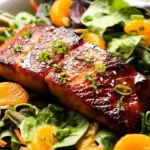
Asian Salmon Salad with Ginger Soy Dressing
- Total Time: 25 minutes
- Yield: 3 servings 1x
- Diet: Low carb
Description
A sticky sweet soy glazed salmon on a bed of lettuce with mandarin oranges and carrots, drizzled with a simple yet flavorful ginger soy dressing.
Ingredients
- 1 lbs fresh salmon
- 1/2 tsp salt
- 2 tbsp soy sauce
- 2 tbsp honey
- 2 tbsp sugar
- 2 tbsp olive oil (plus more for cooking)
- 1–2 cloves garlic (minced)
- 1/2 tsp ground ginger
- sesame seeds (garnish (optional))
- 6–9 cups Lettuce of choice
- 1 1/2 cups canned mandarin oranges (drain)
- ~1 cups shredded carrots
- 2–3 tbsp green onions
- 3 tbsp soy sauce
- 3 tbsp rice vinegar
- 3 tbsp sugar
- 1 tbsp sesame oil
- 1 tbsp olive oil
- 1/2 tsp ground ginger
Instructions
- Prep Salmon: Ensure salmon is completely defrosted, cut into three pieces, and sprinkle the flesh side with salt.
- Make Glaze: Combine soy sauce, honey, sugar, olive oil, garlic, and ginger powder in a small bowl.
- Sear Salmon: Heat olive oil in a skillet over medium heat, pan fry salmon skin side up for a few minutes, then flip and cook the other side. Cover and reduce heat if necessary until cooked through.
- Glaze Salmon: Turn salmon flesh side up, pour sauce into the skillet, and spoon/brush the thickened sauce over the salmon before removing promptly from heat.
- Prepare Salad: Cut and prep vegetables, then divide them into three bowls.
- Make Dressing: Combine soy sauce, rice vinegar, sugar, sesame oil, olive oil, and ground ginger in a jar or bowl and mix well.
- Assemble: Add dressing to the salad, place the glazed salmon on top, and garnish with sesame seeds.
Notes
Store salad and dressing in separate containers in the fridge for up to five days. To reheat, microwave salmon for 45 seconds before adding to fresh salad.
- Prep Time: 15 minutes
- Cook Time: 10 minutes
- Category: Main Course
- Method: Pan-frying
- Cuisine: Asian
Nutrition
- Serving Size: 1 serving
- Calories: 579 kcal
- Sugar: 42 g
- Sodium: 2166 mg
- Fat: 29 g
- Saturated Fat: 4 g
- Unsaturated Fat: 22 g
- Trans Fat: 0 g
- Carbohydrates: 47 g
- Fiber: 3 g
- Protein: 34 g
- Cholesterol: 83 mg
Keywords: salmon salad, ginger soy dressing, Asian salmon, healthy meal, low carb