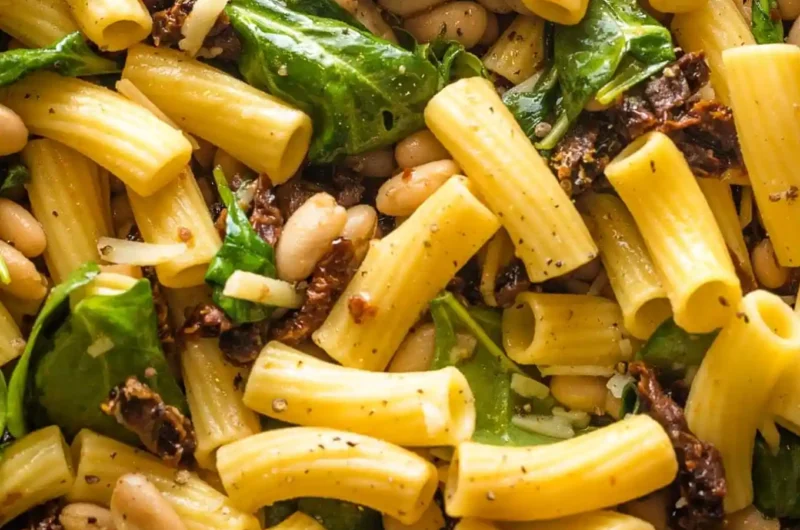
This one-pan meal combines creamy white beans and pasta for a fast, high-protein dinner. It is ready in about 15 minutes and uses simple pantry staples for a satisfying result.
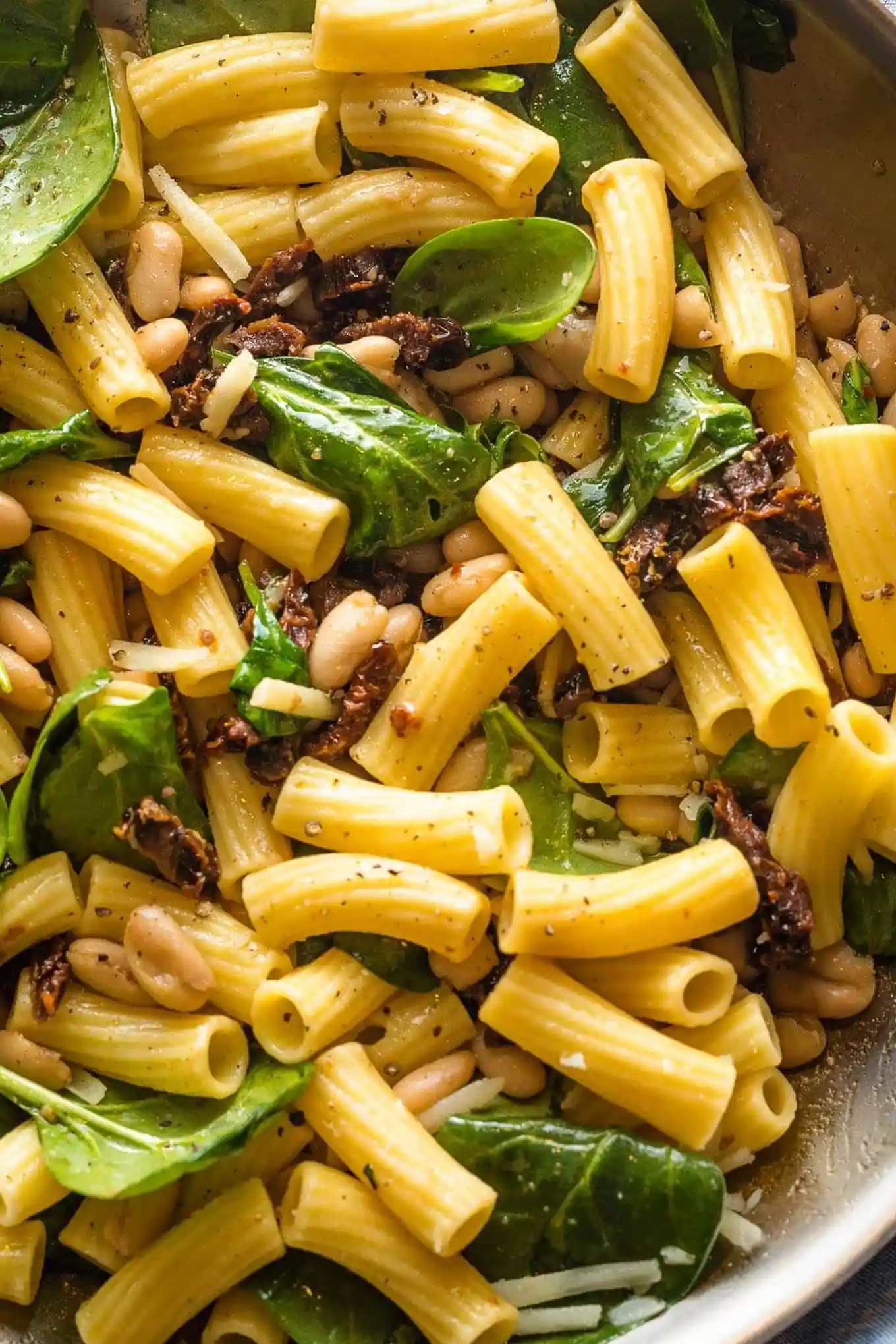
List of ingredients
- 8 ounces pasta – use a sturdy shape like rigatoni or penne.
- 1 tablespoon olive oil – for sautéing the aromatics.
- 3 cloves garlic – minced finely for maximum flavor.
- 1/2 cup oil-packed sun-dried tomatoes – drained of excess oil.
- pinch red pepper flakes – adds a subtle heat.
- 1/2 cup chicken or veggie broth – creates the sauce base.
- 1 (15 ounce) can cannellini beans – drained and rinsed well.
- 2 teaspoons lemon juice – provides brightness and acidity.
- 2 cups baby spinach – adds color and nutrients.
- 1/4 cup shredded Parmesan or Pecorino cheese – for a salty, savory finish.
- kosher salt and black pepper – for seasoning to taste.
step-by-step instructions
- Boil the Pasta: Bring a large pot of water to a boil and add a generous pinch of salt. Add pasta and cook just to al dente, according to package directions. Drain and set aside.
- Sauté Aromatics: While the pasta cooks, warm olive oil in a large skillet over medium heat. Add garlic and cook for 30-60 seconds, just until fragrant. Stir in the sun-dried tomatoes, red pepper flakes, and a pinch each of salt and pepper.
- Simmer the Sauce: Pour in broth. Bring the mixture to a simmer and cook for 1-2 minutes, until slightly reduced.
- Add Beans: Add beans and lemon juice, then simmer 2-3 minutes more to heat through.
- Combine Ingredients: Remove pan from the heat and stir in the spinach, followed by the drained pasta and about half of the cheese. Toss well to combine.
- Final Seasoning: Sample and season with additional salt, pepper, or lemon juice to taste. Serve with remaining cheese and additional red pepper flakes sprinkled on top, if desired.
Ingredient Selection Guide
Choosing the Best Pasta Shape
Rigatoni and penne are ideal choices because their hollow centers and ridges capture the beans and sauce efficiently. Farfalle also works well due to its surface area. Avoid very thin pastas like angel hair, as they may break under the weight of the beans.
Selecting White Bean Varieties
Cannellini beans are preferred for their creamy texture and mild flavor. Great Northern beans are a suitable substitute as they have a similar size and consistency. Navy beans are smaller but still provide the necessary protein and heartiness for this dish.
Using Oil-Packed vs. Dry Sun-Dried Tomatoes
Oil-packed tomatoes offer a richer flavor and softer texture, making them integrate quickly into the sauce. If using dry-packed tomatoes, add an extra drizzle of olive oil and allow them to simmer in the broth for an additional two minutes to rehydrate.
Picking the Right Leafy Greens
Baby spinach is the most convenient option because it wilts almost instantly from residual heat. Baby kale or Swiss chard are excellent alternatives for a more robust flavor and texture. If using collard greens, sauté them briefly before adding the other ingredients.
Selecting a Savory Hard Cheese
Parmesan provides a classic nutty saltiness that complements the lemon and garlic. Pecorino is a great alternative if you prefer a sharper, tangier profile. Ensure you use a variety made with microbial rennet to maintain dietary preferences.
Cooking Techniques for Best Results
Salting the Pasta Water Properly
Adding a generous amount of salt to the boiling water is the only chance to season the pasta dough itself. This prevents the final dish from tasting bland, even after adding the sauce. The water should taste slightly salty, similar to seawater.
Avoiding Overcooked Garlic
Garlic burns quickly over medium heat, which can introduce a bitter taste to the entire pan. Keep the cooking time between 30 and 60 seconds. If the garlic begins to brown too quickly, add the broth immediately to lower the pan temperature.
Utilizing Pasta Water for Sauce Thickness
If the sauce appears too thin, reserve about half a cup of the starchy pasta cooking water before draining. Stirring a few tablespoons of this liquid back into the skillet helps the sauce emulsify and cling to the noodles. This creates a glossier and more cohesive finish.
Achieving the Perfect Al Dente Texture
Cook the pasta for one minute less than the package instructions for al dente. Since the pasta is tossed in a hot skillet with broth and beans, it will continue to cook slightly. This prevents the noodles from becoming mushy or overcooked.
Customizing Your Meal
Adding Extra Plant-Based Proteins
To increase the protein content, you can add sliced artichoke hearts or sautéed mushrooms. These ingredients complement the Tuscan flavor profile without overpowering the beans. Add them during the garlic sauté phase for the best texture.
Increasing the Heat Level
While a pinch of red pepper flakes provides a hint of warmth, you can increase the spice by using a full teaspoon. For a different type of heat, stir in a small amount of crushed red pepper oil. Freshly sliced chili peppers added with the garlic also work well.
Enhancing the Citrus Profile
If you prefer a more vibrant lemon flavor, add a teaspoon of fresh lemon zest along with the juice. The zest contains aromatic oils that provide a different dimension of flavor than the acidity of the juice. This is especially effective when using a heartier pasta shape.
Making the Dish Vegan
To make this recipe vegan, replace the Parmesan or Pecorino with nutritional yeast or a plant-based hard cheese alternative. Ensure you use vegetable broth instead of chicken broth. The creamy texture of the cannellini beans naturally mimics the richness of dairy.
Serving and Pairing Suggestions
Pairing with Crusty Garlic Bread
Toasted baguette slices rubbed with a garlic clove and brushed with olive oil are a perfect accompaniment. The crunch of the bread balances the softness of the beans and pasta. This also provides a way to scoop up any remaining sauce from the plate.
Adding a Fresh Side Salad
A simple arugula salad with a lemon-olive oil dressing cuts through the richness of the cheese and beans. The peppery notes of arugula complement the sun-dried tomatoes. Add shaved fennel or sliced cucumbers for extra crunch and freshness.
Serving with Roasted Vegetables
Roasted baby carrots or asparagus spears add a sweet, earthy element to the meal. Roast them with olive oil, salt, and pepper at 400 degrees Fahrenheit until tender. Place them on top of the pasta or serve them on the side.
Adding Grilled Lean Protein
For those who want additional meat, grilled chicken breast seasoned with Italian herbs is a natural fit. Slice the chicken thinly and place it atop the finished pasta. This keeps the meal balanced while increasing the satiety factor.
Storage and Preservation
Refrigerating Leftovers
Store any remaining pasta in an airtight container in the refrigerator for up to four to five days. Ensure the container is completely sealed to prevent the pasta from drying out. The beans hold their texture well during refrigeration.
Proper Reheating Methods
Reheat the pasta on the stovetop over medium heat with a splash of water or broth. This restores the moisture lost during cooling and prevents the sauce from becoming clumpy. Avoid overheating, as this can cause the spinach to turn brown.
Freezing Considerations
While the sauce and beans freeze reasonably well, cooked pasta often loses its texture when frozen and thawed. If you plan to freeze the meal, undercook the pasta significantly. Alternatively, freeze only the sauce and beans, then combine with fresh pasta upon reheating.
Troubleshooting Common Issues
Fixing a Sauce That is Too Dry
If the pasta absorbs the sauce too quickly, stir in a tablespoon of olive oil or a splash of vegetable broth. This loosens the consistency without altering the flavor profile. Adding a small amount of pasta water is also a highly effective solution.
Balancing Overpowering Lemon Flavor
If the lemon juice makes the dish too tart, add a small pinch of sugar or an extra tablespoon of grated cheese. The fat in the cheese helps neutralize the acidity of the citrus. Stir in a small amount of butter or olive oil to mellow the sharp notes.
Preventing Spinach from Overcooking
Always stir the spinach in after removing the pan from the heat. The residual heat of the pasta and sauce is sufficient to wilt the leaves. Overcooking the spinach leads to a slimy texture and a loss of bright green color.
Frequently Asked Questions
Can I use frozen spinach instead of fresh?
Yes, but you must thaw the frozen spinach and squeeze out all excess water first. Add it at the same time as the drained pasta. Failure to remove the water will result in a watery sauce.
Which broth is best for this recipe?
Vegetable broth is recommended for a lighter, cleaner taste that highlights the lemon. Chicken broth adds a deeper, savory richness. Both are acceptable depending on your flavor preference.
Can I use a different type of bean?
You can use any white bean, such as Great Northern or Navy beans. Chickpeas can also be used for a nuttier flavor and firmer texture, though they will change the traditional Tuscan feel of the dish.
How do I store the remaining sun-dried tomatoes?
Keep them in their original jar submerged in oil and store them in the refrigerator. Ensure the lid is tight to prevent oxidation. They will stay fresh for several weeks if kept cold.
Print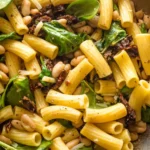
Tuscan Pasta with Cannellini Beans
- Total Time: 15 minutes
- Yield: 4 servings 1x
- Diet: Vegetarian
Description
Shockingly fast and easy to make, but delivers big flavors and a satisfying one-pan meal with veggies, carbohydrates, and protein all in one package.
Ingredients
- 8 ounces pasta
- 1 tablespoon olive oil
- 3 cloves garlic (minced)
- 1/2 cup oil-packed sun-dried tomatoes (drained)
- pinch red pepper flakes
- 1/2 cup vegetable broth
- 1 (15 ounce) can cannellini beans (drained and rinsed)
- 2 teaspoons lemon juice
- 2 cups baby spinach
- 1/4 cup shredded microbial-rennet Parmesan or Pecorino cheese
- kosher salt and black pepper
Instructions
- Step: Bring a large pot of water to a boil and add a generous pinch of salt. Add pasta and cook just to al dente, according to package directions. Drain and set aside.
- Step: While the pasta cooks, warm olive oil in a large skillet over medium heat. Add garlic and cook for 30-60 seconds, just until fragrant. Stir in the sun-dried tomatoes, red pepper flakes, and a pinch each of salt and pepper.
- Step: Pour in broth. Bring the mixture to a simmer and cook for 1-2 minutes, until slightly reduced.
- Step: Add beans and lemon juice, then simmer 2-3 minutes more.
- Step: Remove pan from the heat and stir in the spinach, followed by the drained pasta and about half of the cheese. Toss well to combine. Sample and season with additional salt, pepper, or lemon juice to taste. Serve with remaining cheese and additional red pepper flakes sprinkled on top, if desired.
Notes
You can use the excess olive oil from the sun-dried tomatoes to begin cooking the garlic in step one. Just save it from the jar and add directly to the skillet.
- Prep Time: 5 minutes
- Cook Time: 10 minutes
- Category: Main
- Method: Stovetop
- Cuisine: American
Nutrition
- Serving Size: 1 serving
- Calories: 283 kcal
- Sugar: 2 g
- Sodium: 62 mg
- Fat: 7 g
- Saturated Fat: 1 g
- Unsaturated Fat: 6 g
- Trans Fat: 0 g
- Carbohydrates: 47 g
- Fiber: 3 g
- Protein: 9 g
- Cholesterol: 10 mg
Keywords: pasta with cannellini beans, Tuscan pasta