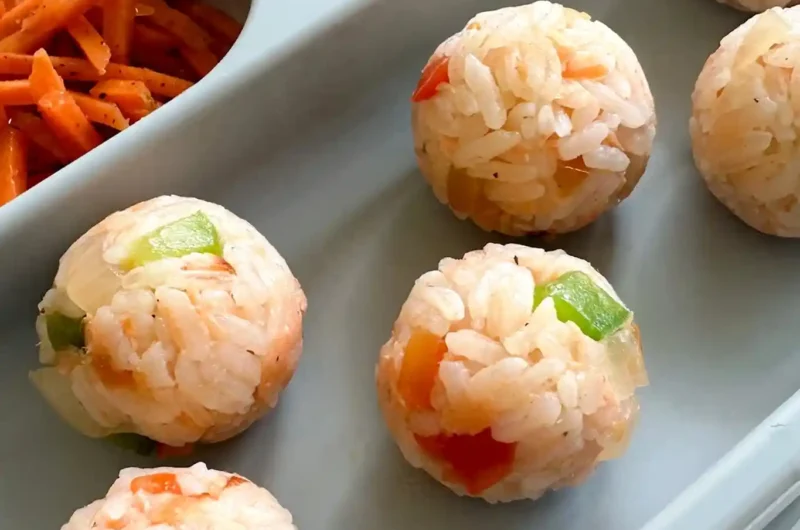
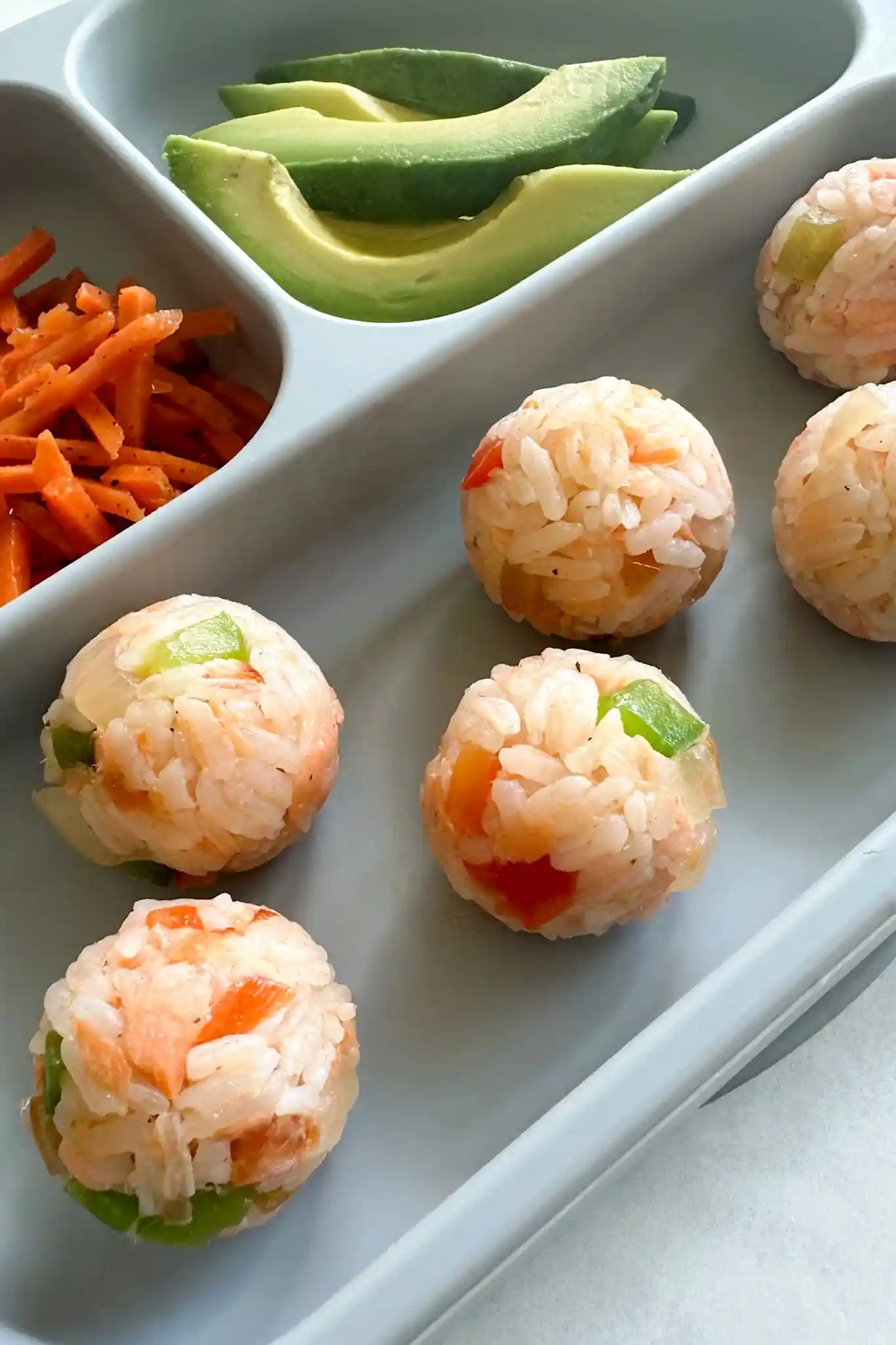
These salmon rice balls provide a convenient and nutritious way to serve fish to the whole family. They are easy to handle, making them an ideal choice for children’s meals or healthy snacks.
List of ingredients
- 2 cups cooked white rice – use a sticky variety, freshly made for best binding.
- 1 large cooked salmon filet (or 2 small) – approximately 1 cup when shredded.
- ½ cup finely chopped onions – minced small to ensure they blend into the balls.
- ½ cup finely chopped bell peppers – finely diced to prevent the balls from breaking.
- 2 tbsp butter – used for sautéing the vegetables.
- salt, to taste – optional, depending on the seasoning of the salmon.
step-by-step instructions
- Prepare the salmon: Use a fork to shred the cooked salmon filets into small pieces and set them aside.
- Sauté the vegetables: Melt butter in a pan over medium heat, then add the chopped onions and peppers. You may add paprika, garlic powder, or black pepper for extra flavor. Cook the vegetables until they are soft and translucent, then remove from heat and let them cool slightly, keeping all the pan juices.
- Combine the mixture: In a large bowl, combine the cooked rice, shredded salmon, and the sautéed vegetables along with their juices. Mix thoroughly until all ingredients are evenly distributed.
- Form the balls: Scoop out tablespoon-sized portions of the mixture. Press them firmly with your hands and roll them into spheres. Wetting your hands with water prevents the rice from sticking to your skin. Alternatively, use a rice baller tool for uniform shapes, or serve the mixture in a bowl as is.
Pro Tips for Perfect Binding
Use Short-Grain Sticky Rice
Short-grain white rice contains more amylopectin, which makes it stickier than long-grain varieties. This natural stickiness acts as the glue that holds the salmon and vegetables together. Freshly cooked rice is essential because it is more pliable and adhesive than chilled rice.
Keep Your Hands Damp
Rice is naturally starchy and will cling to your palms during the shaping process. Dipping your hands in a bowl of water every few balls prevents the mixture from sticking to you. This ensures the surface of each ball remains smooth and round.
Dice Vegetables Very Finely
Large chunks of onion or pepper can create structural weak points in the rice balls. When the vegetables are minced finely, they integrate into the rice matrix without causing the ball to split. This is especially important if you are making smaller bites for children.
Press Firmly While Rolling
Simply rolling the rice is not enough to ensure the ball stays together. You must apply firm pressure as you rotate the portion in your palm to compress the air pockets. This creates a denser, more stable ball that won’t crumble during serving.
Ingredient Substitutions and Customizations
Swap Salmon for Other Proteins
You can replace salmon with other cooked fish like tuna, cod, or halibut. Ensure the alternative protein is shredded or flaked finely to maintain the texture. Cooked shredded chicken or shrimp also work well as protein substitutes.
Incorporate Different Vegetables
While onions and peppers are classic, you can use finely grated carrots, frozen peas, or minced spinach. Always sauté these vegetables in butter first to remove excess moisture. This prevents the rice mixture from becoming too wet and falling apart.
Use Olive Oil Instead of Butter
If you prefer to avoid butter, extra virgin olive oil is an excellent alternative for sautéing. It provides a fruity note that complements the salmon well. Use a 1:1 ratio of oil to butter to achieve similar sautéing results.
Try Brown Rice for Added Nutrition
Brown rice can be used, but it is naturally less sticky than white rice. You may need to press the balls more firmly or add a small amount of mashed avocado to help the mixture bind. Ensure the brown rice is slightly overcooked to increase its stickiness.
Experiment with Seasonings
Beyond salt, you can add garlic powder, onion powder, or a pinch of smoked paprika to the vegetable sauté. A small amount of lemon zest mixed into the final bowl adds a bright, citrusy flavor. Dried parsley or dill also pairs excellently with the salmon.
Serving and Pairing Ideas
Pair with Sliced Avocado
Serving these rice balls alongside creamy avocado slices provides a healthy fat source and a color contrast. You can slice the avocado thinly or serve it as a side of guacamole. The creaminess of the avocado balances the savory taste of the salmon.
Serve with Toasted Seaweed Wraps
Wrap each salmon rice ball in a small piece of roasted nori seaweed. This adds a salty, umami flavor and makes the balls even easier to pick up. It transforms the dish into a simplified version of a sushi roll.
Create a Soy-Ginger Dipping Sauce
A simple dip made from soy sauce, grated ginger, and a drop of sesame oil enhances the flavor. Dip each ball lightly into the sauce just before eating. This adds a savory depth and a professional touch to the presentation.
Add a Side of Steamed Broccoli
Steamed broccoli florets provide a crisp texture and a boost of vitamins to the meal. Lightly season the broccoli with lemon juice and a pinch of salt. This creates a well-balanced plate with protein, carbohydrates, and greens.
Use a Rice Bowl Presentation
If you prefer not to form balls, serve the mixture in a bowl topped with sliced cucumbers and sesame seeds. This is a great option for those who want a more traditional meal format. It allows you to add more liquid toppings like a drizzle of soy glaze.
Storage and Freshness Guidelines
Refrigeration Times and Methods
Store the formed rice balls in an airtight container in the refrigerator for up to three days. Ensure they are completely cooled before sealing the lid to prevent condensation. Condensation can make the exterior of the rice balls mushy.
Form Balls Before Chilling
It is much easier to shape the rice while it is still warm and sticky. Once the rice cools in the fridge, the starches set, making it difficult to mold. Always complete the shaping process before storing them for later use.
Avoid Freezing Rice Balls
Freezing is not recommended for this recipe because the freezing and thawing process disrupts the rice structure. This often results in a grainy or crumbly texture upon reheating. It is best to keep these refrigerated or eat them fresh.
Preventing Rice Hardening
Cold rice can become hard due to a process called retrogradation. To keep the balls from becoming too firm in the fridge, you can place a damp paper towel over the top of the container. This maintains a small amount of humidity around the rice.
Reheating Instructions
Using a Microwave for Quick Warming
Place the rice balls on a microwave-safe plate and cover them with a damp paper towel. Heat in short 30-second intervals until warmed through. The damp towel creates steam, which restores the stickiness and softness of the rice.
Warming in an Air Fryer for Texture
Lightly spray the rice balls with a mist of olive oil and place them in the air fryer at 350°F (175°C). Heat for 3-5 minutes until the edges are slightly crisp. This method adds a pleasant toasted flavor to the exterior.
Steaming for Maximum Moisture
Place the rice balls in a steamer basket over boiling water for 2-3 minutes. This is the most effective way to return the rice to its original freshly-cooked texture. Steaming ensures the interior is hot without drying out the salmon.
Using a Conventional Oven
Wrap the rice balls in aluminum foil to trap moisture and bake at 325°F (160°C) for about 10 minutes. This is a slower process but works well for reheating larger batches. The foil prevents the rice from hardening in the dry oven air.
Troubleshooting Common Issues
Rice Balls Falling Apart
If the balls crumble, it usually means the rice was not sticky enough or was too cold during shaping. Try adding a tablespoon of warm water or a bit of mashed avocado to the mixture. Ensure you are pressing the balls firmly enough during the rolling process.
Rice Feeling Too Dry
Dry rice often happens if the vegetables were sautéed without enough butter or if the rice was overcooked. Add a teaspoon of butter or olive oil to the mix to add moisture. You can also stir in a small amount of warm vegetable broth to loosen the texture.
Vegetables Too Chunky
If the vegetable pieces are too large, they will push the rice apart. Use a sharper knife or a food processor to mince the onions and peppers more finely next time. For the current batch, you can gently press the balls harder to integrate the chunks.
Salmon Flavor Too Mild
Since the rice and vegetables dilute the salmon taste, ensure the salmon is well-seasoned before shredding. You can stir in a pinch of salt or a dash of garlic powder to the final mixture. A squeeze of fresh lemon juice over the finished balls also boosts the salmon’s flavor.
Frequently Asked Questions
Can I use cold rice from the fridge?
While possible, cold rice is much harder to form into balls because the starch has crystallized. You must reheat the rice thoroughly until it is steaming and sticky again before mixing it with the other ingredients.
How do I cook the salmon for this recipe?
You can air fry, bake, or pan-sear the salmon filet until it flakes easily with a fork. Air frying is recommended for a moist texture. Ensure the salmon is cooked through but not overdone to avoid a dry result.
Are these suitable for toddlers?
Yes, these are excellent for toddlers as they are bite-sized and easy to grip. Ensure the vegetables are minced very finely to prevent choking hazards. You can also omit the salt for very young children.
Can I make these without butter?
Yes, you can use olive oil, avocado oil, or coconut oil to sauté the vegetables. The butter adds a rich flavor, but oil provides the same practical function of softening the vegetables and adding moisture to the rice.
What is the best rice for this recipe?
Sushi rice or any short-grain white rice is the best choice due to high starch content. Jasmine rice can work if it is freshly made and slightly moist. Avoid using basmati or long-grain rice as they are too fluffy to bind.
Can I add cheese to the mixture?
Adding a small amount of finely shredded microbial-rennet cheese can help with binding and flavor. Stir the cheese into the warm rice mixture so it melts slightly. This adds a creamy element that kids often enjoy.
Print
Savory Salmon Rice Bites
- Total Time: 20 minutes
- Yield: 3 servings 1x
- Diet: Nut-Free, Egg-Free
Description
These salmon rice balls are a great way to serve salmon filets in a different way! Everything comes together in one bowl and is formed into easy-to-hold balls for little ones!
Ingredients
- 2 cups cooked white rice (sticky, freshly made)
- 1 large cooked salmon filet (about 1 cup shredded)
- ½ cup finely chopped onions
- ½ cup finely chopped bell peppers
- 2 tbsp butter
- salt, to taste
Instructions
- Step 1: Shred the cooked salmon filets with a fork and set aside.
- Step 2: Melt the butter in a pan on medium heat, add chopped onions and peppers, and saute until soft and translucent, then set aside to cool.
- Step 3: Add the cooked rice, shredded salmon, and sauteed onions and peppers to a bowl and mix until well combined.
- Step 4: Scoop out tablespoon-sized portions and roll into balls, pressing firmly with your hands.
Notes
Finely chop the onions and peppers as small as possible to ensure the rice balls hold their shape. Use freshly made sticky rice, such as Jasmine rice, for best results. Salmon can be air-fried for a moist texture.
- Prep Time: 10 minutes
- Cook Time: 10 minutes
- Category: Dinner
- Method: Stovetop
- Cuisine: American
Nutrition
- Serving Size: 1 serving
- Calories: 231 kcal
- Sugar: 2.21 g
- Sodium: 41.64 mg
- Fat: 4.54 g
- Saturated Fat: 0.79 g
- Unsaturated Fat: 3.75 g
- Trans Fat: 0 g
- Carbohydrates: 31.74 g
- Fiber: 1.54 g
- Protein: 14.47 g
- Cholesterol: 32.27 mg
Keywords: salmon rice balls, easy family dinner, nut-free, egg-free, toddler meals