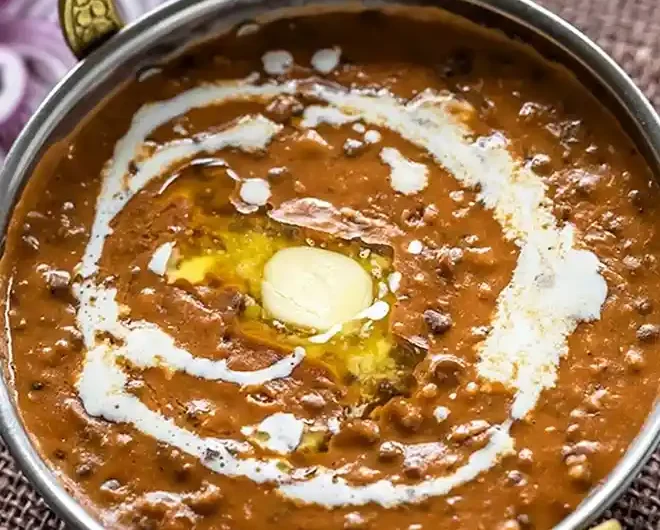
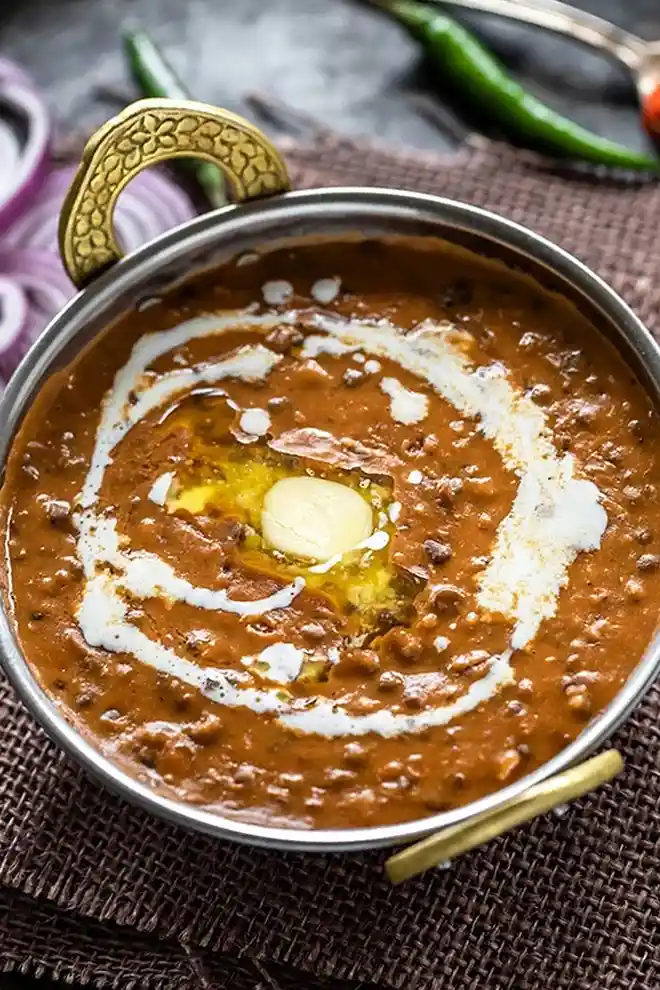
This rich and buttery black lentil dish is a staple of Indian cuisine known for its luxurious texture. It combines slow-cooked legumes with a savory tomato-onion base to create a deeply satisfying meal.
List of ingredients
- 3/4 cup urad dal sabut (whole black lentil), approx 165 grams – the primary base of the dish.
- 1/4 cup rajma (red kidney beans), approx 60 grams – adds body and texture.
- 1 teaspoon salt – used for the initial pressure cooking.
- 3.5 cups water – for boiling the lentils and beans.
- 1 tablespoon ghee – used for the masala and optional smoking.
- 3 tablespoons butter, divided – salted butter is recommended for authentic flavor.
- 1 medium white onion, 115 grams – finely grated for a smooth masala.
- 2 teaspoons ginger garlic paste – fresh paste provides the best aroma.
- 1/2 cup store-bought tomato puree – ensures a consistent, smooth texture.
- 1/2 teaspoon kashmiri red chili powder – provides a bright red color with mild heat.
- 1/4 teaspoon garam masala – optional for a touch of warm spice.
- 1/2 teaspoon salt or to taste – to season the final gravy.
- 1.5 cups water – added gradually during the simmering process.
- 1/2 teaspoon sugar – used to balance the acidity of the tomatoes.
- 1/4 cup cream, 60 ml – for the signature creamy finish.
- Extra salted butter – for garnishing before serving.
- Piece of charcoal – optional for the traditional smokey flavor.
step-by-step instructions
- Soak the Legumes: Wash and rinse the urad dal and rajma thoroughly in a large bowl. Soak them in 3 cups of water overnight to ensure they soften properly.
- Pressure Cook: Drain the soaking water. Transfer the dal and rajma to a pressure cooker with 1 teaspoon salt and 3.5 cups of water. Pressure cook on high-medium heat for 10 whistles, then lower the heat to low-medium for another 10 minutes (total 15-20 whistles).
- Alternative Cooking: If using an Instant Pot, pressure cook the lentils on high pressure for 30 minutes and allow for a natural pressure release.
- Prepare Texture: Once the pressure releases naturally, check that the beans are soft enough to mash with your fingers. Use a potato masher to crush a portion of the dal and rajma for thickness.
- Simmer Base: Set the pot to the lowest heat and let the dal simmer while you prepare the masala base.
- Sauté Aromatics: Heat 2 tablespoons of butter and 1 tablespoon of ghee in a large pan over medium heat. Add the finely grated onion and cook for 6-7 minutes until light golden brown, stirring constantly.
- Add Pastes: Stir in the ginger garlic paste and cook for 1-2 minutes until the raw smell disappears.
- Cook Puree: Mix in the tomato puree and cook for 2 minutes or until the oil begins to separate from the sides of the masala.
- Combine: Add the simmered dal into the masala pan and mix thoroughly. Stir in the garam masala, kashmiri red chili powder, and salt.
- Slow Simmer: Add 1/2 cup of water and set the heat to low. Let the dal simmer uncovered for 45 minutes, stirring every 10 minutes to prevent sticking. Gradually add the remaining 1 cup of water as needed during this time.
- Final Seasoning: After the 45-minute simmer, stir in the sugar to balance the flavors.
- Add Richness: Stir in the remaining 1 tablespoon of butter and 1/4 cup of cream. Mix well and simmer for another 10 minutes on low heat.
- Smokey Finish (Optional): Place a steel bowl on a trivet inside the dal pot. Heat a piece of charcoal until red hot, place it in the bowl, and pour 1 tablespoon of melted ghee over it.
- Infuse Smoke: Immediately cover the pan with a lid and let it sit for 2-5 minutes. Remove the lid and the bowl once the desired smokiness is achieved.
- Serve: Garnish with a swirl of cream and a pat of butter.
Essential Cooking Secrets
Slow Simmering for Depth
The secret to a restaurant-style texture is the length of the simmer. Allowing the dal to cook on low heat for at least 45 minutes to two hours helps the starches release, creating a natural creaminess. This process integrates the flavors of the masala deeply into the lentils.
Prioritizing Salted Butter
Using salted butter, specifically Indian-style salted butter, adds a distinct savory layer that unsalted butter lacks. The salt in the butter interacts with the cream and tomato puree to enhance the overall richness of the dish.
Choosing White Onions
White onions are preferred over red onions because they offer a subtler, sweeter flavor profile. Red onions can sometimes introduce a sharp pungency that distracts from the buttery and creamy notes of the Dal Makhani.
Using Concentrated Tomato Puree
Store-bought tomato puree provides a smoother consistency and a more concentrated flavor than fresh pureed tomatoes. This prevents the sauce from feeling chunky and ensures the final product has a professional, velvety finish.
Balancing with Sugar
A small amount of sugar is critical for balancing the acidity of the tomato puree. It doesn’t make the dish sweet, but rather rounds out the sharp edges of the tomatoes and enhances the richness of the cream.
Ingredient Substitutions
Replacing Kidney Beans
If you do not have rajma, you can increase the quantity of urad dal to 1 cup. While kidney beans add a specific texture and heartiness, the dish remains delicious with just the whole black lentils.
Homemade Puree Alternative
If store-bought puree is unavailable, blend two large tomatoes into a smooth paste. To replicate the richness of commercial puree, add one tablespoon of tomato paste to the fresh puree before adding it to the pan.
Dairy-Free Cream Options
For a dairy-free version, replace the heavy cream with thick coconut cream or cashew cream. While the flavor profile changes slightly, these alternatives maintain the desired thickness and mouthfeel.
Ghee Alternatives
If ghee is not available, you can use additional unsalted butter or a neutral oil with a high smoke point. However, ghee is recommended for the smoking process as it handles high heat better and adds a nutty aroma.
Serving and Variation Ideas
The Dhungar Smoking Method
The dhungar method involves using a hot coal to infuse the dal with a charcoal aroma. This mimics the taste of dal cooked in a traditional clay oven (tandoor) and is highly recommended for an authentic experience.
Ideal Side Dish Pairings
Dal Makhani is best enjoyed with garlic naan or buttery tandoori roti. For a lighter option, serve it with jeera rice (cumin rice) or steamed basmati rice to soak up the creamy gravy.
Adjusting the Heat Level
Kashmiri red chili powder is used mainly for its vibrant color and mild heat. If you prefer a spicier dish, you can add a pinch of cayenne pepper or increase the amount of red chili powder.
Storage and Reheating
Refrigeration Guidelines
Store leftover dal in an airtight container in the refrigerator for up to 4-5 days. The flavors often deepen and improve after a day of resting in the fridge.
Freezing Instructions
This dal freezes exceptionally well for up to two months. Freeze it in portion-sized containers, leaving a little room at the top for expansion as the liquids freeze.
Proper Reheating Method
When reheating, the dal will likely have thickened significantly. Add a splash of water or a tablespoon of cream and heat it slowly on the stovetop over low heat to restore the original consistency.
Make-Ahead Strategies
Pre-Cooking the Lentils
You can pressure cook and mash the lentils and beans a day in advance. Keep them refrigerated in their cooking liquid, which saves significant time on the day of serving.
Preparing the Masala Base
The onion, ginger, garlic, and tomato base can be cooked ahead of time. Store the prepared masala in the fridge and simply add the boiled lentils and water when you are ready to simmer.
Troubleshooting Common Issues
Handling Overly Thick Dal
Because black lentils absorb a lot of liquid, the dal may become too thick during simmering or reheating. Gradually stir in hot water in small increments until you reach your preferred consistency.
Dealing with Hard Lentils
If the lentils are still firm after the initial pressure cooking, they may have been old or insufficiently soaked. Continue pressure cooking for another 5-10 minutes or simmer them longer before adding the masala.
Correcting Excess Acidity
If the dish tastes too tart due to the tomatoes, add an extra pinch of sugar or a small knob of butter. The fat in the butter helps neutralize the perceived acidity of the tomato puree.
Frequently Asked Questions
Can I use a regular pot instead of a pressure cooker?
Yes, you can cook the dal in a heavy-bottomed pot, but it will take much longer. Soak the lentils overnight and simmer them in water for about 75 to 90 minutes until they are completely soft.
Do I have to soak the lentils overnight?
Soaking is highly recommended to ensure the lentils cook evenly and are easier to digest. If you are short on time, you can soak them in hot water for 4-6 hours, but the texture may be slightly different.
Is it possible to make this vegan?
Yes, replace the butter and ghee with vegan butter or oil and use coconut cream instead of dairy cream. Ensure the salt and spices remain the same to keep the flavor profile intact.
Print
Creamy Restaurant Style Dal Makhani
- Total Time: 2 hours 10 minutes
- Yield: 5 servings 1x
- Diet: Vegetarian
Description
Creamy & buttery Dal Makhani is one of India’s most special and popular dal. Black lentils are cooked with lot of butter and cream making it a special dish. Best enjoyed with naan!
Ingredients
- 3/4 cup urad dal sabut (whole black lentil) (165 grams)
- 1/4 cup rajma (red kidney beans) (60 grams)
- 1 teaspoon salt
- 3.5 cups water (28 oz)
- 1 tablespoon ghee
- 3 tablespoons butter (divided)
- 1 medium white onion (115 grams, finely grated)
- 2 teaspoons ginger garlic paste
- 1/2 cup tomato puree
- 1/2 teaspoon kashmiri red chili powder
- 1/4 teaspoon garam masala
- 1/2 teaspoon salt (or to taste)
- 1.5 cups water (12 oz, as needed)
- 1/2 teaspoon sugar
- 1/4 cup cream (60 ml)
- butter (for serving)
- piece of charcoal (optional)
Instructions
- Step 1: Wash and rinse urad dal and rajma in a large bowl and soak in 3 cups water overnight.
- Step 2: Drain the soak water and transfer lentils to a pressure cooker with 1 teaspoon salt and 3.5 cups water.
- Step 3: Pressure cook on high-medium heat for 10 whistles, then lower heat to low-medium and cook for another 10 minutes.
- Step 4: Let the pressure release naturally until the dal and rajma are completely cooked and mashable.
- Step 5: Mash some of the dal and rajma using a potato masher and let it simmer on the lowest heat.
- Step 6: Heat 2 tablespoons butter and 1 tablespoon ghee in a large pot on medium heat.
- Step 7: Add finely grated onion and cook for 6 to 7 minutes or until light golden brown.
- Step 8: Add ginger garlic paste and cook for 1 to 2 minutes.
- Step 9: Add tomato puree and cook for 2 minutes or until oil starts oozing from the sides.
- Step 10: Stir in the boiled dal, garam masala, kashmiri red chili powder, and salt.
- Step 11: Add 1/2 cup water, stir, and simmer on low heat uncovered for around 45 minutes, adding water as needed (total 1.5 cups).
- Step 12: Stir in sugar after the simmering process.
- Step 13: Add the remaining 1 tablespoon butter and 1/4 cup cream and mix well.
- Step 14: Simmer for 10 more minutes on low heat.
- Step 15: (Optional) For smokey flavor, place a steel bowl on a trivet inside the dal, put a red hot charcoal piece in the bowl, pour 1 tablespoon melted ghee over it, and cover with a lid for 2 minutes before removing the bowl.
- Step 16: Garnish with more cream and serve with a pat of butter.
Notes
You may use 1 cup urad dal only if kidney beans are unavailable. If using fresh tomatoes instead of puree, add 1 tablespoon of tomato paste for rich flavor. Simmering on low heat for at least 30 to 60 minutes is key for the best flavor.
- Prep Time: 10 minutes
- Cook Time: 2 hours
- Category: Main Course
- Method: Pressure Cooking and Simmering
- Cuisine: Indian
Nutrition
- Serving Size: 1 serving
- Calories: 293 kcal
- Sugar: 2 g
- Sodium: 793 mg
- Fat: 19 g
- Saturated Fat: 11 g
- Unsaturated Fat: 8 g
- Trans Fat: 0 g
- Carbohydrates: 22 g
- Fiber: 7 g
- Protein: 9 g
- Cholesterol: 58 mg
Keywords: Dal Makhani, Indian Dal, Black Lentils, Creamy Dal, Restaurant Style Dal