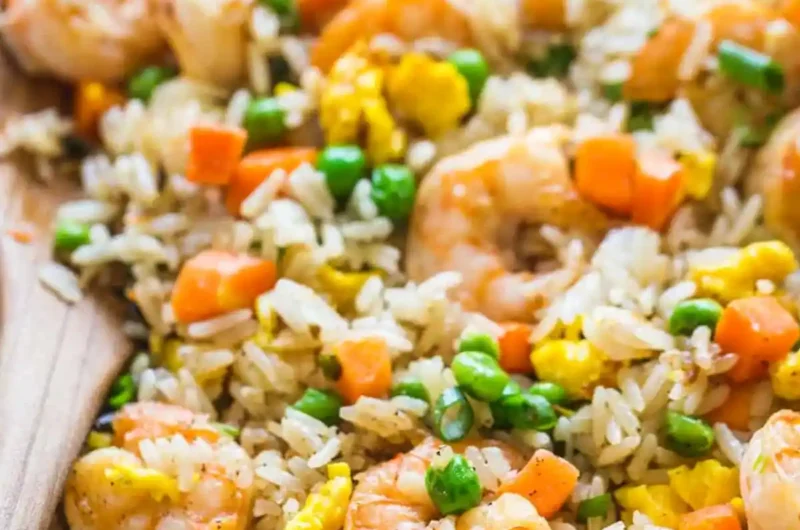
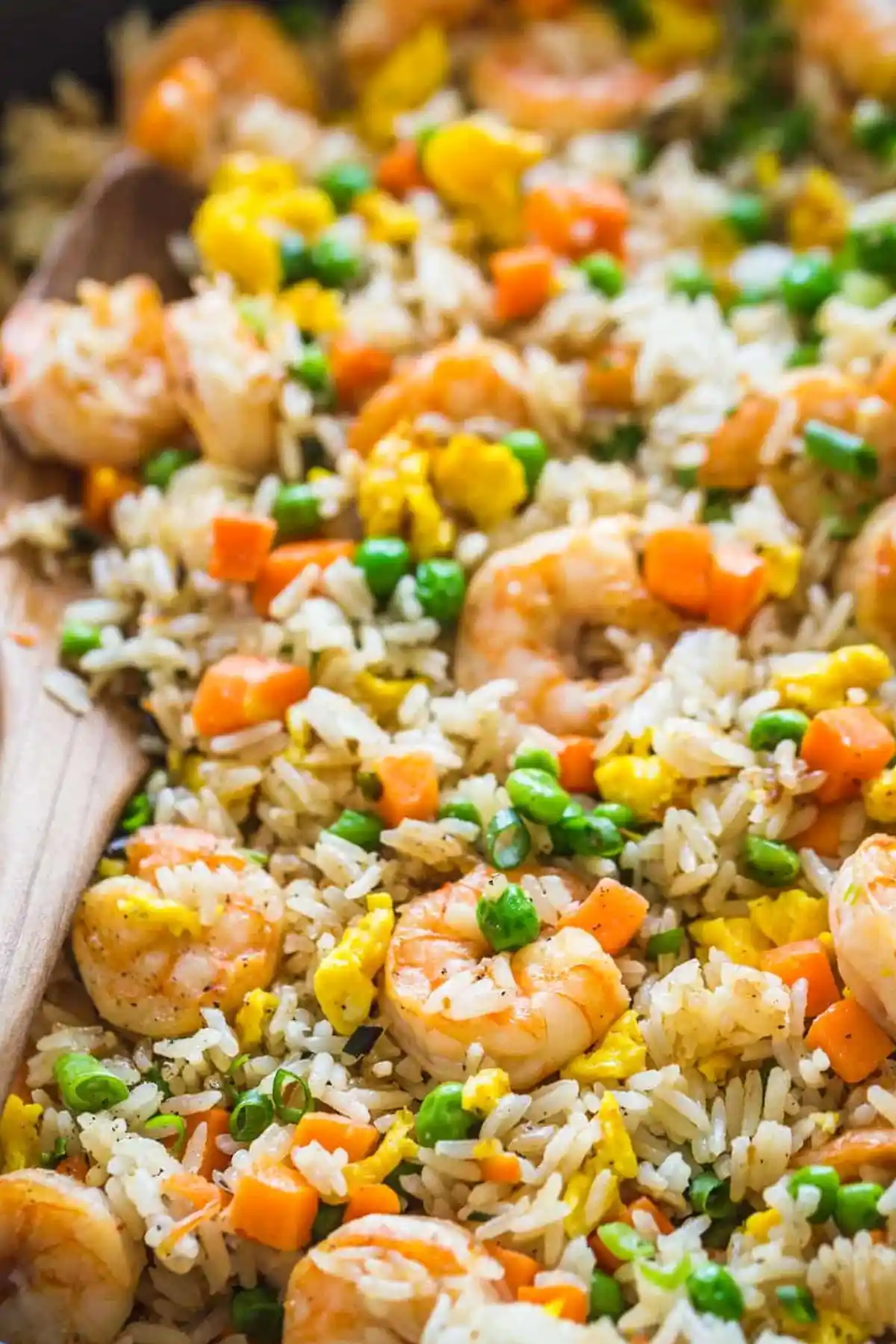
This high-protein meal utilizes chilled leftover rice and fresh shrimp for a fast dinner. It is a perfect one-pan solution for those seeking a takeout-style meal in under 30 minutes.
List of ingredients
- 1 lb 26-30 count uncooked shrimp (peeled and deveined) – medium size for quick cooking.
- 1 tsp corn starch – helps the shrimp sear and stay juicy.
- 1/4 tsp sea salt – enhances the natural flavor of the seafood.
- 1/4 tsp freshly ground black pepper – adds a mild spicy kick.
- 3 Tbsp light olive oil or canola oil – used for high-heat searing.
- 4 large eggs (beaten) – provides extra protein and texture.
- 1/4 cup green onion (finely chopped) – adds a fresh, mild onion flavor.
- 5 cups leftover chilled white rice (rinse rice before cooking) – ensures grains stay separate.
- 12 oz frozen carrots and peas (thawed) – a convenient mix of sweet vegetables.
- 2 Tbsp soy sauce or coconut aminos (or added to taste) – the primary salty seasoning.
- 1 1/2 tsp sesame oil – essential for the traditional nutty aroma.
step-by-step instructions
- Marinate shrimp: In a medium bowl, mix the shrimp, cornstarch, salt, and pepper. Let the mixture marinate at room temperature for 10 minutes.
- Cook the shrimp: Heat a large non-stick skillet on medium/high heat. When a bead of water sizzles and evaporates, swirl in 2 Tbsp of cooking oil and add shrimp in a single layer. Cook 1 minute per side until opaque, then remove to a bowl.
- Add beaten egg: Reduce heat to medium and add beaten eggs to the same skillet. Break up the eggs with a spatula and cook until no longer runny, then remove to a bowl.
- Cook green onion: Wipe the skillet with a paper towel and return to medium/high heat. Add 1 Tbsp oil and the chopped onions, cooking for 30 seconds until fragrant.
- Spread rice: Stir in the chilled rice and spread it evenly over the pan. Cook for 1 to 2 minutes without disturbing it, then stir and sauté for another 1 to 2 minutes until the rice sizzles.
- Add sauces and veggies: Drizzle 2 Tbsp soy sauce over the rice and stir well. Stir in the sesame oil and thawed vegetables, mixing until combined.
- Final combine: Return the cooked shrimp and eggs to the pan. Continue to cook until the rice is hot and sizzling, adding more soy sauce if desired.
Optimizing Your Rice Preparation
The Necessity of Chilled Rice
Using cold, leftover rice is critical for the texture of fried rice. Freshly cooked rice contains too much moisture and surface starch, which leads to a gummy or mushy consistency. Cold rice has undergone retrogradation, meaning the starch has crystallized and the grains remain separate during frying.
Recommended Rice Varieties
Long-grain white rice, such as Jasmine, is the ideal choice for its aromatic flavor and fluffy texture. You can also use medium-grain rice or brown rice for a nuttier taste and more fiber. Regardless of the variety, the rice must be chilled before it enters the pan.
Efficient Cooling Methods
To prepare rice in advance, rinse it under cold water until the water runs clear to remove excess surface starch. After cooking, spread the rice in a thin layer on a baking sheet or in a wide casserole dish. This increases the surface area, allowing it to cool quickly before being stored in the refrigerator.
Professional Shrimp Preparation
Choosing the Right Shrimp Size
Shrimp in the 26-30 count range are medium-sized and provide a balanced bite. They cook quickly and evenly, reducing the risk of overcooking the exterior while the interior remains raw. Always ensure the shrimp are peeled and deveined for a seamless eating experience.
The Function of Cornstarch
Tossing raw shrimp in a small amount of cornstarch creates a thin protective barrier. This helps the shrimp develop a golden-brown sear on the outside while locking in the natural juices. It also prevents the shrimp from sticking to the pan during the high-heat searing process.
Proper Thawing Techniques
If using frozen shrimp, thaw them slowly in the refrigerator overnight for the best texture. For a faster method, place the shrimp in a sealed bag and submerge them in a bowl of cold water. Avoid using warm water, as this can compromise the quality of the seafood.
Vegetable and Protein Customizations
Managing Frozen Vegetable Moisture
Frozen peas and carrots are convenient, but they must be fully thawed and patted dry before being added. Adding frozen vegetables directly into the pan releases excess water, which can steam the rice instead of frying it. This moisture ruins the signature sizzle and crispness of the dish.
Fresh Vegetable Alternatives
You can replace frozen mixes with freshly diced carrots, corn, or chopped broccoli. Bok choy, sliced bell peppers, and snap peas also add great color and nutrition. If using hard vegetables like carrots, sauté them briefly before adding the rice to ensure they are tender.
Alternative Protein Swaps
While shrimp is the star, you can substitute it with diced chicken breast, firm tofu cubes, or thinly sliced beef. Ensure the alternative protein is cooked separately and removed from the pan before starting the rice, similar to the shrimp process. This prevents the protein from becoming rubbery through overcooking.
Flavor Enhancement Strategies
Coconut Aminos as a Substitute
For those seeking a lower-sodium option or a soy-free alternative, coconut aminos are an excellent choice. They provide a similar salty and slightly sweet profile to soy sauce. Taste the dish as you go, as the salt levels may differ slightly from traditional soy sauce.
The Role of Pure Sesame Oil
Pure sesame oil is used as a finishing oil rather than a primary frying oil because of its low smoke point. It provides the distinct, toasted nuttiness associated with authentic Chinese fried rice. Do not substitute this with vegetable oil, as the flavor profile will be significantly diminished.
Adding Fresh Aromatics
To increase the depth of flavor, add finely minced fresh garlic or grated ginger to the pan with the green onions. Sauté them for only 30 seconds to prevent burning. These aromatics add a pungent, savory layer that complements the shrimp and soy sauce.
Advanced Cooking Techniques
Maintaining High Pan Temperatures
Fried rice requires high heat to achieve the correct sear and avoid oil absorption. Use a heavy-bottomed non-stick skillet or a carbon steel wok to maintain a consistent temperature. If the pan cools down too much, the rice will soak up the oil and become greasy rather than toasted.
The Importance of the Sizzle Phase
Allowing the rice to sit undisturbed for 1 to 2 minutes is a key step. This creates a crust on the bottom of the rice, mimicking the ‘wok hei’ or ‘breath of the wok’ found in restaurants. Stirring too frequently prevents the rice from frying and leads to a steamed texture.
Timing the Egg Scramble
Cooking the eggs separately ensures they form distinct, fluffy curds. If eggs are cooked directly with the rice, they often coat the grains in a layer of cooked egg, which prevents the rice from searing. Removing them and adding them back at the end keeps the textures distinct.
Storage and Reheating Guidelines
Safe Cooling Procedures
After cooking, spread the fried rice into a shallow container to cool it quickly. This prevents the rice from staying in the ‘danger zone’ temperature range for too long. Once the rice reaches room temperature, cover it tightly and place it in the refrigerator.
Refrigeration and Freezer Life
Stored in an airtight container, shrimp fried rice remains fresh in the refrigerator for up to 4 days. For longer storage, it can be frozen for up to 3 months. Label the container with the date to ensure you use the food within its optimal window.
Thawing Frozen Rice
The best way to thaw frozen fried rice is to move it from the freezer to the refrigerator 24 hours before you plan to eat it. This gradual thaw preserves the texture of the shrimp and vegetables. Alternatively, you can thaw it in the microwave on a low power setting.
Stovetop Reheating Method
To restore the original texture, reheat the rice in a covered saucepan over medium heat. Add a tablespoon of water or a splash of soy sauce to create steam, which moistens the grains without making them soggy. Stir frequently until the internal temperature reaches 165°F.
Microwave Reheating Method
When using a microwave, place the rice in a microwave-safe bowl and cover it with a damp paper towel. Heat in 30-second intervals, stirring between each segment to ensure even heat distribution. This prevents the edges from drying out while the center remains cold.
Common Troubleshooting
Solving the Sticky Rice Issue
If your rice is clumping together, increase the heat of the pan and add a small amount of additional oil. Use a spatula to gently break apart the clumps without mashing the grains. In the future, ensure the rice is completely chilled and rinsed thoroughly before cooking.
Preventing Rubberly Shrimp
Shrimp cook very quickly and can become tough if left in the pan too long. Remove them the moment they turn opaque and curl into a ‘C’ shape. Adding them back to the pan at the very end only heats them through without further cooking the proteins.
Adjusting the Salt Balance
Depending on the brand of soy sauce or the saltiness of the frozen vegetables, the dish may need adjustment. If it is too salty, add a small pinch of sugar or a squeeze of lime juice to balance the flavor. If it is too bland, add soy sauce one teaspoon at a time.
Frequently Asked Questions
Can I use brown rice for this recipe?
Yes, brown rice works well and adds a heartier texture and more nutrients. Because brown rice is denser, ensure it is fully cooked and chilled before frying to avoid a chewy or underdone result.
Can I make this recipe without eggs?
Absolutely. The eggs provide protein and color, but they are not essential for the flavor of the rice. You can simply omit them or replace them with extra vegetables like diced tofu for a plant-based protein option.
What is the best oil for frying rice?
Use an oil with a high smoke point, such as canola, vegetable, or light olive oil. Avoid using extra virgin olive oil or butter for the initial frying, as these can burn at the high temperatures required for the rice to sizzle.
Print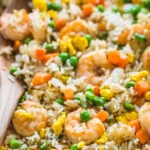
Quick and Savory Shrimp Fried Rice
- Total Time: 30 minutes
- Yield: 6 servings 1x
- Diet: General
Description
Shrimp Fried Rice is one of my go-to 30-minute, one-pot dinners, and my family can’t get enough of it. Shrimp and Rice is the best way to use leftover white rice and whatever vegetables you have on hand. Take out just doesn’t compare!
Ingredients
- 1 lb 26-30 count uncooked shrimp (peeled and deveined)
- 1 tsp corn starch
- 1/4 tsp sea salt
- 1/4 tsp freshly ground black pepper
- 3 Tbsp LIGHT olive oil, or canola
- 4 large eggs (beaten)
- 1/4 cup green onion (finely chopped)
- 5 cups leftover chilled white rice
- 12 oz frozen carrots and peas (thawed)
- 2 Tbsp soy sauce or coconut aminos
- 1 1/2 tsp sesame oil
Instructions
- Marinate shrimp: In a medium bowl, mix the shrimp, cornstarch, salt, and pepper. Let marinate at room temperature for 10 minutes.
- Cook the shrimp: Heat a large non-stick skillet on medium/high heat. When a bead of water sizzles and evaporates, swirl in 2 Tbsp of cooking oil and add shrimp to the hot skillet and spread them out in a single layer. Cook 1 minute per side, or until cooked through and opaque. Remove to a bowl.
- Add beaten egg: Over medium heat, add beaten eggs to the same skillet. Break up the eggs with a spatula and cook until no longer runny. Remove to a bowl.
- Cook green onion: Wipe down the skillet with a paper towel and return to medium/high heat. Add 1 Tbsp oil and onions, and cook green onions until fragrant, 30 seconds.
- Spread rice: Stir in rice, then spread it evenly over the pan and cook for 1 to 2 minutes without disturbing it, then stir and sauté another 1 to 2 minutes. Rice should sizzle.
- Add sauces and veggies: Drizzle 2 Tbsp soy sauce (or add to taste) over rice and stir well. Add sesame oil and thawed vegetables and mix well.
- Final Mix: Add cooked shrimp and cooked eggs back to the pan and mix well. Continue to cook until the rice is hot and sizzles, stirring frequently. Add more soy sauce to taste, if desired.
Notes
To cook rice for fried rice: rinse until the water runs clear, cook rice on the stovetop, then cool to room temperature. Spread it into a casserole dish or baking sheet to cool faster then cover and refrigerate until chilled. Storage and Reheating: Cool the fried rice by spreading it into a shallow container and refrigerating it uncovered until cool. Cover and store in the fridge for up to 4 days or in the freezer for up to 3 months. To reheat, thaw in the fridge overnight, or heat from frozen in a covered saucepan over medium heat. Stir until heated through (165°F). You can also microwave a thawed portion for 30-second intervals (stirring between intervals) until the food registers 165°F.
- Prep Time: 15 minutes
- Cook Time: 15 minutes
- Category: Dinner
- Method: Stir-frying
- Cuisine: Chinese
Nutrition
- Serving Size: 1 serving
- Calories: 396 kcal
- Sugar: 4 g
- Sodium: 1108 mg
- Fat: 12 g
- Saturated Fat: 2 g
- Unsaturated Fat: 10 g
- Trans Fat: 0 g
- Carbohydrates: 44 g
- Fiber: 2 g
- Protein: 25 g
- Cholesterol: 299 mg
Keywords: shrimp and rice, shrimp fried rice, shrimp fried rice recipe