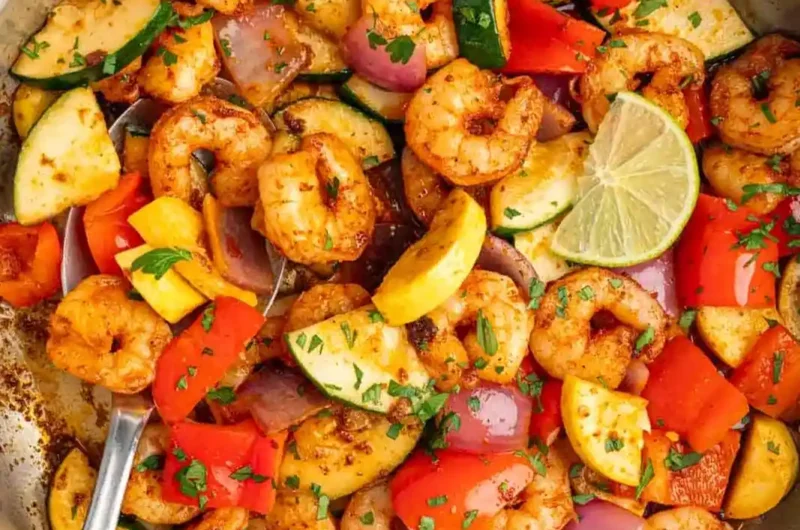
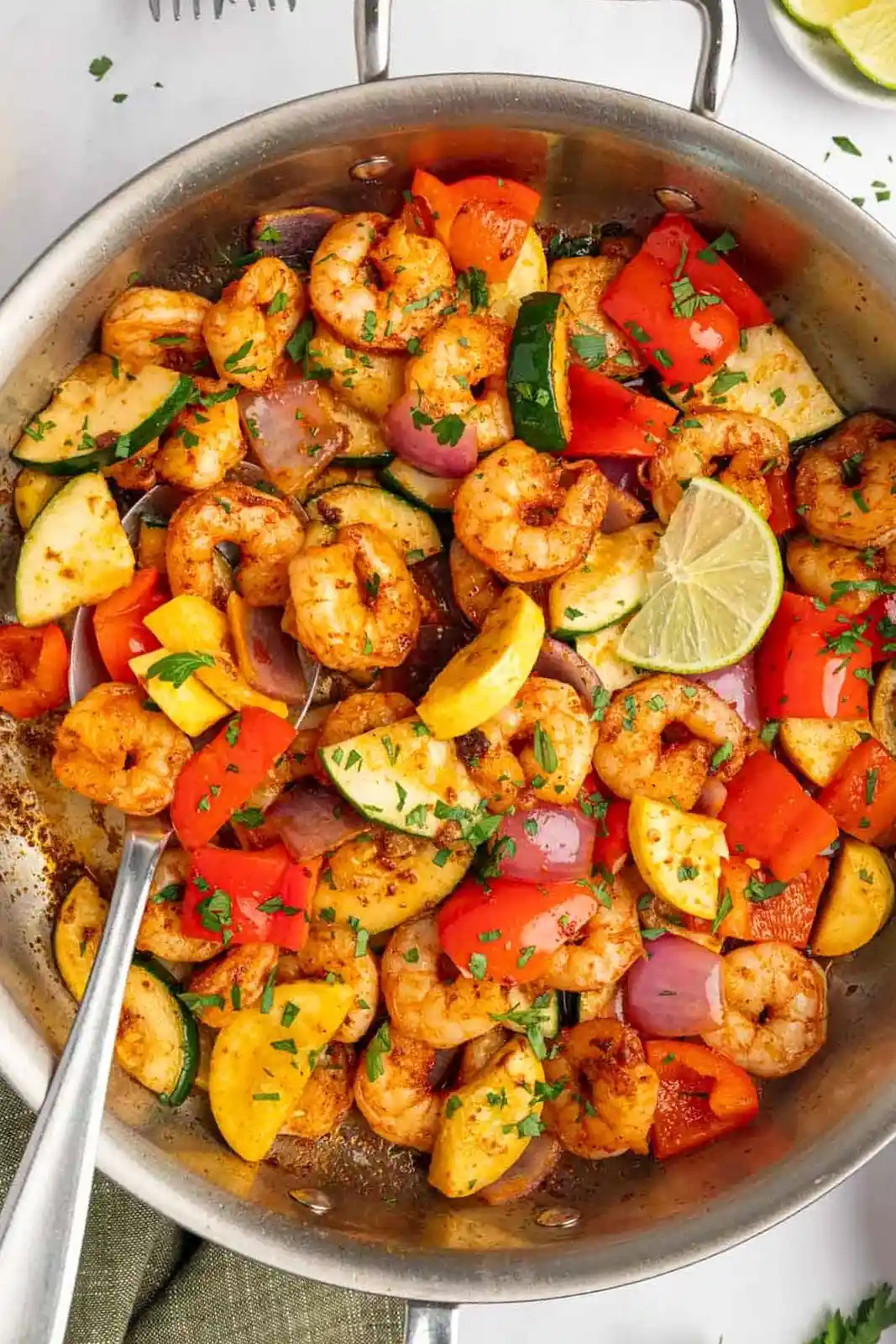
This shrimp and vegetable skillet is a nutritious, low-carb meal that prepares in under 30 minutes. It combines tender shrimp with a vibrant mix of summer squash and peppers for a fast weeknight dinner.
List of ingredients
- 2 lbs. large shrimp (raw, deveined and tail off) – ensures quick and even cooking.
- 1 tbsp. olive oil (light tasting) – used for the shrimp marinade.
- Chopped parsley (optional) – for a fresh garnish.
- 3 tbsps. lime juice – provides acidity to the marinade.
- 1 tsp. salt – enhances all natural flavors.
- 2 tsps. fresh ground black pepper – adds a subtle spicy heat.
- 1 tbsp. chili seasoning (spice blend) – provides deep, savory flavor.
- 1 tsp. paprika – adds color and a mild sweetness.
- ½ tsp. cumin – adds earthy warmth.
- 2 cloves fresh garlic (minced) – provides a sharp aromatic base.
- 1 tbsp. olive oil (light tasting) – used for sautéing the vegetables.
- 1 small purple onion (diced) – adds color and a mild tang.
- 1 large zucchini (halved and sliced) – adds bulk and nutrients.
- 1 large yellow squash (halved and sliced) – complements the zucchini texture.
- 1 large red bell pepper (cubed) – provides sweetness and crunch.
- 1 tbsp. olive oil (light tasting) – used for sautéing the shrimp.
step-by-step instructions
- Marinate the Shrimp: Pat the shrimp dry with paper towels and place them in a mixing bowl. Add the marinade ingredients and mix well to coat the shrimp thoroughly, then set aside.
- Prepare the Vegetables: Wash and dry the purple onion, zucchini, yellow squash, and red bell pepper. Chop or cube them into uniform pieces and set them aside for cooking.
- Sauté the Vegetables: Heat one tablespoon of olive oil in a large non-stick skillet over medium-high heat. Sauté the diced vegetables until they are tender and have developed a golden color, then remove them from the pan and set them aside in a bowl.
- Cook the Shrimp: In the same skillet, add another tablespoon of olive oil. Sauté the marinated shrimp for about 6-8 minutes, flipping them halfway through, until they are fully cooked through.
- Combine and Finish: Return the cooked vegetables back into the skillet with the shrimp. Sauté everything together for another 1-2 minutes to blend the flavors.
- Garnish and Serve: Remove the skillet from the heat. Serve immediately and garnish with fresh chopped parsley if desired.
Pro Cooking Techniques
Patting Shrimp Dry for a Better Sear
Always use paper towels to remove excess moisture from the surface of raw shrimp before marinating. When shrimp are wet, they release water into the pan, which leads to steaming rather than searing. A dry surface allows the shrimp to brown quickly and develop a better crust.
Managing Pan Temperature
Use a medium-high heat setting to ensure the olive oil reaches its shimmering point before adding ingredients. If the pan is too cool, the vegetables will release their juices and become mushy instead of golden. If it is too hot, the garlic in the shrimp marinade may burn and become bitter.
Preventing Rubber-Like Texture
Shrimp cook very quickly and can easily become overdone. Monitor the shrimp closely and remove them from the heat as soon as they turn opaque and pink. Overcooking causes the protein fibers to tighten, resulting in a rubbery and chewy consistency.
Ensuring Uniform Vegetable Cuts
Cut the zucchini, squash, and bell peppers into similar sizes to ensure they cook at the same rate. If some pieces are significantly larger than others, the smaller pieces will overcook before the larger ones are tender. This consistency maintains the ideal tender-crisp texture.
Ingredient Alternatives
Switching the Protein Source
If you prefer a different protein, chicken breast can be used as a substitute. Cut the chicken into small, bite-sized cubes and increase the cooking time to ensure it reaches an internal temperature of 165 degrees Fahrenheit. Tofu can be used for a plant-based version, provided it is pressed firmly to remove excess water.
Using Different Seasonal Vegetables
You can adapt this recipe based on what is in season by using broccoli florets, asparagus tips, or sliced mushrooms. Broccoli and asparagus may require an extra minute of sautéing compared to squash. Mushrooms should be sautéed first as they release more moisture into the pan.
Adjusting the Spice Profile
For a different flavor direction, replace the chili seasoning and cumin with Cajun seasoning for a Louisiana style. Alternatively, use a blend of dried oregano, basil, and a pinch of red pepper flakes for an Italian-inspired profile. Always adjust the salt levels when using pre-mixed seasoning blends.
Serving Suggestions
Pairing with Grains and Quinoa
Serve the shrimp and vegetable mixture over a bed of fluffy white rice or quinoa. These grains absorb the leftover pan juices and marinade, making the meal more filling. Quinoa is an excellent choice for those looking to increase the protein and fiber content of the dish.
Combining with Pasta
Toss the cooked skillet ingredients with cooked linguine, penne, or farfalle pasta. Adding a small splash of extra olive oil or a squeeze of fresh lemon juice helps the vegetables and shrimp adhere to the noodles. This transforms the low-carb skillet into a hearty pasta dish.
Serving with Fresh Side Salads
A simple green salad with a light vinaigrette provides a refreshing contrast to the savory sautéed vegetables. Use mixed baby greens, cucumber slices, and a dressing made of olive oil and apple cider vinegar. This keeps the overall meal light and nutrient-dense.
Storage and Maintenance
Refrigeration Guidelines
Store any leftover shrimp and vegetables in an airtight glass or plastic container in the refrigerator. This dish will remain fresh and safe to eat for up to two days. Ensure the food has cooled slightly before sealing the lid to prevent excessive condensation.
Optimal Reheating Methods
The best way to reheat this dish is in a skillet over medium heat until warmed through. Avoid using a microwave, as the intense, uneven heat can make the shrimp rubbery and the vegetables mushy. Adding a teaspoon of water or olive oil can help restore moisture during reheating.
Make-Ahead Preparation
While the dish is best served fresh, you can prep the components in advance. Dice the vegetables and store them in a sealed container and mince the garlic. You can also marinate the shrimp up to a few hours ahead of time, though marinating for too long in lime juice can change the texture of the seafood.
Frequently Asked Questions
How do I know when shrimp is fully cooked?
Shrimp are done when they change from a translucent gray to an opaque pink color. They should also curl into a ‘C’ shape; if they curl tightly into an ‘O’ shape, they are likely overcooked.
Are shrimp different from prawns?
While often used interchangeably, shrimp and prawns have different anatomical structures. Prawns generally have a different gill structure and a different arrangement of legs, and they are often larger in size, though the taste is very similar.
Are shrimp considered fish?
No, shrimp are not fish but are categorized as shellfish. Specifically, they are crustaceans, meaning they are invertebrates with an exoskeleton rather than an internal bony skeleton.
Should I use fresh or frozen raw shrimp?
Both work well, but frozen raw shrimp are often more convenient and can be just as fresh as those bought at a counter. Ensure frozen shrimp are fully thawed and patted dry before cooking to avoid watering down the skillet.
Can I use a different type of oil?
Olive oil is recommended for its flavor and health benefits, but avocado oil is a great substitute due to its higher smoke point. Avoid using butter for the initial high-heat sauté as it can burn more quickly than oil.
Print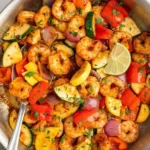
Shrimp and Vegetable Skillet
- Total Time: 20 minutes
- Yield: 4 servings 1x
- Diet: Low Carb
Description
This Shrimp and Vegetable Skillet is a quick and healthy dinner or lunch recipe! It’s super low in carbs and loaded with delicious veggies.
Ingredients
- 2 lbs. large shrimp (raw, deveined and tail off)
- 1 tbsp. olive oil
- Chopped parsley (optional for garnishing)
- 3 tbsps. lime juice
- 1 tsp. salt
- 2 tsps. fresh ground black pepper
- 1 tbsp. chili seasoning
- 1 tsp. paprika
- ½ tsp. cumin
- 2 cloves fresh garlic, minced
- 1 tbsp. olive oil
- 1 small purple onion, diced
- 1 large zucchini, halved and sliced
- 1 large yellow squash, halved and sliced
- 1 large red bell pepper, cubed
- 1 tbsp. olive oil
Instructions
- Marinate: Pat the shrimp dry with paper towel and place into a bowl. Add in the marinade ingredients and mix well to coat the shrimp. Set aside.
- Prepare Veggies: To prepare the veggies, wash and dry them well. Chop/cube them and set aside.
- Sauté Veggies: In a large non stick skillet, add one tablespoon of olive oil and bring to medium/high heat. Sauté the veggies until they are tender and obtain a golden color. Remove and set aside in a bowl.
- Sauté Shrimp: In the same skillet, sauté the shrimp with 1 tbsp. of olive oil until they are fully cooked through. This takes about 6-8 minutes, flipping the shrimp pieces over half way through.
- Combine: Return the cooked veggies back into the skillet and sauté with the shrimp for another 1-2 minutes.
- Serve: Remove from heat and serve. Garnish with fresh chopped parsley if you like.
Notes
Use frozen raw shrimp instead of frozen cooked shrimp for a less chewy texture. Use large or jumbo size shrimp for the most flavor. Always use fresh vegetables for best results. Marinate the shrimp for up to 30 minutes if time permits.
- Prep Time: 10 minutes
- Cook Time: 10 minutes
- Category: Main Dish
- Method: Sautéing
- Cuisine: American
Nutrition
- Serving Size: 1 serving
- Calories: 333 kcal
- Sugar: 4.3 g
- Sodium: 913.8 mg
- Fat: 12.3 g
- Saturated Fat: 2.8 g
- Unsaturated Fat: 9.5 g
- Trans Fat: 0 g
- Carbohydrates: 11.1 g
- Fiber: 2 g
- Protein: 47.3 g
- Cholesterol: 180 mg
Keywords: shrimp, vegetable skillet, low carb, healthy dinner, quick meal, seafood