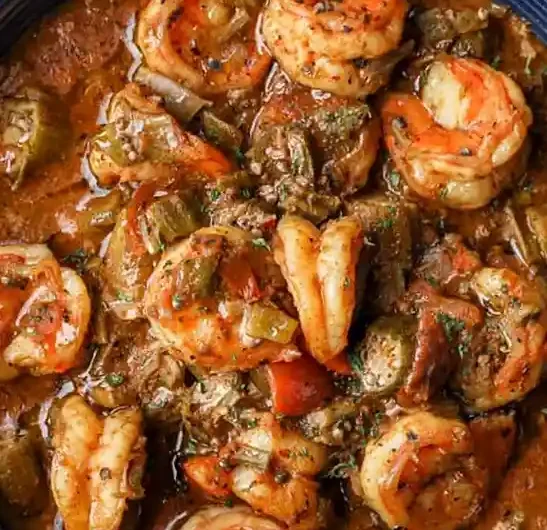
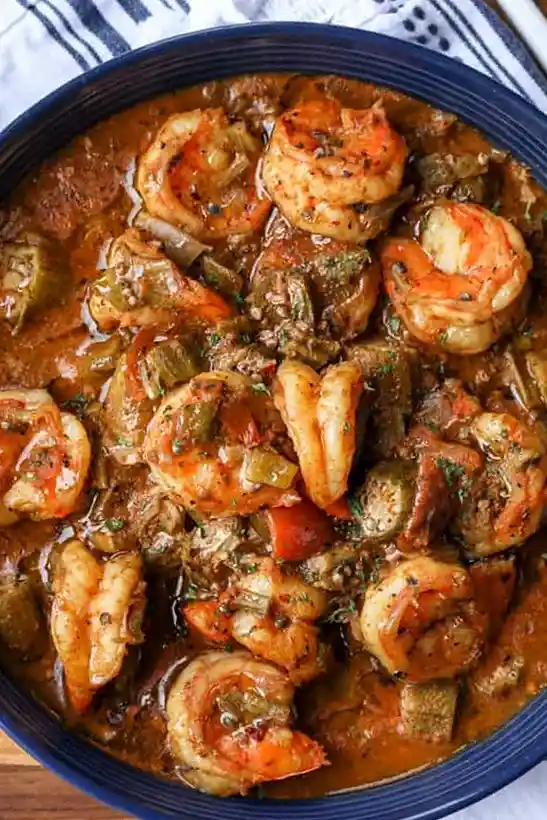
This smothered okra with shrimp is a bold, hearty dish featuring classic Southern flavors and a thick, savory sauce. It is a versatile meal that pairs perfectly with steamed rice or cornmeal for a filling dinner.
List of ingredients
- 1 Lb. Fresh-Cut Okra – sliced into bite-size pieces.
- 5 Vine Tomatoes or Roma Tomatoes – 2 extra large tomatoes can be used as a substitute.
- 2 Lbs. Colossal Raw Shrimp – peeled and deveined.
- 1 Tbsp. Garlic Paste – or 4 minced garlic cloves.
- 1/2 Cup Roughly Chopped Onions – used for the aromatic base.
- 1 tsp. Kosher Salt – for seasoning.
- 1/2 tsp. Coarse Black Pepper – for seasoning.
- 2 Tbsp. Extra Virgin Olive Oil – for searing shrimp.
- 2 Tbsp. Tomato Paste – to thicken and enrich the sauce.
- 2 Tbsp. Cajun Seasoning – provides the primary flavor profile.
- 2 Cups Water or Vegetable Broth – used as the cooking liquid.
- 1 tsp. Ground Ginger – adds a subtle warmth.
- 1 tsp. Cumin – adds earthy notes.
- 1 tsp. Red Pepper Flakes – optional, for extra heat.
- 1 tsp. Dried Basil – for herbal depth.
- 1 tsp. Dried Parsley – for herbal depth.
- 3 Bay Leaves – added for aromatic complexity.
step-by-step instructions
- Prepare the components: Slice the okra into bite-sized pieces, wash, drain, and set aside. Cut the tomatoes into pieces. Peel, devein, and wash the raw shrimp. Prepare the garlic by mincing cloves or using garlic paste. Roughly chop the onions.
- Sear the shrimp: Season the raw shrimp with salt and pepper, mixing well. Heat 2 tablespoons of extra virgin olive oil in a large saucepan over medium-high heat. Once the oil is hot, add the shrimp and cook for approximately 6 minutes total, or until they turn lightly pink. Remove the shrimp from the pan and set them aside.
- Sauté the base: In the same saucepan, add the sliced okra and chopped onions. Cover the pan and cook for 20 minutes, stirring occasionally to ensure even cooking.
- Build the sauce: Add the cut tomatoes to the pan and mix well. Stir in the tomato paste, Cajun seasoning, garlic, ground ginger, cumin, red pepper flakes, dried basil, dried parsley, and the water or broth. Stir the mixture thoroughly to combine all ingredients.
- Slow cook: Add the bay leaves to the sauce. Reduce the heat to medium-low, cover the pan, and cook for 45 minutes. Stir occasionally to prevent the ingredients from sticking to the bottom of the pan.
- Final assembly: Add the previously seared shrimp back into the saucepan. Continue to cook everything together for another 10 to 15 minutes. Serve the dish warm over a bed of rice.
Guidelines for Selecting the Best Produce
Choosing the Right Okra Pods
When shopping for okra, look for pods that are bright green and firm to the touch. Ideally, choose pods that are under 3 inches long, as larger pods tend to be more fibrous and woody. Avoid any pods that have brown spots or feel soft, as these are past their prime.
Selecting the Ideal Tomatoes
Roma or vine tomatoes are recommended because they have a lower water content and a meatier texture. This helps the sauce thicken naturally without becoming too watery. If using extra-large tomatoes, ensure they are ripe and fragrant to provide a balanced acidity to the dish.
Buying Quality Shrimp
Colossal raw shrimp are preferred for this recipe because their size allows them to withstand the final simmer without shriveling. Ensure the shrimp are peeled and deveined to maintain a clean texture. If using frozen shrimp, thaw them completely in the refrigerator before seasoning to avoid excess moisture in the pan.
Techniques for Managing Okra Texture
Reducing Mucilage and Sliminess
To minimize the slimy texture of okra, avoid cutting the pods into too many small pieces, or consider cooking them whole. Slicing the okra releases the mucilage, which acts as a natural thickener but can be off-putting to some. Cooking the pods for longer periods over medium-low heat also helps break down the slime.
Using Acid to Cut Through Slime
Adding an acidic component, such as tomatoes or a splash of vinegar, helps neutralize the mucilage. The acidity in the Roma tomatoes used in this recipe works to break down the slime while adding a bright flavor profile. For an extra precaution, soaking sliced okra in vinegar for 30 minutes and rinsing it before cooking can further reduce sliminess.
Controlling Heat for Better Consistency
Cooking the okra on medium-to-medium-low heat ensures that the vegetables soften gradually. High heat can cause the okra to release its moisture too quickly, potentially increasing the sliminess. A slow, steady simmer allows the sauce to emulsify and thicken correctly.
Customizing the Flavor Profile
Adjusting the Heat Levels
The heat in this dish comes primarily from the Cajun seasoning and red pepper flakes. If you prefer a milder flavor, reduce the Cajun seasoning to one tablespoon and omit the red pepper flakes entirely. For those who enjoy a spicier kick, add a pinch of cayenne pepper during the sauce-building step.
Substituting the Protein
While shrimp is the traditional choice, this dish can be adapted for different dietary preferences. Shiitake mushroom caps are an excellent substitute for shrimp due to their hearty, chewy texture. Simply sauté the mushrooms in the same manner as the shrimp before adding them back to the finished sauce.
Enhancing the Herbal Notes
The combination of basil and parsley provides a classic aromatic base. You can enhance this by adding a teaspoon of dried thyme or oregano. If you have access to fresh herbs, stir in chopped fresh parsley and basil during the last 5 minutes of cooking for a brighter, more vibrant taste.
Serving and Pairing Recommendations
Optimal Rice Pairings
This dish is best served over a bed of white rice, but other varieties work well. Ghanaian Jollof rice adds an extra layer of spice and color, while dill rice provides a refreshing contrast. For a more traditional Southern approach, serve the smothered okra alongside cornmeal or white grits.
Complementary Side Dishes
To make this a complete meal, pair the shrimp and okra with homemade gluten-free biscuits or drop biscuits. A side of red beans and rice also complements the Cajun flavors. A simple green salad with a lemon vinaigrette can help cut through the richness of the smothered sauce.
Plating for Presentation
For the best presentation, scoop a generous portion of rice into a wide bowl and ladle the smothered okra and shrimp over the top. Garnish with a sprinkle of fresh parsley or sliced green onions to add a pop of color and a fresh onion flavor to the finished plate.
Storage and Reheating Advice
Refrigeration and Shelf Life
Store any leftover smothered okra and shrimp in an airtight container in the refrigerator. The dish will remain fresh and flavorful for up to three days. Ensure the container is fully sealed to prevent the shrimp from absorbing other odors in the fridge.
The Best Way to Reheat
Reheat the dish on the stove over medium-low heat to maintain the texture of the shrimp. Add a small splash of water or vegetable broth to the pan to loosen the sauce, as it will likely thicken further during refrigeration. Stir gently to avoid breaking the okra pieces.
Avoiding Overcooked Shrimp during Reheating
When reheating, be careful not to boil the sauce vigorously, as this can cause the shrimp to become rubbery. Heat the mixture only until it is warmed through. If using a microwave, use medium power and stir every minute to ensure even heating.
Troubleshooting Common Issues
Preventing the Sauce from Burning
Because of the tomato paste and spices, the sauce can stick to the bottom of the pan. To prevent scorching, stir the mixture occasionally during the 45-minute simmer. Using a heavy-bottomed saucepan or a cast iron skillet helps distribute heat more evenly and reduces hot spots.
Managing Sauce Thickness
If you prefer a drier texture, leave the saucepan uncovered during the simmering process to allow the liquid to evaporate. Conversely, if the sauce becomes too thick, stir in an additional half-cup of water or broth. The goal is a thick, gravy-like consistency that coats the vegetables.
Fixing Underdone Okra
If the okra still feels too firm or slimy after the initial simmer, extend the cooking time by another 15 to 20 minutes on low heat. The longer the okra cooks, the softer it becomes and the less mucilage remains. Ensure the lid is on to keep the moisture levels stable.
Frequently Asked Questions
How do you smother okra down?
Smothering okra involves cooking it slowly in a heavy saucepan or cast iron skillet over medium-low heat. The process typically takes at least 45 minutes, allowing the vegetables to soften and the sauce to reduce to a thick, rich consistency.
How do you smother okra on the stove?
To smother okra on the stove, sauté the okra and onions first, then add liquids and seasonings. Cover the pan and simmer on low heat, stirring occasionally until the vegetables are tender and the liquid has reduced into a thick sauce.
Do you cut the top off okra before cooking?
Yes, it is recommended to cut off the stem end (the top) of the okra before cooking. This removes the tough part of the pod and allows the seasonings to penetrate the vegetable more effectively, improving the overall dining experience.
Can I use frozen okra instead of fresh?
Yes, frozen okra can be used, but it contains more water than fresh pods. To prevent the sauce from becoming too thin, allow the frozen okra to thaw completely and squeeze out as much excess liquid as possible before adding it to the pan.
What is the best way to avoid slimy okra?
The best ways to avoid sliminess are cooking the okra whole, using an acidic ingredient like tomatoes or vinegar, and ensuring the dish simmers for a sufficient amount of time. Avoiding over-stirring the okra also prevents the release of too much mucilage.
Print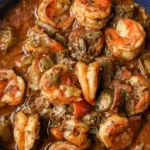
Southern Style Smothered Okra with Shrimp
- Total Time: 90 minutes
- Yield: 8 servings 1x
- Diet: Seafood
Description
Learn how to make the best smothered okra with tomatoes and shrimp on the stove without being slimy.
Ingredients
- 1 Lb. Fresh-Cut Okra
- 5 Vine Tomatoes or Roma Tomatoes
- 2 Lbs. Colossal Raw Shrimp, peeled and deveined
- 1 Tbsp. Garlic Paste
- ½ Cup Roughly Chopped Onions
- 1 tsp. Kosher Salt
- 1/2 tsp. Course Black Pepper
- 2 Tbsp. Extra Virgin Olive Oil
- 2 Tbsp. Tomato Paste
- 2 Tbsp. Cajun Seasoning
- 2 Cups Water or vegetable broth
- 1 tsp. Ground Ginger
- 1 tsp. Cumin
- 1 tsp. Red Pepper Flakes
- 1 tsp. Dried Basil
- 1 tsp. Dried Parsley
- 3 Bay Leaves
Instructions
- Step: Slice the okra into bite-size pieces, wash, drain, and set aside. Cut the tomatoes, peel and devein the shrimp, prepare the garlic paste, and roughly chop the onions.
- Step: Season the shrimp with salt and pepper. In a large saucepan over medium-high heat, add olive oil. Cook the shrimp for about 6 minutes or until lightly pink, then remove and set aside.
- Step: In the same saucepan, add okra and onions. Cover and cook for 20 minutes, stirring occasionally.
- Step: Add tomatoes, tomato paste, Cajun Seasoning, garlic, ground ginger, cumin, red pepper flakes, basil, parsley, and water. Stir to combine and add bay leaves.
- Step: Reduce heat to medium-low, cover, and cook for 45 minutes, stirring occasionally to prevent sticking.
- Step: Add the cooked shrimp back into the pan and continue to cook for 10-15 minutes. Serve warm with rice.
Notes
Leaving the saucepan uncovered will help the liquid evaporate for a drier texture. The longer the okra cooks, the less slimy it will be.
- Prep Time: 30 minutes
- Cook Time: 60 minutes
- Category: Dinner
- Method: Stove-top
- Cuisine: American
Nutrition
- Serving Size: 1 serving
- Calories: 312 kcal
- Sugar: 25 g
- Sodium: 1344 mg
- Fat: 6 g
- Saturated Fat: 1 g
- Unsaturated Fat: 5 g
- Trans Fat: 0 g
- Carbohydrates: 30 g
- Fiber: 9 g
- Protein: 28 g
- Cholesterol: 221 mg
Keywords: smothered okra, shrimp, Cajun, Southern style, okra and tomatoes