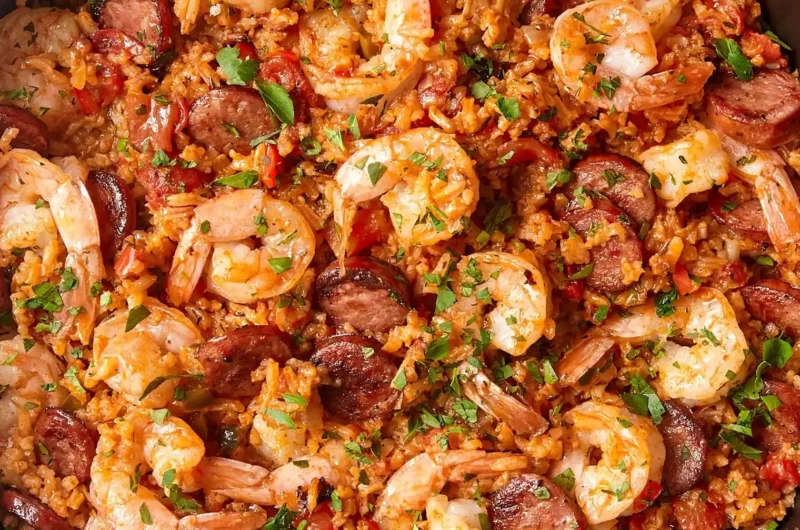
This hearty one-pot meal combines savory smoked sausage, tender shrimp, and aromatic vegetables for a satisfying dinner. It is designed for efficiency, bringing together bold flavors in under 45 minutes.
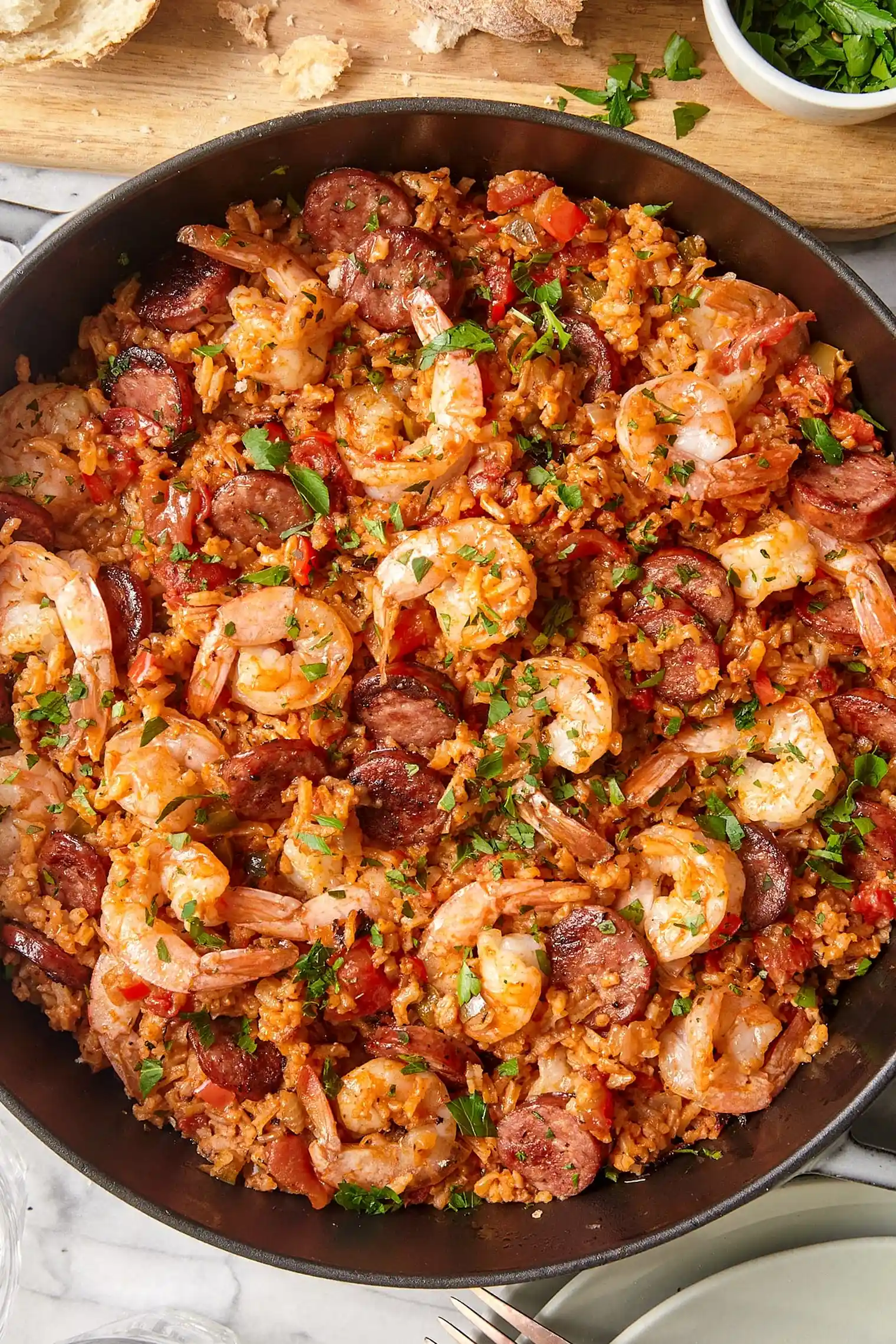
List of ingredients
- 1 1/2 tablespoons vegetable oil – used for searing the proteins and aromatics.
- 1 (12.8-ounce) package smoked beef or chicken sausage, thinly sliced – provides a smoky, salty base.
- 1 small sweet onion, diced – adds a mild sweetness to the sauce.
- 1 red bell pepper, diced – contributes color and a slight crunch.
- 1 green bell pepper, diced – adds an earthy flavor profile.
- 1 1/2 cups basmati rice – cooks quickly and remains fluffy.
- 4 cloves garlic, minced – essential for aromatic depth.
- 1 1/2 teaspoons sweet paprika – gives the dish its characteristic color and sweetness.
- 1 1/2 teaspoons dried oregano – provides an herbal balance.
- 1 teaspoon onion powder – enhances the overall savory notes.
- 1 teaspoon dried thyme – adds a subtle woodsy flavor.
- 1 bay leaf – infuses the rice with a deep aroma during simmering.
- Kosher salt and freshly ground black pepper, to taste – used for seasoning throughout.
- 3 1/2 cups chicken stock – the primary liquid for cooking the rice.
- 1 (14.5-ounce) can petite diced tomatoes – adds acidity and texture.
- 1 1/2 tablespoons tomato paste – thickens the sauce and intensifies the tomato flavor.
- 1 teaspoon hot sauce – adds a customizable kick of heat.
- 1 1/2 pounds medium shrimp, peeled and deveined – the main protein source.
- 2 tablespoons chopped fresh parsley leaves – used for a bright, fresh finish.
step-by-step instructions
- Sauté the Base: Heat vegetable oil in a large stockpot or Dutch oven over medium heat. Add the sliced sausage, diced onion, and bell peppers, cooking and stirring occasionally until the vegetables are tender, about 4-5 minutes.
- Toast Rice and Spices: Stir in the basmati rice, minced garlic, paprika, oregano, onion powder, thyme, and the bay leaf. Cook for 1-2 minutes until fragrant, then season with salt and pepper to taste.
- Simmer the Liquid: Stir in the chicken stock, diced tomatoes, tomato paste, and hot sauce. Bring the mixture to a boil, then cover the pot, reduce the heat, and simmer for about 15 minutes until the flavors blend.
- Cook the Shrimp: Stir in the shrimp and season with salt and pepper. Cover the pot again and cook for about 5 minutes, or until the shrimp are pink and cooked through and the rice is tender.
- Final Touch: Stir in the fresh parsley leaves to add a pop of color and freshness.
- Serve: Dish out the jambalaya immediately while hot.
Pro Techniques for Maximum Flavor
Use a Heavy-Bottomed Dutch Oven
A cast-iron Dutch oven is ideal because it distributes heat evenly across the bottom of the pot. This prevents the rice from scorching in one area while remaining undercooked in others. It also helps maintain a consistent simmer during the 15-minute reduction phase.
Developing the Fond
When browning the sausage and vegetables, allow some brown bits to stick to the bottom of the pot. This caramelized layer, known as fond, is full of concentrated flavor. When you add the chicken stock, these bits dissolve and enrich the entire dish.
Properly Toasting the Rice
Sautéing the rice with the garlic and spices before adding liquid allows the grains to absorb the fat and aromatics. This process prevents the rice from becoming overly mushy. It also creates a nuttier flavor profile that complements the smoked sausage.
Managing Starch and Stirring
Avoid stirring the pot too frequently once the liquid has been added and the lid is closed. Over-stirring releases excess starch from the basmati rice, which can lead to a gummy or sticky texture. Let the rice simmer undisturbed to achieve distinct, fluffy grains.
Ingredient Modifications and Substitutions
Alternative Smoked Sausage Options
While smoked beef or chicken sausage is recommended, you can use turkey sausage for a leaner option. Ensure the sausage is pre-cooked and smoked to maintain the traditional flavor profile. Avoid fresh sausages that require long cooking times, as they may not brown quickly enough.
Swapping the Main Protein
If you prefer not to use shrimp, diced chicken breast or thighs are excellent substitutes. If using chicken, add it at the same time as the sausage to ensure it is fully cooked. For a plant-based version, replace shrimp with chickpeas or extra firm tofu cubes.
Adding Extra Vegetable Variety
To increase the nutritional value, consider adding diced celery to complete the Cajun ‘holy trinity’ of onion, celery, and pepper. Frozen corn kernels or sliced okra can also be stirred in during the simmering stage. These additions provide extra texture and sweetness.
Adjusting the Heat Level
Depending on the brand of hot sauce used, the heat level will vary significantly. For a milder dish, omit the hot sauce and use a pinch of cayenne pepper. For more intensity, add a dash of crushed red pepper flakes during the spice-toasting step.
Guide to Selecting the Best Shrimp
Wild Caught vs Farmed Shrimp
Wild caught shrimp generally offer a more intense, briny flavor compared to farmed varieties. They are often preferred in professional cooking for their cleaner taste. Both options work for this recipe, but wild caught usually provides a more premium experience.
Fresh vs Flash-Frozen Shrimp
Many ‘fresh’ shrimp at the store were previously frozen at sea. Flash-frozen shrimp are often fresher because they are processed immediately after catch. Frozen shrimp also provide more flexibility, allowing you to use only the exact amount needed for the recipe.
Safe and Fast Thawing Methods
The safest way to thaw shrimp is in the refrigerator overnight. For a faster method, place them in a colander and run cold water over them for 5-10 minutes. Always pat the shrimp dry with paper towels before adding them to the pot to ensure they sear rather than steam.
Preventing Rubbery Texture
Shrimp cook extremely quickly and can become tough and rubbery if overdone. Always add them at the very end of the cooking process. They only need about 5 minutes of covered heat to reach a perfect, opaque pink color.
Serving Suggestions and Pairings
Complementary Breads
Serve this jambalaya with crusty French bread or warm garlic toast to soak up the remaining sauce. Homemade cornbread is another classic pairing that balances the spicy and savory notes. The sweetness of cornbread contrasts well with the heat of the hot sauce.
Fresh Side Salads
A crisp, acidic salad can cut through the richness of the sausage and rice. Try a chopped Italian salad with a vinaigrette or a creamy coleslaw. The cold, crunchy texture of a salad provides a refreshing counterpoint to the hot jambalaya.
Roasted Vegetable Sides
For a more complete meal, serve with garlic parmesan roasted broccoli or glazed carrots. These vegetables add color to the plate and provide a healthy balance to the protein-heavy main course. Roast them in the oven while the jambalaya is simmering.
Final Garnishing Ideas
Beyond the required parsley, sliced green onions provide a sharp, fresh bite. A wedge of fresh lemon on the side allows guests to add a squeeze of citrus, which brightens the seafood flavors. Extra dashes of hot sauce on the table allow for individual heat customization.
Storage and Reheating Instructions
Refrigeration Timeline
Store leftover jambalaya in an airtight container in the refrigerator for 3 to 4 days. Because it contains seafood and dairy-free stock, it is important to cool it down quickly before sealing. The flavors often intensify overnight, making leftovers taste even better.
Preventing Dryness During Storage
Rice tends to absorb moisture over time, which can make the jambalaya feel dry in the fridge. To prevent this, ensure the container is truly airtight to lock in existing moisture. Do not freeze the dish for long periods, as the rice texture can degrade.
Reheating on the Stove
For the best results, reheat the jambalaya in a skillet over medium-low heat. Add a splash of water or chicken stock to loosen the rice and restore the sauce’s consistency. Cover the pan for a few minutes to steam the shrimp and rice back to tenderness.
Microwave Reheating Tips
When using a microwave, place the jambalaya in a microwave-safe bowl and add a teaspoon of water. Cover the bowl with a damp paper towel to trap the steam. Heat in short intervals, stirring in between, to avoid creating hard, overcooked edges.
Advanced Preparation and Make-Ahead Tips
Pre-chopping Vegetable Kits
You can dice the onions and bell peppers up to 24 hours in advance. Store them together in a sealed container or freezer bag. This reduces the active prep time on the night of cooking to just a few minutes.
Measuring Spice Blends
Combine the paprika, oregano, onion powder, and thyme in a small ramekin before you start the stove. Having your dry seasonings ready prevents the garlic or rice from burning while you are searching for individual spice jars.
Cooking the Base Separately
If you are hosting a party, you can cook the jambalaya base (sausage, rice, and vegetables) a few hours early. Keep it warm on low heat, then stir in the raw shrimp just before serving. This ensures the shrimp are perfectly cooked for your guests.
Common Troubleshooting
Rice is Still Too Hard
If the rice hasn’t softened after the simmer time, add an extra 1/4 cup of chicken stock. Cover the pot tightly and simmer for another 5 minutes on low heat. The extra steam will help penetrate the center of the rice grains.
The Dish is Too Liquid
If there is too much liquid remaining after the simmering phase, remove the lid and increase the heat slightly. Simmer uncovered for 3-5 minutes to allow the excess moisture to evaporate. This will thicken the sauce and concentrate the flavor.
Lack of Bold Flavor
If the dish tastes bland, increase the amount of salt or add another teaspoon of paprika. A small squeeze of lemon juice or an extra dash of hot sauce can also wake up the flavors. Ensure you used a high-quality chicken stock for the best depth.
Frequently Asked Questions
Can I use brown rice?
Yes, but brown rice requires more liquid and a longer cooking time. You will likely need to add an extra cup of stock and increase the simmering time from 15 minutes to about 40-45 minutes. Consider soaking the brown rice for 30 minutes beforehand.
Is this recipe freezer friendly?
While you can freeze jambalaya, the rice may become grainy upon thawing. To minimize this, freeze the dish in small portions. Thaw completely in the fridge before reheating slowly on the stove with extra liquid.
How do I make it vegetarian?
Replace the chicken stock with vegetable broth and use a plant-based smoked sausage. Instead of shrimp, use chickpeas or cauliflower florets. Ensure the plant-based sausage is well-browned to provide the necessary smoky flavor.
What is the difference between jambalaya and gumbo?
Jambalaya is a one-pot rice dish where the rice is cooked inside the pot with the proteins and vegetables. Gumbo is a thicker stew made with a roux and is served over a separate scoop of steamed rice.
Print
One-Pot Shrimp and Smoked Sausage Jambalaya
- Total Time: 45 minutes
- Yield: 6 servings 1x
- Diet: General
Description
Easy, no-fuss jambalaya packed with sausage, shrimp, vegetables, rice and Cajun seasoning made in less than 45 minutes! A weeknight favorite!
Ingredients
- 1 1/2 tablespoons vegetable oil
- 1 (12.8-ounce) package smoked turkey sausage (thinly sliced)
- 1 small sweet onion (diced)
- 1 red bell pepper (diced)
- 1 green bell pepper (diced)
- 1 1/2 cups basmati rice
- 4 cloves garlic (minced)
- 1 1/2 teaspoons sweet paprika
- 1 1/2 teaspoons dried oregano
- 1 teaspoon onion powder
- 1 teaspoon dried thyme
- 1 bay leaf
- Kosher salt and freshly ground black pepper (to taste)
- 3 1/2 cups chicken stock
- 1 (14.5-ounce) can petite diced tomatoes
- 1 1/2 tablespoons tomato paste
- 1 teaspoon hot sauce
- 1 1/2 pounds medium shrimp (peeled and deveined)
- 2 tablespoons chopped fresh parsley leaves
Instructions
- Step: Heat vegetable oil in a large stockpot or Dutch oven over medium heat. Add sausage, onion and bell peppers. Cook, stirring occasionally, until vegetables are tender, about 4-5 minutes.
- Step: Stir in rice, garlic, paprika, oregano, onion powder, thyme and bay leaf until fragrant, about 1-2 minutes; season with salt and pepper, to taste.
- Step: Stir in chicken stock, diced tomatoes, tomato paste and hot sauce. Bring to a boil; cover, reduce heat and simmer until reduced and flavors have blended, about 15 minutes.
- Step: Stir in shrimp; season with salt and pepper, to taste. Cook, covered, until pink and cooked through and rice is tender, about 5 minutes. Stir in parsley.
- Step: Serve immediately.
Notes
Use a heavy-bottomed Dutch oven for even heat distribution. Brown the turkey sausage first to create fond for extra flavor. Use high-quality, low-sodium chicken stock. Tomato paste adds body and richness. To avoid rubbery shrimp, add them at the very end of the cooking process. Avoid over-stirring to prevent the rice from becoming gummy.
- Prep Time: 15 minutes
- Cook Time: 30 minutes
- Category: Main Course
- Method: One Pan
- Cuisine: Cajun
Nutrition
- Serving Size: 1 serving
- Calories: 460 kcal
- Sugar: 7 g
- Sodium: 920 mg
- Fat: 16 g
- Saturated Fat: 5 g
- Unsaturated Fat: 11 g
- Trans Fat: 0 g
- Carbohydrates: 42 g
- Fiber: 4 g
- Protein: 34 g
- Cholesterol: 165 mg
Keywords: authentic jambalaya, sausage and shrimp jambalaya, seafood jambalaya, shrimp jambalaya