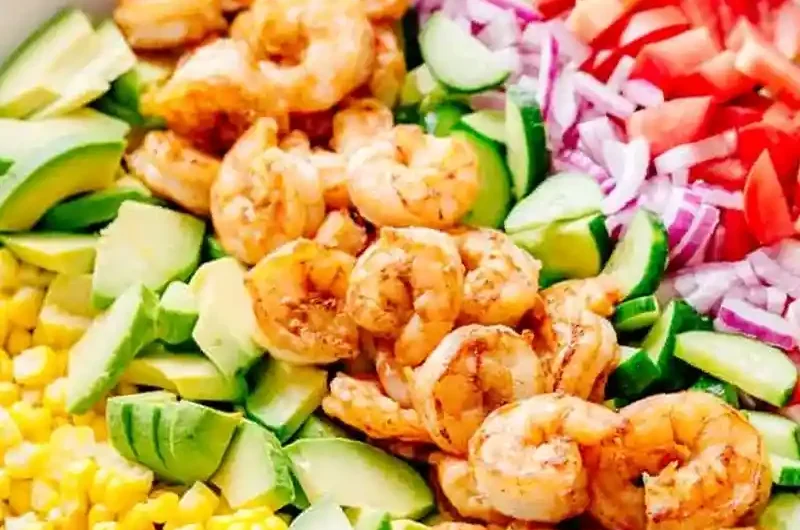
This refreshing shrimp avocado salad combines bold Cajun spices with crisp summer vegetables for a vibrant meal. It is a nutrient-dense dish that works perfectly as a light lunch or a sophisticated side for a dinner party.
List of ingredients
- 1/2 lb Roma tomatoes, chopped (3 to 4 medium) – adds a juicy sweetness.
- 1/2 English cucumber, sliced (or 3 smaller garden cucumbers) – provides a refreshing crunch.
- 1/2 medium red onion, thinly sliced – adds a sharp, zesty bite.
- 2 avocados, peeled, pitted and sliced – gives a creamy texture.
- 1 cup corn kernels (from 2 fresh cobs or canned drained) – adds pops of sweetness.
- 1 medium romaine lettuce (5 to 6 cups chopped) – creates a crisp base.
- 2 Tbsp unsalted butter – used for sautéing the shrimp.
- 1 lb large raw shrimp, peeled and deveined – the primary protein.
- 1 tsp cajun spice – provides a smoky and spicy flavor.
- 2 cloves garlic, pressed – adds aromatic depth to the shrimp.
- Pinch of salt – enhances the natural flavors.
- 3 Tbsp olive oil (mild or extra virgin) – the base of the dressing.
- Juice of 1 large lemon (about 3 Tbsp, or substitute lime juice) – provides bright acidity.
- 1/2 bunch cilantro (1/2 cup chopped) – adds a fresh, herbal finish.
- 1 tsp sea salt or 3/4 tsp table salt – for dressing seasoning.
- 1/8 tsp freshly ground black pepper – for a subtle kick.
step-by-step instructions
- Season the shrimp: Place the shrimp in a medium bowl, sprinkle with 1 tsp cajun spice, 2 pressed garlic cloves, and a pinch of salt. Stir well to ensure every shrimp is evenly coated in the spice mixture.
- Sauté the protein: Heat a large non-stick pan over medium-high heat and swirl in 2 Tbsp of butter. Once the butter stops sizzling, add the shrimp in a single layer and sauté for about 2 minutes without disturbing them. Flip the shrimp over and sauté for another minute or just until they are cooked through. Avoid overcooking to prevent a rubbery texture. Remove them to a plate and let them cool.
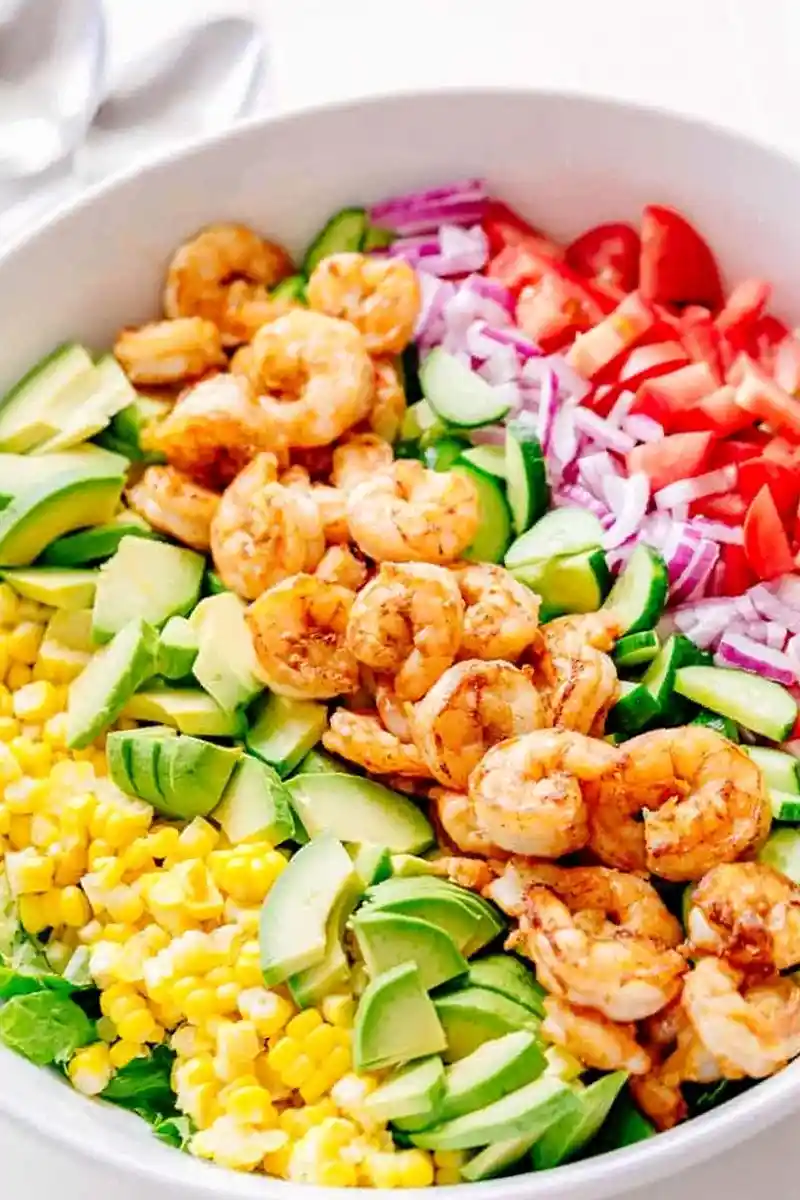
- Assemble the salad: Chop, rinse, and spin dry the romaine lettuce. Line the bottom of a large salad platter or bowl with 5 to 6 cups of chopped romaine. Arrange the remaining salad ingredients (tomatoes, cucumber, onion, corn, avocado) and the cooled shrimp in organized rows on top of the lettuce.
- Prepare and add dressing: In a small bowl, whisk together the olive oil, lemon juice, chopped cilantro, salt, and black pepper. Drizzle the dressing over the salad, toss gently to combine, and serve immediately.
Ingredient Selection and Preparation
Selecting Perfectly Ripe Avocados
Look for avocados that yield slightly to gentle pressure when squeezed in the palm of your hand. Avoid those with mushy spots or skin that is overly dark and shriveled. If the stem nub pops off easily and is green underneath, the avocado is usually ripe and ready for use.
Preparing English Cucumbers
English cucumbers are ideal because they have thinner skins and smaller seeds compared to standard garden cucumbers. Slice them into uniform half-moons to ensure that every bite has a balanced ratio of vegetables. If using garden cucumbers, peel them partially in strips for a decorative look.
Using Fresh Versus Canned Corn
Fresh corn kernels provide a sweet, juicy pop of flavor that elevates the entire salad. If you are using canned corn, be sure to drain and rinse it thoroughly to remove excess sodium and canning liquid. Grilled corn is another excellent alternative that adds a smoky depth to the dish.
Ensuring Crisp Romaine Lettuce
Romaine provides the necessary crunch to support the heavier ingredients like shrimp and avocado. Chop the lettuce into bite-sized pieces and rinse them under cold water to remove any grit. Use a salad spinner to dry the leaves completely, as moisture prevents the dressing from adhering.
Mastering the Shrimp Sauté
Achieving the Right Sear
When you add the shrimp to the hot butter, place them in a single layer without overcrowding the pan. Avoid stirring them immediately; let them sear for two full minutes to develop a golden-brown crust. This caramelization process adds a rich flavor that complements the Cajun spices.
Avoiding Rubbery Texture
Shrimp are lean proteins that can overcook in a matter of seconds. Remove them from the heat as soon as they turn opaque and curl into a ‘C’ shape. If they curl tightly into an ‘O’ shape, they are likely overcooked and will have a tough, rubbery texture.
Handling Garlic for Maximum Flavor
Pressing the garlic cloves creates a paste that adheres better to the shrimp than minced garlic. Mix the garlic and Cajun spices into the raw shrimp before they hit the pan to ensure an even coating. This method prevents the garlic from burning in the hot butter before the shrimp are fully cooked.
Controlling the Pan Temperature
Use a large non-stick pan over medium-high heat to ensure the butter is shimmering before adding the protein. If the heat is too low, the shrimp will release moisture and steam rather than sear. This results in a pale color and a loss of the desired charred flavor.
Dressing Enhancements and Substitutions
Swapping Lemon for Lime
Lime juice provides a zestier, more tropical flavor profile that pairs beautifully with corn and avocado. You can use an equal amount of lime juice to replace the lemon juice without altering the consistency. This is a great option for those wanting a more Mexican-inspired flavor palette.
Adjusting the Cilantro Intensity
Some people find the taste of cilantro to be overwhelming or soap-like due to genetics. If you prefer a milder flavor, you can substitute half of the cilantro with fresh flat-leaf parsley. This keeps the vibrant green color while softening the herbal punch of the dressing.
Choosing the Right Olive Oil
A mild olive oil is best if you want the lemon and cilantro to be the primary flavors. If you prefer a more robust taste, use a high-quality extra virgin olive oil for its peppery notes. Ensure the oil is stored in a cool, dark place to avoid rancidity.
Managing Salt Levels
Cajun spices vary significantly in salt content between different brands. Taste your shrimp first before adding the full amount of salt to the dressing. You can always add more salt at the end, but you cannot remove it once it is mixed in.
Creative Recipe Variations
Adding Extra Proteins
To transform this from a side dish into a hearty main course, consider adding grilled chicken breast or chickpeas. These additions provide extra satiety and blend seamlessly with the zesty dressing. Ensure additional proteins are seasoned similarly to the shrimp for flavor consistency.
Swapping the Lettuce Base
While romaine is the classic choice, baby spinach or an arugula mix can add a different nutritional profile and flavor. Arugula adds a peppery bite that contrasts well with the sweetness of the corn. Ensure any replacement greens are dried thoroughly to avoid a watery salad.
Incorporating Different Peppers
Sliced red bell peppers add a sweet crunch and a bright pop of color to the platter. For those who enjoy a bit of heat, finely diced jalapeños or serrano peppers can be mixed in. This adds a layer of spice that complements the Cajun shrimp.
Adding a Nutty Crunch
Toasted pumpkin seeds, sunflower seeds, or slivered almonds provide a contrasting texture to the soft avocado. Toast them in a dry pan for two minutes until fragrant before sprinkling them over the finished salad. This adds an earthy element that rounds out the flavor profile.
Serving and Presentation Tips
Plating for Visual Impact
Instead of tossing everything in a bowl immediately, arrange the ingredients in neat rows over the bed of romaine. Place the colorful tomatoes, cucumbers, corn, and avocado side by side for a professional look. This allows guests to see all the fresh components before the dressing is added.
Pairing with Grains
Serving this salad alongside a scoop of quinoa or brown rice turns it into a complete meal. The grains absorb the excess dressing and provide complex carbohydrates for lasting energy. You can even mix the grains directly into the salad for a bowl-style presentation.
Preparing as an Appetizer
For a party setting, scoop small amounts of the salad into Belgian endive leaves or hollowed-out cucumber slices. This creates a sophisticated, bite-sized appetizer that is easy for guests to eat while standing. It eliminates the need for forks and plates during a cocktail hour.
Coordinating Side Dishes
This salad pairs exceptionally well with other grilled seafood or a light garlic-infused bread. The bright acidity of the lemon dressing cuts through the richness of buttered bread or grilled fish. Keep the side dishes simple to let the vibrant salad remain the star of the meal.
Storage and Freshness Strategies
Preventing Avocado Oxidation
Avocados turn brown quickly when exposed to air due to an enzyme called polyphenol oxidase. To prevent this, toss the sliced avocado in a small amount of lemon juice or the prepared dressing immediately. This acidity creates a barrier that keeps the fruit looking bright green.
Separating Dressing from Greens
To maintain the structural integrity of the romaine, store the dressing in a separate airtight container. Dressing the salad too early causes the salt to draw water out of the lettuce, leading to wilting. Only drizzle the dressing on just before you intend to serve.
Storing Cooked Shrimp
Store the sautéed shrimp in a sealed glass container in the refrigerator for up to three days. If you are prepping the salad in advance, keep the shrimp separate from the raw vegetables. This prevents the flavors from bleeding and keeps the shrimp’s texture consistent.
Organizing Prepped Vegetables
Chop your cucumbers, tomatoes, and onions and store them in separate containers or compartments. When stored together, the salt and acidity from the tomatoes can cause the cucumbers to soften. Combining them at the last minute ensures maximum crispness.
Reheating and Temperature Guide
Serving the Shrimp Cold
Many people prefer this salad with chilled shrimp, which makes it an ideal dish for hot summer days. After sautéing, spread the shrimp on a plate and let them cool to room temperature before refrigerating. This prevents the shrimp from steaming the lettuce upon assembly.
Room Temperature Application
Serving the shrimp at room temperature allows the complex flavors of the Cajun seasoning to be more apparent. Remove the cooked shrimp from the fridge about 20 minutes before assembly. This creates a pleasant temperature contrast with the chilled vegetables.
Gently Warming the Protein
If you prefer the shrimp warm, sauté them immediately before placing them on the salad. Use a very hot pan for a quick sear so the shrimp don’t overcook while warming. Place the warm shrimp on top of the salad as the very last step.
Maintaining Salad Temperature
Keep your platter or mixing bowl in the refrigerator until you are ready to assemble. This keeps the romaine and cucumbers exceptionally crisp. The contrast between a cold base and warm or room-temperature shrimp is highly satisfying.
Troubleshooting Common Problems
Managing a Watery Salad
Watery salads usually occur when vegetables are not dried properly or when salt is added too early. Use a salad spinner for the lettuce and pat the shrimp dry with paper towels. If you see liquid pooling at the bottom, gently drain it before serving.
Balancing Over-Seasoned Shrimp
If the Cajun spice blend is too salty or spicy, you can balance it with acidity. Squeeze an extra wedge of fresh lemon over the cooked shrimp to neutralize the salt. You can also add a small pinch of sugar to the dressing to counteract the heat.
Fixing Mushy Avocados
If the avocados are slightly overripe, avoid slicing them into thin strips. Instead, dice them into small, firm cubes that can be folded into the salad without breaking apart. This ensures you have distinct pieces of avocado rather than a creamy spread.
Addressing Dressing Separation
Since olive oil and lemon juice do not naturally emulsify, they will separate in the jar. Vigorously whisk the dressing with a fork or shake it in a mason jar immediately before use. This ensures every bite of the salad is evenly coated in flavor.
Frequently Asked Questions
Can I use frozen shrimp?
Yes, frozen shrimp work perfectly as long as they are fully thawed. Rinse them under cold water and pat them completely dry with paper towels before adding the seasoning. This prevents the shrimp from releasing excess water in the pan.
How do I store leftovers?
Store the components in separate containers to maintain freshness. Keep the greens in one container, the cooked shrimp in another, and the dressing in a jar. Combine and dress the salad only when you are ready to eat.
What is a good substitute for Cajun spice?
You can make your own blend using smoked paprika, garlic powder, onion powder, dried oregano, and a pinch of cayenne pepper. This allows you to control the heat level and the salt content of the dish. Mix these in equal parts and adjust to taste.
Can I make this salad ahead of time?
You can prep the shrimp and chop the vegetables up to 24 hours in advance. However, do not assemble the salad or add the dressing until serving. This ensures the romaine stays crunchy and the avocado remains bright green.
Is this recipe gluten-free?
This recipe is naturally gluten-free provided your Cajun spice blend does not contain wheat-based fillers. Always check the ingredient list on store-bought spice mixes to be sure. Most pure spice blends are safe for gluten-free diets.
Print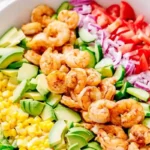
Zesty Cajun Shrimp and Avocado Salad
- Total Time: 20 minutes
- Yield: 6 servings 1x
- Diet: General
Description
This shrimp avocado salad has all of the best flavors of summer. Loaded with avocado, cucumbers, tomatoes and corn all over a bed of bright romaine with a light cilantro dressing.
Ingredients
- 1/2 lb Roma tomatoes, chopped
- 1/2 English cucumber, sliced
- 1/2 medium red onion, thinly sliced
- 2 avocados, peeled, pitted and sliced
- 1 cup corn kernels
- 1 medium romaine lettuce, chopped
- 2 Tbsp unsalted butter
- 1 lb large raw shrimp, peeled and deveined
- 1 tsp cajun spice
- 2 cloves garlic, pressed
- Pinch of salt
- 3 Tbsp olive oil
- Juice of 1 large lemon
- 1/2 cup chopped cilantro
- 1 tsp sea salt
- 1/8 tsp freshly ground black pepper
Instructions
- Step 1: Place shrimp in a medium bowl, sprinkle with 1 tsp cajun spice, 2 pressed garlic cloves and a pinch of salt and stir to combine.
- Step 2: Heat large non-stick pan over medium high heat. Swirl in 2 Tbsp butter. Once butter stops sizzling, add shrimp in a single layer and sauté about 2 min without disturbing. Flip shrimp over and sauté another minute or just until cooked through. Remove to a plate and set aside to cool.
- Step 3: Line the bottom of a large salad platter/bowl with chopped romaine lettuce. Add remaining salad ingredients and shrimp in rows on top of romaine.
- Step 4: In a small bowl, whisk together olive oil, lemon juice, chopped cilantro, sea salt and black pepper. Drizzle dressing over the salad then toss to combine and serve.
Notes
Freshly boiled or grilled corn adds a sweet burst of flavor. This salad can also be served vegetarian by omitting the shrimp.
- Prep Time: 16 minutes
- Cook Time: 4 minutes
- Category: Salad
- Method: Sautéing
- Cuisine: American
Nutrition
- Serving Size: 1 serving
- Calories: 415 kcal
- Sugar: 6 g
- Sodium: 340 mg
- Fat: 22 g
- Saturated Fat: 4 g
- Unsaturated Fat: 18 g
- Trans Fat: 0 g
- Carbohydrates: 14 g
- Fiber: 4 g
- Protein: 36 g
- Cholesterol: 85 mg
Keywords: Shrimp Avocado Salad, Summer Salad, Cajun Shrimp, Healthy Salad