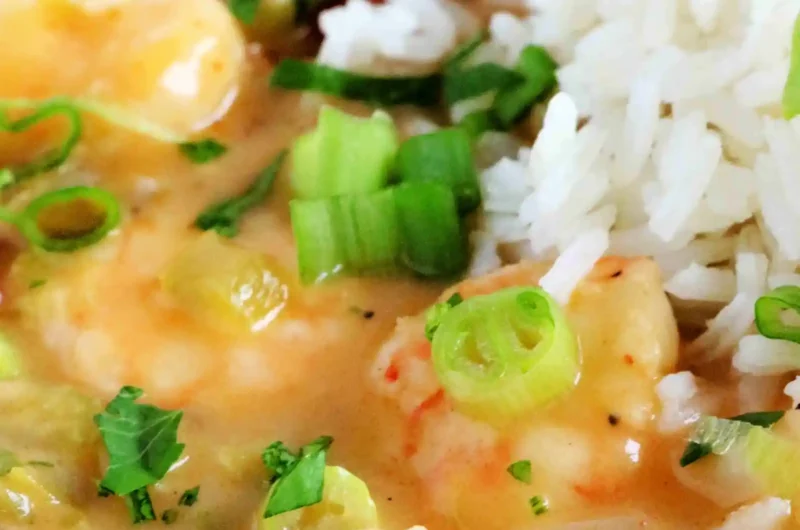
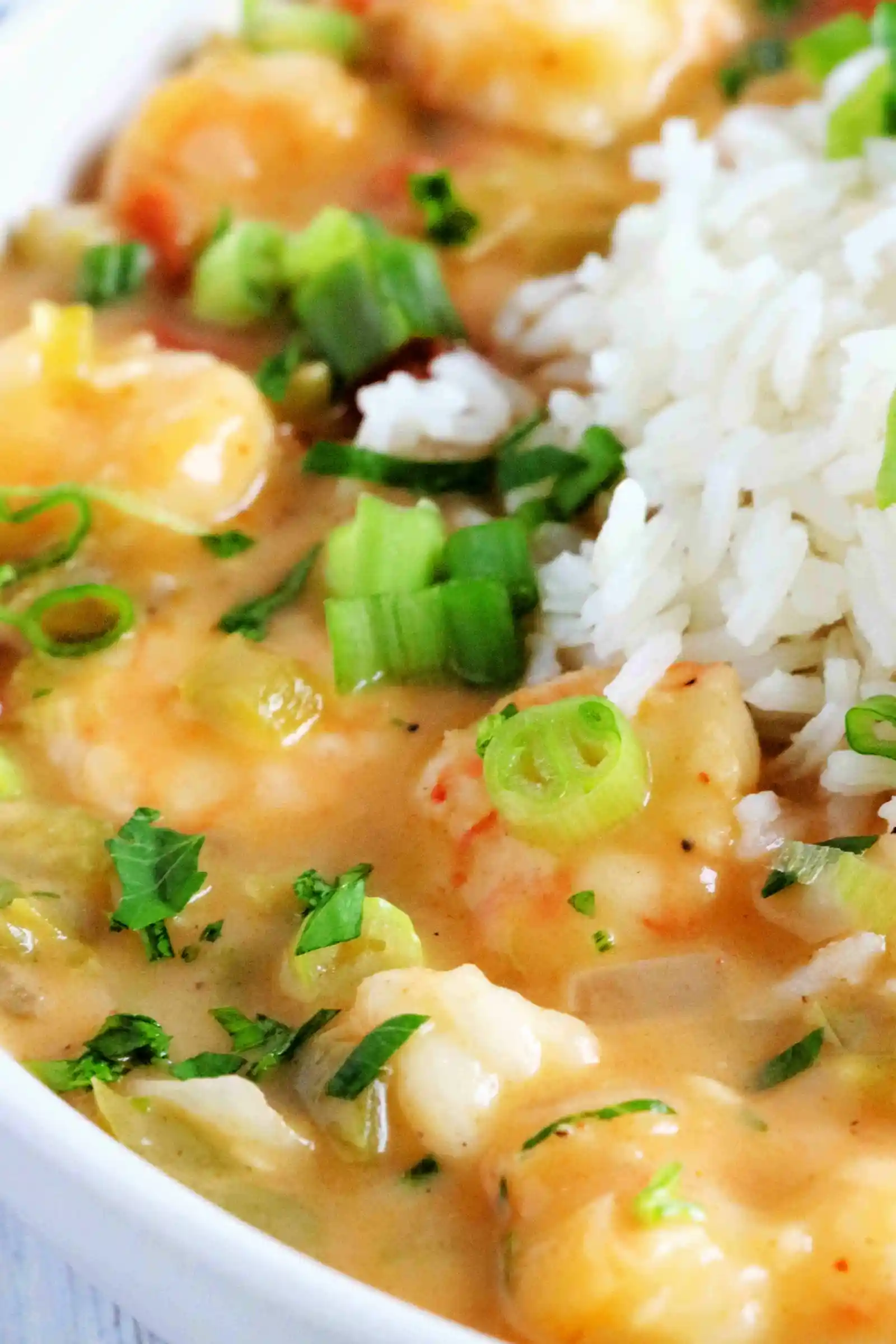
This creamy Creole-style shrimp etouffée utilizes a traditional blonde roux and the classic Cajun vegetable trinity. It is a rich, savory dish that pairs perfectly with fluffy white rice for a complete meal.
List of ingredients
- 6 tablespoons unsalted butter – used for the roux and sautéing.
- 1 yellow onion, finely diced – part of the aromatic base.
- 1 green bell pepper, seeded and finely diced – provides a classic pepper flavor.
- 3 stalks of celery, finely diced – adds an earthy note.
- 3 cloves of garlic – minced for aromatic depth.
- 1/2 cup all-purpose flour – the thickening agent for the roux.
- 1 tablespoon tomato paste – adds richness and color.
- 4 cups unsalted chicken broth or unsalted seafood broth – the primary liquid base.
- 2 1/2 teaspoons Worcestershire sauce – provides a salty, savory depth.
- 1 teaspoon hot sauce – adds a hint of acidity and spice.
- 2 teaspoons Cajun or Creole seasoning – the primary flavor profile.
- 1/2 teaspoon Kosher salt – for seasoning adjustment.
- Generous pinch black pepper – adds a subtle heat.
- 1 bay leaf – adds a floral, herbal aromatic.
- 1 large tomato (seeds and pulp removed), diced – adds fresh acidity.
- 1 pound large wild-caught shrimp, peeled and deveined – the main protein.
step-by-step instructions
- Sauté Aromatics: Melt butter in a large sauté pan or Dutch oven over medium-high heat. Add the diced onion, bell pepper, and celery, sautéing until softened for 6-8 minutes. Add the minced garlic and cook for one additional minute to avoid burning.
- Develop the Roux: Sprinkle the all-purpose flour evenly over the vegetable mixture. Stir constantly for 1 to 2 minutes to cook out the raw flour taste.
- Build the Sauce: Stir in the tomato paste. Incorporate the first 2 cups of broth by adding it in large splashes, stirring thoroughly after each addition to ensure a smooth consistency. Stir in the remaining 2 cups of broth until combined.
- Season the Base: Add the Worcestershire sauce, hot sauce, Cajun seasoning, salt, black pepper, bay leaf, and diced tomato. Stir well to distribute the seasonings.
- Simmer and Thicken: Lower the heat to maintain a gentle simmer. Cook for 6-8 minutes, stirring occasionally, until the sauce reaches a slightly thickened consistency.
- Cook the Shrimp: Add the shrimp to the simmering sauce. Cook for approximately 5 minutes, stirring often, until the shrimp are pink and firm.
- Serve: Remove the bay leaf. Ladle the etouffée into bowls and serve with a serving of white rice.
Technical Roux Guidance
Maintaining Precise Heat Levels
Use medium-high heat to melt the butter quickly without letting it brown too deeply. If the butter begins to foam excessively or turn dark brown, lower the heat immediately to prevent scorching the milk solids.
Ensuring Proper Flour Integration
Sprinkle the flour over the vegetables rather than dumping it in one spot. This allows the flour to distribute evenly and absorb the fat, which prevents the formation of large, uncooked flour clumps.
The Gradual Liquid Addition Method
Adding the first half of the broth in splashes allows the roux to emulsify slowly. This technique creates a stable, velvety texture and ensures that the sauce remains completely smooth as it thickens.
Identifying a Blonde Roux
This recipe requires a blonde roux, which means the flour should be cooked just long enough to remove the raw taste. It should appear pale gold and smell slightly nutty, rather than deep brown or chocolate-colored.
Vegetable Preparation Techniques
Executing a Fine Dice
Aim for a consistent, small dice for the onion, celery, and bell pepper. This ensures the vegetables soften at the same rate and integrate seamlessly into the thick sauce.
Removing Tomato Pulp and Seeds
Dice only the outer walls of the tomato after removing the watery pulp and seeds. This prevents excess moisture from thinning the sauce and keeps the consistency rich and creamy.
Timing the Garlic Addition
Add the garlic only after the other vegetables have softened. Garlic burns much faster than onions or peppers and can become bitter if cooked for the full 8 minutes.
Managing the Cajun Trinity
Keep the ratios of onion, celery, and bell pepper relatively equal. This balance is essential for the authentic Creole flavor profile that defines the base of the etouffée.
Shrimp Selection and Handling
Choosing the Optimal Shrimp Size
Large shrimp are recommended as they hold their shape well during the simmering process. Avoid jumbo prawns unless you cut them into bite-sized pieces to ensure they fit comfortably on a spoon with the rice.
Properly Thawing Frozen Shrimp
Thaw frozen shrimp in the refrigerator overnight or under cold running water. Adding frozen shrimp directly to the pot will drop the sauce temperature and cause the shrimp to release too much water.
Identifying Correct Doneness
Cook the shrimp until they curl into a ‘C’ shape and turn opaque pink. Overcooking them into a tight ‘O’ shape makes the protein tough and rubbery.
Cleaning and Deveining
Ensure all shrimp are fully peeled and deveined before adding them to the sauce. This improves the texture and prevents the grit of the digestive tract from entering the dish.
Sauce Consistency and Flavor
Adjusting Sauce Thickness
If the sauce is too thin after simmering, allow it to cook for another 2-3 minutes without a lid. If it becomes too thick, whisk in a small amount of additional broth to reach the desired velvety consistency.
Balancing Salt and Spice
Taste the sauce before adding the shrimp, as Cajun seasonings vary in salt content. Adjust the Kosher salt only after the seasoning mix has had time to meld with the broth.
Using High-Quality Broths
Unsalted chicken or seafood broth allows for better control over the final sodium level. Seafood broth adds a more intense oceanic depth, while chicken broth provides a more neutral, savory base.
The Role of Tomato Paste
Tomato paste adds a concentrated umami flavor and a slight orange tint to the sauce. It acts as a bridge between the richness of the roux and the acidity of the fresh tomatoes.
Serving and Pairing Suggestions
The Proper Way to Plate
Place a mound of fluffy white rice in the bottom of the bowl first. Ladle the shrimp etouffée over the rice so the sauce seeps into the grains for maximum flavor absorption.
Complementary Bread Pairings
Serve with a toasted baguette or crusty French bread. The bread is ideal for scooping up the remaining creamy sauce from the bowl.
Fresh Garnish Options
Top the finished dish with thinly sliced green onions or chopped fresh parsley. These fresh herbs provide a color contrast and a bright flavor that cuts through the richness of the roux.
Suggested Side Dishes
A light green salad with a lemon vinaigrette pairs well with this meal. The acidity of the dressing cleanses the palate between bites of the rich, buttery sauce.
Storage and Preservation
Refrigeration Guidelines
Store leftovers in an airtight container in the refrigerator for up to three days. Keep the rice and the etouffée in separate containers to prevent the rice from absorbing all the sauce.
Freezing Advice
Etouffée can be frozen for up to two months, though the texture of the shrimp may change slightly. Thaw completely in the refrigerator before reheating.
Reheating for Texture
Reheat the sauce in a saucepan over low heat rather than in a microwave. Add a tablespoon of water or broth to loosen the sauce, as the roux will thicken further during cooling.
Preventing Shrimp Overcooking during Reheat
Heat the sauce first and add the shrimp only at the very end. Gently warm the shrimp through to avoid making them rubbery during the second cooking process.
Troubleshooting Common Issues
Fixing Lumpy Roux
If the sauce develops lumps, use a whisk to vigorously stir the mixture over medium heat. If lumps persist, you can pass the sauce through a fine-mesh strainer before adding the shrimp.
Correcting Over-Salted Sauce
If the sauce is too salty, stir in a small amount of unsalted broth or a splash of water. You can also add a pinch of sugar to balance the salinity.
Managing Sauce Separation
If the fat separates from the sauce, it is usually due to excessive heat. Lower the temperature and whisk in a small amount of cold broth to re-emulsify the mixture.
Preventing Burnt Butter
If the butter browns too quickly, wipe the pan clean and start over. Burnt butter introduces a bitter taste that cannot be corrected once the flour is added.
Frequently Asked Questions
What is the difference between Shrimp Etouffee and Shrimp Creole?
Shrimp Etouffée uses a roux for a thick, creamy consistency, whereas Shrimp Creole is a tomato-based stew without a roux. Etouffée is more like a bisque, while Creole is more like a chunky tomato sauce.
Can I use a different type of flour?
All-purpose flour is best for a traditional roux. If using gluten-free flour, choose a 1:1 baking blend that contains xanthan gum to ensure the sauce thickens properly.
Why is the sauce called ‘smothered’?
The word etouffée comes from the French word ‘étouffer’, meaning to smother. This refers to the way the seafood is cooked slowly in a thick, covering sauce.
Can I use frozen shrimp for this recipe?
Yes, frozen shrimp work well as long as they are completely thawed and patted dry. Ensure they are peeled and deveined to maintain the smooth texture of the sauce.
Print
Creamy Creole Shrimp Etouffee
- Total Time: 40 minutes
- Yield: 6 servings 1x
- Diet: General
Description
A creamy, velvety smooth Creole-style Shrimp Etouffée with a foolproof roux, a simple sauce fortified with the Cajun’s holy trinity of vegetables, fresh tomatoes, and quick-cooking shrimp!
Ingredients
- 6 tablespoons unsalted butter
- 1 yellow onion, finely diced
- 1 green bell pepper, seeded and finely diced
- 3 stalks of celery, finely diced
- 3 cloves of garlic
- 1/2 cup all-purpose flour
- 1 tablespoon tomato paste
- 4 cups unsalted chicken broth or unsalted seafood broth
- 2 1/2 teaspoons Worcestershire sauce
- 1 teaspoon hot sauce
- 2 teaspoons Cajun or Creole seasoning
- 1/2 teaspoon Kosher salt
- Generous pinch black pepper
- 1 bay leaf
- 1 large tomato (seeds and pulp removed), diced
- 1 pound large wild-caught shrimp, peeled and deveined
Instructions
- Sauté: Add the butter to a large sauté pan or Dutch oven over medium-high heat. Do not allow the butter to burn. Add the onion, bell pepper, and celery as soon as the butter has melted and sauté until softened, 6-8 minutes. Add the garlic and sauté 1 minute more.
- Roux: Sprinkle the flour over the mixture, and stir for about 1 – 2 minutes.
- Sauce: Stir in the tomato paste, and begin adding the first 2 cups of broth one big splash at a time, stirring well after each addition. Add the remaining broth and stir to combine.
- Season: Stir in the Worcestershire, hot sauce, Cajun seasoning, salt, black pepper, bay leaf, and diced tomato.
- Simmer: Reduce the heat to maintain a simmer, and simmer for 6-8 minutes, until the mixture is slightly thickened. Stir occasionally. Add the shrimp and simmer an additional 5 minutes, stirring often. Serve with a heaping serving of fluffy white rice, and enjoy!
Notes
We prefer to use wild-caught, frozen shrimp that comes peeled and deveined to speed along the preparations. Be sure it is thawed before adding to the pot.
- Prep Time: 12 minutes
- Cook Time: 28 minutes
- Category: Main Course
- Method: Stovetop
- Cuisine: American, Creole
Nutrition
- Serving Size: 1 serving
- Calories: 266 kcal
- Sugar: 3 g
- Sodium: 912 mg
- Fat: 14 g
- Saturated Fat: 8 g
- Unsaturated Fat: 6 g
- Trans Fat: 0 g
- Carbohydrates: 16 g
- Fiber: 2 g
- Protein: 21 g
- Cholesterol: 221 mg
Keywords: Shrimp Etouffee, Creole, Cajun, Louisiana