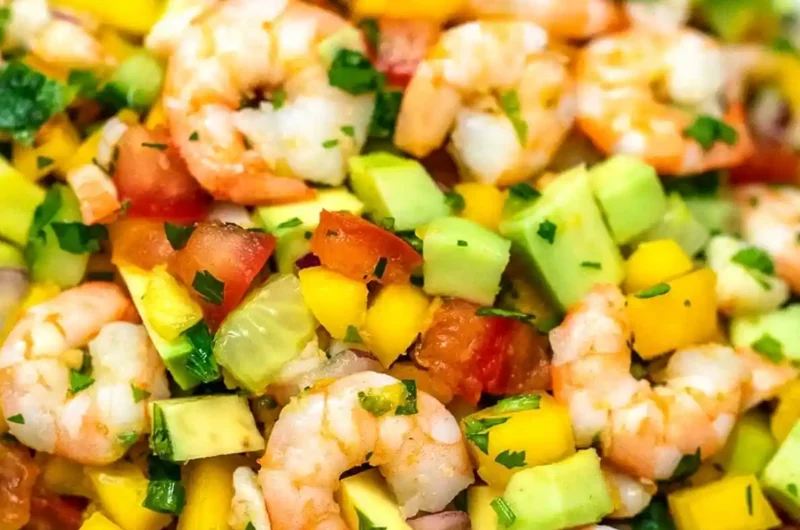
This refreshing shrimp ceviche is a bright, citrus-forward appetizer ready in 30 minutes. It combines pre-cooked seafood with fresh tropical fruits and crisp vegetables for a light and healthy dish.
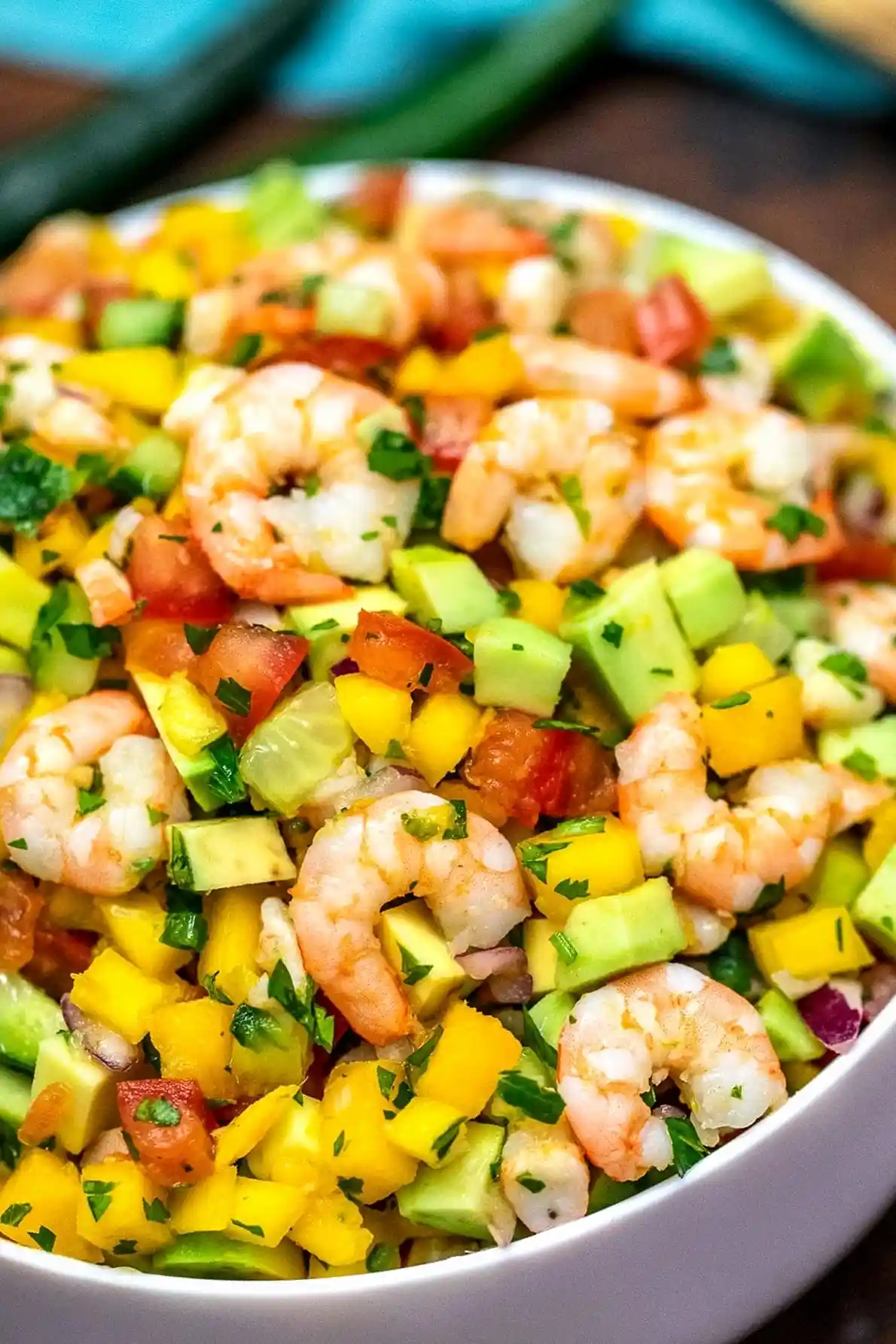
List of ingredients
- 2 pounds shrimp (peeled and cooked) – provides the main protein and a firm texture.
- 1 small red onion (diced) – adds a sharp, pungent contrast to the fruit.
- 2 jalapenos (seeds removed then minced) – introduces a mild heat and fresh pepper flavor.
- 1 cup cucumber (finely diced) – adds a cool, crisp element to balance the acidity.
- 2 cups Roma tomatoes (seeded and diced) – contributes juiciness and a mild sweetness.
- 1/2 cup cilantro leaves (finely chopped) – gives an earthy, herbal finish.
- 2 avocados (seeded and chopped) – adds creaminess and healthy fats.
- 2 large mangos (seeded and chopped) – brings a tropical sweetness to the mix.
- 1/2 cup lime juice – the primary acid for marinating and flavor.
- 1/4 cup orange juice – softens the acidity and adds a fruity depth.
- Zest of 1 lime – intensifies the citrus aroma.
- Salt to taste – enhances all the individual flavors.
- Tortilla chips (for serving) – the ideal crunchy vehicle for the ceviche.
step-by-step instructions
- Prep the shrimp: Chop half of the cooked shrimp and place them in a large mixing bowl.
- Combine base ingredients: Add the remaining whole shrimp, diced red onion, minced jalapeno, cucumber, tomatoes, cilantro, mango, and avocado to the bowl.
- Add the dressing: Pour the lime juice, lime zest, and orange juice over the mixture. Season with salt to taste and gently toss to combine all components.
- Chill the mixture: Cover the bowl and refrigerate for at least 30 minutes or overnight. If you plan to refrigerate for longer than 30 minutes, wait to add the avocado until just before serving to prevent browning.
- Serve: Serve the ceviche chilled alongside crisp tortilla chips.
Optimization Tips for Texture and Presentation
Uniformly Dicing Ingredients for Better Texture
Dicing the shrimp and vegetables into similar small sizes ensures that every spoonful contains a balanced mix of all ingredients. This consistency prevents any single component from dominating the bite and creates a more professional appearance on the plate. It also allows the citrus marinade to penetrate the ingredients more evenly.
Using Freshly Squeezed Lime Juice
Fresh lime juice provides a bright, sharp acidity that bottled concentrates cannot replicate. The volatile oils in fresh juice interact better with the shrimp and avocado, keeping the flavors vibrant. For the best results, squeeze the limes immediately before mixing the dressing.
Selecting a Non-Reactive Glass Bowl
Using a glass bowl for chilling is highly recommended because it does not react with the citric acid in the lime and orange juices. Unlike some metal bowls, glass will not impart a metallic taste to the delicate seafood. Glass also maintains a colder temperature, which helps keep the shrimp and vegetables crisp during the marinating process.
Adjusting Salt After the Chilling Period
The perception of salt changes as the citrus marinade rests and penetrates the seafood. It is best to add a small amount of salt during mixing, but perform a final taste test after the 30-minute chill. Add additional salt only at the end to ensure the seasoning is perfectly balanced against the acidity.
Ingredient Substitutions and Customizations
Substituting Scallops for Shrimp
You can replace the 2 pounds of cooked shrimp with 2 pounds of cooked scallops for a different texture. Scallops are naturally sweeter and softer, providing a more delicate seafood experience. Keep the lime juice, cucumber, tomato, and cilantro exactly the same to maintain the classic ceviche profile.
Adding Pineapple for Extra Tropical Flavor
For a sweeter and more complex fruit profile, stir in 1 cup of finely diced fresh pineapple along with the mango. The pineapple adds a different type of acidity and sweetness that pairs exceptionally well with the jalapeno. This variation is particularly effective for summer parties and outdoor gatherings.
Incorporating Bell Peppers for Color and Crunch
Adding 1 cup of finely diced red, yellow, or orange bell peppers increases the visual appeal and adds a distinct crunch. Bell peppers provide a mild sweetness that complements the mango and orange juice. They also help the dish feel more substantial when served as a light meal.
Using a Lemon Blend for Milder Acidity
If the lime juice feels too sharp, replace 1/4 cup of it with fresh lemon juice. Lemon juice has a slightly softer, more floral acidity compared to the punchy nature of lime. This creates a more rounded citrus flavor that is gentler on the palate.
Adding an Olive Oil Finish
Stirring in 1 tablespoon of high-quality extra virgin olive oil just before serving can smooth out the sharp edges of the citrus. The oil creates a light emulsion that coats the ingredients, giving the ceviche a richer mouthfeel. This is especially useful if you are serving the dish as a main course.
Serving and Pairing Suggestions
Pairing with Alternative Air-Fried Chips
While corn tortilla chips are traditional, air-fryer banana chips provide a sweet and salty contrast that enhances the mango. Alternatively, homemade air-fried veggie chips made from beets or sweet potatoes offer a nutrient-dense and colorful pairing. These options add variety to the texture and flavor profile of the appetizer.
Complementing with Grilled Proteins
This ceviche works well as a side dish for grilled meats, such as a lean grilled steak or chicken breast. The acidity of the ceviche cuts through the richness of the grilled meat, refreshing the palate between bites. This combination transforms a simple appetizer into a complete, balanced dinner.
Creating a Party Platter Arrangement
For larger gatherings, serve the ceviche in individual small clear cups or shot glasses. This prevents the dish from becoming messy on a shared platter and makes it easier for guests to grab and eat. Place a single tortilla chip inside each cup for a polished presentation.
Pairing with Traditional Side Dishes
To make this a fuller Mexican-inspired meal, serve the ceviche alongside a bean salad or a pot of fluffy white rice. The starch from the rice or beans balances the high acidity of the lime juice. This makes the meal more filling while maintaining the fresh, light quality of the seafood.
Storage and Freshness Guidelines
Refrigerating Leftovers for Maximum Freshness
Store any remaining shrimp ceviche in an airtight glass container in the refrigerator for up to two days. Ensure the container is sealed tightly to prevent the ceviche from absorbing other odors from the fridge. Beyond two days, the vegetables may lose their crispness and the shrimp may become overly soft.
Avoiding the Freezer for Seafood Salads
Do not freeze this recipe, as the freezing process destroys the cellular structure of the cucumber and avocado. Upon thawing, the vegetables will become mushy and release excess water, ruining the texture of the dish. The shrimp also lose their snap when frozen after being marinated in citrus.
Maintaining the Ideal Serving Temperature
Ceviche must be served cold to ensure both food safety and optimal taste. The chilled temperature enhances the crispness of the cucumber and the brightness of the citrus. If the dish has been sitting at room temperature for more than two hours, it should be discarded to avoid seafood spoilage.
Preparation Strategies for Crowds
Timing the Make-Ahead Process
You can prep the chopped vegetables and shrimp several hours in advance and store them in separate containers. Mix the citrus dressing in a small jar and keep it chilled. Combine everything 30 to 60 minutes before your guests arrive to ensure the flavors are fused but the vegetables remain crunchy.
Preventing Avocado Oxidation
Avocados brown quickly due to exposure to oxygen. To keep the ceviche looking vibrant, chop the avocados and fold them in only 10 to 15 minutes before serving. If you must add them earlier, ensure they are thoroughly coated in lime juice, which slows down the oxidation process.
Efficient Batch Preparation
When making large quantities, use a food processor to pulse the onion and jalapeno for speed, but dice the mango and avocado by hand. Hand-dicing the softer fruits prevents them from turning into a puree. Work in batches using the largest bowl available to avoid bruising the ingredients during tossing.
Cooking Shrimp from Scratch
The Boiling and Ice-Bath Method
To cook your own shrimp, bring a large pot of water to a boil with 1 tablespoon of salt. Add the peeled and deveined shrimp and cook for 2 to 3 minutes until they are pink and opaque. Immediately drain them and plunge them into a bowl of ice water for 3 minutes to stop the cooking process and maintain a firm snap.
Using Frozen Shrimp for Convenience
Frozen shrimp can be used as long as they are fully thawed and cooked. Thaw them slowly in the refrigerator overnight or under cold running water to preserve the texture. Ensure they are patted completely dry after thawing and cooking so that excess water does not dilute the citrus marinade.
Ensuring the Right Shrimp Texture
Avoid overcooking the shrimp, as rubbery shrimp will not absorb the citrus flavors as effectively. The shrimp should just curl into a ‘C’ shape; if they curl tightly into an ‘O’ shape, they are overcooked. Proper chilling after cooking is the key to achieving the professional texture found in restaurant ceviches.
Common Questions
Is shrimp ceviche safe to eat?
This specific recipe uses pre-cooked shrimp, making it safe and accessible for all ages. While traditional ceviche uses raw fish ‘cooked’ by acid, using cooked seafood removes the risks associated with raw fish consumption and ensures a consistent texture.
How to cook shrimp for ceviche?
Boil peeled shrimp in salted water for 2-3 minutes until pink. Immediately chill them in an ice bath for 3 minutes, drain, and pat dry. This method prevents overcooking and ensures the shrimp remain firm when mixed with the acidic marinade.
Can I use frozen shrimp for ceviche?
Yes, frozen shrimp are a practical and effective choice. Just ensure they are fully thawed and cooked before adding them to the mix. Frozen shrimp often maintain a very consistent size and texture, which helps in achieving uniform dicing.
Print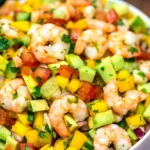
Fresh Mango and Shrimp Ceviche
- Total Time: 30 minutes
- Yield: 8 servings 1x
- Diet: Seafood
Description
A light and easy homemade Shrimp Ceviche loaded with fresh ingredients like avocado, mango, and a bright citrus dressing, ready in just 30 minutes.
Ingredients
- 2 pounds shrimp (peeled and cooked)
- 1 small red onion (diced)
- 2 jalapenos (seeds removed then minced)
- 1 cup cucumber (finely diced)
- 2 cups Roma tomatoes (seeded and diced)
- 1/2 cup cilantro leaves (finely chopped)
- 2 avocados (seeded and chopped)
- 2 large mangos (seeded and chopped)
- 1/2 cup lime juice
- 1/4 cup orange juice
- Zest of 1 lime
- Salt to taste
- Tortilla chips (for serving)
Instructions
- Step 1: Chop half of the cooked shrimp and place in a large bowl.
- Step 2: Add the whole shrimp, red onion, jalapeno, cucumber, tomatoes, cilantro, mango and avocado in a large bowl.
- Step 3: Pour the lime, lime zest and orange juice over the shrimp mixture. Add salt to taste. Gently toss to combine.
- Step 4: Cover and refrigerate for at least 30 minutes or overnight. If you want to refrigerate it for more than 30 minutes, skip adding the avocado as it will get brown.
- Step 5: Serve chilled with tortilla chips.
Notes
Dice shrimp and vegetables into similar sizes for better presentation. Use fresh lime juice for the best flavor. Add avocado closer to serving time to keep its color. Use a glass bowl for chilling to maintain freshness.
- Prep Time: 30 minutes
- Cook Time: 0 minutes
- Category: Appetizer
- Method: Chilling
- Cuisine: Mexican, American
Nutrition
- Serving Size: 1 serving
- Calories: 252 kcal
- Sugar: 11 g
- Sodium: 890 mg
- Fat: 9 g
- Saturated Fat: 1 g
- Unsaturated Fat: 8 g
- Trans Fat: 0 g
- Carbohydrates: 18 g
- Fiber: 5 g
- Protein: 26 g
- Cholesterol: 286 mg
Keywords: Shrimp Ceviche, Seafood Appetizer, Mexican Shrimp Salad, Fresh Mango Ceviche