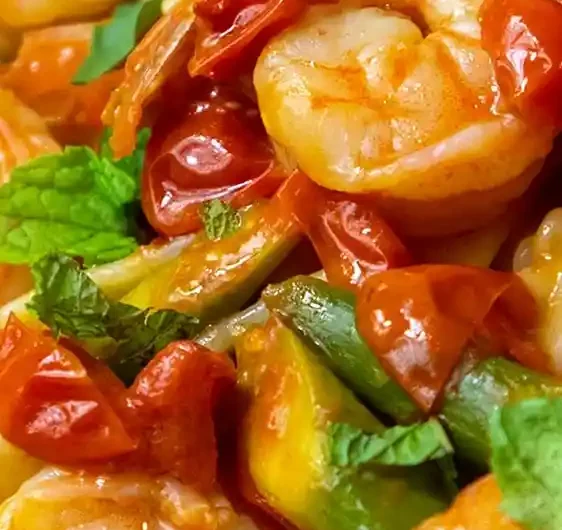
This vibrant pasta combines fresh spring vegetables with succulent shrimp for a balanced meal. It utilizes a light sauce of tomatoes and aromatic herbs to keep the flavors bright and clean.
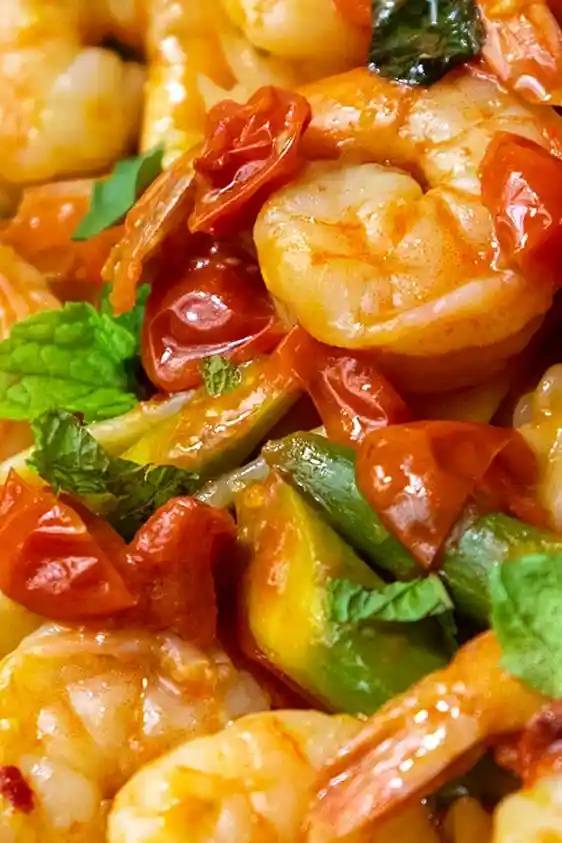
List of ingredients
- Kosher salt – for seasoning the pasta water and the sauce.
- 1 pound long pasta, such as manfredi lunghi – providing a sturdy base for the ingredients.
- 2 tablespoons extra-virgin olive oil – used for sautéing and adding richness.
- Two 12-ounce bags cherry tomatoes, stemmed and halved – the primary base for the sauce.
- 1/2 teaspoon kosher salt – divided for seasoning vegetables and shrimp.
- 1/2 teaspoon freshly ground black pepper – divided for seasoning.
- 1/2 teaspoon dried crushed red pepper or Calabrian chili paste – for a mild spicy kick.
- 3 large cloves garlic, flattened and chopped – adds pungent depth to the oil.
- 1/2 cup vegetable broth mixed with 1 tablespoon lemon juice – a non-alcoholic substitute for white wine to provide acidity.
- 1 pound asparagus, trimmed, stalks cut on a diagonal into 1 to 1 1/2-inch pieces – adds crunch and color.
- 1 pound large shrimp, peeled and deveined – the main protein source.
- 1/2 cup chopped fresh basil – adds sweet, peppery notes.
- 1/2 cup chopped fresh mint – provides a cooling, fresh contrast.
- 2 teaspoons chopped fresh oregano – adds an earthy, traditional Italian flavor.
step-by-step instructions
- Cook the Pasta: Bring a large pot of salted water to a boil over high heat. Add the pasta and cook until tender but still firm to the bite, stirring occasionally, for 8 to 10 minutes. Drain the pasta and place it in a large bowl.
- Sauté the Tomatoes: Heat the olive oil in a large deep skillet over medium-high heat. Add the halved cherry tomatoes, 1/4 teaspoon of salt, and 1/4 teaspoon of black pepper. Cook, stirring occasionally, until the tomatoes have softened, about 2 minutes.
- Add Aromatics: Stir in the crushed red pepper flakes and the chopped garlic. Cook for approximately 30 seconds until the garlic becomes aromatic but not brown.
- Simmer Vegetables: Pour in the vegetable broth and lemon juice mixture, then add the asparagus pieces. Bring the liquid to a boil and allow it to simmer for 5 minutes.
- Cook the Shrimp: Sprinkle the shrimp with the remaining 1/4 teaspoon of salt and 1/4 teaspoon of black pepper. Add the seasoned shrimp to the pan and simmer until they are opaque and cooked through, which usually takes 5 to 7 minutes.
- Finish with Herbs: Stir the chopped fresh basil, mint, and oregano into the skillet. Pour the entire sauce and vegetable mixture over the cooked pasta and toss thoroughly to combine. Serve the dish immediately.
Preparation Tips for Fresh Ingredients
Selecting the Best Shrimp
Choose shrimp that are translucent in color and have a firm texture. Avoid any that have a strong ammonia scent or black spots on the shell. For this recipe, large shrimp are ideal as they hold their shape well during the simmering process.
Preparing Asparagus Stalks
To remove the woody ends, bend a stalk near the bottom until it snaps naturally. Cut the remaining stalks on a diagonal into 1-inch pieces to increase the surface area for searing. This ensures the asparagus cooks evenly and integrates well with the long pasta.
Choosing the Right Pasta Shape
Long pastas like linguine, spaghetti, or manfredi lunghi are best for this light sauce. These shapes allow the olive oil and tomato juices to coat the strands effectively. Ensure you do not overcook the pasta, as it will continue to soften when tossed with the hot sauce.
Ingredient Substitutions and Variations
Vegetable Alternatives for Asparagus
If asparagus is unavailable, snap peas or thinly sliced zucchini work well. Snap peas provide a similar crunch and sweetness, while zucchini offers a softer texture. Adjust the cooking time slightly, as zucchini cooks faster than asparagus.
Replacing Shrimp with Other Proteins
You can substitute shrimp with scallops or chunks of firm white fish like cod. Scallops should be seared separately first to get a golden crust before adding them back at the end. White fish should be cut into uniform cubes to prevent them from breaking apart in the pan.
Using Different Herb Blends
While basil, mint, and oregano are traditional for spring, you can use flat-leaf parsley and chives for a milder taste. If you prefer more earthiness, increase the amount of oregano and add a pinch of dried thyme. Fresh herbs should always be added at the very end to preserve their bright color.
Alternative Tomato Options
Grape tomatoes can be used interchangeably with cherry tomatoes. If using larger Roma tomatoes, dice them into small, consistent cubes. Note that larger tomatoes may release more water, which might require an extra minute of simmering to thicken the sauce.
Advanced Cooking Techniques
Achieving Al Dente Pasta
Al dente means ‘to the tooth,’ indicating the pasta should have a slight resistance when bitten. Start tasting the pasta two minutes before the package directions suggest. This prevents the pasta from becoming mushy when it is combined with the sauce in the skillet.
Preventing Overcooked Shrimp
Shrimp cook very quickly and can become rubbery if left too long. They are done when they curl into a ‘C’ shape and turn opaque white with pink edges. Avoid letting them curl into a tight ‘O’ shape, as this is a sign of overcooking.
Sautéing Garlic Without Burning
Garlic burns quickly at high temperatures, creating a bitter taste. Add the garlic only after the tomatoes have already released some moisture into the pan. Keep the heat at medium-high and stir constantly for 30 seconds to ensure the garlic softens without browning.
Serving and Presentation Ideas
Plating for Visual Appeal
Use a pasta fork or tongs to twirl the pasta into a nest in the center of the plate. Spoon the shrimp, asparagus, and tomatoes over the top of the mound. This highlights the colorful ingredients and prevents the pasta from looking flat on the plate.
Adding a Final Garnish
A final drizzle of high-quality extra-virgin olive oil adds a professional sheen to the dish. You may also add a small amount of fresh lemon zest over the shrimp for extra brightness. A sprinkle of freshly cracked black pepper provides a sharp contrast to the sweet tomatoes.
Recommended Side Dishes
Pair this pasta with a simple arugula salad dressed with lemon and olive oil. The peppery notes of the arugula complement the mint and basil in the pasta. Garlic bread or a toasted baguette can also be served to soak up the remaining sauce from the plate.
Storage and Reheating Advice
Storing Leftovers in the Fridge
Place leftover pasta in an airtight container and refrigerate immediately after cooling. The dish will stay fresh for up to three days. Keep in mind that the pasta will absorb some of the sauce as it sits, which may make it seem drier the next day.
Best Methods for Reheating Pasta
Reheat the pasta in a skillet over medium heat instead of using a microwave. Add a splash of water or vegetable broth to the pan to loosen the sauce and restore the moisture. Heat gently until the shrimp are warmed through to avoid overcooking them again.
Freezing Considerations
It is not recommended to freeze this dish because of the asparagus and shrimp. Freezing and thawing change the cellular structure of these ingredients, making the asparagus mushy and the shrimp rubbery. For the best quality, consume the meal within three days of preparation.
Troubleshooting Common Issues
Fixing a Sauce that is Too Thin
If the sauce is too watery, increase the heat to medium-high and simmer for an additional two to three minutes. You can also stir in a tablespoon of the starchy pasta cooking water. The starch helps emulsify the oil and liquid, creating a thicker coating for the noodles.
Managing Excessive Saltiness
If the dish tastes too salty, add a squeeze of fresh lemon juice or a teaspoon of sugar. The acidity of the lemon or the sweetness of the sugar helps to balance and mask the saltiness. Avoid adding more water, as this can dilute the other flavors of the sauce.
Handling Bitter Asparagus
Some thick asparagus stalks can have a bitter taste. To fix this, peel the lower half of the stalk with a vegetable peeler before cutting. Ensuring the asparagus is sautéed properly in olive oil also helps to mellow out any bitterness.
Frequently Asked Questions
Can I use frozen shrimp?
Yes, you can use frozen shrimp. Thaw them completely in the refrigerator overnight or place them in a colander under cold running water for 15 minutes. Pat the shrimp dry with paper towels before seasoning to ensure they sear rather than steam in the pan.
How do I store the fresh herbs?
Store fresh herbs by placing the stems in a glass of water and covering the leaves loosely with a plastic bag in the fridge. For mint specifically, avoid letting the leaves touch the sides of the container to prevent bruising. This keeps them vibrant for up to a week.
Can this be made gluten-free?
Yes, replace the long pasta with a gluten-free alternative made from brown rice, corn, or chickpeas. Be careful with the cooking time, as gluten-free pastas often have a narrower window between being undercooked and overcooked.
What is the best oil for this recipe?
Extra-virgin olive oil is the best choice because it adds a fruity, peppery flavor that complements the Mediterranean ingredients. If you are cooking at a very high heat, you can use a light olive oil, but finish the dish with a drizzle of extra-virgin oil for the taste.
Print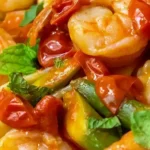
Spring Shrimp and Asparagus Pasta with Cherry Tomatoes
- Total Time: 45 minutes
- Yield: 4 servings 1x
- Diet: Dairy-free, Nut-free
Description
This pasta dish has all of the colors and flavors of spring! Tons of fresh herbs and bright flavors make this a perfect recipe for the season.
Ingredients
- Kosher salt (for pasta water)
- 1 pound long pasta, such as manfredi lunghi
- 2 tablespoons extra-virgin olive oil
- Two 12-ounce bags cherry tomatoes, stemmed and halved
- 1/2 teaspoon kosher salt
- 1/2 teaspoon freshly ground black pepper
- 1/2 teaspoon dried crushed red pepper or Calabrian chili paste
- 3 large cloves garlic, flattened and chopped
- 1/2 cup vegetable broth
- 1 pound asparagus, trimmed, stalks cut on a diagonal into 1 to 1 1/2-inch pieces
- 1 pound large shrimp, peeled and deveined
- 1/2 cup chopped fresh basil
- 1/2 cup chopped fresh mint
- 2 teaspoons chopped fresh oregano
Instructions
- Step 1: Bring a large pot of salted water to a boil over high heat. Add the pasta and cook until tender but still firm to the bite, stirring occasionally, 8 to 10 minutes. Drain and place in a large bowl.
- Step 2: Heat the oil in a large deep skillet over medium-high heat. Add the tomatoes, 1/4 teaspoon of salt and 1/4 teaspoon of black pepper. Cook, stirring occasionally, until softened, about 2 minutes. Add the crushed red pepper flakes and garlic. Cook for 30 seconds until aromatic. Add the vegetable broth and asparagus. Bring to a boil and simmer for 5 minutes.
- Step 3: Sprinkle the shrimp with the remaining 1/4 teaspoon of salt and 1/4 teaspoon black pepper. Add the shrimp to the pan and continue to simmer until the shrimp is cooked through, 5 to 7 minutes. Stir in the basil, mint and oregano.
- Step 4: Pour the sauce over the pasta and toss to combine. Serve immediately.
- Prep Time: 10 minutes
- Cook Time: 35 minutes
- Category: Main Course
- Method: Stovetop
- Cuisine: Italian
Nutrition
- Serving Size: 1 serving
- Calories: 620 kcal
- Sugar: 8 g
- Sodium: 850 mg
- Fat: 12 g
- Saturated Fat: 2 g
- Unsaturated Fat: 10 g
- Trans Fat: 0 g
- Carbohydrates: 85 g
- Fiber: 7 g
- Protein: 38 g
- Cholesterol: 180 mg
Keywords: shrimp, asparagus, cherry tomato, pasta, spring, Italian