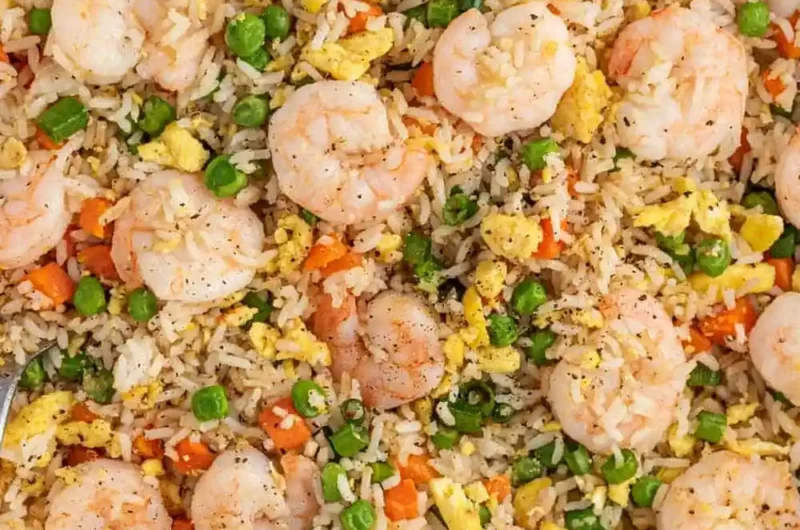
Enjoy a light and nutrient-dense shrimp fried rice that avoids heavy butters and excessive oils. This quick meal comes together in 30 minutes using simple pantry staples and frozen vegetables.
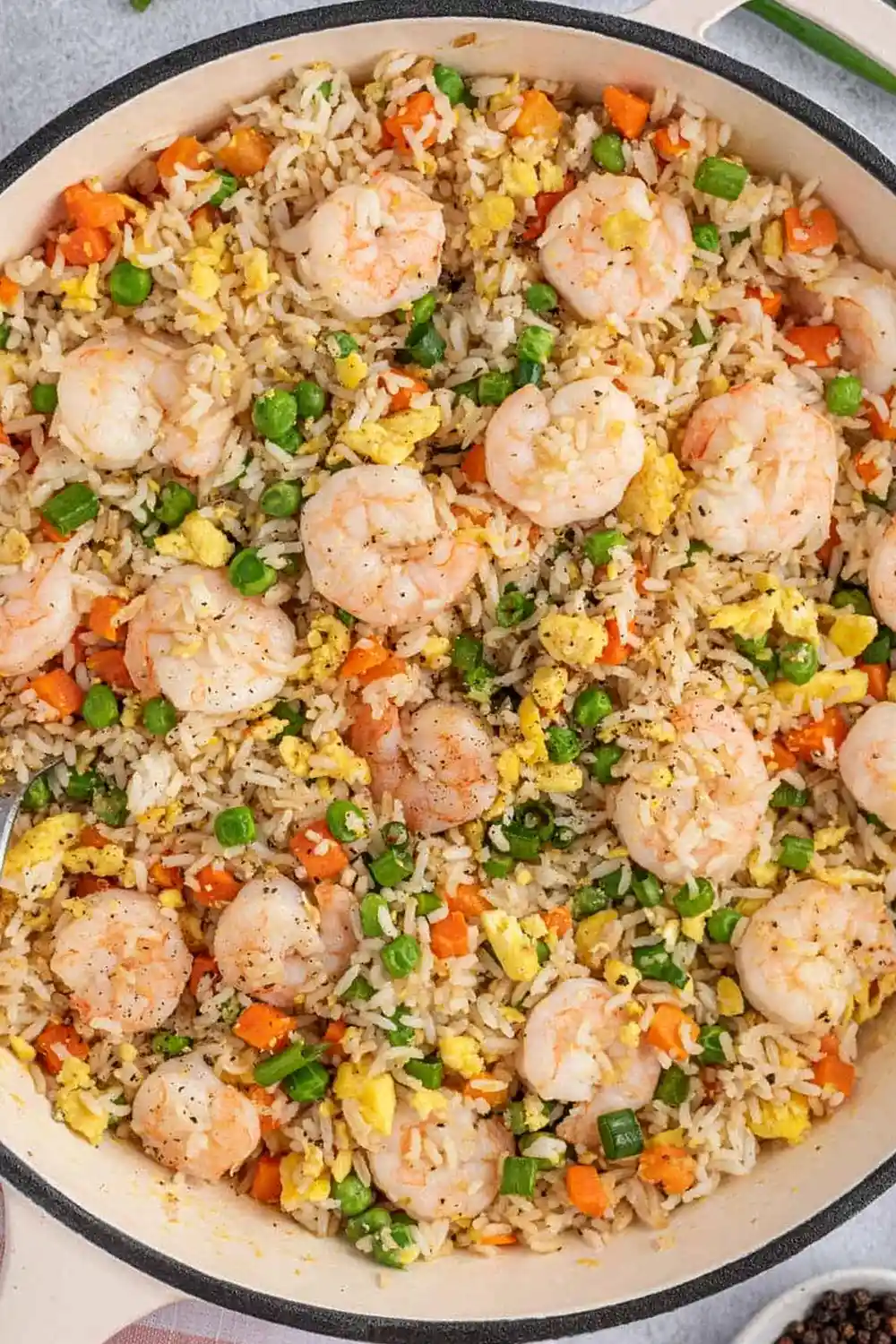
List of ingredients
- 2 tablespoons olive oil – used for sautéing the shrimp and vegetables.
- 1 lb medium raw shrimp – peeled and deveined for easy eating.
- 1 cup frozen peas and carrots – a convenient mix for color and nutrition.
- 1 teaspoon grated ginger – provides a fresh, zesty aromatic base.
- 1 teaspoon minced garlic – adds depth and savory flavor.
- 4 eggs – beaten and scrambled into the rice for protein.
- 3 cups cooked rice – must be cooled completely to avoid mushiness.
- 1 tablespoon soy sauce – delivers essential saltiness and umami.
- 1 teaspoon salt – to taste.
- 1 teaspoon ground black pepper – for a subtle spicy kick.
- 2 tablespoons green onion – chopped and used as a fresh garnish.
step-by-step instructions
- Sear the Shrimp: Heat olive oil in a large skillet over medium heat. Add the shrimp and cook for 4-5 minutes, flipping frequently until opaque and cooked through, then transfer to a plate.
- Sauté Aromatics: In the same skillet, add the frozen peas and carrots, grated ginger, and minced garlic. Cook for approximately 2 minutes until the vegetables soften.
- Scramble the Eggs: Push the sautéed vegetables to one side of the skillet. Pour the beaten eggs into the empty space and cook until they are scrambled and firm.
- Combine and Fry: Return the cooked shrimp to the pan and add the cooled rice. Stir in the soy sauce, salt, and pepper, mixing all ingredients thoroughly over low heat for 3-5 minutes.
- Final Touch: Stir in the chopped green onions and remove the skillet from the heat immediately. Transfer to a bowl and serve warm.
Optimizing Your Rice Selection
Use Long-Grain Varieties
Long-grain rice like Jasmine or Basmati is ideal because the grains remain distinct after cooking. Short-grain or glutinous rice contains more starch, which can lead to a sticky, clumped texture when fried.
The Importance of Chilled Rice
Using rice that has been refrigerated overnight is the most effective way to prevent mushiness. The cooling process allows the surface starch to dry out, ensuring the grains fry individually rather than sticking together.
Proper Cooling Techniques
If you must use freshly cooked rice, spread it in a thin layer on a large baking sheet. Place the sheet in the refrigerator or freezer for 30 minutes to remove excess moisture and heat rapidly.
Avoiding Over-Stirring
When adding the rice to the pan, fold it gently rather than stirring aggressively. Excessive agitation can break the grains, releasing more starch and compromising the fluffy texture of the dish.
Selecting and Preparing Shrimp
Thawing Frozen Shrimp Properly
Place frozen shrimp in a colander and rinse under cold running water for several minutes. Avoid using warm water, as this can partially cook the exterior and affect the final texture.
Patting Shrimp Dry
Use paper towels to pat the shrimp completely dry before adding them to the oil. Excess moisture creates steam in the pan, which prevents the shrimp from searing and results in a boiled texture.
Managing Shrimp Sizes
Medium shrimp provide the best balance of flavor and bite-size consistency. If using jumbo shrimp, cut them into smaller pieces so they cook evenly and distribute well throughout the rice.
Preventing Overcooking
Shrimp cook very quickly and can become rubbery if left in the pan too long. Remove them as soon as they turn pink and opaque, then return them only at the final stage of mixing.
Vegetable Variations and Substitutions
Utilizing Frozen Stir-Fry Blends
Pre-cut frozen stir-fry mixes are an excellent alternative to peas and carrots. These often include broccoli, snap peas, and baby corn, adding more texture and nutritional variety to the meal.
Incorporating Fresh Leafy Greens
Fresh spinach, kale, or bok choy can be added during the aromatic sauté stage. Stir them in just until they wilt to maintain their bright color and vitamin content.
Adding Crunch with Root Vegetables
Finely diced water chestnuts or bamboo shoots add a satisfying crunch to the dish. These should be added at the same time as the ginger and garlic to ensure they are heated through.
Customizing with Bell Peppers
Diced red, yellow, or green bell peppers add sweetness and vibrant color. Sauté them for 2-3 minutes before adding the frozen peas to ensure they are tender-crisp.
Mastering the Stir-Fry Technique
Controlling Pan Temperature
Maintain medium heat when searing shrimp to ensure a golden exterior without burning. Lower the heat when adding the rice to allow the soy sauce to coat the grains without scorching.
The One-Pan Egg Method
Pushing the vegetables to the side allows the eggs to fry in direct contact with the pan surface. This creates larger, firmer curds of egg rather than small, fragmented bits mixed with the vegetables.
Choosing the Right Cookware
A wide, heavy-bottomed skillet or a wok is best for this recipe. The larger surface area allows for faster evaporation of moisture and more efficient tossing of the ingredients.
Timing the Soy Sauce Addition
Add soy sauce after the rice has been added to the pan. This ensures the sauce is absorbed by the rice grains rather than burning on the bottom of the skillet during the vegetable sauté.
Flavor Enhancements and Adjustments
Boosting Umami with Low-Sodium Soy
Low-sodium soy sauce provides the necessary salt and depth while allowing you to control the total sodium intake. If the flavor is too light, add a small pinch of salt at the end.
Adding Heat with Chili Flakes
For those who prefer a spicy dish, stir in red pepper flakes or a teaspoon of sriracha during the final mixing stage. This distributes the heat evenly across the rice and shrimp.
Fresh Herb Garnishes
While green onions are traditional, adding fresh cilantro or parsley at the end provides a bright contrast to the savory soy sauce. Always add these after turning off the heat to prevent wilting.
Adjusting Salt Balance
Always taste the dish before adding the final teaspoon of salt. Since soy sauce and frozen vegetable mixes often contain sodium, you may find that less additional salt is required.
Storage and Reheating Advice
Refrigeration Guidelines
Store leftover shrimp fried rice in an airtight container in the refrigerator for up to three days. Ensure the rice is completely cooled before sealing the lid to prevent condensation.
Freezing for Meal Prep
This dish freezes well for up to one month. Portion the rice into individual freezer-safe containers to make reheating and serving more convenient.
Microwave Reheating Tips
When reheating in a microwave, add a teaspoon of water or a damp paper towel over the rice. This creates steam that re-hydrates the grains and prevents them from becoming hard.
Skillet Reheating Method
For the best texture, reheat the rice in a skillet over medium heat with a tiny amount of olive oil. Stir frequently for 3-5 minutes until the shrimp and rice are heated through.
Troubleshooting Common Issues
Solving Mushy Rice Textures
If the rice turns out mushy, it is usually due to using warm rice or too much liquid. To fix this in the future, ensure the rice is chilled and avoid adding extra water or broth.
Dealing with Clumping Grains
If the rice clumps together, use a spatula to gently break the masses apart during the low-heat cooking phase. Using a fork to break up chilled rice before adding it to the pan also helps.
Fixing Rubbery Shrimp
Rubbery shrimp are the result of overcooking. To avoid this, adhere strictly to the 4-5 minute searing time and remove them from the heat the moment they lose their translucency.
Correcting Over-Salted Dishes
If the dish is too salty, stir in a handful of steamed unsalted vegetables or a squeeze of fresh lime juice. The acidity and extra bulk help neutralize the excess sodium.
Frequently Asked Questions
Can I use brown rice instead of white rice?
Yes, brown rice works well and adds more fiber. Because brown rice is denser, ensure it is fully cooked and chilled before adding it to the skillet to maintain a good texture.
What can I use instead of soy sauce?
Coconut aminos are a great alternative for those seeking a soy-free option. They offer a similar savory flavor with slightly less salt and a hint of sweetness.
Do the shrimp need to be raw?
This recipe is designed for raw shrimp to maximize flavor and control the cooking process. If using pre-cooked shrimp, add them at the very end just to warm them through.
Can I add more protein to this recipe?
You can add diced tofu or shredded chicken alongside the shrimp. Sauté the additional protein first, remove it from the pan, and return it at the end with the shrimp.
Print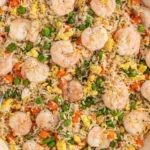
Healthy Shrimp Fried Rice
- Total Time: 30 minutes
- Yield: 4 servings 1x
- Diet: General
Description
Simple and easy to make shrimp fried rice with tender shrimps and loads of veggies. Ready in 30 minutes
Ingredients
- 2 tablespoons olive oil
- 1 lb medium raw shrimp, peeled and deveined
- 1 cup frozen peas and carrots
- 1 teaspoon grated ginger
- 1 teaspoon minced garlic
- 4 eggs, beaten
- 3 cups cooked rice, cooked and cooled
- 1 tablespoon soy sauce
- 1 teaspoon salt
- 1 teaspoon ground black pepper
- 2 tablespoons green onion, chopped
Instructions
- Step: To a large skillet over medium heat, add oil. Once the oil is heated, add the shrimp and cook for 4-5 minutes until the shrimp is cooked through by flipping them frequently. Transfer the cooked shrimp to a plate and set them aside.
- Step: To the same skillet add carrot and peas, ginger, and garlic. Cook for 2 minutes until the veggies soften a bit.
- Step: Push the veggies on one side of the skillet and add the beaten eggs. Cook the eggs to scramble.
- Step: Transfer the shrimp back to the skillet along with the cooked rice. Stir in the soy sauce, salt, and pepper. Mix the rice, eggs, and veggies all together. Cook on low heat for 3-5 minutes by stirring the rice often.
- Step: Finally, add the green onions and turn off the heat. Transfer the shrimp fried rice to a bowl and serve.
Notes
Use cooked and cooled long-grain rice to avoid a mushy texture. Scramble the eggs separately from the vegetables to ensure they firm up correctly. Store leftovers in the fridge for up to 3 days.
- Prep Time: 15 minutes
- Cook Time: 15 minutes
- Category: Main Course
- Method: Stir-frying
- Cuisine: Chinese
Nutrition
- Serving Size: 1 serving
- Calories: 386 kcal
- Sugar: 1 g
- Sodium: 1567 mg
- Fat: 13 g
- Saturated Fat: 3 g
- Unsaturated Fat: 9 g
- Trans Fat: 1 g
- Carbohydrates: 40 g
- Fiber: 2 g
- Protein: 26 g
- Cholesterol: 307 mg
Keywords: shrimp fried rice, healthy fried rice, easy dinner, Chinese cuisine, quick meals