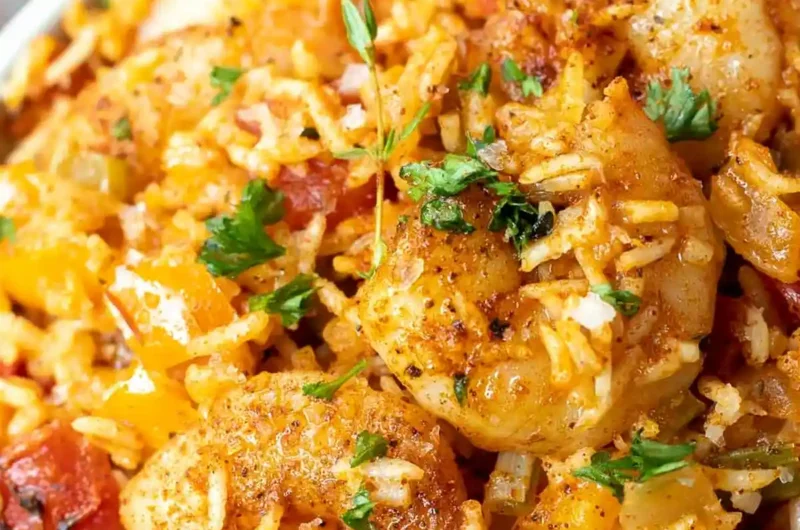
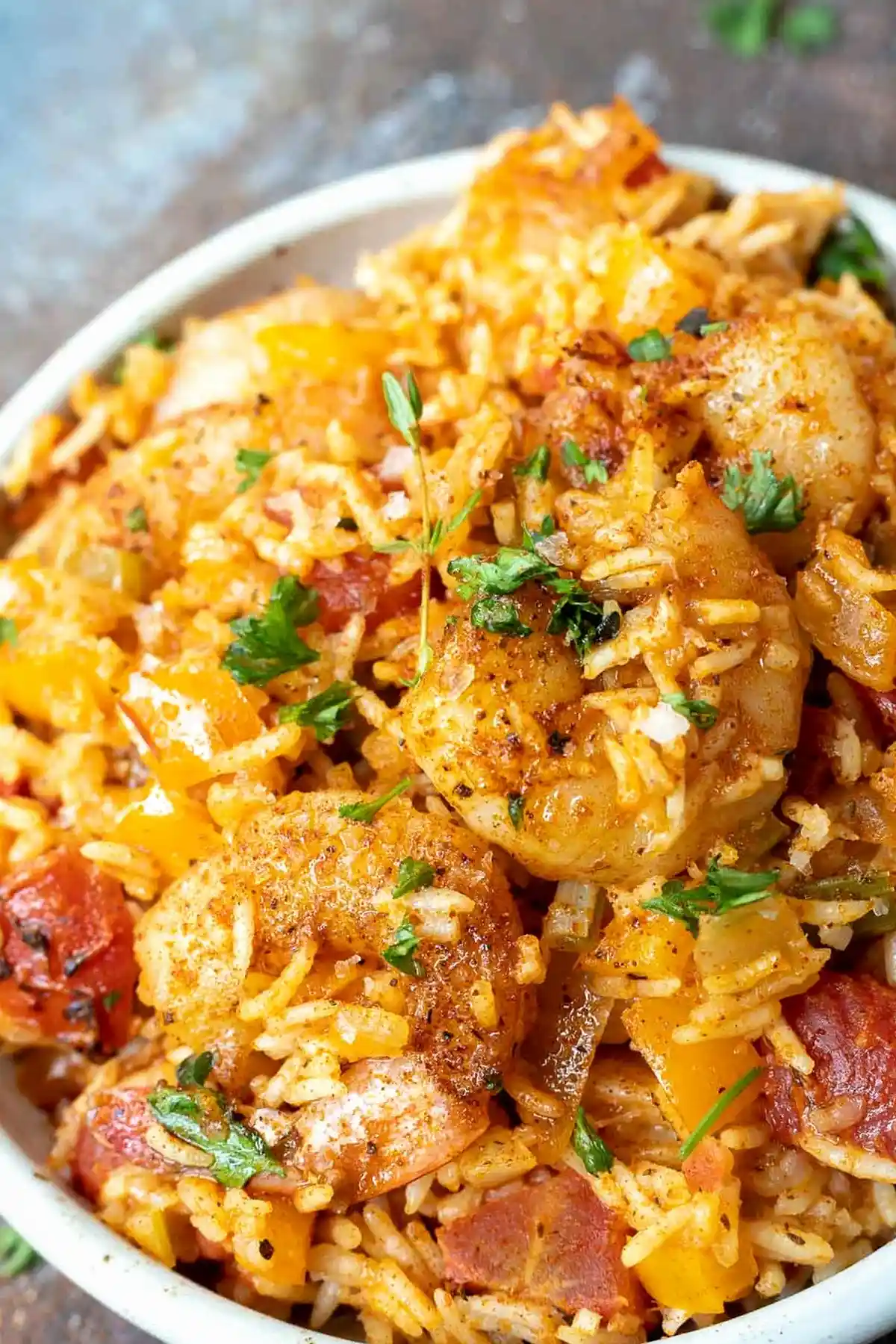
This hearty shrimp and rice bake combines bold Cajun spices with a creamy tomato base for a filling meal. It is an efficient one-pan dinner that delivers deep, smoky flavors in a short amount of time.
List of ingredients
- 1 Lb peeled and deveined shrimp (31-40 count) – ensure they are fully thawed.
- 3 cups cooked brown or white rice – use long-grain varieties for better texture.
- 4 celery stalks, chopped – provides a necessary aromatic crunch.
- 1 orange bell pepper, seeded and chopped – adds color and a mild sweetness.
- 1 sweet onion, chopped – forms the flavorful base of the dish.
- 3-4 garlic cloves, chopped – adds pungent, savory depth.
- 3 tablespoons oil – used for sautéing the aromatic vegetables.
- 1 14.5oz can organic fire roasted diced tomatoes – adds a rich, charred flavor.
- 1/4 cup heavy cream – creates a velvety consistency in the sauce.
- 2 tablespoons Cajun seasoning – the primary source of heat and spice.
- Salt and pepper – added to taste.
- 1 tablespoon hot sauce (optional) – for those who prefer extra spice.
- Fresh parsley and thyme – used as a fresh garnish before serving.
step-by-step instructions
- Preheat Oven: Set your oven to 375ºF. Ensure the oven rack is positioned in the center to allow for even heat distribution around the casserole dish.
- Rice Preparation: Prepare your rice according to the package instructions and set it aside. Using chilled, leftover rice can often prevent the dish from becoming too soft during baking.
- Sauté Vegetables: Heat oil in a large sauté pan over medium/high heat. Add the chopped celery, bell pepper, and onions, cooking until they are tender, then stir in the garlic and cook for one additional minute.
- Combine Base: Transfer the sautéed vegetables, cooked rice, and thawed shrimp into a large mixing bowl. Stir them gently to ensure the shrimp are evenly distributed throughout the rice.
- Prepare Sauce: In a separate bowl, whisk together the organic fire roasted diced tomatoes, heavy cream, Cajun seasoning, salt, pepper, and optional hot sauce. Mix until the cream is fully incorporated into the tomatoes.
- Mix Ingredients: Pour the tomato and cream mixture over the shrimp, rice, and vegetable combination. Stir the contents thoroughly until every grain of rice and piece of shrimp is well coated.
- Prepare Dish: Spray a large casserole dish with nonstick cooking spray to prevent sticking. Transfer the mixture into the dish and spread it out evenly with a spatula.
- Bake and Garnish: Bake the casserole for 25-30 minutes or until the shrimp are opaque and cooked through. Remove from the oven and serve immediately, topped with fresh parsley and thyme.
Choosing the Right Shrimp
Understanding Shrimp Counts
The 31-40 count refers to the number of shrimp per pound. This medium size is ideal for casseroles because the shrimp are large enough to remain juicy during the baking process but small enough to distribute evenly in every bite.
Fresh versus Frozen
Frozen peeled and deveined shrimp are often more convenient and just as nutritious as fresh. If using frozen, thaw them slowly in the refrigerator overnight or place them in a sealed bag under cold running water for 20 minutes.
Proper Drying Techniques
Before adding shrimp to the mixture, pat them dry with paper towels. Removing excess surface moisture prevents the casserole from becoming watery and helps the sauce adhere better to the seafood.
Rice Selection and Preparation
White Rice Varieties
Long-grain white rice, such as Basmati or Jasmine, is recommended for this dish. These varieties have a lower starch content than short-grain rice, which helps the grains remain distinct and prevents the bake from turning into a porridge.
Brown Rice Alternative
Brown rice is an excellent choice for those seeking more fiber and a nuttier flavor. Since brown rice takes longer to cook and has a firmer texture, it holds up very well during the oven-baking stage.
Using Leftover Rice
Using day-old refrigerated rice is a professional tip for this recipe. The grains dry out slightly in the fridge, allowing them to absorb the creamy Cajun sauce without overcooking or becoming mushy.
Mastering the Cajun Flavor
Controlling the Heat Level
Cajun seasonings vary wildly in spice levels between brands. If you are sensitive to heat, start with one tablespoon and taste the sauce before adding the second, or choose a mild-labeled blend.
Sodium Management
Many pre-made Cajun blends contain a significant amount of salt. To avoid oversalting your dish, taste the combined mixture before adding any extra salt during the seasoning step.
Creating a Custom Blend
If you prefer to make your own seasoning, combine smoked paprika, garlic powder, onion powder, dried oregano, and a pinch of cayenne pepper. This allows you to control the exact balance of smokiness and heat.
Vegetable Preparation Tips
Consistent Chopping
Aim for uniform pieces when chopping the celery, onion, and bell pepper. Consistent sizing ensures that all vegetables soften at the same rate during the sautéing process, preventing some pieces from being raw while others are overdone.
The Importance of Sautéing
Sautéing the vegetables before baking is crucial for developing flavor through the Maillard reaction. This process caramelizes the natural sugars in the onions and peppers, adding a depth that baking alone cannot achieve.
Alternative Pepper Colors
While orange bell peppers provide a lovely hue, red or yellow peppers work equally well. Red peppers offer a slightly deeper sweetness, while green peppers add a more traditional, slightly bitter Cajun profile.
Optimizing the Sauce
The Role of Fire Roasted Tomatoes
Fire roasted tomatoes provide a smoky undertone that complements the Cajun spices. The roasting process concentrates the flavors and adds a charred quality that mimics the taste of a traditional outdoor skillet cook.
Adjusting the Creaminess
Heavy cream provides the necessary fat to balance the acidity of the tomatoes and the heat of the spices. For a lighter version, you can use half-and-half, though the sauce will be slightly thinner.
Balancing Acidity
If the sauce tastes too acidic due to the tomatoes, a tiny pinch of sugar can neutralize the sharpness. This enhances the overall flavor profile without making the dish taste sweet.
Baking and Doneness
Identifying Cooked Shrimp
Shrimp are cooked when they change from translucent to an opaque white and pink color. They should curl into a ‘C’ shape; if they curl tightly into an ‘O’ shape, they may be overcooked and rubbery.
Preventing Over-Baking
Because the shrimp are mixed with rice and vegetables, they are somewhat protected from the direct heat. However, start checking the shrimp at the 25-minute mark to ensure they do not overcook.
Using the Correct Pan
A glass or ceramic baking dish is ideal for this recipe as it distributes heat evenly. Avoid using thin metal pans that can create hot spots, which might overcook the bottom layer of rice.
Serving and Pairing Ideas
Complementary Side Dishes
This casserole is a complete meal, but it pairs well with a crisp green salad or steamed broccoli. A side of crusty French bread is also excellent for soaking up the leftover creamy sauce from the pan.
Fresh Herb Garnishes
Fresh parsley and thyme are not just for looks; they provide a bright, citrusy contrast to the heavy cream and bold spices. Always add the herbs after baking to preserve their color and fresh aroma.
Presentation Suggestions
Serve the casserole in wide, shallow bowls to showcase the vibrant colors of the orange pepper and pink shrimp. A sprinkle of freshly cracked black pepper on top adds a professional finishing touch.
Storage and Preservation
Refrigeration Guidelines
Store leftover casserole in an airtight container in the refrigerator for up to three days. Ensure the dish is cooled slightly before sealing to prevent excess condensation from forming inside the container.
Freezing Considerations
While the rice and vegetables freeze well, shrimp can become rubbery when frozen and thawed a second time. It is generally recommended to eat this dish fresh or refrigerated rather than freezing it.
Proper Reheating Methods
To reheat, place a portion in an oven-safe dish and cover with foil to trap moisture. Heat at 325ºF until warmed through, or microwave on medium power, stirring halfway through to ensure even heating.
Common Troubleshooting
Handling Excess Liquid
If the casserole appears too watery, it is likely due to excess moisture from the frozen shrimp. Next time, ensure shrimp are patted very dry, or simmer the sautéed vegetables for a few extra minutes to reduce moisture.
Fixing Bland Flavor
If the dish lacks punch, stir in an extra teaspoon of Cajun seasoning or a dash of hot sauce after baking. A squeeze of fresh lemon juice can also brighten the flavors and wake up the spices.
Avoiding Rubbery Shrimp
Rubbery shrimp are usually the result of overcooking. To prevent this, ensure your oven is calibrated correctly and remove the dish the moment the shrimp reach their opaque state.
Frequently Asked Questions
Can I use a different type of seafood?
Yes, you can replace shrimp with scallops or chunks of firm white fish like cod. Be mindful that different seafood has different cooking times; fish may cook faster than shrimp.
Can I make this dish dairy-free?
You can substitute the heavy cream with full-fat coconut milk or a cashew-based cream. These alternatives provide the same richness and texture without the use of dairy.
Is it possible to use uncooked rice?
This recipe requires pre-cooked rice to ensure the textures are correct. Using uncooked rice would require significantly more liquid and a much longer baking time, which would overcook the shrimp.
What can I use instead of Cajun seasoning?
Old Bay seasoning is a good substitute, though it is more focused on celery salt and paprika. You may need to add a pinch of cayenne pepper to match the heat of a true Cajun blend.
Print
Spicy Cajun Shrimp and Rice Bake
- Total Time: 40 minutes
- Yield: 8 servings 1x
- Diet: General
Description
Make dinner fun and flavorful with this Cajun Shrimp and Rice Casserole Recipe. This hearty nutritious meal will be a new family favorite!
Ingredients
- 1 Lb Peeled Deveined Shrimp (31–40 count)
- 3 Cups Cooked Brown or White Rice
- 4 Celery Stalks, chopped
- 1 Orange Bell Pepper, seeded and chopped
- 1 Sweet Onion, chopped
- 3–4 Garlic Cloves, chopped
- 3 Tablespoons Oil
- 1 14.5oz Can Fire Roasted Diced Tomatoes
- 1/4 Cup Heavy Cream
- 2 Tablespoons Cajun Seasoning
- Salt and Pepper to taste
- 1 Tablespoon Hot Sauce (optional)
- Fresh Parsley and Thyme
Instructions
- Step 1: Preheat oven to 375ºF.
- Step 2: Prepare rice according to package instructions and set aside.
- Step 3: In a large sauté pan over medium/high heat, cook celery, bell pepper and onions in oil until tender, then add garlic and cook for 1 minute.
- Step 4: Transfer sautéed veggies, cooked rice and thawed shrimp to a large bowl.
- Step 5: In a separate bowl, mix fire roasted diced tomatoes, heavy cream, Cajun seasoning, salt, pepper and hot sauce; pour mixture over shrimp and rice and stir until fully combined.
- Step 6: Transfer to a large casserole dish sprayed with nonstick.
- Step 7: Bake for 25-30 minutes or until shrimp are cooked through; serve topped with fresh parsley and thyme.
Notes
If Cajun seasoning blend includes salt, be sure not to add too much additional salt.
- Prep Time: 10 minutes
- Cook Time: 30 minutes
- Category: Dinner
- Method: Baking
- Cuisine: American
Nutrition
- Serving Size: 1 serving
- Calories: 248 kcal
- Sugar: 4 g
- Sodium: 1477 mg
- Fat: 9 g
- Saturated Fat: 2 g
- Unsaturated Fat: 7 g
- Trans Fat: 0 g
- Carbohydrates: 25 g
- Fiber: 2 g
- Protein: 16 g
- Cholesterol: 128 mg
Keywords: cajun shrimp and rice, casserole recipe, easy dinner recipe, shrimp and rice, shrimp casserole