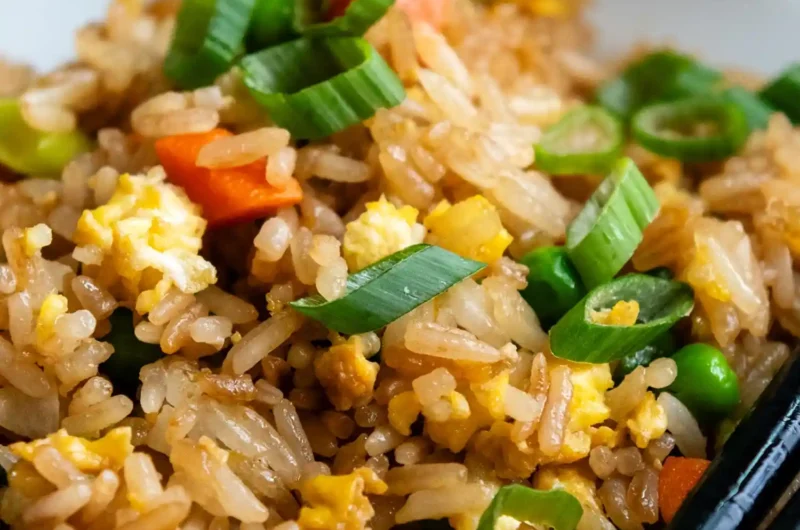
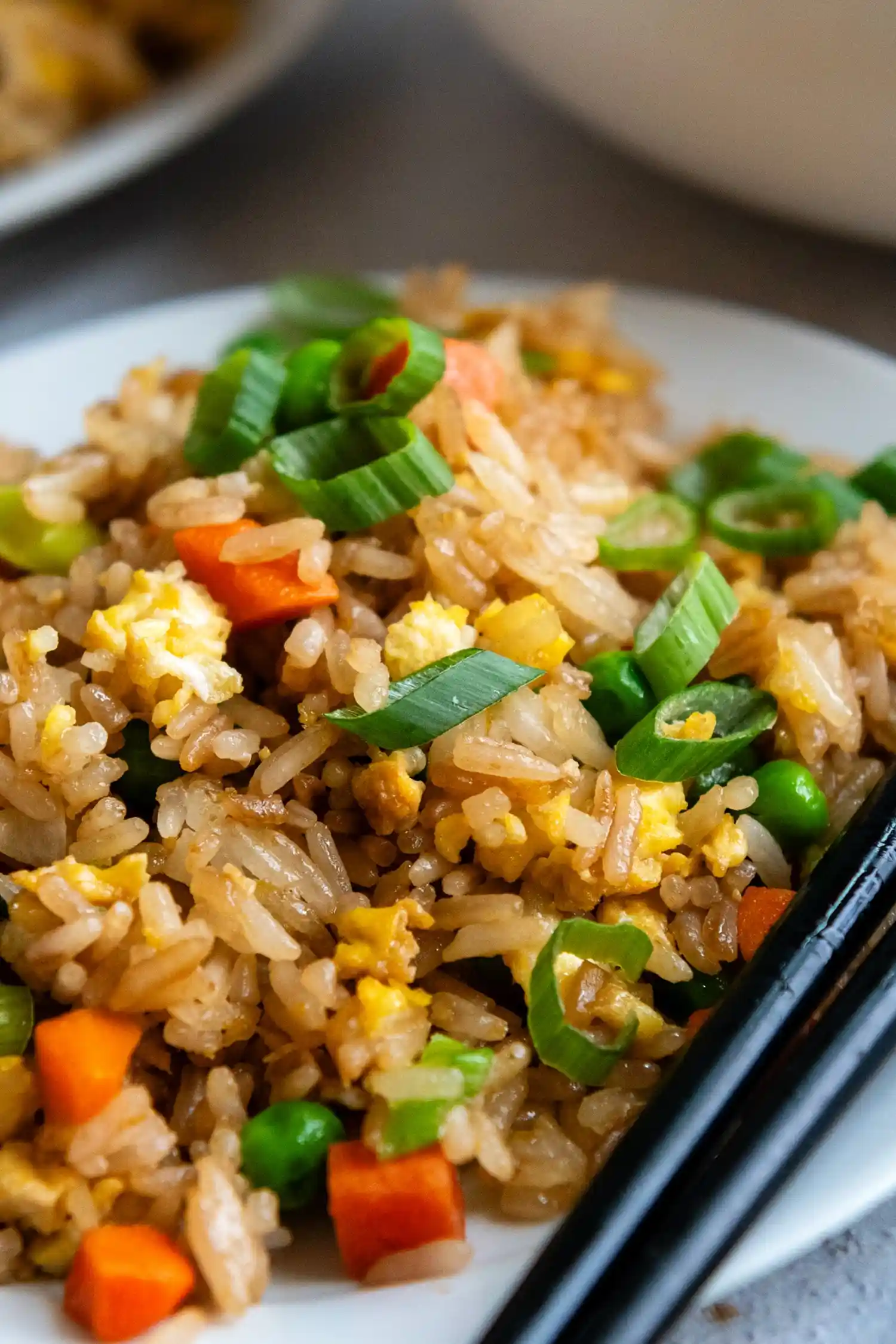
Enjoy a restaurant-style meal at home with this quick and easy gluten-free fried rice. This recipe ensures the perfect grain texture and a savory, umami flavor profile. It is an ideal side dish or a versatile base for various proteins.
List of ingredients
- 3 tablespoons vegetable oil – used for frying and preventing sticking.
- 5 cups (packed) cold cooked jasmine rice – chilled rice ensures separate grains.
- 3 large eggs – adds richness and protein.
- 1 cup frozen peas and carrots, thawed (optional) – adds color and nutrition.
- 3 green onions, sliced – provides a fresh, mild onion flavor.
- 3 tablespoons gluten-free soy sauce – the primary seasoning for umami.
- 1 teaspoon sesame oil (optional) – adds a distinct toasted aroma.
step-by-step instructions
- Fry the rice: Heat a wok or large deep skillet over medium-high heat. Add the vegetable oil and the cold rice, stirring to coat the grains in oil and breaking up any large chunks. Fry for about 3-4 minutes.
- Scramble the eggs: Reduce the heat slightly and push the rice to one side of the pan. Pour the eggs into the empty side. Cook and stir to scramble them until they are almost cooked through.
- Combine and finish: Mix the scrambled eggs back into the rice. Stir in the optional peas and carrots, sliced green onions, gluten-free soy sauce, and optional sesame oil. Cook until everything is heated through, then serve immediately.
Optimal Rice Preparation Methods
Rinsing Techniques for Clear Water
Place your measured uncooked rice in a fine-mesh sieve. Run cold water over the grains while stirring them with your hand for at least one minute. Continue this process until the water draining from the sieve is completely clear to remove excess surface starch.
Selecting the Best Rice Variety
Long-grain varieties like jasmine or basmati are the best choices for fried rice. These grains are less sticky than short-grain rice, which helps them separate easily during the frying process. Jasmine rice specifically offers a fragrant aroma that complements the soy sauce.
Controlling the Water Ratio
To prevent the rice from becoming mushy, use a precise water-to-rice ratio. For jasmine rice, using slightly less water than usual results in a drier grain. This dryness is essential for achieving the toasted texture characteristic of takeout fried rice.
The Importance of Steam Release
After cooking the rice, it is important to let steam escape quickly. If the rice stays in a covered pot, the trapped moisture can make the grains soft and sticky. Removing the lid or fluffing the rice immediately helps stop the cooking process.
Refrigeration for Texture Control
Cold rice is non-negotiable for high-quality fried rice. Chilling the rice in the refrigerator for at least 30 minutes, or ideally overnight, allows the starches to retrograde. This makes the grains firmer and less likely to clump when hitting the hot oil.
Using a Sheet Pan for Cooling
Spread the cooked rice in a thin, even layer across a large baking sheet. This maximizes the surface area, allowing the rice to cool much faster and more evenly than if it were left in a bowl. Once cooled, the grains will be dry and ready for the wok.
Cooking Equipment and Heat Control
Wok Advantages for Even Heating
A wok is the ideal tool because its curved sides and narrow bottom concentrate heat. This allows you to stir-fry ingredients quickly and move them to the sides of the pan easily. The high heat of a wok creates a toasted flavor known as wok hei.
Using a Large Deep Skillet
If you do not own a wok, a large deep skillet is a practical alternative. Ensure the pan is wide enough to allow the rice to spread out without overcrowding. Overcrowding the pan lowers the temperature and can lead to steaming rather than frying.
Temperature Management for Searing
Keep the heat at a medium-high setting to ensure the rice sears rather than boils. If the temperature drops too low, the rice will absorb the oil and become greasy. If it is too high, the soy sauce may burn quickly.
Preventing Rice from Sticking
Stir the rice constantly during the first few minutes of frying. This ensures every grain is coated in oil, which creates a barrier between the rice and the pan. Breaking up clumps with a spatula prevents concentrated areas of sticking.
Oil Selection for High Heat
Use a neutral oil with a high smoke point, such as vegetable, canola, or grapeseed oil. Avoid extra virgin olive oil or butter for the initial frying phase, as they can burn at the temperatures required for authentic fried rice.
Flavor Profiles and Gluten-Free Swaps
Choosing Certified Gluten-Free Soy Sauce
Standard soy sauce contains wheat, so always verify that your brand is certified gluten-free. Look for clear labels on the packaging to ensure there is no cross-contamination. Many major brands now offer a dedicated gluten-free version.
Tamari for Deep Umami Flavor
Tamari is a Japanese soy sauce that is traditionally brewed without wheat. It generally has a richer, darker, and more intense savory flavor than standard soy sauce. It is an excellent substitute for those seeking a deeper umami taste.
Coconut Aminos for a Sweet Twist
Coconut aminos are a soy-free and gluten-free alternative made from coconut sap. They are naturally sweeter and lower in sodium than soy sauce. To balance the sweetness, you may need to add a pinch of extra salt to the dish.
Liquid Aminos as an Alternative
Liquid aminos are derived from soybeans and provide a salty, savory profile similar to soy sauce. They are naturally gluten-free and often contain more amino acids. They work well in this recipe as a direct one-to-one replacement.
Enhancing Aroma with Sesame Oil
Toasted sesame oil should be added at the very end of the cooking process. Because it has a low smoke point, adding it too early can destroy its delicate nutty flavor. A small amount provides a professional aromatic finish.
Adding Freshly Grated Ginger
For a zesty kick, stir in a teaspoon of freshly grated ginger before adding the rice. Ginger adds a warm, spicy note that cuts through the richness of the oil and eggs. It is best to sauté the ginger for 30 seconds first.
Using Minced Garlic for Depth
Adding minced garlic provides a pungent, savory base for the dish. Sauté the garlic in the oil for a few seconds until fragrant, but be careful not to brown it too much. Burnt garlic can introduce a bitter taste to the final meal.
Protein and Vegetable Variations
Incorporating Sautéed Chicken Breast
Dice chicken breast into small, uniform pieces and sauté them in the pan before the rice. Once the chicken is fully cooked and golden, remove it and set it aside. Stir the cooked chicken back into the rice at the final stage.
Adding Tender Beef Strips
Use flank steak or sirloin cut into thin strips for a hearty version of this dish. Sear the beef over high heat until browned, then remove it from the pan to prevent overcooking. Mix it back in with the soy sauce and vegetables.
Using Firm Tofu Cubes
Press extra-firm tofu to remove excess water, then dice it into small cubes. Pan-fry the tofu until the edges are crispy before proceeding with the rice. Tofu absorbs the soy sauce and sesame oil very effectively.
Adding Sautéed Mushrooms and Peppers
Sauté sliced bell peppers and mushrooms before adding the rice to the pan. These vegetables add earthy tones and a slight crunch to the texture. Ensure they are cooked until tender-crisp for the best experience.
Using Fresh Bok Choy
Chopped bok choy adds a refreshing, leafy element to the fried rice. Add the stems first to soften them, then stir in the leafy greens at the very end. The greens only need a few seconds of heat to wilt.
Including Pineapple for Sweetness
Small chunks of fresh or canned pineapple create a sweet and savory contrast. This variation is popular in Thai-style fried rice. Add the pineapple during the final stir-fry phase to warm them through without breaking them down.
Storage and Reheating Guidelines
Cooling Process Before Storage
Allow the fried rice to cool to room temperature before placing it in a container. Putting hot rice directly into the fridge can create condensation, which makes the rice soggy. This also prevents the internal temperature of the fridge from rising.
Airtight Container Recommendations
Store the leftovers in a glass or BPA-free plastic airtight container. A tight seal prevents the rice from absorbing other odors in the refrigerator. It also keeps the grains from drying out completely.
Maximum Storage Duration
Freshly made fried rice can be stored in the refrigerator for up to three to four days. Beyond this time, the quality of the vegetables and the texture of the rice will begin to degrade. Always check for freshness before consuming.
Pan-Searing for Reheating
The best way to reheat fried rice is in a non-stick skillet over medium heat. This restores the toasted texture and prevents the rice from becoming mushy. Stir frequently to ensure even heating.
Microwave Steam Method
If using a microwave, place the rice in a bowl and sprinkle a teaspoon of water over the top. Cover the bowl with a damp paper towel or a lid to trap the steam. Heat in short bursts, stirring in between, to avoid cold spots.
Common Troubleshooting Solutions
Resolving Mushy Rice Texture
If your rice is mushy, it is likely due to too much water during the initial boil or using warm rice. To fix this in the future, ensure you use the cooling method described above. If the dish is already mushy, cook it longer over higher heat to evaporate excess moisture.
Avoiding Overcooked Eggs
Eggs can become rubbery if cooked too long. To prevent this, scramble them quickly on the empty side of the pan and mix them with the rice while they are still slightly moist. The residual heat from the rice will finish cooking the eggs.
Adjusting Excessive Saltiness
If the dish tastes too salty, you can balance it by adding a squeeze of fresh lime juice or a teaspoon of sugar. Adding more steamed vegetables or a handful of fresh green onions can also dilute the saltiness. Always taste as you go.
Preventing Rice Clumping
Clumping usually happens when the rice is not sufficiently cooled or not enough oil is used. Use a spatula to press down on clumps during the frying stage. Ensure the pan is hot enough to sear the grains individually.
Frequently Asked Questions
Can I use brown rice instead?
Yes, you can use brown rice, but keep in mind that it has a nuttier flavor and a firmer texture. Brown rice takes longer to cook and does not soften as much as jasmine rice, so you may need to add a tiny bit more oil.
Is it necessary to use day-old rice?
While not strictly necessary, it is highly recommended. Freshly cooked rice contains too much moisture and will likely turn into a porridge-like consistency. If you must use fresh rice, spread it on a tray and freeze it for 15 minutes first.
Can I freeze this dish?
Yes, fried rice freezes well. Store it in freezer-safe bags and remove as much air as possible. When reheating from frozen, use a skillet and add a splash of water or oil to restore the texture.
Which oil is best for frying?
Vegetable oil is the best choice because of its neutral taste and high smoke point. Canola or peanut oil are also excellent alternatives. Avoid using butter or olive oil as the primary frying agent to prevent burning.
Print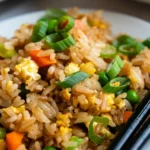
Simple Weeknight Gluten Free Fried Rice
- Total Time: 75 minutes
- Yield: 6 servings 1x
- Diet: Gluten-Free, Vegetarian
Description
Just because this easy gluten-free side dish is uncomplicated, doesn’t mean it lacks flavor or the perfect texture. If you have been disappointed by gluten-free fried rice that is is mushy or bland, then this is the recipe for you. It’s all about using right grain of rice, ideal ingredient ratios (all GF, of course), and an easy cooking technique that will make you ditch the take-out forever!
Ingredients
- 3 tablespoons vegetable oil
- 5 cups (packed) cold cooked jasmine rice
- 3 large eggs
- 1 cup frozen peas and carrots, thawed (optional)
- 3 green onions, sliced
- 3 tablespoons gluten-free soy sauce
- 1 teaspoon sesame oil (optional)
Instructions
- Step: Heat a wok or large deep skillet over medium-hight heat. Add the oil then the cold rice, stirring to coat the rice in oil, and breaking up any chunks. Fry for about 3-4 minutes.
- Step: Reduce heat slightly and move the rice to one side of the pan. To the empty side, add the eggs. Cook and stir to scramble the eggs, almost cooking through.
- Step: Combine the eggs with the rice. Add in the optional veggies, green onions, soy sauce, and optional sesame oil. Stir and cook until heated through. Serve immediately.
Notes
Recommended Cooking and Cooling Rice Technique: Place 2 cups jasmine rice in a sieve and rinse thoroughly, until the water runs clear. Transfer the rice to a medium saucepan and add 2 ¼ cups water. Heat, uncovered, until the water starts to boil. Reduce the heat to medium until the rice starts to rise above the water. Cover slightly and let cook for 5 minutes. Once water is absorbed, turn off heat, cover completely, and let sit for 10 minutes. Fluff with a fork, spread on a large baking sheet, and refrigerate for at least 30 minutes to overnight.
- Prep Time: 60 minutes
- Cook Time: 15 minutes
- Category: Side Dish
- Method: Stir-frying
- Cuisine: Chinese
Nutrition
- Serving Size: 1 serving
- Calories: 283 kcal
- Sugar: 0.3 g
- Sodium: 80 mg
- Fat: 10 g
- Saturated Fat: 2 g
- Unsaturated Fat: 8 g
- Trans Fat: 0.1 g
- Carbohydrates: 40 g
- Fiber: 1 g
- Protein: 7 g
- Cholesterol: 82 mg
Keywords: gluten-free, fried rice, jasmine rice, side dish, Chinese food