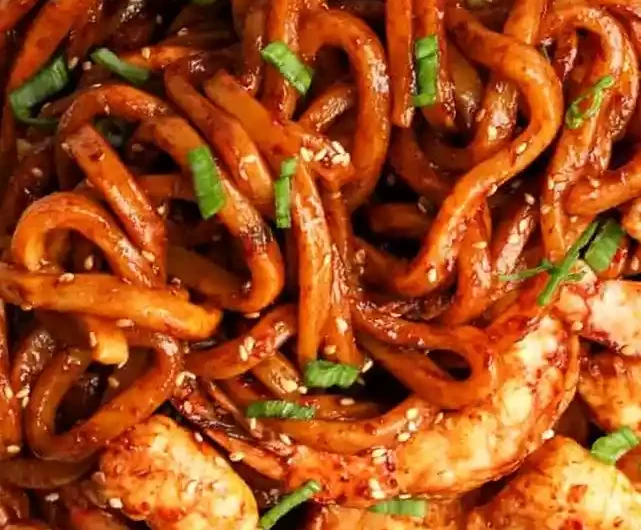
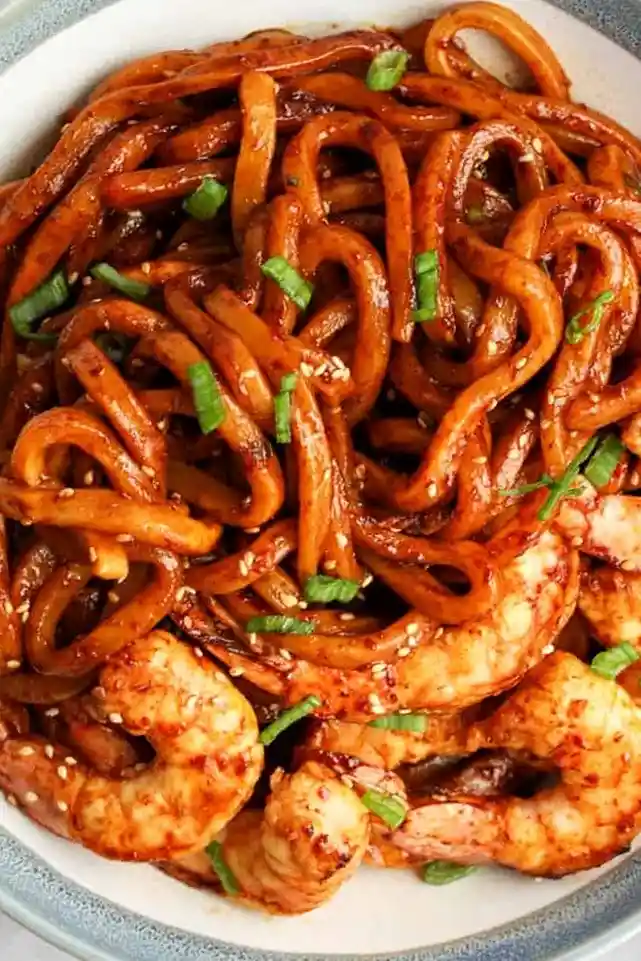
This rapid dinner combines chewy udon noodles with succulent shrimp in a spicy, aromatic garlic sauce. It is designed for busy weeknights, requiring only 15 minutes from preparation to plate.
List of ingredients
- 1.10 lb udon noodle – frozen or fresh, prepared according to package instructions
- 10 jumbo shrimp – peeled and deveined for easy eating
- 1 green onion – finely chopped for flavor and garnish
- 1 tbsp vegetable oil – or any neutral oil with a high smoke point
- 1 clove garlic – minced finely to distribute flavor
- 1/2 tsp sesame seeds – used for final garnishing
- 2 tsp sesame oil – provides a toasted nutty aroma
- 1 tsp gochugaru – Korean red pepper flakes (double the amount for extra heat)
- 1 tsp white granulated sugar – or cane sugar to balance the salt
- 1/2 tsp chicken bouillon powder – adds savory depth
- 1/2 tsp Chinese black vinegar – or substitute with apple cider, rice, or white vinegar
- 2 tsp dark soy sauce – for a rich color and deep flavor
- 2 tsp regular soy sauce – provides the primary salty base
step-by-step instructions
- Prepare the noodles: Place frozen udon noodles in a large bowl and soak them in boiling water for about 30 seconds just until they loosen. Strain the noodles thoroughly and set them aside.
- Cook the shrimp: Heat vegetable oil in a large pan over medium heat. Fry the shrimp until they turn pink, curl into a C-shape, and are cooked through. Immediately remove the shrimp from the pan and set them aside to avoid overcooking.
- Sauté aromatics: Reduce the pan heat to low-medium. Sauté the minced garlic and chopped green onions for approximately 10 seconds or until they become fragrant.
- Build the sauce: Quickly add the following ingredients in this specific order to prevent burning: sesame oil, gochugaru, sugar, chicken bouillon powder, Chinese black vinegar, and both types of soy sauce.
- Combine noodles: Toss the strained udon noodles into the pan. Mix well and stir-fry until every noodle is evenly coated in the chili garlic sauce.
- Final assembly: Return the cooked shrimp to the pan and toss them with the noodles. Remove the pan from the heat immediately. Garnish with sesame seeds and additional green onions before serving.
Professional Cooking Techniques
Selecting the Best Udon Noodles
Frozen udon is highly recommended over shelf-stable vacuum-sealed versions. Frozen noodles maintain a superior chewy texture and are less likely to break apart during the stir-fry process. If using fresh noodles, ensure they are rinsed of excess starch to prevent the sauce from becoming gummy.
Controlling Shrimp Texture
Shrimp cook very quickly and can become rubbery if left on the heat too long. Remove them as soon as they form a C-shape; if they curl tightly into an O-shape, they are overcooked. Keeping them separate from the sauce until the final step ensures they remain tender.
Optimizing Chili Oil Infusion
Adding the gochugaru and sesame oil to the heated garlic base allows the chili flakes to toast slightly. This process releases fat-soluble flavors and creates a more vibrant red color in the final dish. Ensure the heat is low-medium during this phase so the pepper flakes do not burn and turn bitter.
Managing Sauce Consistency
The order of adding ingredients is crucial because sugar and bouillon powder can burn if they hit the pan alone. By adding the liquid soy sauces and vinegar toward the end of the sauce build, you create a slurry that protects the smaller granules. This results in a smooth, glossy coating on the noodles.
Ingredient Substitutions and Swaps
Alternative Protein Choices
While shrimp is the primary protein, this sauce works well with other options. Sliced chicken breast, thin strips of beef, or extra-firm tofu cubes are excellent replacements. If using chicken or beef, increase the initial sauté time to ensure the meat is fully cooked through before removing it from the pan.
Replacing Gochugaru
If Korean red pepper powder is unavailable, use standard crushed red pepper flakes or Sichuan chili flakes. Note that standard red pepper flakes are often spicier and less smoky than gochugaru. You may need to reduce the quantity to maintain a mild heat level.
Vinegar Alternatives for Acidity
Chinese black vinegar provides a unique fermented depth, but rice vinegar or apple cider vinegar are suitable substitutes. These alternatives offer a brighter, sharper acidity. Avoid using balsamic vinegar, as its strong sweetness and distinct flavor profile will clash with the Asian-inspired aromatics.
Gluten-Free Modifications
To make this dish gluten-free, replace the wheat-based udon with gluten-free udon or brown rice noodles. Use tamari or coconut aminos instead of both dark and regular soy sauce. Check that your chicken bouillon powder is certified gluten-free, as some brands use wheat-based thickeners.
Oil Selection for High Heat
Use oils with a high smoke point such as avocado, canola, or peanut oil for the initial frying of the shrimp. Extra virgin olive oil is not recommended because its low smoke point can cause the oil to break down and smoke at medium-high temperatures. This can alter the taste of the garlic and shrimp.
Serving Suggestions and Pairings
Ideal Appetizer Pairings
This dish pairs well with light, crispy starters that contrast the richness of the sesame oil. Vegetable egg rolls, crab rangoons, or pan-fried gyoza are excellent choices. A light egg drop soup or hot and sour soup can also provide a comforting start to the meal.
Adding Vegetable Side Dishes
To increase the nutritional value, serve the noodles with stir-fried greens. Bok choy, choy sum, or garlic green beans provide a fresh, crisp texture that cuts through the spicy sauce. Stir-fried snow pea leaves are another traditional choice that complements the udon’s chewiness.
Balanced Protein Combinations
For a more substantial feast, serve this as part of a larger spread with Mongolian beef or soy garlic tofu. The consistency of the chili garlic sauce makes it a versatile centerpiece that does not overpower other savory, soy-based dishes on the table.
Storage and Reheating Instructions
Refrigerator Storage Guidelines
Leftover noodles can be stored in an airtight container in the refrigerator for up to 4 days. Ensure the container is fully sealed to prevent the noodles from absorbing other scents from the fridge. The sauce may thicken during cooling, which is normal for starch-based noodles.
Best Reheating Methods
For the best texture, reheat the noodles in a pan over medium heat with a tablespoon of water or broth. This helps loosen the sauce and restores the noodles’ bounce. Alternatively, a microwave can be used for 2-3 minutes, though the shrimp may toughen slightly during this process.
Why Freezing is Discouraged
It is not recommended to freeze this dish because the texture of the udon noodles degrades significantly upon thawing. The shrimp can also become mealy and lose their snap. For the best experience, only cook the amount needed for a few days of consumption.
Troubleshooting Common Issues
Preventing Soggy Noodles
Over-soaking udon noodles in boiling water will make them mushy and prone to breaking. Limit the soak time to 30 seconds—just enough to separate the strands. Always strain them thoroughly so excess water does not dilute the sauce in the pan.
Handling Burnt Garlic
Garlic burns very quickly and becomes bitter if cooked too long over high heat. Keep the heat at low-medium and sauté for no more than 10 seconds before adding the other sauce ingredients. If the garlic turns dark brown, it is best to start the sauce over to avoid a bitter taste.
Adjusting Salt Levels
If the dish tastes too salty, you can balance it by adding a small amount of extra sugar or a squeeze of fresh lime juice. If it lacks saltiness, add a few drops of regular soy sauce at the very end of the cooking process. Be cautious with bouillon powder, as different brands have varying sodium levels.
Frequently Asked Questions
Can I make this in advance?
Yes, this dish can be prepared up to 4 days in advance and stored in the refrigerator. When reheating, use a pan on the stovetop to ensure the sauce emulsifies and the noodles regain their texture without drying out.
Are udon noodles gluten-free?
Standard udon noodles are made from wheat flour and are not gluten-free. However, you can find gluten-free udon alternatives made from rice or corn flour at most Asian grocery stores or online retailers.
How do I make these noodles not spicy?
To remove the heat, simply omit the gochugaru or red pepper flakes entirely. The dish will still be highly flavorful due to the garlic, sesame oil, and soy sauces, but it will lose the spicy kick.
Print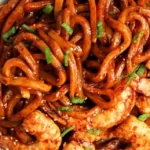
Easy 15-min. Chili Garlic Shrimp Noodles
- Total Time: 15 minutes
- Yield: 2 servings 1x
- Diet: General
Description
Bouncy udon noodles in a delicious aromatic garlic chili oil with succulent shrimp. These quick and easy chili garlic shrimp noodles are ready in 15 minutes with minimal ingredients!
Ingredients
- 1.10 lb udon noodle (frozen, or fresh udon prepared to package instructions)
- 10 jumbo shrimp (peeled & deveined)
- 1 green onion (finely chopped)
- 1 tbsp vegetable oil
- 1 clove garlic (minced)
- 1/2 tsp sesame seeds
- 2 tsp sesame oil
- 1 tsp gochugaru (or red pepper flakes)
- 1 tsp white granulated sugar
- 1/2 tsp chicken bouillon powder
- 1/2 tsp Chinese black vinegar (or apple cider vinegar/rice vinegar/white vinegar)
- 2 tsp dark soy sauce
- 2 tsp regular soy sauce
Instructions
- Step: Soak frozen udon noodles in hot boiling water until loosened (about 30 seconds), strain, and set aside.
- Step: Heat vegetable oil in a large pan on medium heat and fry shrimp until pink, curled, and cooked through, then remove and set aside.
- Step: Reduce heat to low-medium and sauté garlic and green onions for 10 seconds or until fragrant.
- Step: Quickly add sesame oil, gochugaru, sugar, chicken bouillon powder, Chinese black vinegar, and both soy sauces to the pan.
- Step: Toss in udon noodles and mix well until noodles are coated in sauce.
- Step: Toss in the cooked shrimp, remove from heat, and garnish with sesame seeds and more green onions.
Notes
Use frozen or fresh udon for a chewier texture compared to shelf-stable options. Be careful not to overcook the shrimp to keep them tender.
- Prep Time: 10 minutes
- Cook Time: 5 minutes
- Category: Main Course
- Method: Stir-frying
- Cuisine: Chinese, Japanese, Korean
Nutrition
- Serving Size: 1 serving
- Calories: 925 kcal
- Sugar: 25 g
- Sodium: 3830 mg
- Fat: 11 g
- Saturated Fat: 1 g
- Unsaturated Fat: 4 g
- Trans Fat: 0 g
- Carbohydrates: 173 g
- Fiber: 14 g
- Protein: 40 g
- Cholesterol: 5 mg
Keywords: chili garlic shrimp, udon noodles, 15 minute meal, quick dinner, Asian fusion