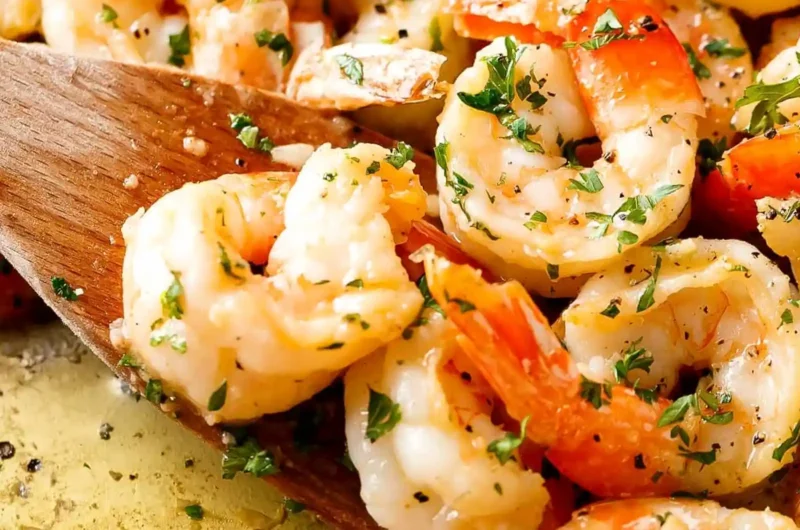
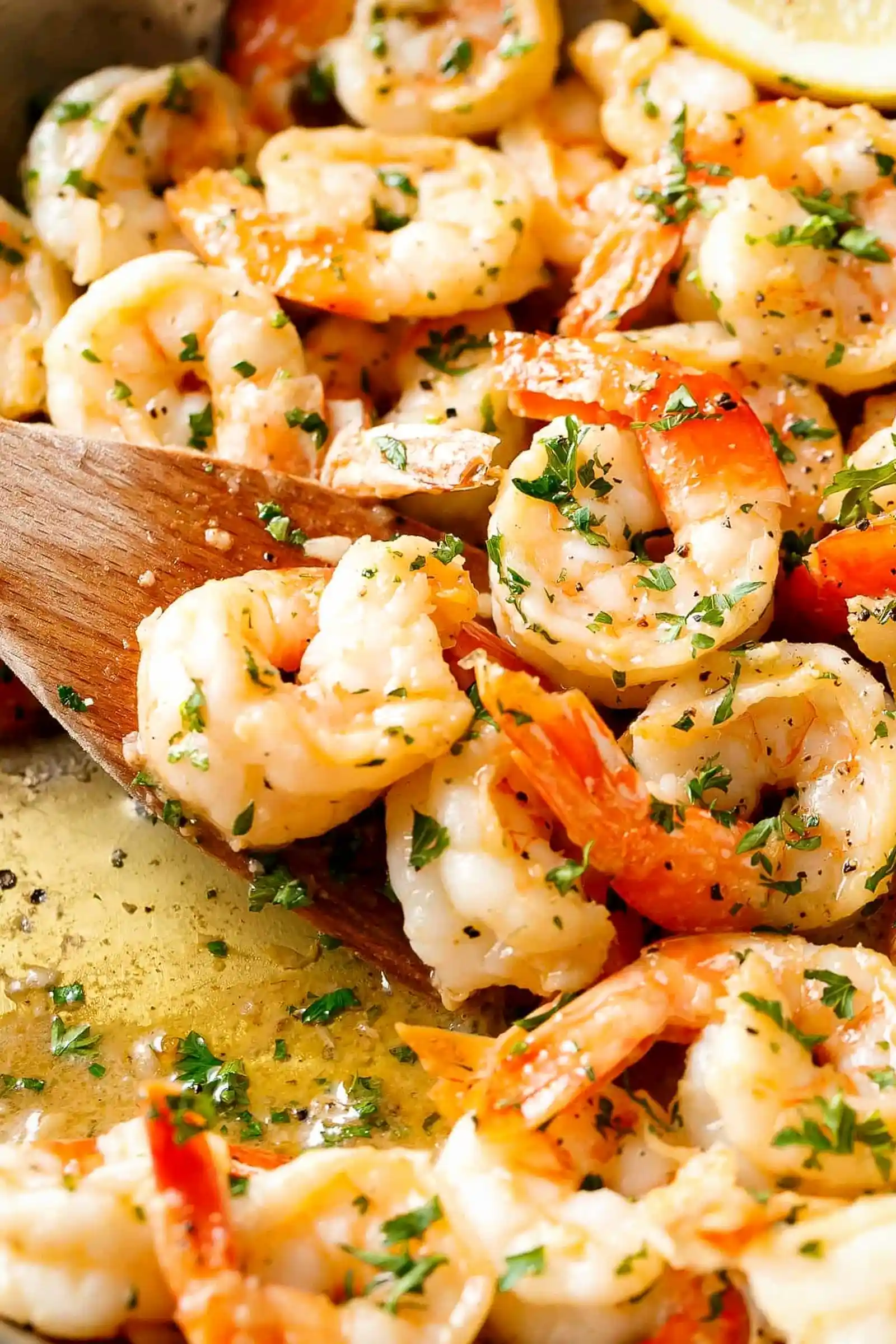
This Garlic Butter Shrimp Scampi is a fast, high-protein meal that comes together in about ten minutes. It features a rich, buttery sauce with a bright citrus finish, making it an ideal choice for busy weeknights.
List of ingredients
- 2 tablespoons olive oil – prevents butter from burning at high heat.
- 4 tablespoons butter – divided into two portions for sautéing and finishing.
- 4-5 cloves garlic – large, minced (approx. 1 1/2 tablespoons).
- 1 1/4 pounds shrimp – large prawns, shelled with tails on or off.
- 1 pinch salt – adjust according to preference.
- 1 pinch cracked pepper – for a subtle heat.
- 1/4 cup vegetable broth – adds depth of flavor and replaces white wine.
- 1/2 teaspoon red pepper flakes – crushed, optional for a spicy kick.
- 2 tablespoons lemon juice – provides essential acidity.
- 1/4 cup fresh parsley – chopped finely for garnish and freshness.
step-by-step instructions
- Sauté Aromatics: Heat the olive oil and 2 tablespoons of butter in a large pan or skillet over medium-high heat. Add the minced garlic and sauté for 30 to 60 seconds until fragrant, ensuring it does not brown too quickly.
- Sear the Shrimp: Add the shrimp to the pan and season with salt and pepper. Sauté for 1-2 minutes on one side until they begin to turn pink, then flip them over.
- Simmer the Sauce: Pour in the vegetable broth and stir in the red pepper flakes if using. Bring the liquid to a simmer for 1-2 minutes until the broth reduces by about half and the shrimp are fully cooked through.
- Final Emulsion: Stir in the remaining 2 tablespoons of butter, lemon juice, and chopped parsley. Remove the pan from the heat immediately to keep the sauce creamy and prevent the shrimp from toughening.
- Plating: Serve the shrimp and sauce immediately over rice, pasta, garlic bread, or steamed vegetables such as cauliflower, broccoli, or zucchini noodles.
Pro Cooking Techniques for Perfect Scampi
Implement Mise en Place for Speed
Because shrimp cook extremely quickly, it is critical to have all ingredients measured and chopped before turning on the stove. Having the broth, lemon juice, and parsley ready prevents the shrimp from overcooking while you search for ingredients. This preparation ensures the timing of the sauce reduction is precise.
Control the Heat to Avoid Burning Garlic
Garlic contains natural sugars that burn easily at high temperatures, creating a bitter taste. Use a combination of olive oil and butter to raise the smoke point of the fat. Keep the garlic moving constantly in the pan for those first 60 seconds to ensure even cooking without scorching.
Identify the Exact Moment of Doneness
Shrimp are cooked when they change from translucent to opaque and curl into a ‘C’ shape. If they curl tightly into an ‘O’ shape, they are overcooked and will become rubbery. Remove the pan from the heat the moment the ‘C’ shape is achieved.
Create a Glossy Pan Sauce
Adding the final portion of cold butter at the end of the process is a technique called monter au beurre. This creates a thick, glossy emulsion that clings to the shrimp rather than separating into a pool of oil. Stirring this in off the heat prevents the emulsion from breaking.
Ingredient Selection and Substitutions
Choose Wild-Caught Shrimp for Superior Taste
Wild-caught shrimp typically offer a more intense, natural sweetness and a firmer texture than farm-raised options. They often have a more vibrant color when cooked. When buying frozen shrimp, look for those labeled ‘peeled and deveined’ to save preparation time.
Using Vegetable Broth as a Wine Alternative
Replacing white wine with vegetable broth maintains the liquid base needed for the pan sauce while removing alcohol. A low-sodium vegetable broth is recommended to maintain control over the salt levels. This substitution keeps the savory profile of the dish intact.
Substitute Ghee for Traditional Butter
For those who prefer a higher smoke point or a nuttier flavor, ghee is an excellent substitute for butter. Ghee is clarified butter with the milk solids removed, meaning it will not brown as quickly during the initial sauté. Use it in the same proportions as the butter called for in the recipe.
Swap Lemon Juice for Lime for a Zesty Twist
While lemon is traditional for scampi, fresh lime juice provides a brighter, more tropical acidity. This works particularly well if you are serving the shrimp over coconut rice or with cilantro instead of parsley. Use the same 2-tablespoon measurement for consistency.
Serving Suggestions and Pairings
Classic Pasta Pairings
Linguine and angel hair pasta are the traditional choices for shrimp scampi because their thin shapes carry the butter sauce efficiently. Toss the cooked pasta directly into the skillet with the shrimp for a minute to ensure every strand is coated. Garnish with extra parmesan cheese for added richness.
Low-Carb Vegetable Alternatives
Zucchini noodles (zoodles) provide a fresh, crisp alternative that keeps the meal light. For a heartier low-carb option, steamed cauliflower florets or roasted spaghetti squash work well. Sauté the zoodles separately for 2 minutes before adding the shrimp on top to avoid watering down the sauce.
Complementary Side Dishes
A side of crusty garlic bread is ideal for soaking up the remaining butter sauce from the plate. A light arugula salad with a simple balsamic vinaigrette provides a peppery contrast to the rich butter. Steamed asparagus or sautéed spinach also pair well with the citrus notes of the dish.
Using the Recipe as an Appetizer
To serve this as a starter, reduce the shrimp quantity and serve them individually on a platter. Provide small toothpicks for easy grabbing and place a lemon wedge beside each shrimp. This presentation is professional and suitable for gatherings.
Storage and Reheating Guidelines
Proper Refrigeration Techniques
Store leftover shrimp scampi in an airtight glass container to maintain freshness. Ensure the shrimp are fully submerged in the sauce to prevent them from drying out in the fridge. The dish will stay safe to eat for 2 to 3 days when kept at 40°F (4°C) or below.
Avoid Microwave Overcooking
Microwaving shrimp often leads to a rubbery texture because the intense heat cooks the proteins too quickly. Instead, reheat the scampi in a small skillet over low heat. Add a teaspoon of water or broth to loosen the sauce as it warms through.
Freezing Considerations
Shrimp scampi is not ideal for freezing because the emulsion of the butter sauce often breaks upon thawing. Additionally, the texture of the shrimp can become mushy. If you must freeze it, store the shrimp and sauce together but expect a loss in sauce consistency.
Thawing Frozen Shrimp Safely
If using frozen shrimp, thaw them in the refrigerator overnight or place them in a sealed bag under cold running water. Never thaw shrimp at room temperature, as this increases the risk of bacterial growth. Pat the shrimp completely dry with paper towels before cooking to ensure a proper sear.
Preparation and Make-Ahead Advice
Prepping the Shrimp Base
You can peel and devein the shrimp several hours in advance and store them in a bowl with a damp paper towel. This prevents the shrimp from drying out while waiting for the cooking process. Keep them chilled in the refrigerator until the exact moment they hit the pan.
Creating a Garlic-Parsley Paste
To further speed up the cooking process, you can blend the minced garlic and chopped parsley into a coarse paste. This allows you to add both aromatic elements to the pan simultaneously. However, be careful not to over-process, as you want visible bits of garlic and herbs.
Pre-Measuring the Liquid Components
Combine the vegetable broth, lemon juice, and red pepper flakes in a small measuring cup before starting. This allows you to pour all the liquid elements into the pan in one motion. This prevents the shrimp from sitting in the hot pan too long while you measure individual liquids.
Troubleshooting Common Issues
What to do if the Sauce is Too Thin?
If the sauce has not reduced enough, continue simmering the broth for another 1-2 minutes before adding the final butter. If it is still too thin after adding the butter, you can whisk in a tiny pinch of cornstarch mixed with water. However, reducing the liquid via simmering is the preferred method for flavor concentration.
Handling Rubbery Shrimp
Rubbery shrimp are a result of overcooking. If this happens, there is no way to reverse the texture, but you can mask it by adding more sauce. To prevent this in the future, strictly follow the ‘C’ shape rule and remove the pan from the heat the second the shrimp are opaque.
Fixing Bitter or Burnt Garlic
If the garlic turns dark brown or black, it has burnt and will taste bitter. The best solution is to discard the burnt garlic and start the sauté process over. Trying to save the sauce by adding more ingredients will only result in a bitter-tasting final dish.
Managing Sauce Separation
If the butter separates from the broth and forms oil droplets on top, the pan was likely too hot when the final butter was added. To fix this, whisk the sauce vigorously over very low heat to re-emulsify the fats. Adding a teaspoon of cold water can sometimes help stabilize the emulsion.
Frequently Asked Questions
Can I use frozen shrimp for this recipe?
Yes, frozen shrimp work perfectly as long as they are fully thawed and patted dry. Dry shrimp sear better and create a more flavorful crust, whereas wet shrimp will steam in the pan.
What is the best size of shrimp to use?
Large or jumbo shrimp (typically 16-20 or 21-25 count per pound) are best because they hold their shape and remain juicy. Smaller shrimp cook much faster and are more prone to overcooking.
Can this recipe be made in a wok?
A wok is an excellent tool for this recipe because its high sides and heat distribution allow for fast searing. Use the same oil-to-butter ratio to ensure the high heat of the wok does not burn the butter.
How do I devein shrimp if they aren’t pre-cleaned?
Use a small paring knife to make a shallow slit along the back of the shrimp. Use the tip of the knife or a toothpick to lift out the dark vein, which is the digestive tract, and rinse under cold water.
} Print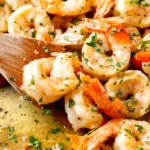
Quick Garlic Butter Shrimp Scampi
- Total Time: 10 minutes
- Yield: 4 servings 1x
- Diet: Low Carb
Description
Garlic Butter Shrimp Scampi is a quick and easy dish featuring a garlic buttery scampi sauce with lemon, ready in less than 10 minutes. Serve as an appetizer or as a main course with pasta or low-carb vegetables.
Ingredients
- 2 tablespoons olive oil
- 4 tablespoons butter
- 4–5 cloves garlic, minced
- 1 1/4 pounds shrimp, shelled
- 1 pinch salt
- 1 pinch cracked pepper
- 1/4 cup vegetable broth
- 1/2 teaspoon red pepper flakes
- 2 tablespoons lemon juice
- 1/4 cup fresh parsley, chopped
Instructions
- Step 1: Heat olive oil and 2 tablespoons of butter in a large pan or skillet. Add garlic and sauté until fragrant (about 30 seconds – 1 minute). Then add the shrimp, season with salt and pepper to taste and sauté for 1-2 minutes on one side (until just beginning to turn pink), then flip.
- Step 2: Pour in vegetable broth, add red pepper flakes (if using). Bring to a simmer for 1-2 minutes or until liquid reduces by about half and the shrimp is cooked through.
- Step 3: Stir in the remaining butter, lemon juice and parsley and take off heat immediately.
- Step 4: Serve over rice, pasta, garlic bread or steamed vegetables.
Notes
Use a butter/oil combination to prevent the butter from burning. For a low carb option, serve over zucchini noodles or steamed cauliflower.
- Prep Time: 5 minutes
- Cook Time: 5 minutes
- Category: Dinner
- Method: Sautéing
- Cuisine: Italian
Nutrition
- Serving Size: 1 serving
- Calories: 303 kcal
- Sugar: 0.4 g
- Sodium: 276 mg
- Fat: 19 g
- Saturated Fat: 8 g
- Unsaturated Fat: 9 g
- Trans Fat: 0.5 g
- Carbohydrates: 2 g
- Fiber: 0.3 g
- Protein: 29 g
- Cholesterol: 258 mg
Keywords: shrimp scampi, garlic butter shrimp, quick dinner, Italian seafood