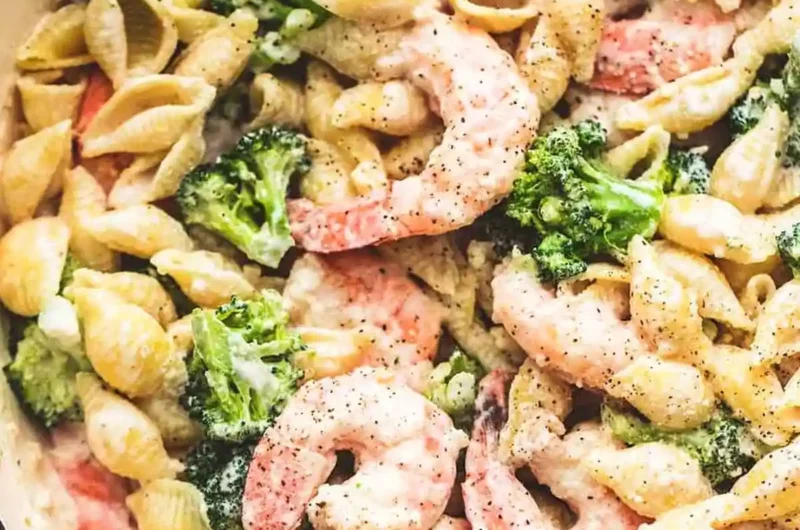
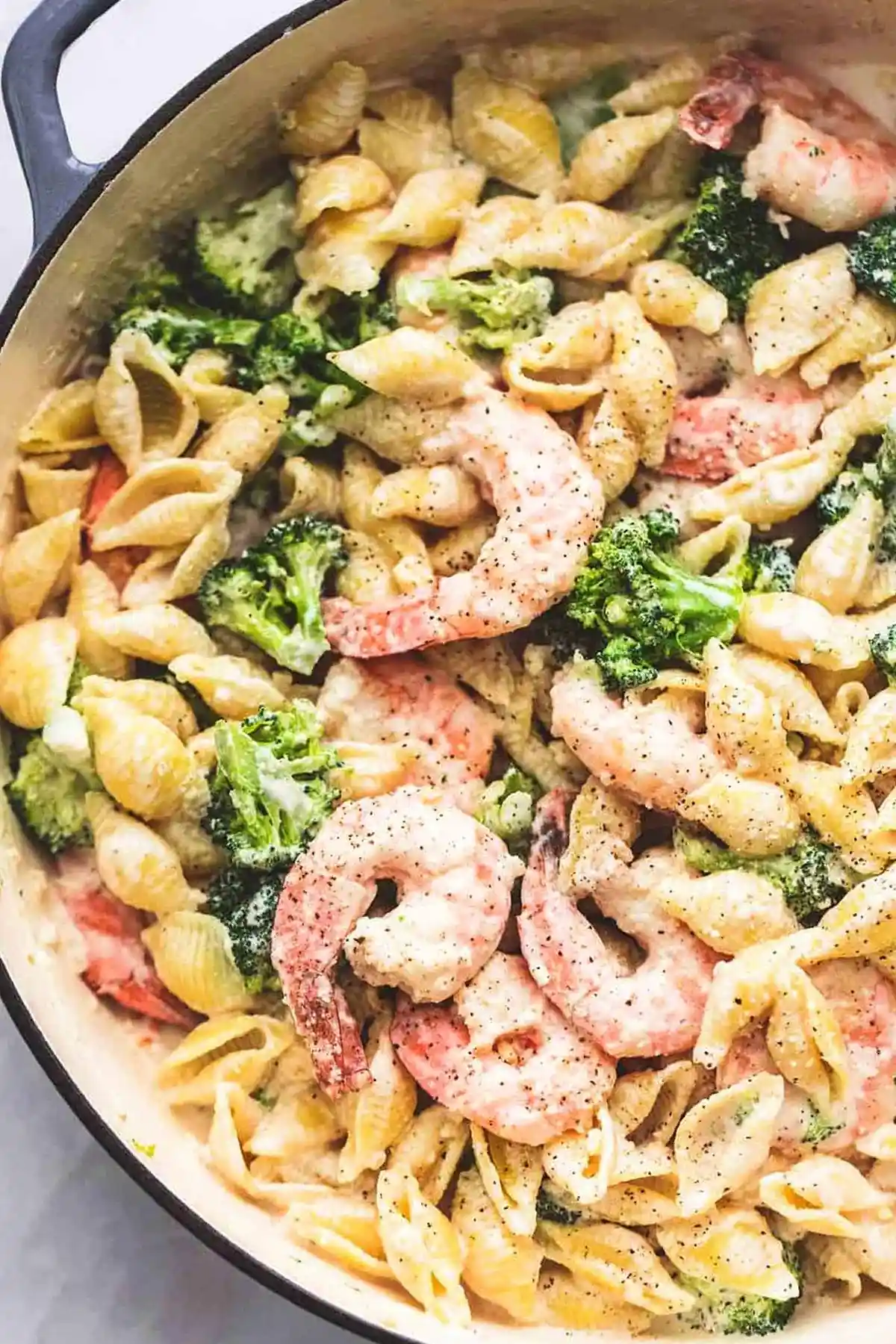
This creamy Shrimp and Broccoli Alfredo is a nutrient-dense, one-pan meal that comes together in just 30 minutes. It is an ideal solution for busy weeknights when you need a filling dinner without extensive cleanup.
List of ingredients
- 1 pound medium or large shrimp – peeled, deveined, and tails removed if preferred.
- 2 tablespoons olive oil – used for sautéing the seafood.
- 3 cups broccoli florets – cut into bite-sized pieces for even cooking.
- 1/4 cup water – for steaming the broccoli in the pan.
- 8 ounces medium pasta shells – boiled until tender and drained.
- 3 tablespoons butter – creates the base for the roux.
- 2 teaspoons minced garlic – adds aromatic depth to the sauce.
- 2 tablespoons flour – used as a thickening agent.
- 3 cups whole milk or half and half – provides the creamy base (substitute 1 cup with heavy cream for extra richness).
- 2/3 cup shredded parmesan cheese – for a salty, nutty flavor.
- 1-2 teaspoons salt – adjusted to taste.
- 1/2 teaspoon cracked black pepper – or 1/4 teaspoon ground black pepper.
- Additional grated parmesan cheese – for garnishing the final dish.
step-by-step instructions
- Sauté the shrimp: Drizzle olive oil into a large, 2-inch deep skillet over medium heat. Add the shrimp and cook for 4-6 minutes until they are opaque and fully cooked through. Transfer the shrimp to a side dish and cover them to maintain warmth.
- Steam the broccoli: Add the broccoli florets and 1/4 cup of water to the same skillet. Cover the pan and cook for 4-6 minutes until the broccoli is fork-tender. Drain any remaining liquid and set the broccoli aside with the cooked shrimp.
- Prepare the garlic butter: Keep the skillet over medium heat and add the butter. Once the butter has melted, stir in the minced garlic and cook for about 1 minute until it becomes fragrant.
- Create the roux: Sprinkle the flour over the melted garlic butter. Stir constantly to combine the flour and butter into a smooth paste.
- Build the sauce: Gradually whisk in the milk or half and half. Continue whisking until the liquid is fully incorporated and the mixture is smooth.
- Add cheese and seasoning: Stir in the shredded parmesan cheese, salt, and pepper. Continue stirring until the cheese is completely melted and the sauce is integrated. Taste and adjust the salt and pepper as needed.
- Combine and serve: Fold in the cooked pasta shells, sautéed shrimp, and steamed broccoli. Top with additional grated parmesan cheese before serving.
Customizing Your Sauce Texture and Flavor
Using Heavy Cream for Maximum Richness
To achieve a thicker, restaurant-style consistency, replace one cup of the milk with heavy cream. This increases the fat content, which prevents the sauce from breaking and gives it a more velvety mouthfeel.
Incorporating Greek Yogurt for a Lighter Option
If you prefer a lower-calorie sauce, you can substitute a portion of the cream or milk with plain 0% fat Greek yogurt. This adds a slight tanginess and boosts the protein content while reducing overall saturated fats.
Adjusting Garlic Intensity
For a more mellow flavor, use roasted garlic cloves mashed into a paste instead of raw minced garlic. If you prefer a sharper bite, add an extra teaspoon of fresh garlic during the final minute of the butter sauté.
Adding a Hint of Nutmeg
A small pinch of ground nutmeg stirred into the milk base enhances the creaminess of the parmesan cheese. This is a classic Italian technique that adds a subtle warmth to the alfredo sauce without overpowering the shrimp.
Ingredient Selection Guide
Choosing Between Fresh and Frozen Shrimp
Fresh shrimp offer the best texture, but high-quality frozen shrimp are a convenient alternative. If using frozen, thaw them completely in the refrigerator or under cold running water and pat them dry to ensure they sear rather than steam.
Selecting the Best Broccoli Florets
Choose broccoli with tight, dark green buds and firm stems. Avoid florets that show yellowing or have a limp texture, as these will not hold up well during the steaming process and may taste bitter.
Picking the Ideal Pasta Shape
While this recipe uses medium shells to scoop up the sauce, other shapes work well. Penne or rigatoni are excellent for holding hearty chunks of broccoli, while fettuccine is the traditional choice for alfredo.
Using High-Quality Parmesan Cheese
For the best melting results, grate your own parmesan from a wedge rather than using pre-shredded bags. Pre-shredded cheeses often contain anti-caking agents like cellulose, which can make the sauce slightly grainy.
Professional Cooking Techniques
Preventing Rubberized Shrimp
Avoid overcooking the shrimp by removing them from the pan the moment they turn opaque and form a ‘C’ shape. Shrimp that curl tightly into an ‘O’ shape are usually overcooked and will have a rubbery texture.
Mastering the Roux Process
When combining the butter and flour, cook the mixture for about 1-2 minutes without letting it brown. This removes the raw taste of the flour while ensuring the sauce thickens properly once the milk is added.
Controlling the Broccoli Texture
Ensure the broccoli is only ‘fork-tender’ during the initial steam. Since the vegetables will be stirred back into the hot sauce at the end, they will continue to cook slightly; undercooking them initially prevents them from becoming mushy.
Emulsifying the Sauce Correctly
Whisk the milk in gradually rather than pouring it all in at once. This allows the flour and butter to incorporate smoothly, preventing lumps from forming in the final cheese sauce.
Recommended Serving Pairings
Complementing with Garlic Bread
Serve this dish with a toasted baguette topped with garlic butter and fresh parsley. The crunch of the bread provides a textural contrast to the soft pasta and creamy sauce, and it is perfect for dipping into leftover alfredo.
Balancing with a Fresh Green Salad
A crisp garden salad with a lemon-based vinaigrette helps cut through the richness of the cream and cheese. Mix arugula, cherry tomatoes, and cucumber for a bright, acidic accompaniment that cleanses the palate.
Adding Roasted Root Vegetables
For a more substantial meal, serve a side of roasted carrots or parsnips. Toss them in olive oil, salt, and pepper, and roast at 400 degrees Fahrenheit for 45 minutes until caramelized.
Serving with Steamed Asparagus
If you want more greens, lightly steamed asparagus spears are a great addition. The earthy flavor of the asparagus pairs naturally with the buttery shrimp and parmesan sauce.
Storage and Reheating Guidelines
Refrigerating Leftovers
Store any remaining pasta in an airtight container in the refrigerator for up to three to four days. Keep the container sealed tightly to prevent the pasta from absorbing too much moisture and becoming soggy.
Reheating Without Sauce Separation
Cream sauces can separate when reheated. To fix this, add a tablespoon of milk or water to the pasta before microwaving or heating on the stove, and stir frequently to re-emulsify the fats.
Avoiding the Freezer
It is generally recommended not to freeze cream-based pasta dishes. The freezing and thawing process often causes the sauce to break, leaving the dish with a greasy texture and separated liquids.
Common Cooking Troubleshooting
Fixing a Clumpy Sauce
If the sauce becomes lumpy, remove it from the heat and whisk vigorously. If lumps persist, you can pass the sauce through a fine-mesh strainer or use an immersion blender for a few seconds to smooth it out.
Managing Excess Saltiness
Because parmesan cheese is naturally salty, it is easy to over-season the dish. If the sauce tastes too salty, stir in an extra splash of milk or a squeeze of fresh lemon juice to balance the flavors.
Dealing with Watery Vegetables
If your broccoli releases too much water after steaming, ensure you drain the pan thoroughly. Any excess water left in the skillet will dilute the roux and make the alfredo sauce thin and runny.
Frequently Asked Questions
Can I use frozen broccoli instead of fresh?
Yes, you can use frozen broccoli florets. Thaw them completely and pat them dry with a paper towel before adding them to the pan to avoid adding unnecessary moisture to the sauce.
What is the best substitute for whole milk?
Half and half is the best substitute for a richer taste. For a dairy-free alternative, use unsweetened cashew milk or almond milk, though you may need to increase the flour slightly to maintain the thickness.
How do I stop the shrimp from sticking to the pan?
Ensure the olive oil is shimmering and hot before adding the shrimp. Avoid crowding the pan; if you have too many shrimp, sauté them in two batches to maintain a high temperature for a proper sear.
Can I use a different type of cheese?
While parmesan is traditional, you can use Pecorino Romano for a saltier, sharper flavor. You can also mix in a small amount of shredded mozzarella for a stretchier, more melted consistency.
Print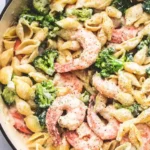
Creamy Shrimp and Broccoli Alfredo Pasta
- Total Time: 30 minutes
- Yield: 4 servings 1x
- Diet: General
Description
This Shrimp and Broccoli Alfredo dish combines all the best things about al dente pasta, creamy, cheesy alfredo sauce, delicious, buttery shrimp, and hearty broccoli all in one pot, for an easy weekday meal that’s done in just 30 minutes!
Ingredients
- 1 pound medium or large shrimp (peeled and deveined, tails removed if desired)
- 2 tablespoons olive oil
- 3 cups broccoli florets
- ¼ cup water
- 8 ounces medium pasta shells (boiled until tender and drained)
- 3 tablespoons butter
- 2 teaspoons minced garlic
- 2 tablespoons flour
- 3 cups whole milk or half n half
- ⅔ cup microbial-rennet parmesan cheese
- 1–2 teaspoons salt
- ½ teaspoon cracked black pepper
- additional grated microbial-rennet parmesan cheese for topping
Instructions
- Sauté Shrimp: Drizzle oil in a large (2-inch deep) skillet over medium heat. Add shrimp and saute for 4-6 minutes until opaque and cooked through. Transfer to a dish and cover to keep warm.
- Cook Broccoli: Add broccoli and water to the pan, cover and cook 4-6 minutes until broccoli is fork-tender. Drain any remaining liquid and set broccoli aside with the shrimp.
- Sauté Garlic: Add butter to the pan (still over medium heat). Once melted, stir in garlic until fragrant, about 1 minute.
- Make Roux: Sprinkle flour over melted butter and stir to combine.
- Thicken Sauce: Gradually whisk in milk until incorporated and smooth.
- Finish Sauce: Stir in cheese, salt, and pepper until cheese is completely melted and incorporated. Taste, add more salt and pepper if needed.
- Combine: Stir in cooked pasta shells, shrimp, and broccoli. Top with additional parmesan cheese and serve.
Notes
For a richer, creamier sauce use 1 cup heavy cream in place of the fat free or whole milk.
- Prep Time: 10 minutes
- Cook Time: 20 minutes
- Category: Main Course
- Method: Stovetop
- Cuisine: Italian
Nutrition
- Serving Size: 1 serving
- Calories: 503 kcal
- Sugar: 13 g
- Sodium: 965 mg
- Fat: 19 g
- Saturated Fat: 8 g
- Unsaturated Fat: 11 g
- Trans Fat: 0 g
- Carbohydrates: 60 g
- Fiber: 4 g
- Protein: 23 g
- Cholesterol: 38 mg
Keywords: shrimp, broccoli, alfredo, pasta, creamy, dinner, Italian