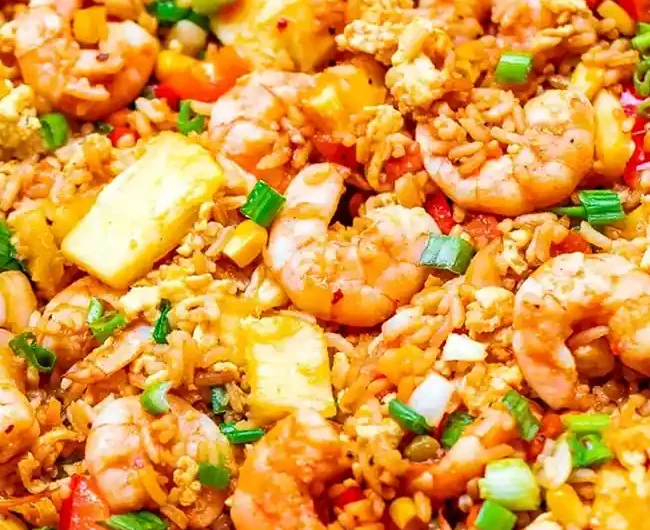
This quick meal combines savory soy sauce with sweet pineapple and tender shrimp for a balanced flavor profile. It is designed for efficiency and can be prepared in a single pan in about 30 minutes.
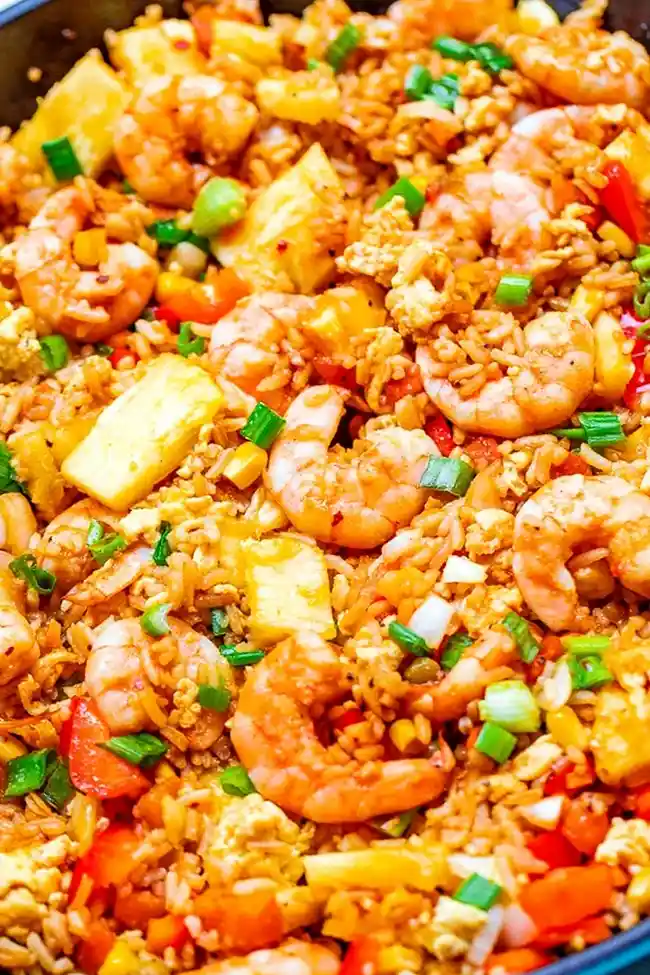
List of ingredients
- 3 to 4 tablespoons canola or vegetable oil (olive oil may be substituted) – used for searing shrimp and sautéing vegetables.
- 1 to 2 tablespoons sesame oil – adds a distinct nutty aroma and flavor.
- 1 pound medium-large fresh shrimp, cleaned (approximately 15-20 count) – provide the main protein.
- 1 medium red bell pepper, diced small – adds color and a mild sweetness.
- 1 cup peas and diced carrots blend (frozen and thawed, or canned and drained) – provides essential vegetable texture.
- 1/2 cup corn (frozen and thawed, or canned and drained) – contributes a sweet crunch.
- 2 to 3 garlic cloves, finely minced or pressed – used for aromatic base.
- 1 teaspoon ground ginger (or to taste) – adds a warm, pungent zing.
- 3 large eggs, lightly beaten – adds richness and binds the dish.
- 4 cups cooked rice (white, long-grain, or brown) – the base of the meal.
- 1 to 1 1/2 cups fresh diced pineapple (or one 8-ounce can drained tidbits) – provides the signature Hawaiian sweetness.
- 2 to 3 green onions, trimmed and sliced into thin rounds – used for fresh garnish and flavor.
- 1/4 cup reduced-sodium soy sauce (or to taste) – the primary seasoning agent.
- 1/2 teaspoon freshly ground black pepper (or to taste) – adds a mild spicy depth.
- Red chili flakes (optional and to taste) – used to introduce a heat element.
step-by-step instructions
- Sear the shrimp: Add the oils to a large non-stick skillet or wok and cook shrimp over medium-high heat for about 3 minutes, flipping halfway through. Ensure you do not overcook them to avoid a rubbery texture.
- Remove protein: Use a slotted spoon to move the shrimp to a plate, leaving the oils and cooking juices in the skillet for the vegetables.
- Sauté vegetables: Add the diced red bell pepper, peas, carrots, and corn to the pan. Cook for about 2 minutes, stirring occasionally until they begin to soften.
- Add aromatics: Stir in the minced garlic and ground ginger. Cook for 1 minute while stirring intermittently to prevent the garlic from burning.
- Scramble eggs: Push the cooked vegetables to one side of the skillet. Pour the beaten eggs into the empty side and stir them until they are fully scrambled.
- Warm the rice: Lower the heat to low. Add the cooked rice to the skillet, stirring to combine all ingredients, and warm through for 1 to 2 minutes. If the mixture appears too dry, add a small amount of additional oil.
- Combine final ingredients: Return the cooked shrimp to the pan. Stir in the diced pineapple and sliced green onions. Evenly drizzle with soy sauce, then season with black pepper and optional red chili flakes.
- Final seasoning check: Taste the fried rice for balance. If needed, add more soy sauce; many find that a total of 1/3 cup provides the best flavor.
Optimizing Your Rice Selection
Using Day-Old Chilled Rice
Cold rice is ideal because the grains have dehydrated slightly in the refrigerator. This prevents the rice from clumping or becoming mushy when it hits the hot oil in the pan. If you use fresh rice, let it cool completely before frying.
Quick-Cook Rice Options
Pre-cooked rice pouches are a convenient time-saver for this recipe. Simply heat them according to the package instructions before adding them to the skillet. This ensures the rice is fluffy and ready for immediate frying.
Brown Rice Alternatives
Brown rice can be substituted for white rice to increase the fiber content of the dish. Because brown rice has a firmer texture, it holds up very well to the frying process. Ensure it is fully cooked before adding it to the wok.
Selecting and Preparing the Best Shrimp
Choosing the Right Shrimp Size
Shrimp in the 15-20 count range are recommended for fried rice. They are large enough to remain juicy but small enough to be eaten in one bite. This size ensures a consistent distribution of protein throughout the dish.
Handling Frozen Raw Shrimp
If using frozen raw shrimp, thaw them completely in the refrigerator overnight or under cold running water. Pat them dry with paper towels before cooking. Excess moisture will cause the shrimp to steam rather than sear, reducing the flavor.
Working with Pre-Cooked Shrimp
Pre-cooked frozen shrimp should be thawed and drained thoroughly. Add them to the pan during the final steps for only one minute to warm through. Cooking them too long will make them tough and rubbery.
Flavor Enhancements and Ingredient Swaps
Choosing the Best Pineapple
Fresh pineapple offers the most vibrant flavor and a crisp texture. Canned pineapple tidbits are a practical alternative and provide a more consistent sweetness. Frozen pineapple can be used but should be thawed and drained to avoid adding too much liquid to the rice.
Adding Extra Heat with Chili
Red chili flakes provide a subtle heat that cuts through the sweetness of the pineapple. For a more intense flavor, you can add a teaspoon of Sriracha or chopped fresh bird’s eye chilies. Adjust the amount based on your heat tolerance.
Adjusting the Salt Level
Reduced-sodium soy sauce is recommended to prevent the dish from becoming overly salty. Always start with the minimum amount and add more gradually after tasting. This allows you to control the sodium levels precisely.
Protein Substitutions
While shrimp is traditional, you can replace it with diced chicken breast or extra-firm pressed tofu. If using chicken, sear it similarly to the shrimp until fully cooked. Tofu should be pan-fried until golden brown before adding the vegetables.
Essential Cooking Equipment
The Benefits of Using a Wok
A wok is designed for high-heat cooking and rapid stirring, which is perfect for fried rice. Its curved sides allow you to toss ingredients easily without them spilling over. This creates a more authentic texture known as ‘wok hei’.
Using Non-Stick Skillets
A large non-stick skillet is a great alternative if you do not own a wok. It prevents the rice and eggs from sticking to the bottom of the pan. Ensure the skillet is large enough to hold all ingredients without crowding, which prevents steaming.
Long-Term Storage and Freshness
Refrigeration Guidelines
Store leftover fried rice in an airtight container in the refrigerator. It will remain fresh and safe to eat for up to 3 to 5 days. Ensure the rice has cooled completely before sealing the container to prevent condensation.
Avoiding Freezer Burn
Freezing fried rice is generally not recommended as the texture of the rice and shrimp can degrade. If you must freeze it, use a vacuum-sealed bag to remove as much air as possible. Thaw completely in the fridge before reheating.
Reheating for Maximum Quality
Microwave Reheating Method
Heat individual portions in the microwave using 30-second intervals. Stir the rice between intervals to ensure even heating. Be careful not to overheat, as the shrimp can quickly become rubbery.
Stovetop Reheating Technique
Reheat the rice in a skillet over medium heat with a teaspoon of oil or water. Stir frequently until the dish is steaming hot. This method better preserves the fried texture of the rice grains.
Pairing Ideas for a Complete Meal
Fresh Side Salads
A crisp green salad with a sesame-ginger vinaigrette complements the richness of the fried rice. The acidity of the dressing balances the sweetness of the pineapple. Use mixed greens, shredded carrots, and cucumber for the best crunch.
Light Appetizers
Fresh spring rolls with a peanut dipping sauce make an excellent starter. These rolls provide a cool, refreshing contrast to the warm, savory rice. Use shrimp or tofu in the rolls to keep the meal cohesive.
Troubleshooting Common Issues
Preventing Mushy Rice
Mushy rice usually happens when the rice is too wet or overcooked. Use long-grain rice and ensure it is cooled or chilled before frying. Avoid stirring too aggressively, which can break the grains.
Stopping Shrimp from Becoming Rubbery
Rubberiness is caused by overcooking the shrimp. Remove them from the heat as soon as they turn opaque and curl into a ‘C’ shape. Adding them back at the very end ensures they stay tender.
Fixing a Too-Salty Dish
If you accidentally add too much soy sauce, add a squeeze of fresh lime juice or a pinch of sugar. The acidity or sweetness helps neutralize the saltiness. You can also stir in a handful of steamed unsalted vegetables to dilute the flavor.
Frequently Asked Questions
Can I use a different type of oil?
Yes, canola or vegetable oil is used for high-heat searing, but olive oil is a suitable substitute. Sesame oil is specifically used for its flavor and should be kept in the recipe for the best taste.
Is it possible to make this recipe vegan?
Yes, replace the shrimp with extra-firm tofu and the eggs with a tofu scramble or omit them entirely. Use a vegan-certified soy sauce or tamari to ensure no animal products are included.
Why does my fried rice stick to the pan?
Sticking occurs if the pan is not hot enough when the rice is added or if there is not enough oil. Ensure the skillet is well-oiled and keep the rice moving constantly over medium-low to medium heat.
How do I prepare the pineapple if I don’t have a fresh one?
Drain a can of pineapple tidbits thoroughly using a colander. If using frozen pineapple, thaw it and pat it dry with a paper towel to prevent the rice from becoming watery.
Print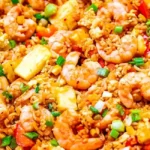
Hawaiian Pineapple Shrimp Fried Rice
- Total Time: 30 minutes
- Yield: 6 servings 1x
- Diet: General
Description
A Hawaiian-inspired shrimp fried rice recipe that’s EASY, ready in minutes, and has so much authentic flavor!! A family favorite that’s better-than-takeout!!
Ingredients
- 3 to 4 tablespoons canola or vegetable oil
- 1 to 2 tablespoons sesame oil
- 1 pound medium-large fresh shrimp, cleaned
- 1 medium red bell pepper, diced small
- 1 cup peas and diced carrots blend
- 1/2 cup corn
- 2 to 3 garlic cloves, finely minced
- 1 teaspoon ground ginger
- 3 large eggs, lightly beaten
- 4 cups cooked rice
- 1 to 1 1/2 cups fresh diced pineapple
- 2 to 3 green onions, sliced into thin rounds
- 1/4 cup reduced-sodium soy sauce
- 1/2 teaspoon freshly ground black pepper
- red chili flakes (optional)
Instructions
- Step: Add the oils and shrimp to a large non-stick skillet or wok and cook over medium-high heat for about 3 minutes, flipping halfway through.
- Step: Remove shrimp with a slotted spoon and place on a plate; set aside.
- Step: Add the red bell pepper, peas, carrots, and corn, and cook for about 2 minutes or until vegetables begin to soften.
- Step: Add the garlic and ginger, and cook for 1 minute.
- Step: Push vegetables to one side of the skillet, add the eggs to the other side, and cook to scramble.
- Step: Turn the heat to low, add the cooked rice, stir to combine, and allow it to warm through for a minute or two.
- Step: Add the shrimp back in, the pineapple, green onions, soy sauce, pepper, and optional red pepper flakes, and stir to combine.
- Step: Taste and check for seasoning balance; add additional soy sauce if desired.
Notes
Use reduced-sodium soy sauce to avoid over-salting. This recipe can be adapted using chicken or pressed extra-firm tofu as a substitute for shrimp.
- Prep Time: 15 minutes
- Cook Time: 15 minutes
- Category: 30-Minute Meals
- Method: Stir-fry
- Cuisine: Asian
Nutrition
- Serving Size: 1 serving
- Calories: 356 kcal
- Sugar: 5 g
- Sodium: 427 mg
- Fat: 17 g
- Saturated Fat: 2 g
- Unsaturated Fat: 15 g
- Trans Fat: 0 g
- Carbohydrates: 42 g
- Fiber: 3 g
- Protein: 10 g
- Cholesterol: 95 mg
Keywords: pineapple fried rice, shrimp fried rice, Hawaiian style, 30-minute meal, easy dinner