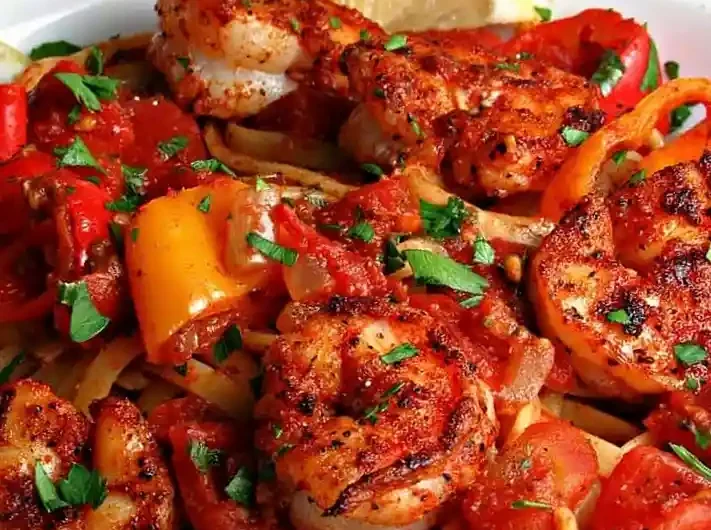
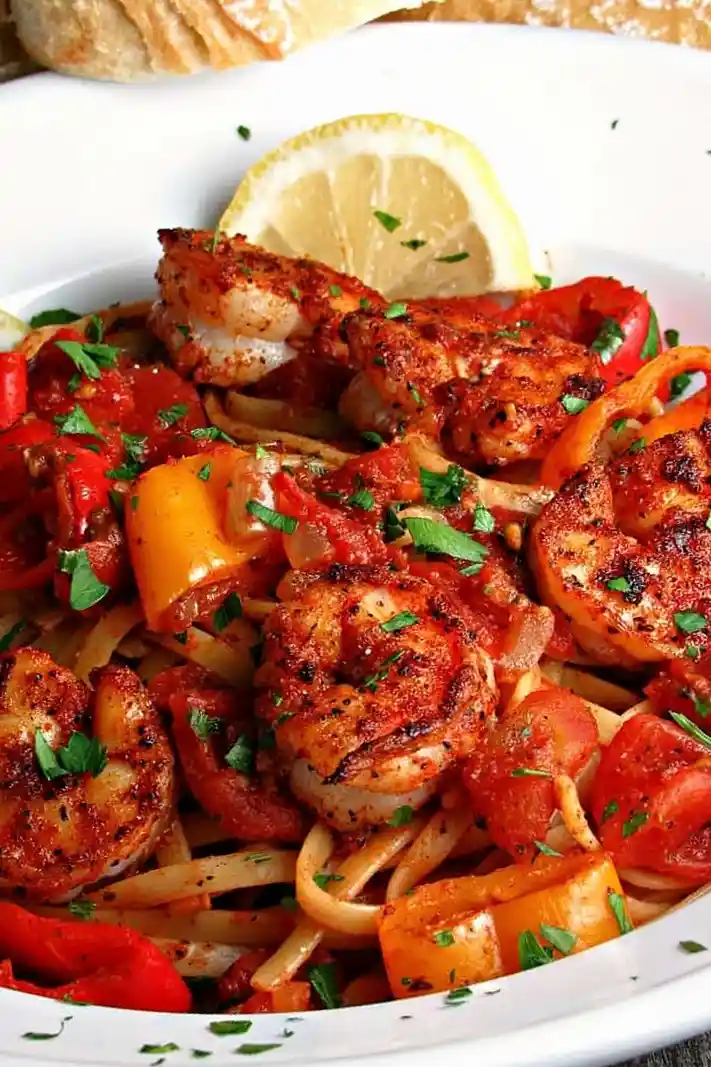
This blackened shrimp pasta combines bold Cajun spices with a zesty tomato-based sauce for a satisfying meal. It is a quick, one-pan seafood dish that delivers intense flavor without the need for heavy cream. Perfect for weeknight dinners or impressive guest meals.
List of ingredients
- 1 tablespoon olive oil – used for high-heat searing.
- 1 tablespoon butter – adds richness and prevents sticking.
- 1 pound 21-25 shrimp – raw, peeled and deveined.
- 2 tablespoons cajun seasoning plus 1/4 teaspoon – divided for shrimp and sauce.
- 1/2 cup onion – finely chopped for the base.
- 2 cloves garlic – grated for maximum flavor release.
- 1 1/2 cups mini bell peppers – sliced into thin strips.
- 1/3 cup pasta water – reserved from the pot to emulsify the sauce.
- 1/4 cup chicken stock – provides a savory depth as a non-alcoholic substitute.
- 15 ounce can of diced tomatoes – undrained for added moisture.
- 1/2 teaspoon smoked paprika – adds a subtle woody aroma.
- 1 tablespoon worcestershire sauce – enhances the savory umami profile.
- 1/4 cup fresh parsley – chopped for a bright finish.
- 8 ounces linguine – or a similar long pasta shape.
- Optional: sliced lemon – for a fresh citrus garnish.
step-by-step instructions
- Season the Seafood: Rinse the shrimp, pat them thoroughly dry with a paper towel, and place them in a bowl. Sprinkle one tablespoon of cajun seasoning over the shrimp and gently toss to ensure an even coat.
- Sear the Shrimp: Heat the olive oil and butter over medium heat in a large skillet. Add the shrimp and sauté for 1-2 minutes per side, being careful not to overcook them; remove them from the skillet and set them aside.
- Sauté the Aromatics: Reduce the skillet heat to low. Add the chopped onion, sliced bell peppers, and grated garlic, seasoning with 1/4 teaspoon of cajun seasoning. Cook for 2-4 minutes until onions soften, stirring frequently to prevent the garlic from burning.
- Prepare the Pasta: Boil the linguine for one minute less than the package instructions specify. Reserve 1/4 cup of the starchy pasta water before draining the noodles.
- Simmer the Sauce: Stir the reserved pasta water into the skillet along with the chicken stock, undrained diced tomatoes, smoked paprika, Worcestershire sauce, and the remaining tablespoon of cajun seasoning. Simmer over medium-low heat for about 5 minutes to allow the sauce to thicken.
- Final Flavor Adjustment: Taste the sauce and add a light sprinkle of salt or additional cajun seasoning if more heat or salinity is needed.
- Combine and Serve: Toss the undercooked pasta into the sauce and cook for another 2 minutes. Return the seared shrimp to the pan, fold in the fresh parsley, and serve immediately with lemon slices for squeezing.
Mastering the Blackening Process
The Importance of Patting Shrimp Dry
Moisture on the surface of the shrimp creates steam, which prevents a proper sear. Use paper towels to remove all surface water before seasoning to ensure the spices adhere and the shrimp brown quickly. This step is essential for achieving the characteristic blackened crust.
Controlling the Pan Temperature
Medium-high heat is ideal for searing, but the butter can burn if the oil is too hot. Start with the olive oil to raise the temperature, then add butter just before the shrimp hit the pan. This combination provides the high smoke point of oil and the flavor of butter.
Identifying Perfect Doneness
Shrimp cook very rapidly and become rubbery if overdone. Look for the shrimp to curl into a ‘C’ shape; if they curl tightly into an ‘O’ shape, they are likely overcooked. Remove them from the heat as soon as they turn opaque.
Vegetable Preparation and Sautéing
Slicing Peppers for Consistent Texture
Cut the mini bell peppers into uniform strips that are not too thin. If they are sliced too finely, they will dissolve into the tomato sauce during the simmering process. Keeping them slightly thicker ensures they maintain a pleasant bite.
Preventing Garlic from Burning
Grated garlic has a high surface area and burns much faster than sliced garlic. Always add it after the onions and peppers have begun to soften. Stir constantly during the last minute of sautéing to keep the garlic golden and fragrant.
Softening the Onion Base
Sautéing onions over low to medium heat allows them to release their natural sugars. This process creates a sweet foundation that balances the spicy and acidic notes of the Cajun seasoning and tomatoes. Ensure they are translucent before adding the liquid ingredients.
Pasta Cooking Science
Timing for the Perfect Al Dente
Cooking the pasta one minute under the package directions prevents it from becoming mushy. The pasta finishes cooking inside the sauce, absorbing the flavors directly into the noodle. This creates a more integrated final dish.
The Role of Starchy Pasta Water
Pasta water contains released starches that act as a natural thickening agent. When added to the sauce, it helps the liquids emulsify and cling to the pasta more effectively. This prevents the sauce from pooling at the bottom of the plate.
Selecting the Ideal Pasta Shape
Linguine is recommended because its flat surface area holds onto the tomato sauce well. Fettuccine or spaghetti are also excellent alternatives if linguine is unavailable. Avoid very small pasta shapes that might get lost in the chunky vegetable sauce.
Sauce Development and Balancing
Simmering for Flavor Concentration
The 5-minute simmer is crucial for reducing the excess moisture from the canned tomatoes and stock. This concentration of liquid intensifies the spices and creates a richer mouthfeel. Keep the heat at medium-low to avoid scorching the bottom of the pan.
Adjusting Salt and Heat Levels
Different brands of Cajun seasoning vary significantly in salt content. Always taste the sauce before adding extra salt. If the sauce is too spicy, a squeeze of lemon or a pinch of sugar can help neutralize the heat.
Integrating Umami with Worcestershire
Worcestershire sauce adds a layer of savory depth and complexity to the tomato base. It provides an earthy undertone that complements the smoky paprika. This small addition transforms a simple tomato sauce into a professional-tasting glaze.
Ingredient Substitutions and Alternatives
Using Broth instead of Wine
Chicken stock or vegetable broth provides the necessary liquid and savory notes without the use of alcohol. For a deeper flavor, use a low-sodium concentrated broth. This ensures the sauce remains rich while remaining family-friendly.
Low-Carb Pasta Alternatives
Zucchini noodles or spaghetti squash can be used for a lower-calorie option. Sauté these separately and toss them into the sauce at the very end. Since they release more water, you may need to simmer the sauce for a few extra minutes.
Swapping Mini Bell Peppers
If mini bell peppers are unavailable, standard red or yellow bell peppers work perfectly. Simply dice them into small squares to mimic the size of the mini variety. Green peppers can be used but will add a slightly more bitter, sharp flavor.
Tomato Product Variations
While diced tomatoes provide a nice texture, crushed tomatoes can be used for a smoother sauce. If using crushed tomatoes, you may need slightly less pasta water to keep the consistency from becoming too thin. Ensure the tomatoes are not overly sweetened.
Serving and Presentation Ideas
Enhancing the Dish with Fresh Lemon
The acidity of fresh lemon juice cuts through the richness of the butter and the intensity of the spices. Squeeze the lemon over the pasta just before serving to brighten the overall flavor profile. This adds a professional touch and balances the smoked paprika.
Recommended Side Dishes
A crisp green salad with a light vinaigrette pairs well with the bold flavors of this pasta. Garlic bread or a toasted rustic baguette is also ideal for soaking up the remaining sauce. Steamed broccoli or asparagus can add a healthy green element to the meal.
Plating for Visual Appeal
Use a carving fork to twirl the pasta into a high mound in the center of the plate. Arrange the blackened shrimp on top so they are visible and not buried in the noodles. Garnish with an extra sprinkle of fresh parsley and a lemon wedge on the side.
Storage and Reheating Guidelines
Proper Refrigeration Practices
Store leftovers in an airtight container in the refrigerator for up to three days. Keep the shrimp and pasta together, but be aware that the pasta will absorb more sauce as it sits. This may make the dish seem drier the next day.
Reheating Without Overcooking
To avoid rubbery shrimp, reheat the pasta in a skillet over medium-low heat rather than the microwave. Add a tablespoon of water or chicken stock to loosen the sauce. Heat gently until just warmed through, avoiding a rolling boil.
Freezing Considerations
This dish is not ideal for freezing because the shrimp texture degrades during the freezing and thawing process. However, the vegetable and tomato sauce can be frozen. Cook the pasta and shrimp fresh and combine them with the thawed sauce.
Meal Prep and Efficiency
Organizing Your Mise en Place
Since this recipe moves quickly, have all your ingredients prepped and measured before turning on the heat. Chop the onions, slice the peppers, and grate the garlic in advance. This prevents you from burning the garlic while you are still chopping other vegetables.
Safe Thawing of Frozen Shrimp
Thaw frozen shrimp in the refrigerator overnight or place them in a bowl of cold water for 20 minutes. Never thaw shrimp in warm water, as this can compromise the texture and safety of the seafood. Pat them dry immediately after thawing.
Pre-Cutting Vegetables
Onions and bell peppers can be chopped up to 24 hours in advance and stored in airtight containers. This reduces the actual cooking time to under 20 minutes. Keep the grated garlic separate or mince it fresh for the best aroma.
Troubleshooting Common Issues
Fixing a Watery Sauce
If the sauce is too thin after simmering, increase the heat slightly to reduce the liquid further. Alternatively, you can stir in a small amount of cornstarch slurry or a tablespoon of grated parmesan cheese to thicken the consistency. Ensure you don’t over-reduce, or the sauce will become too salty.
Reducing Excessive Heat
If the Cajun seasoning is too spicy for your preference, add a small amount of unsalted butter or a splash of heavy cream if you choose to ignore the cream-free rule. A squeeze of lemon or a teaspoon of honey can also mask the burn of the peppers.
Correcting Bland Flavors
If the dish tastes flat, it likely needs more acid or salt. Add another squeeze of lemon juice or a small pinch of salt to wake up the flavors. A dash of extra smoked paprika can also add the missing depth.
Frequently Asked Questions
Can I use frozen shrimp for this recipe?
Yes, frozen shrimp work perfectly as long as they are fully thawed and patted dry before seasoning. Ensure they are peeled and deveined to save time and ensure a better eating experience.
What is the best type of Cajun seasoning to use?
Use a blend that contains paprika, garlic powder, onion powder, and cayenne. If your blend does not contain salt, you will need to add a pinch of salt to the sauce and the shrimp for a balanced taste.
Can I make this dish without butter?
Yes, you can replace the butter with an additional tablespoon of olive oil or avocado oil. While you will lose some of the richness, the bold spices and tomato sauce will still provide plenty of flavor.
Which pasta is a good gluten-free substitute?
Brown rice pasta or chickpea pasta works well with this hearty sauce. Be careful not to overcook gluten-free pasta, as it can break apart more easily than wheat-based linguine when tossed in the pan.
Print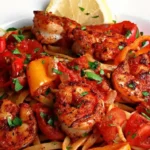
Zesty Blackened Shrimp Pasta
- Total Time: 30 minutes
- Yield: 4 servings 1x
- Diet: General
Description
Blackened Shrimp Pasta ~ Cajun seasoned shrimp sauteed with peppers and onions in a bold tomato sauce, served with pasta.
Ingredients
- 1 tablespoon olive oil
- 1 tablespoon butter
- 1 pound 21-25 shrimp (raw, peeled and deveined)
- 2 tablespoons cajun seasoning (+ 1/4 teaspoon, divided)
- 1/2 cup onion (chopped)
- 2 cloves garlic (grated)
- 1 1/2 cups mini bell peppers (sliced)
- 1/3 cup pasta water
- 1/4 cup chicken stock
- 15 ounce can of diced tomatoes
- 1/2 teaspoon smoked paprika
- 1 tablespoon worcestershire sauce
- 1/4 cup fresh parsley (chopped)
- 8 ounces linguine
- sliced lemon for serving (optional)
Instructions
- Step: Rinse the shrimp, pat it dry with a paper towel and place it in a bowl. Sprinkle one tablespoon of cajun seasoning over the shrimp and gently toss to coat.
- Step: Heat the olive oil and butter over medium heat in a large skillet then drop in the shrimp and saute 1-2 minutes per side without overcooking them then remove them from the skillet and reserve.
- Step: Reduce the heat to low then add the onion, bell peppers and grated garlic to the same skillet. Season it with 1/4 teaspoon of the cajun seasoning and cook 2-4 minutes or until the onions have softened, stirring frequently so the garlic doesn’t burn.
- Step: Meanwhile cook the pasta one minute less than package directions. The pasta will finish cooking in the sauce. Scoop out 1/4 cup of pasta water then drain the pasta.
- Step: Add the pasta water to the skillet along with the chicken stock, (undrained) can of diced tomatoes, smoked paprika, Worcestershire sauce and the other tablespoon of Cajun seasoning. Simmer 5 minutes over medium-low heat letting the sauce thicken slightly.
- Step: Taste the sauce and adjust for salt and heat.
- Step: Add the cooked pasta to the sauce, tossing to coat it and continue cooking the pasta in the sauce 2 minutes. Return the shrimp to the skillet, fold in the parsley and serve right away with slices of lemon for squeezing over the top.
Notes
If your Cajun seasoning doesn’t contain salt, the shrimp and sauce may require some. Don’t slice the peppers too thin or they’ll disappear in the sauce.
- Prep Time: 10 minutes
- Cook Time: 20 minutes
- Category: Main Course
- Method: Sautéing
- Cuisine: Cajun
Nutrition
- Serving Size: 1 serving
- Calories: 410 kcal
- Sugar: 7 g
- Sodium: 980 mg
- Fat: 13 g
- Saturated Fat: 4 g
- Unsaturated Fat: 9 g
- Trans Fat: 0 g
- Carbohydrates: 44 g
- Fiber: 4 g
- Protein: 31 g
- Cholesterol: 155 mg
Keywords: blackened shrimp pasta, cajun shrimp and pasta