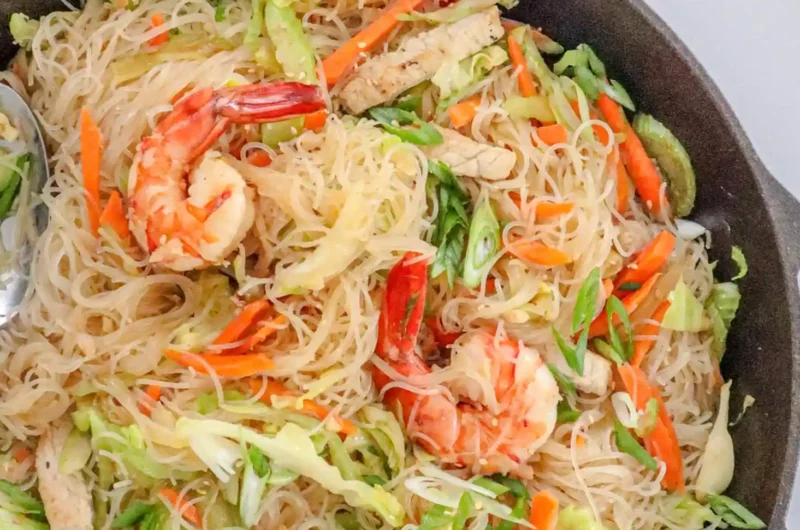
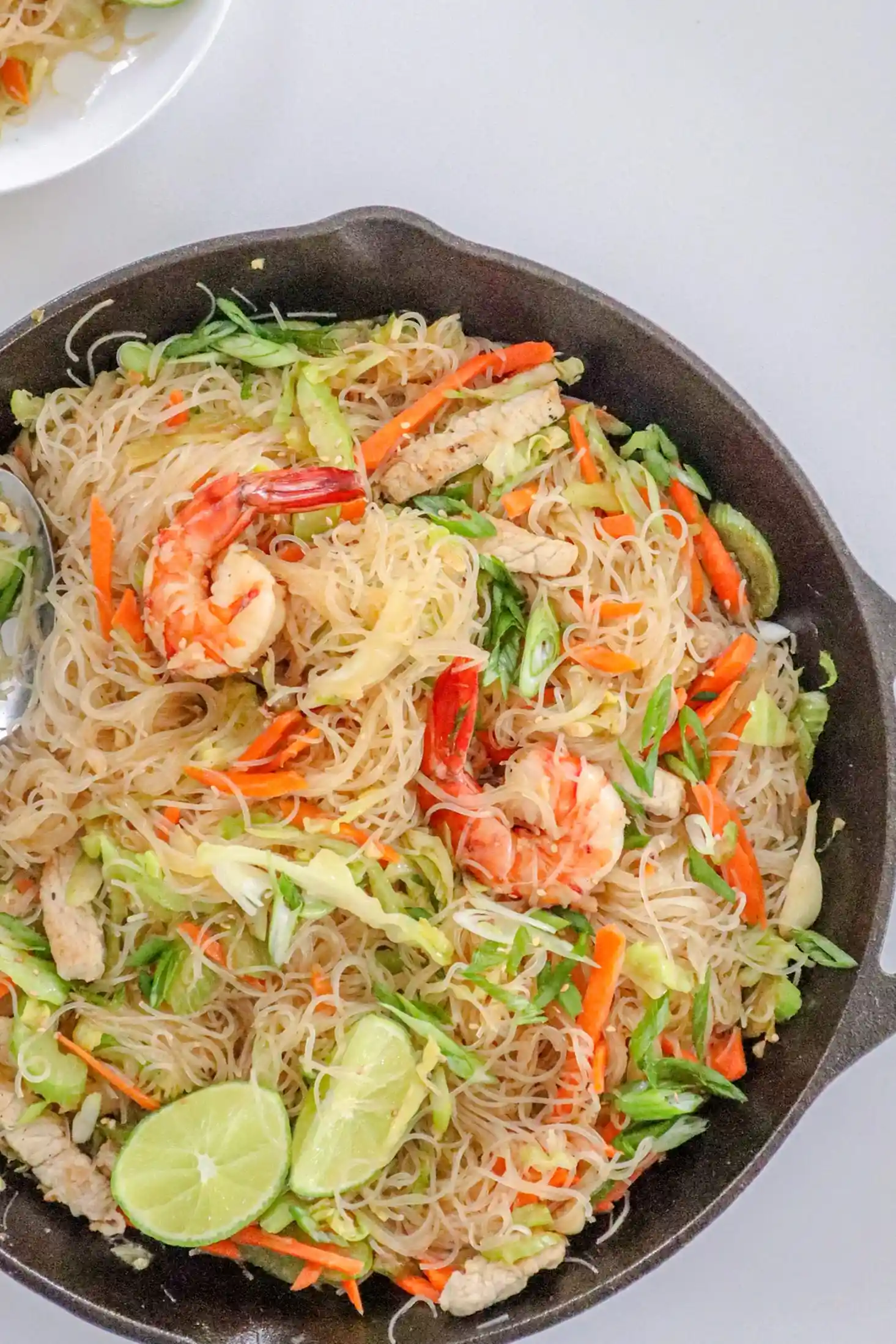
This Filipino Bihon Pancit is a savory stir-fry featuring thin rice noodles, crisp vegetables, and tender proteins. It provides a balanced meal that combines umami flavors with a refreshing citrus finish.
List of ingredients
- 1 pack rice noodles – soak in water to soften before cooking.
- 2 tablespoons avocado oil – divided for sautéing protein and vegetables.
- 1 chicken loin or breast – thinly sliced as a lean protein substitute.
- 5-8 large shrimp – peeled and de-veined for added umami.
- 1 teaspoon salt – divided for seasoning meat and vegetables.
- 3 garlic cloves – minced finely for aroma.
- 1/2 white onion – sliced thinly.
- 1 carrot – julienned into thin matchsticks.
- 1/4 cabbage – sliced into strips.
- 2 celery stalks – sliced thinly.
- 1 tablespoon soy sauce – for initial vegetable seasoning.
- 2.5 cups chicken broth – divided; 2 cups for cooking and 0.5 cup for adjusting consistency.
- 1/4 cup oyster sauce – the primary savory base; add more to taste.
- 1-2 tablespoons soy sauce – optional for final seasoning.
- Black pepper – to taste.
- Sliced green onions – for garnish and freshness.
- 1 calamansi or lime – freshly squeezed for acidity.
step-by-step instructions
- Prepare the base: Soak the rice noodles in room temperature water for 15-30 minutes until softened. While soaking, mince the garlic, slice the onion, julienne the carrot, and slice the cabbage and celery. Ensure all vegetables are uniform in size for even cooking.
- Process the proteins: Thinly slice the chicken and peel and de-vein the shrimp. If using chicken breast, pound the meat slightly with the back of a knife to ensure tenderness. Strain the softened noodles and set them aside.
- Sauté the meat: Heat a pan over medium-high heat and add 1 tablespoon of avocado oil. Add the sliced chicken and cook for 1 minute, then add the shrimp and 1/2 teaspoon of salt. Fry for another minute until the shrimp turns orange and the chicken is browned, then remove them from the pan.
- Cook the vegetables: Using the same pan on medium heat, add another tablespoon of oil. Sauté the minced garlic and sliced onions for one minute, then add carrots for one minute. Add the cabbage and celery, sautéing for 2 minutes.
- Season the greens: Stir in 1 tablespoon of soy sauce and 1/2 teaspoon of salt. Continue cooking until the cabbage has softened, then transfer the vegetables to a separate plate.
- Simmer the noodles: Set the pan to low-medium heat and pour in 2 cups of chicken broth and 1/4 cup of oyster sauce. Add the strained rice noodles to the liquid.
- Reduce and combine: Cook for 5-8 minutes, stirring occasionally, until the broth has evaporated and the noodles are no longer soupy. Return the sautéed vegetables and meat to the pan.
- Final adjustments: Mix all ingredients thoroughly. If the noodles appear too dry, gradually add up to 1/2 cup of extra chicken broth.
- Finish and serve: Season with black pepper and garnish with sliced green onions. For extra savoriness, stir in 1-2 tablespoons of soy sauce or oyster sauce. Serve immediately with a fresh squeeze of lime or calamansi juice.
Optimizing Your Noodle Selection
Using Golden Bihon Rice Noodles
Golden bihon noodles are specifically designed for this dish and offer a tender, non-soggy texture. These cornstarch-based sticks hold their shape well during the simmering process. They absorb the savory broth effectively without becoming overly mushy.
Managing the Soaking Process
Soaking noodles for 15-30 minutes is critical to prevent them from absorbing too much broth during the final cook. If skipped, the noodles may remain hard or require excessive liquid, which can dilute the flavor. Always strain them thoroughly before adding them to the pan.
Alternatives to Traditional Bihon
If bihon noodles are unavailable, thin vermicelli rice noodles can be used as a substitute. Be mindful that different brands have varying thicknesses and may require shorter soaking times. Always test one noodle for softness before straining.
Protein Customization Options
Using Chicken for a Leaner Profile
Substituting chicken loin or breast for other meats ensures a lean, high-protein meal. Slicing the meat against the grain creates smaller fibers that cook quickly. This prevents the chicken from becoming tough during the two-stage cooking process.
Enhancing the Dish with Shrimp
Shrimp adds a sweet, briny contrast to the savory soy and oyster sauce. To maintain a tender texture, avoid overcooking the shrimp during the initial sauté. They should be removed from the pan as soon as they turn opaque and orange.
Plant-Based Protein Substitutions
For a vegetarian version, replace the meat with extra-firm tofu or tempeh. Press the tofu to remove excess water before sautéing it in avocado oil. Use a mushroom-based vegetarian oyster sauce and vegetable broth to maintain the flavor profile.
Vegetable Preparation and Variety
Achieving the Perfect Julienne
Cutting carrots and celery into uniform matchsticks ensures that every vegetable cooks at the same rate. This prevents the carrots from remaining raw while the cabbage overcooks. A mandoline slicer can be used for precision and speed.
Incorporating Additional Vegetables
While cabbage and carrots are traditional, adding sliced bell peppers or snap peas provides extra crunch and color. These should be added at the same time as the celery to preserve their snap. Do not overcook them, as they should remain vibrant and crisp.
Managing Vegetable Moisture
Cooking vegetables in batches or removing them from the pan prevents them from steaming. By sautéing them quickly and setting them aside, you preserve their texture. This ensures the final dish has a variety of textures rather than a uniform softness.
Professional Cooking Techniques
Tenderizing Sliced Meat
Pounding sliced chicken with the back of a knife breaks down tough connective tissues. This process, known as mechanical tenderizing, allows the meat to cook faster and more evenly. It also helps the meat absorb the salt seasoning more effectively.
Controlling Pan Temperature
Using medium-high heat for the protein creates a sear that locks in flavor. Switching to medium heat for the vegetables prevents the garlic from burning. The final low-medium heat for the noodles ensures the broth reduces slowly and permeates the rice grains.
Balancing the Liquid Ratio
The key to a successful pancit is the broth-to-noodle ratio. If the pan looks too watery, continue simmering for another two minutes before adding the proteins back. If the noodles clump together, a small splash of extra chicken broth will loosen them.
Serving and Pairing Suggestions
Pairing with Fried Spring Rolls
Filipino pancit is traditionally served with lumpia, which are crispy fried spring rolls. The crunch of the roll complements the soft texture of the rice noodles. Serve them with a side of sweet chili sauce for an authentic experience.
Optimizing Citrus Freshness
Squeezing fresh lime or calamansi over the dish right before eating is essential. The acidity cuts through the richness of the oyster sauce and brightens the overall flavor. Avoid adding the citrus during the cooking process to prevent the flavor from evaporating.
Serving as a Main or Side
This dish is hearty enough to be a main course due to the combination of protein and vegetables. However, it can also serve as a side dish for grilled fish or roasted chicken. Serve it on a large platter to allow the noodles to cool slightly for better texture.
Storage and Food Safety
Refrigeration and Container Use
Store leftover pancit in an airtight container in the refrigerator for up to three days. Ensure the dish has cooled completely before sealing the lid to prevent excess condensation. This helps the noodles maintain their structural integrity.
Preventing Noodle Clumping
Rice noodles tend to stick together as they cool and store. To prevent this, you can toss the noodles with a tiny amount of oil before refrigerating. This creates a barrier that keeps the strands separate for easier reheating.
Reheating and Refreshing Techniques
Microwave Reheating Method
Place the leftovers in a microwave-safe bowl and cover them with a damp paper towel. The moisture from the towel steams the noodles, preventing them from becoming hard or dry. Heat in 30-second intervals, stirring in between.
Stovetop Refreshing Method
For the best texture, reheat the pancit in a skillet over medium heat. Add a tablespoon of chicken broth or water to re-hydrate the noodles. Toss gently until heated through to avoid breaking the long noodle strands.
Troubleshooting Common Issues
Fixing Mushy Noodles
If the noodles become too soft, you likely soaked them for too long or used too much broth. To fix this, reduce the soaking time to 15 minutes next time. Ensure the broth has almost completely evaporated before adding the vegetables back in.
Adjusting Bland Flavors
If the dish lacks depth, increase the amount of oyster sauce or soy sauce during the final stir. A pinch of sugar can also balance the saltiness and enhance the umami. Always taste and adjust in small increments to avoid over-salting.
Preventing Watery Results
Watery noodles often occur when vegetables are added back too early or the broth isn’t reduced enough. Ensure the pan is not overcrowded, which can cause vegetables to release excess water. Cook the noodles until the liquid is fully absorbed.
Frequently Asked Questions
What is the difference between Pancit Bihon and Pancit Canton?
Pancit Bihon uses thin rice noodles, resulting in a softer, more delicate texture. Pancit Canton uses thick egg noodles, which provide a firmer, springier bite and a richer taste. The seasonings are similar, but the noodle base changes the experience.
Can I make this dish gluten-free?
Yes, you can make this dish gluten-free by substituting the soy sauce with tamari or coconut aminos. Ensure the oyster sauce used is also certified gluten-free. The rice noodles are naturally gluten-free.
How long do the soaked noodles stay fresh?
Soaked noodles should be used immediately or within a few hours. If stored in water for too long, they can become overly saturated and lose their texture. Always strain and use them promptly for the best results.
Print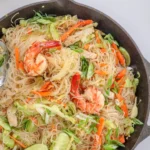
Filipino Bihon Pancit with Chicken and Shrimp
- Total Time: 45 minutes
- Yield: 5 servings 1x
- Diet: General
Description
This traditional Filipino dish known as Bihon Pancit is a quick and easy stir-fry noodle dish with vegetables and chicken, enhanced with shrimp and a fresh squeeze of lime juice.
Ingredients
- 1 pack rice noodles (soaked in water to soften)
- 1 tablespoon avocado oil
- 1 chicken breast, thinly sliced
- 5–8 large shrimp, peeled and de-veined (optional)
- 1 teaspoon salt
- 1 tablespoon avocado oil
- 3 garlic cloves, minced
- 1/2 white onion, sliced
- 1 carrot, julienne
- 1/4 cabbage, sliced
- 2 celery stalks, sliced
- 1 tablespoon soy sauce
- 2 cups chicken broth
- 1/4 cup oyster sauce
- 1–2 tablespoon soy sauce, to taste
- Black pepper, to taste
- Sliced green onions
- 1 calamansi or lime, freshly squeezed
Instructions
- Soak: Soak rice noodles for 15-30 minutes in room temperature water, then strain and set aside.
- Prep: Mince garlic, slice onion, julienne carrot, and slice cabbage and celery.
- Protein Prep: Thinly slice the chicken and peel and de-vein the shrimp.
- Sear Protein: Heat 1 tablespoon oil in a pan over medium-high heat; add chicken and cook for 1 minute, then add shrimp and 1/2 teaspoon salt, frying for 1 minute until shrimp are orange and chicken is browned; set aside.
- Sauté Vegetables: Heat 1 tablespoon oil over medium heat; sauté garlic and onion for one minute, add carrots for 1 minute, then add cabbage and celery for 2 minutes; stir in 1 tablespoon soy sauce and 1/2 teaspoon salt, then set aside.
- Cook Noodles: Use the same pan over low-medium heat; add 2 cups chicken broth and 1/4 cup oyster sauce, then stir in the softened noodles.
- Combine: Once the broth has evaporated and cooked down, stir in the sautéed vegetables and protein; gradually add 1/2 cup chicken broth if noodles appear too dry.
- Finish: Add black pepper and sliced green onions; optionally add 1-2 tablespoons of soy sauce and oyster sauce for extra savoriness, and serve with freshly squeezed calamansi or lime.
Notes
Tenderize the chicken by pounding it slightly with the back of a knife. Ensure all vegetables are cut to a uniform size for even cooking. Soaking the noodles prevents them from absorbing too much broth during the cooking process.
- Prep Time: 30 minutes
- Cook Time: 15 minutes
- Category: Main Course
- Method: Stir-fry
- Cuisine: Filipino
Nutrition
- Serving Size: 1 serving
- Calories: 636 kcal
- Sugar: 4 g
- Sodium: 2247 mg
- Fat: 32 g
- Saturated Fat: 10 g
- Unsaturated Fat: 19 g
- Trans Fat: 0.003 g
- Carbohydrates: 58 g
- Fiber: 4 g
- Protein: 28 g
- Cholesterol: 115 mg
Keywords: Filipino Pancit, Bihon, stir-fry noodles, Filipino cuisine, rice noodles