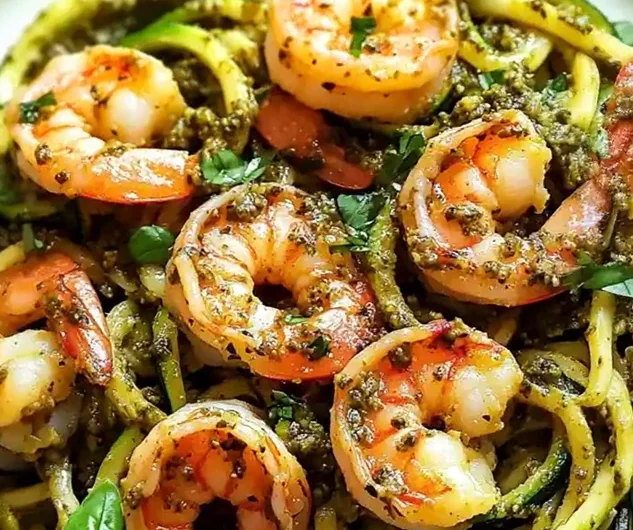
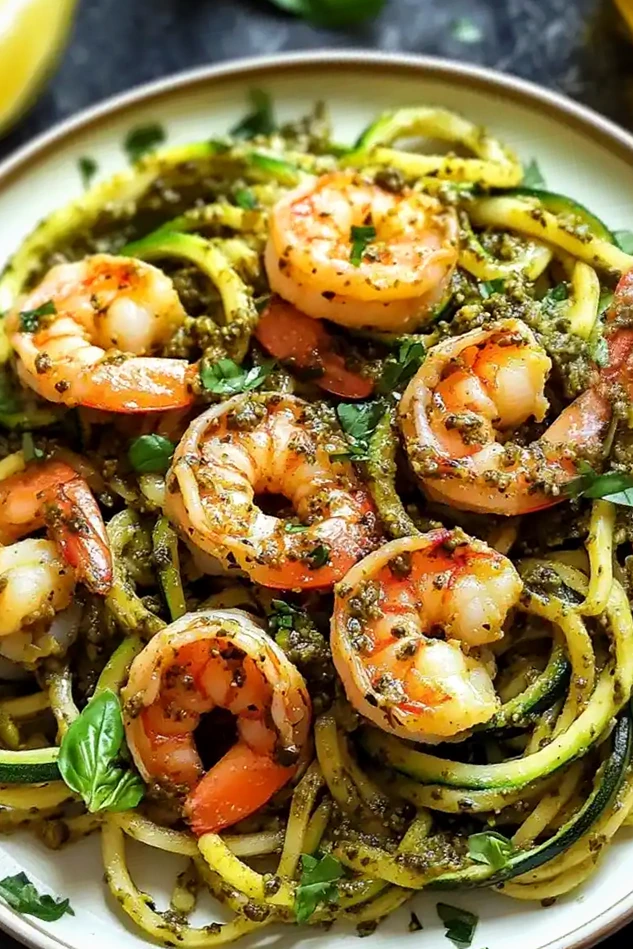
This zucchini noodle dish with pesto and shrimp is a low-carb meal ready in just 25 minutes. It provides a healthy, gluten-free alternative to traditional pasta for a quick weeknight dinner.
List of ingredients
- 2 medium zucchinis – spiralized into noodles
- 1 lb shrimp – peeled and deveined
- 1/2 cup pesto – store-bought or homemade
- 2 tbsp olive oil – divided for sautéing
- 2 cloves garlic – minced
- 1/4 tsp salt – for seasoning
- 1/4 tsp black pepper – for seasoning
- 1 cup cherry tomatoes – halved
- 2 tbsp Parmesan cheese – freshly grated
- 1 tbsp pine nuts – toasted
step-by-step instructions
- Prepare the zucchini: Use a spiralizer to create long, thin zucchini noodles. If you do not have one, use a julienne peeler or purchase pre-spiralized zucchini. Lightly salt the noodles, let them sit for 10 minutes to draw out excess water, and then pat them dry with a paper towel.
- Prepare the shrimp: Thaw any frozen shrimp completely. Pat them dry with a paper towel to ensure a better sear in the pan.
- Sear the shrimp: Heat 1 tablespoon of olive oil in a large skillet over medium heat. Add the minced garlic and sauté for 30 seconds until fragrant. Add the shrimp to the pan, season with salt and black pepper, and cook for 2-3 minutes per side until they are pink and opaque. Remove the shrimp from the skillet and set them aside.
- Sauté the zoodles: In the same skillet, heat the remaining 1 tablespoon of olive oil over medium heat. Add the zucchini noodles and sauté for 1-2 minutes until they are slightly softened. Avoid overcooking to prevent the noodles from becoming soggy.
- Combine and finish: Stir the pesto into the skillet with the zucchini noodles and toss until evenly coated. Return the cooked shrimp to the skillet and mix gently to combine all ingredients.
- Final additions: Stir in the halved cherry tomatoes for sweetness. Sprinkle the freshly grated Parmesan cheese and toasted pine nuts over the top before serving.
- Serve: Divide the mixture evenly among four plates and serve immediately.
Optimizing Zucchini Texture
Using the Right Spiralizer
A hand-crank spiralizer usually provides the most control over the thickness of the noodles. For a firmer bite, use the thicker blade setting. Electric spiralizers are faster for larger batches but can sometimes over-process the vegetable.
The Importance of Salting
Salting the zucchini noodles draws out excess moisture through osmosis. This prevents the final dish from becoming watery in the pan. Let them sit for exactly 10 minutes before rinsing or patting dry.
Proper Drying Technique
Use a clean kitchen towel or heavy-duty paper towels to press the salted zoodles. Squeezing them gently removes the surface water that would otherwise steam the noodles instead of sautéing them. Dry noodles brown better and maintain their shape.
Avoiding Overcooking
Zucchini noodles have a very high water content and cook extremely fast. Sautéing them for more than 2 minutes often results in a mushy consistency. Keep the heat medium-high and keep the noodles moving constantly.
Shrimp Preparation Guide
Thawing Frozen Shrimp
Place frozen shrimp in a colander under cool running water for a few minutes. Avoid using hot water, as this can begin to cook the exterior and affect the texture. Ensure they are fully thawed before they hit the pan.
Achieving the Perfect Sear
Heat the olive oil until it shimmers before adding the shrimp. Adding shrimp to a cold pan causes them to release moisture and boil rather than sear. A hot pan creates a golden-brown crust that enhances flavor.
Identifying Doneness
Shrimp are cooked when they curl into a ‘C’ shape and turn opaque. If they curl tightly into an ‘O’ shape, they are likely overcooked and will be rubbery. Remove them from the heat the moment they lose their translucency.
Patting Shrimp Dry
Moisture on the surface of the shrimp creates steam in the skillet. Patting them dry with paper towels allows the protein to caramelize quickly. This step is essential for getting a professional restaurant-style finish.
Pesto Customization
Making Fresh Basil Pesto
Pulse fresh basil leaves, garlic, toasted pine nuts, and Parmesan in a food processor. Slowly drizzle in olive oil while blending until the mixture reaches a smooth consistency. Add a squeeze of lemon juice to help maintain the bright green color.
Choosing Store-Bought Options
Select a pesto that lists extra virgin olive oil and fresh basil as the first ingredients. Avoid brands that use excessive preservatives or seed oils. Refrigerated pesto usually tastes fresher than the shelf-stable jarred versions.
Nut-Free Pesto Alternatives
Replace pine nuts with toasted sunflower seeds or pumpkin seeds for a similar crunch. You can also use a small amount of nutritional yeast for a nutty flavor without using actual nuts. This makes the dish safer for those with allergies.
Vegan Pesto Modifications
Substitute the Parmesan cheese with nutritional yeast or a vegan almond-based cheese. Use a pinch of salt to mimic the savoriness of the dairy. The result is a creamy, herby sauce that remains plant-based.
Ingredient Substitutions
Alternative Protein Options
Replace shrimp with scallops or cubed firm tofu for a different protein profile. Chicken breast strips also work well if sautéed until fully cooked before adding the zoodles. Adjust cooking times based on the protein used.
Different Noodle Bases
Spaghetti squash is a great alternative if you prefer a heartier texture. You can also use sweet potato noodles or traditional gluten-free pasta. If using pasta, boil it separately before tossing it with the pesto and shrimp.
Cheese Swaps for Different Diets
Use Pecorino Romano for a sharper, saltier flavor than Parmesan. For a milder taste, a sprinkle of feta cheese adds a nice tang. If avoiding dairy, omit the cheese entirely or use a plant-based Parmesan alternative.
Vegetable Add-ins for Nutrition
Add baby spinach or kale to the skillet during the last minute of cooking for extra greens. Sliced mushrooms or diced bell peppers can be sautéed with the garlic for added depth. These additions increase the nutrient density of the meal.
Serving and Pairing Suggestions
Adding Fresh Garnishes
Garnish the finished dish with fresh basil leaves or chopped parsley. A sprinkle of red pepper flakes adds a subtle heat that complements the creamy pesto. A squeeze of fresh lemon juice brightens the overall flavor.
Choosing a Side Salad
A simple arugula salad with a lemon vinaigrette pairs well with the richness of the pesto. Mix in some shaved carrots or cucumber for added crunch. Keep the dressing light to balance the meal.
Garlic Bread Pairings
Serve with toasted sourdough topped with garlic butter and herbs. This provides a satisfying contrast to the light zucchini noodles. For a low-carb option, use toasted almond flour bread.
Plating for Presentation
Twirl the zucchini noodles using a carving fork or tongs to create a nest on the plate. Place the shrimp on top of the nest and scatter the cherry tomatoes around the edges. Finish with a dusting of cheese and pine nuts.
Storage and Freshness
Refrigeration Guidelines
Store leftovers in an airtight container in the refrigerator for up to two days. Keep the shrimp and zoodles together, but be aware that the zoodles will release more water over time. Ensure the container is completely sealed to prevent odors from absorbing.
Best Reheating Methods
Reheat the dish gently in a skillet over medium heat for 2-3 minutes. Avoid the microwave if possible, as it can make the shrimp rubbery and the zucchini mushy. Add a teaspoon of water or olive oil if the pesto has thickened too much.
Freezing Considerations
Zucchini noodles do not freeze well because they lose their structure and become watery upon thawing. However, you can freeze the cooked shrimp and pesto separately. Thaw them and combine with fresh zoodles for a quick meal.
Managing Excess Moisture
If the dish becomes watery after storage, drain the excess liquid before reheating. You can also stir in a small amount of extra pesto to bind the sauce back together. This ensures the flavor remains concentrated.
Make-Ahead Planning
Prepping Zoodles in Advance
Spiralize the zucchini a day ahead and store them in a container with a paper towel. This allows you to skip the prep work on the night of cooking. Do not salt them until you are ready to cook to prevent them from becoming too limp.
Pre-cooking Proteins
Sauté the shrimp slightly underdone and store them in the fridge. When you are ready to serve, flash-fry them with the zoodles to finish cooking. This prevents the shrimp from becoming overcooked during the reheating process.
Batch Preparing Pesto
Make a large batch of homemade pesto and freeze it in ice cube trays. Pop out one or two cubes as needed for various recipes. This saves time and ensures you always have a fresh sauce available.
Quick Assembly Tips
Have all your ingredients measured and chopped before turning on the stove. Since the cooking process takes less than 15 minutes, ‘mise en place’ is critical. This prevents the garlic from burning while you search for the pesto.
Common Troubleshooting
Fixing Watery Zoodles
If your noodles release too much water, tilt the skillet and spoon out the excess liquid. You can also increase the heat slightly to evaporate the moisture faster. Always remember to salt and pat dry before cooking next time.
Preventing Rubbery Shrimp
Ensure the shrimp are not crowded in the pan, as this lowers the temperature and leads to steaming. Cook them in batches if necessary to maintain a high heat. Remove them from the pan immediately once they turn opaque.
Balancing Pesto Saltiness
If the store-bought pesto is too salty, add a splash of heavy cream or a tablespoon of Greek yogurt. A squeeze of lemon juice can also cut through the saltiness with acidity. Adjust the seasoning at the very end.
Enhancing Overall Flavor
If the dish feels bland, add a pinch of garlic powder or a dash of onion powder. A small amount of butter added to the zoodles during sautéing can also add richness. Ensure the pine nuts are toasted for a deeper, nuttier taste.
Frequently Asked Questions
Can I use frozen shrimp?
Yes, you can use frozen shrimp as long as they are completely thawed and patted dry. This prevents the temperature of the pan from dropping, which ensures a proper sear.
How do I keep the pesto green?
Add a small amount of lemon juice to the pesto to prevent oxidation. You can also blanch the basil leaves quickly in boiling water and then shock them in ice water before blending.
Can I make this dish vegan?
Yes, by using a vegan pesto (omitting cheese and using nutritional yeast) and replacing shrimp with chickpeas or tofu. Omit the Parmesan cheese topping as well.
What are the best zoodles?
Firm, medium-sized zucchinis are best for spiralizing. Avoid very large zucchinis, as they tend to have more seeds and a higher water content, which makes them soggier when cooked.
Print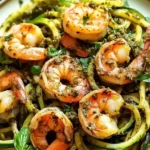
Zucchini Noodles with Pesto and Shrimp (25-Minutes)
- Total Time: 25 minutes
- Yield: 4 servings 1x
- Diet: Low-Carb
Description
Zucchini noodles with pesto and shrimp is a quick, healthy, and delicious Italian-inspired recipe. Ready in just 25 minutes, this dish combines tender shrimp, flavorful pesto, and light zucchini noodles for a low-carb, gluten-free meal.
Ingredients
- 2 medium zucchinis, spiralized
- 1 lb shrimp, peeled and deveined
- 1/2 cup pesto
- 2 tbsp olive oil
- 2 cloves garlic, minced
- 1/4 tsp salt
- 1/4 tsp black pepper
- 1 cup cherry tomatoes, halved
- 2 tbsp microbial-rennet Parmesan cheese, freshly grated
- 1 tbsp pine nuts, toasted
Instructions
- Preparation: Spiralize the zucchini, salt the noodles for 10 minutes to remove excess water, and pat dry with a paper towel.
- Shrimp Prep: Thaw frozen shrimp completely and pat dry with a paper towel.
- Sauté Shrimp: Heat 1 tablespoon of olive oil in a large skillet over medium heat, sauté minced garlic for 30 seconds, add shrimp, season with salt and black pepper, and cook for 2-3 minutes per side until pink and opaque.
- Set Aside: Remove the shrimp from the skillet and set aside.
- Cook Zoodles: In the same skillet, heat the remaining 1 tablespoon of olive oil over medium heat and sauté zucchini noodles for 1-2 minutes until slightly softened.
- Combine: Add the pesto to the skillet with the zucchini noodles and toss until evenly coated, then return the cooked shrimp to the skillet and mix gently.
- Optional Additions: Add halved cherry tomatoes and sprinkle Parmesan cheese and toasted pine nuts on top.
- Serving: Divide the zucchini noodles and shrimp evenly among four plates and serve immediately.
Notes
Avoid overcooking zucchini noodles to prevent sogginess. Store leftovers in an airtight container in the fridge for up to 2 days.
- Prep Time: 10 minutes
- Cook Time: 15 minutes
- Category: Main Course
- Method: Sautéing
- Cuisine: Italian
Nutrition
- Serving Size: 1 serving
- Calories: 320 kcal
- Sugar: 6 g
- Sodium: 610 mg
- Fat: 18 g
- Saturated Fat: 4 g
- Unsaturated Fat: 14 g
- Trans Fat: 0 g
- Carbohydrates: 12 g
- Fiber: 4 g
- Protein: 28 g
- Cholesterol: 150 mg
Keywords: Zucchini Noodles with Pesto and Shrimp, low-carb, gluten-free, keto-friendly